
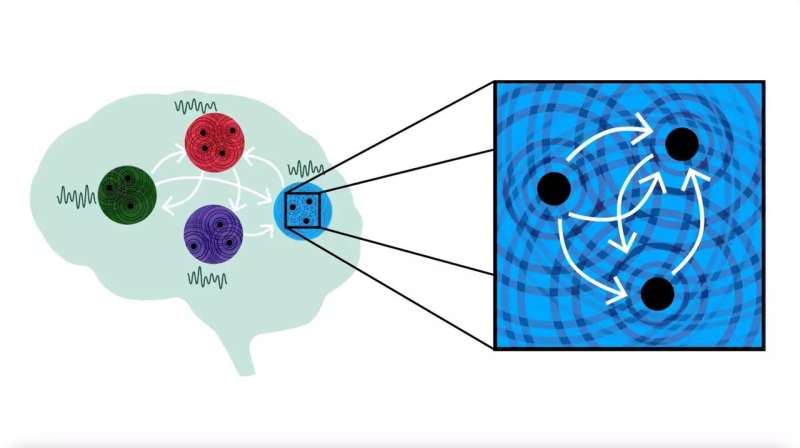
Researchers have made a new discovery in understanding fundamental brain processes. For the first time, the team has provided compelling evidence that the brain’s characteristic rhythmic patterns play a crucial role in information processing. While these oscillatory dynamics have long been observed in the brain, their purpose has remained mostly elusive until now.
Music has the best chance of providing pain relief when it is played at our natural rhythm, a McGill University research team has discovered.
Tiny plastic particles may accumulate at higher levels in the human brain than in the kidney and liver, with greater concentrations detected in postmortem samples from 2024 than in those from 2016, suggests a paper published in Nature Medicine. Although the potential implications for human health remain unclear, these findings may highlight a consequence of rising global concentrations of environmental plastics.
The first-ever ethics checklist developed for portable MRI brain researchers.
A team of scientists from the Center for Neuroscience Imaging Research (CNIR) at the Institute for Basic Science (IBS) has unveiled how the hippocampus orchestrates multiple memory processes, including encoding new information, forming memories, and retrieving them. The study is published in Nature Communications.
A recent study suggests that frequent treatment with intranasal oxytocin a hormone linked to empathy, may help address a key symptom in patients with frontotemporal dementia.
Researchers using intracranial electroencephalogram (EEG) recordings from deep within the brain found that meditation led to changes in activity in the amygdala and hippocampus, key brain regions involved in emotional regulation and memory.
Could the key to easing anxiety be hidden in our gut? Scientists have discovered a crucial connection between gut microbes and anxiety-related behaviour.
People’s ability to interpret emotions or focus on performing a task is reduced by short-term exposure to particulate matter air pollution, potentially making everyday activities more challenging, according to a new study.
New research has revealed clear evidence that changes in the orchestration of brain oxygenation dynamics and neuronal function in Alzheimer’s disease contribute to the neurodegeneration.
Researchers are paving the way for the design of bionic limbs that feel natural to users. They demonstrate the connection between hand movement patterns and motoneuron control patterns. The study, published in Science Robotics, also reports the application of these findings to a soft prosthetic hand, which was successfully tested by individuals with physical impairments.
Occupational exposure to noise and/or vibrations is associated with the presence of vertigo, according to a study recently published in the Journal of Clinical Medicine.
A team of researchers recently carried out a study aimed at exploring the differences among patients with OCD. Their findings, published in Translational Psychiatry, allowed them to identify two broad OCD subtypes, which are associated with different patterns in gray matter volumes and disease epicenters.
A Canadian research team has revealed important new insights into the activation dynamics of neural stem cells (NSCs). These are the stem cells that build our central nervous systems and self-renew.
New research reveals that brain cells use a muscle-like signaling mechanism to relay information over long distances. Scientists discovered that dendrites, the branch-like extensions of neurons, contain a structured network of contact sites that amplify calcium signals—similar to how muscles contract. These contact sites regulate calcium release, activating key proteins involved in learning and memory.
Finally this week, a large study has found that heavy cannabis use, both recent and lifetime, is linked to reduced brain activity during working memory tasks in over 1,000 young adults.
 inside-the-brain.com