
Rewiring The Brain: Teaching An Old Dog New Tricks

For decades, scientists thought that the adult human brain was static and unchanging. But in the last few decades, we have learned that the adult brain is more dynamic than we ever imagined.  In fact, the human brain is malleable and can change in response to new experiences.  It is adaptable, like plastic – hence the term “neuroplasticity.”

Learn more about neuroplasticity in this infographic.

Rewiring_the_Brain_Infographic_1.jpg

Weekly Neuroscience Update

buddhist-1807526_960_720.jpgResearchers have discovered differences in the brain’s emotional networks between those who do not meditate, novice meditators and those who have practiced meditation for a long time.
According to researchers, people find it easier to lie in a foreign language than their native tongue.

A new study could revolutionize understanding of how signal flow can be measured in the brain and could have an impact into the development of new artificial neural networks.

Scientists in the US have announced they’ve developed an Artificial Intelligence (AI) system that can tell how smart a person is just by looking at a scan of their brain.

Researchers have developed a new, non-surgical method to manipulate brain circuitry. The technique uses sound waves in combination with small bubble injections into the bloodstream that temporarily opens the blood-brain barrier.

A new study reports disrupted transportation routes in nerve cells are a significant cause of Parkinson’s disease.

According to researchers, vision and brain circuits perform regular background scans, making neurons available for focus based tasks. The process makes it possible for us to pay, and maintain attention.

Researchers report high density of neurons in the dorsolateral prefrontal cortex play a significant role in resilient dyslexia.

Finally this week, a new study reports children who exhibit excessive self-control and have tendencies toward perfectionism are twice as likely to develop OCD by their teenage years.

Weekly Neuroscience Update

infant-brain-lips-neurosciencenews.jpg

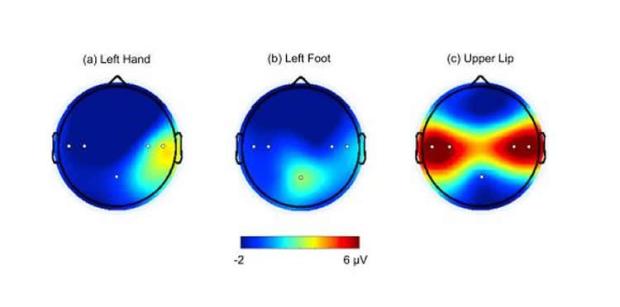
This colored “scalp map” (viewed from the top of a baby’s head with the nose forward), shows the average amount of brain activity measured by EEG sensors in response to touch to the baby’s body. The image shows that hand touch evokes activity on one side, foot touch evokes activity at the middle, and lip touch evokes very strong activity on both sides.  Image Source: UW Institute for Learning & Brain Sciences.

At 60 days old, the infant brain shows greater neurological activity associated with the lips than any other part of the body, a new study reveals.

Researchers report people with higher empathy process music with greater involvement in the brain’s reward system and areas of the brain associated with social information processing.

A new study reveals noradrenaline plays a vital role in early stages of perception. Researchers report later processing of visual information occurs in the cerebral cortex and is affected by noradrenaline to determine if an image will enter our stream of consciousness.

A new study reports a link between higher than average late life systolic blood pressure and higher number of tangles in Alzheimer’s disease.

Scientists have revealed the area of the brain that controls our voice box, allowing us to alter the pitch of our speech. The insight could pave the way for advancing neuroprosthetics to allow people who can’t speak, to express themselves in a naturalistic way

Researchers report brain areas involved in the articulation of language are also implicated in the perception of language.

A new neuroimaging study reveals every person has unique brain anatomy. The uniqueness is a result of a combination of genetic factors and life experiences.

A group of Japanese researchers has discovered that neural inflammation caused by our innate immune system plays an unexpectedly important role in stress-induced depression. This insight could potentially lead to the development of new antidepressants targeting innate immune molecules. The findings were published in the online edition of Neuron.

Contrary to popular belief, Adderall and other ADHD drugs do not improve cognition in healthy college students. Instead, they may impair cognitive function.

Finally this week, a new study reports when certain brain areas react more strongly to food rewards than financial rewards, children are more likely to overeat, even if they are not hungry or overweight.


Weekly Neuroscience Update

feet-619399_960_720.jpg

A new study reveals children who are habitually barefoot show significantly different motor skills between the ages of 6-10 than those who are habitually shod. Researchers report those who habitually barefoot have better balance and jumping skills.

New research has found the natural vibrations of cars make people sleepier, affecting concentration and alertness levels just 15 minutes after drivers get behind the wheel.

Scientists have discovered a “Big Bang” of Alzheimer’s disease – the precise point at which a healthy protein becomes toxic but has not yet formed deadly tangles in the brain.

A new study reports people living in areas with more sunlight have lower rates of OCD.

Neuroscientists at the University of California-Berkeley are developing a technique that could give us the ability to fool our brain into thinking that we’d experienced something that never happened by manipulating electrical activity in the brain.

Researchers report boys on the autism spectrum tend to have lower fractal dimension in the right side of the cerebellum than those without autism.

Distinct molecular mechanisms can generate the same features in different neurons, a team of scientists has discovered. Its findings, which appear in the journal Cell, enhance our understanding of brain cell development.

Finally this week, a new study reports a short burst of exercise can dramatically improve long-term retention of new motor skills.


Weekly Neuroscience Update

guitar-869217_960_720.jpgResearchers say those who can improvise are better musicians than those who have limited improvisational experience.

Melatonin is a hormone known to promote sleep, but its underlying mechanisms are unknown. Now, researchers have discovered how melatonin suppresses neurons in the brain that keeps you awake and alert. These findings could lead to new therapies for those who suffer from insomnia.

A new study shows how specific neurons can process sensory information about temperature and facilitate a change in behavior to adapt to the climate.

Researchers have identified electrical activity in the brain that is specific to the start of migraines. The new study reports spreading depolarization can be seen as a migraine begins, and an electrical current can be used to stop it in its tracks.

Adolescent drinking is associated with changes in the metabolite profile, a new study shows. 

Scientists are using big data and artificial intelligence to map neural networks in the brain. The new technology could help to better understand the progression of neurodegenerative diseases.

Sound and object motion can be used to change perceptions about body size, according to a new study.

Researchers report impairments in the neuroprotective communication between neural blood vessels, astrocytes and neurons may be an early factor in how high blood pressure may impair cognitive function.

A new study confirms a link between a number of autoimmune diseases and an increased risk of developing psychosis.

Autonomous Sensory Meridian Response (ASMR) – the relaxing ‘brain tingles’ experienced by some people in response to specific triggers, such as whispering, tapping and slow hand movements – may have benefits for both mental and physical health, according to new research.

Researchers have developed new neural implants that enable targeted delivery of drugs deep into brain structures.

A new study reports specific alterations in signaling circuits associated with memory can induce an abnormal response in neurons, which is linked to the aging process and cognitive decline.

Researchers say the combination of low muscle mass and strength in the context of high-fat mass, could be a predictor of cognitive function in older adults. 

Obstructive sleep apnoea (OSA) is associated with changes to the structure of the brain that are also seen in the early stages of dementia, according to a study published in the European Respiratory Journal.

Finally, this week, a new study reports a mother’s diet during pregnancy may have an effect on the composition of her child’s gut bacteria.
