Weekly Neuroscience Update

(A) Brain regions where spectra were measured (yellow box) (B) 1H MR spectrum in the hippocampus: Hippocampal taurine signal shown at 3.4 ppm (arrow). Black line: actual measured spectrum. Red line: LCModel fitting spectrum. Credit: Korea Basic Science Institute (KBSI)

For the first time, a research team in Korea has discovered there is a significant relationship between depression and the taurine concentration in the hippocampus, an area of the brain responsible for memory and learning functions. This discovery provides the opportunity to publicize the role and importance of taurine in future prevention, diagnosis, and treatment of depression.

A recent study reveals that individuals who experienced childhood adversity, such as neglect or abuse, faced higher chances of COVID-19 hospitalization or mortality in adulthood.

Time spent watching television or playing computer games has measurable and long-term effects on children’s brain function, according to a review of 23 years of neuroimaging research, which—while showing negative impacts—also demonstrates some positive effects.

A first-of-its-kind study has identified overactive inflammation and loss of critical protection mechanisms in the brain as potential contributors to suicide risk.

An international team of scientists has uncovered the vital role of microglia, the immune cells in the brain that acts as its dedicated defense team, in early human brain development. By incorporating microglia into lab-grown brain organoids, scientists were able mimic the complex environment within the developing human brain to understand how microglia influence brain cell growth and development.

A novel study finds a link between childhood physical fitness and cerebellar grey matter volume in adolescents.

Mayo Clinic researchers have identified new scoring criteria allowing for the detection of treatable forms of rapidly progressive dementia (RPD) with reasonably high confidence during a patient’s first clinical visit. This scoring criteria may allow physicians to substantially reduce the time it takes to begin treatment. The findings are published in the Annals of Neurology.

A new sudy has identified the top three genes responsible for traumatic brain injury complications.

Researchers have made a discovery that sheds light on how our brain cells manage to efficiently replace older proteins. This process is crucial for maintaining effective neural communication and ensuring optimal cognitive function.

A pair of studies has uncovered novel cellular mechanisms that are involved in two types of genetic amyotrophic lateral sclerosis, or ALS.

In a study published in the Journal of Neuroscience Research, psychological assessments indicated that people who regularly use cannabis, or marijuana, tend to have a greater understanding of the emotions of others. Brain imaging tests also revealed that cannabis users’ anterior cingulate—a region generally affected by cannabis use and related to empathy—had stronger connectivity with brain regions related to sensing the emotional states of others within one’s own body.

Finally this week, researchers have unearthed the genetic connection between the heart and brain related to fainting spells.

Weekly Neuroscience Update

Credit: Psychological Bulletin (2023)

A new study has provided the first clear picture of where language processes are located in the brain. The findings may be useful in clinical trials involving language recovery after brain injury.

Researchers have developed a model for studying one type of familial epilepsy, opening the door to understanding—and eventually targeting—the mechanisms that lead to the disorder and its associated fatalities.

A new study published in Nature Medicine sheds light on how biological sex influences brain function and its impact on the risk of various brain-related diseases.

A breakthrough technique developed by University of Oxford researchers could one day provide tailored repairs for those who suffer brain injuries. The researchers have demonstrated for the first time that neural cells can be 3D-printed to mimic the architecture of the cerebral cortex.

A research team has identified new potential treatments for children with rare genetic conditions of blood vessels, which cause severe, symptoms like seizures and impaired development.

Scientists have discovered new insights into how our brain stores episodic memories—a type of long-term, conscious memory of a previous experience—that could be critical to the development of new neuroprosthetic devices to help patients with memory problems, like Alzheimer’s disease and dementia.

A global blood test for concussion could be a step closer after a new study discovered specific proteins or biomarkers that can help diagnose concussions relatively quickly and accurately.

The brain circuitry that is disrupted in Alzheimer’s disease appears to influence memory through a type of brain wave known as theta oscillation, a team led by UT Southwestern Medical Center researchers report. The findings, published in Nature Communications, could help researchers design and evaluate new treatments for Alzheimer’s, a condition that affects millions of people around the globe and has no cure.

Finally this week, a new study reveals the role of vascular system cells—pericytes—in the formation of long-term memories of life events—memories that are lost in diseases such as Alzheimer’s disease. 

Weekly Neuroscience Update

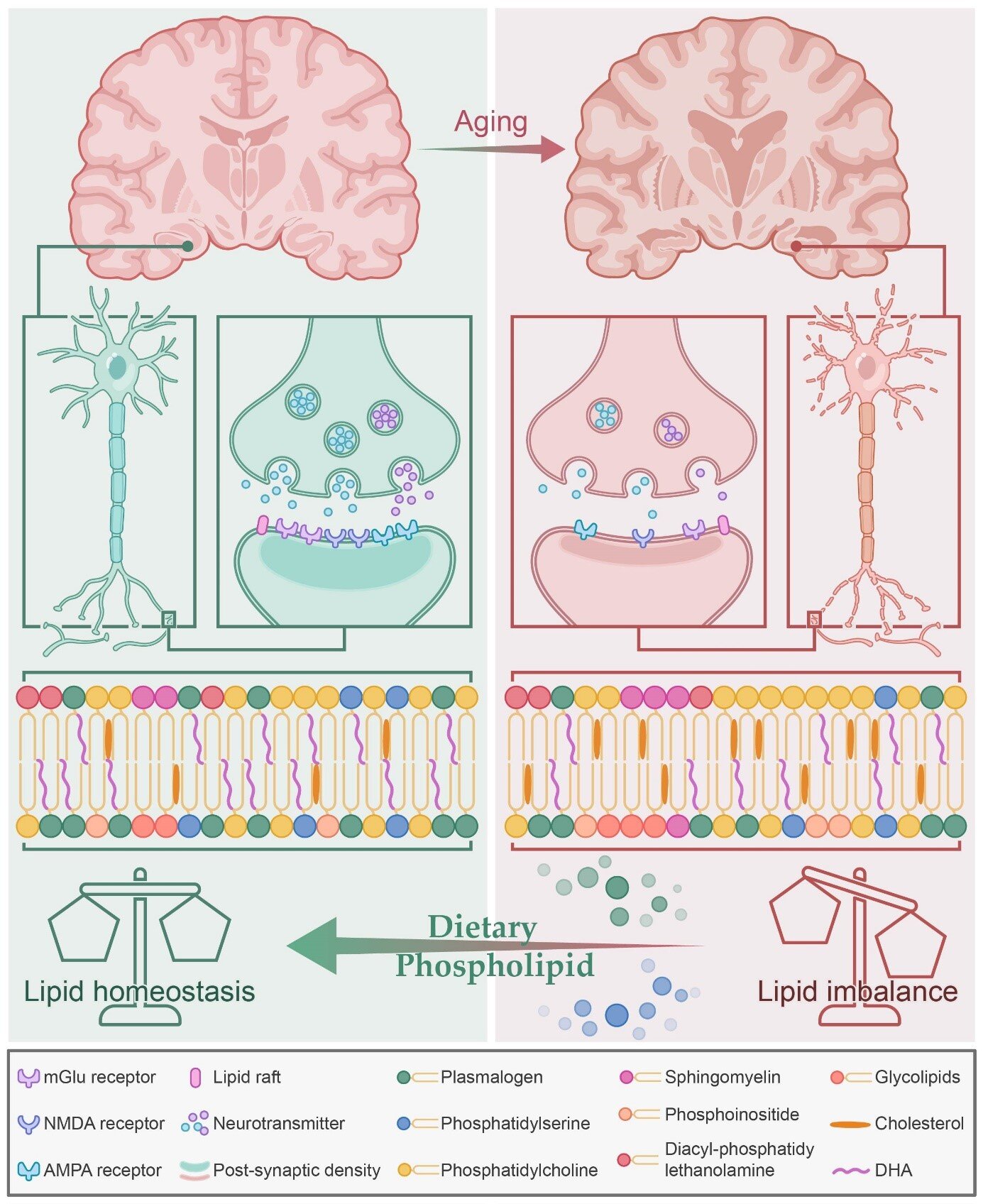
Dietary phospholipid intervention could prevent brain aging by maintaining lipid homeostasis and enhancing synaptic plasticity. Credit: Wei Xiong et al.

A new review highlights the significant role of dietary lipids in preventing brain aging and cognitive decline. As the global burden of aging-related brain diseases, particularly dementia, continues to rise, this research offers promising insights into potential nutritional interventions that could improve brain function during aging.

Cerebrospinal fluid (CSF) leaks may be one of the mechanisms that link traumatic brain injury (TBI) with dementia, according to a new hypothesis.

Short-term exposure to air pollution may be linked to an increased risk of stroke, according to a meta-analysis published in Neurology. Short-term exposure was defined as occurring within five days of the stroke.

People with a higher cumulative estrogen exposure throughout their life may have a lower risk of cerebral small vessel disease, according to a new study.

New research is painting a clearer picture of the early signs of multiple sclerosis (MS), showing that people are nearly twice as likely to experience mental illness in the years leading up to the onset of the disease.

Increased TV/DVD screen time at 1 and 2 years of age negatively affects developmental performance at 2 and 3 years of age, according to a study published in JAMA Pediatrics.

Whether you are an early bird or a night owl, your internal clock plays a critical role in maximizing your mental performance, according to a recent study. This effect is so strong that it can significantly impact academic performance for adolescent students and the results of brain health assessments for older adults.

Researchers are using ultra-high field 7 Tesla MRI to provide a better understanding of how sleep is regulated.

A new study suggests a common brain network exists among people with substance use disorder. By evaluating data from across more than 144 studies of addiction, the team found abnormalities across substance use disorders mapped to a common brain network across substances and lesion locations, suggesting a potential brain circuit to target with neurostimulation therapies.

Finally this week, people differ significantly in their memory performance and researchers have now discovered that certain brain signals are related to these differences.

Weekly Neuroscience Update

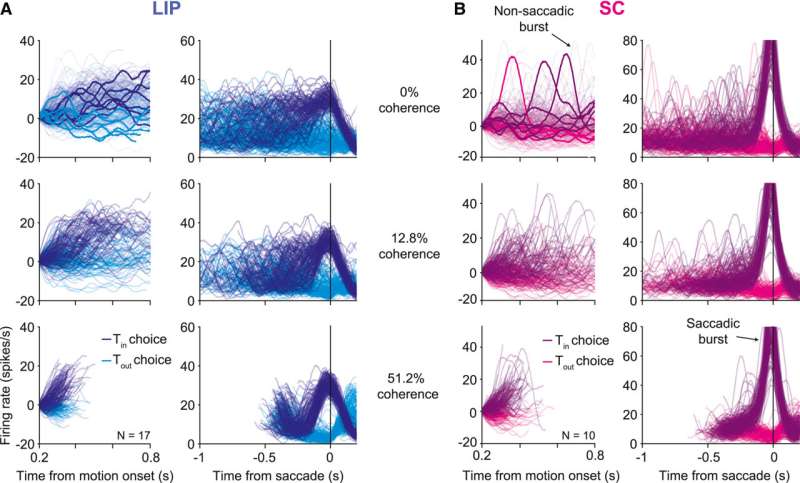
Single-trial dynamics in LIP and SC are different. (Neuron, 2023)

A new paper, published in Neuron, highlights the role of the superior colliculus (SC), a structure in the midbrain, in terminating decisions.

Degeneration of dopaminergic neurons is widely accepted as the first event that leads to Parkinson’s, but a new study suggests that a dysfunction in the neuron’s synapses—the tiny gap across which a neuron can send an impulse to another neuron—leads to deficits in dopamine and precedes the neurodegeneration.

Depression, a challenging condition to diagnose early, may now be detected more promptly using a simple 1-minute Electroencephalogram (EEG) test at home.

Scientists have confirmed that human brains are naturally wired to perform advanced calculations, much like a high-powered computer, to make sense of the world through a process known as Bayesian inference.

New research shows how repeated traumatic brain injury contributes to Alzheimer’s disease.

Racial disparities can be seen in dementia severity, functional impairment, and neuropsychiatric symptoms among patients with frontotemporal dementia (FTD), according to a study recently published in JAMA Neurology.

A new study identifies a potential new approach to PTSD treatment.

Any head injury—even a mild one—raises a person’s risk of later having an ischemic stroke. Having multiple injuries increases that risk, even more so than the severity of a single traumatic brain injury, researchers have found.

New research finds that cerebrospinal fluid net flow is markedly decreased in Huntington’s disease, with the decrease being greater in the later stages of the disease.

The targeted use of ultrasound technology can bring about significant changes in brain function that could pave the way towards treatment of conditions such as depression, addiction, or anxiety, a new study suggests.

Finally this week, new research finds that antidepressants may actually reduce negative memories in individuals suffering from depression while improving overall memory function.

Weekly Neuroscience Update

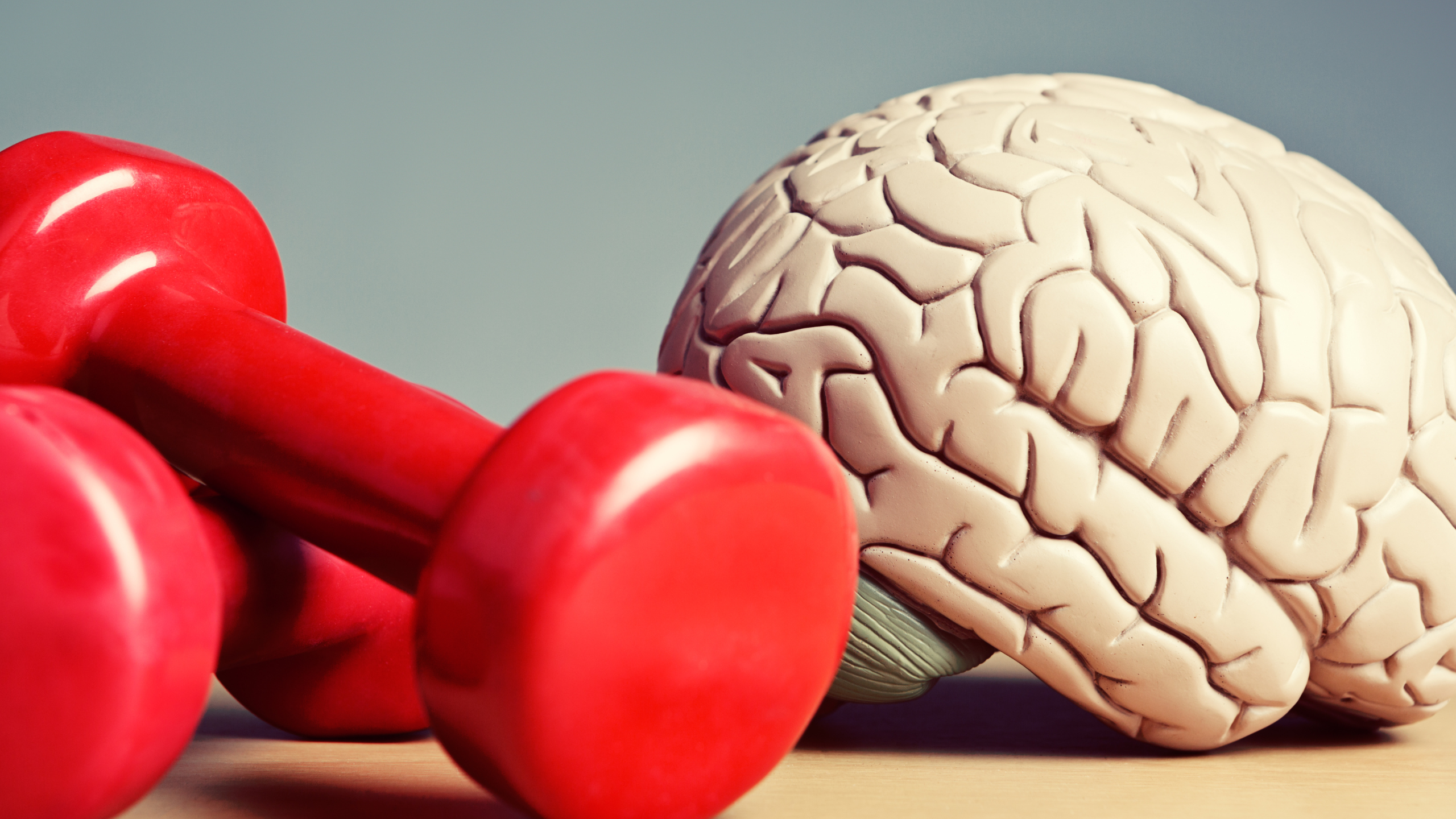
Exercise can improve your cognitive and mental health — but not all forms and intensities of exercise affect the brain equally. The effects of exercise are much more nuanced, as specific intensities of exercise over a long period of time are associated with different aspects of memory and mental health, according to a new study.

A research team has shown for the first time that non-invasive stimulation of the vagus nerve at the ear can strengthen the communication between stomach and brain within minutes.

A mutation in a newly discovered small protein is connected to a significant increase in the risk for Alzheimer’s disease, expanding the known gene targets for the disease and presenting a new potential avenue for treatment, according to a new study.

A new report highlights the advances and challenges in prevention, clinical care, and research in traumatic brain injury, a leading cause of injury-related death and disability worldwide.

Neurons in an area of the brain responsible for memory (known as the entorhinal cortex) are significantly larger in SuperAgers compared to cognitively average peers, individuals with early-stage Alzheimer’s disease, and even individuals 20 to 30 years younger than SuperAgers — who are aged 80 years and older, reports a new study.

Children who were infected with COVID-19 show a substantially higher risk of developing type 1 diabetes (T1D), according to new research.

Researchers have discovered a biological mechanism that increases the strength with which fear memories are stored in the brain. The study provides new knowledge on the mechanisms behind anxiety-related disorders, and identifies shared mechanisms behind anxiety and alcohol dependence.

Finally this week, a new study demonstrates how an AI algorithm can estimate biological age with high accuracy based on brain scan images.

Weekly Neuroscience Update

Credit: Science Advances (2022). DOI: 10.1126/sciadv.abo0171

New evidence that suggests the SARS-CoV-2 virus is able to enter the brain by using nose cells to make nanotube tunnels is published in the journal Science Advances.

Exploring the predictive properties of neuronal metabolism can contribute to our understanding of how humans learn and remember. This key finding from a consideration of molecular mechanisms of learning and memory conducted by scientists from Russia and the U.S. has been published in Neuroscience & Biobehavioral Reviews

Older adults who suffer from hypothyroidism are at increased risk of developing dementia. The risk is even higher in those who require thyroid hormone replacement therapy to treat their condition.

Researchers have shown that the computational imaging technique, known as “ghost imaging”, can be combined with human vision to reconstruct the image of objects hidden from view by analyzing how the brain processes barely visible reflections on a wall.

Scientists have discovered that an injury to one part of the brain changes the connections between nerve cells across the entire brain. 

Researchers have discovered the molecule in the brain responsible for associating good or bad feelings with a memory. Their discovery, published in Nature paves the way for a better understanding of why some people are more likely to retain negative emotions than positive ones—as can occur with anxiety, depression or post-traumatic stress disorder (PTSD).

New research has revealed some of the first detailed molecular clues associated with one of the leading causes of death and disability, a condition known as traumatic brain injury (TBI).

Pollution is widely known to be a risk to individual’s physical health, but can it have adverse effects on mental health as well? A study published in Developmental Psychology suggests that exposure to ozone can be a risk factor for depression in adolescents.

Finally this week, you’re fast asleep. But some regions of your brain tasked with hearing sound aren’t taking the night off, according to new research.

Weekly Neuroscience Update


Adobe Spark (81).jpg

Fathers given boosts of the hormone oxytocin show increased activity in brain regions associated with reward and empathy when viewing photos of their toddlers, a new study finds. The journal Hormones and Behavior published the results of the study, the first to look at the influence of both oxytocin and vasopressin – another hormone linked to social bonding – on brain function in human fathers.

A new study looks at the association between tiredness, genetics, environment and health.

A genetic ‘switch’ has been discovered by researchers at the University of Leicester which could help to prevent or delay the symptoms of Parkinson’s disease. In a paper published in the journal Cell Death and Differentiation, the team discovered that a gene called ATF4 plays a key role in Parkinson’s disease, acting as a ‘switch’ for genes that control mitochondrial metabolism for neuron health.

A new study supports olfactory testing as an early method to detect those at risk of develop dementia.

Researchers have experimentally confirmed the hypothesis, whereby comprehension of a word’s meaning involves not only the ‘classic’ language brain centres but also the cortical regions responsible for the control of body muscles, such as hand movements. The resulting brain representations are, therefore, distributed across a network of locations involving both areas specialised for language processing and those responsible for the control of the associated action.

Better quality sleep is linked to improved emotions and fewer stressors the next day, researchers report.

New research shows that patients with mild traumatic brain injury (mTBI), even without evidence of brain lesions, may exhibit changes in brain connectivity detectable at the time of the injury that can aid in diagnosis and predicting the effects on cognitive and behavioural performance at 6 months.

Finally this week, preschool aged children who took naps after learning new verbs better understood the word when tested 24 hours later, a new study reports.

Weekly Neuroscience Update

age-brain-related-changes-autism

Researchers at the University of Miami find that large-scale connectivity in autism changes with age.

Although scientists know that depression affects the brain, they don’t know why some people respond to treatment while others do not. Now a team of researchers has shown for the first time in a large cohort of patients that electroconvulsive therapy (ECT), sometimes referred to as shock treatment, change certain areas of the brain that play a role in how people feel, learn and respond to positive and negative environmental factors.

Research by biologists at the University of York has identified new mechanisms potentially driving progression of an aggressive form of dementia.

A new study shows that the act of remembering leads to the subtle forgetting of other memories.

When we look at a known word, our brain sees it like a picture, not a group of letters needing to be processed. That’s the finding from a Georgetown University Medical Center (GUMC) study published in the Journal of Neuroscience, which shows the brain learns words quickly by tuning neurons to respond to a complete word, not parts of it.

Scientists at the University of Bonn have discovered a new cause of temporal lobe epilepsy.

Brown fat tissue, the body’s “good fat,” communicates with the brain through sensory nerves, possibly sharing information that is important for fighting human obesity, such as how much fat we have and how much fat we’ve lost, according to research published in the Journal of Neuroscience.

Finally this week, people who have suffered serious head injuries show changes in brain structure resembling those seen in older people, according to a new study.


Weekly Neuroscience Update

Brain scans of meditators and non-meditators. Areas of the brain affected by aging (in red) are fewer and less widespread in people who meditate, bottom row, than in people who don’t meditate. Negative correlations between local gray matter and age. Displayed are maximum intensity projections superimposed onto the SPM standard glass brain (sagittal, coronal, axial). Shown, in red, are significant negative age-related correlations within controls (top) and meditators (bottom). Significance profiles are corrected for multiple comparisons via controlling the family-wise error (FWE) rate at p ≤ 0.05. Note the less extended clusters in meditators compared to controls. Credit: Frontiers in Psychology.

Brain scans of meditators and non-meditators. Areas of the brain affected by aging (in red) are fewer and less widespread in people who meditate, bottom row, than in people who don’t meditate. Negative correlations between local gray matter and age. Displayed are maximum intensity projections superimposed onto the SPM standard glass brain (sagittal, coronal, axial). Shown, in red, are significant negative age-related correlations within controls (top) and meditators (bottom). Significance profiles are corrected for multiple comparisons via controlling the family-wise error (FWE) rate at p ≤ 0.05. Note the less extended clusters in meditators compared to controls. Credit: Frontiers in Psychology.

New brain research findings suggest long-term meditation may lead to less age-related gray matter atrophy in the human brain.

A new study has revealed that many mental disorders share a common structure in the brain. Six conditions were examined and found to be connected by the loss of gray matter in three specific areas related to cognitive functions such as self-control.

A new paper argues that there is a widespread misunderstanding about the true nature of traumatic brain injury and how it causes chronic degenerative problems.

New research finds that there is not a single type of schizophrenia, as thought, but 8 different genetic diseases.

Scientists have discovered that babies of the age from 9 to 16 months remember the names of objects better if they had a short nap. And only after sleeping can they transfer learned names to similar new objects.

Cocaine addicted individuals may continue their habit despite unfavourable consequences like imprisonment or loss of relationships because their brain circuits responsible for predicting emotional loss are impaired, according to a study published in The Journal of Neuroscience.

Scientists have discovered how a ‘mini-brain’ in the spinal cord aids in balance.

UCLA neurophysicists have found that space-mapping neurons in the brain react differently to virtual reality than they do to real-world environments. Their findings could be significant for people who use virtual reality for gaming, military, commercial, scientific or other purposes.

New research has highlighted the structural improvements on the brain observed in bilingual people who immerse themselves in two languages.

Good sleep in young and middle-aged people helps boost memory up to 28 years later, a new review of the evidence finds.

For the first time, scientists have revealed a mechanism underlying the cellular degeneration of upper motor neurons, a small group of neurons in the brain recently shown to play a major role in ALS pathology.

Finally this week, we know that our existence depends on a bit of evolutionary genius aptly nicknamed “fight or flight.” But where in our brain does the alarm first go off, and what other parts of the brain are mobilized to express fear and remember to avoid danger in the future? New research sheds some light on this question.


Weekly Neuroscience Update

The human brain using colors and shapes to show neurological differences between two people. Credit Arthur Toga, University of California, Los Angeles via NIGMS.

The human brain using colors and shapes to show neurological differences between two people. Credit Arthur Toga, University of California, Los Angeles via NIGMS.

While many different combinations of genetic traits can cause autism, brains affected by autism share a pattern of ramped-up immune responses, an analysis of data from autopsied human brains reveals. The study, published online in the journal Nature Communications, included data from 72 autism and control brains.

Teenagers who have suffered a traumatic brain injury are twice as likely to drink alcohol or use drugs when compared with whose who have never experienced a similar blow or trauma to the head.

Activating the brain’s amygdala, an almond-shaped mass that processes emotions, can create an addictive, intense desire for sugary foods, a new study found. Rewards such as sweet, tasty food or even addictive drugs like alcohol or cocaine can be extremely attractive when this brain structure is triggered. And another study, led by researchers at University of California, San Diego School of Medicine, revealed that the brains of obese children literally light up differently when tasting sugar.

Scientists have discovered a link between sleep loss and cell injury. Results of a new study find sleep deprivation causes the damage to cells, especially in the liver, lung, and small intestine. Recovery sleep following deprivation heals the damage.

Neural circuits that activate when we daydream run in the opposite direction to how we process reality, a new study finds.

Yale researchers using a new brain imaging analysis method have confirmed that smoking cigarettes activates a dopamine-driven pleasure and satisfaction response differently in men compared to women.

Whether we’re paying attention to something we see can be discerned by monitoring the firings of specific groups of brain cells. Now, new work from Johns Hopkins shows that the same holds true for the sense of touch.

Serious, long-term stress can have dire consequences for your brain. That’s because the immune system and the brain are intimately related, say researchers at the Ruhr University Bochum, Germany.

In the current issue of Psychotherapy and Psychosomatics a new study identifies biological characteristics who may predict who is going to respond to psychotherapy.

Some high school football players exhibit measurable brain changes after a single season of play even in the absence of concussion, according to a study presented at the annual meeting of the Radiological Society of North America. Meanwhile, as debate increases about whether female lacrosse players should wear headgear, a new study reports measurements of the accelerations that stick blows deliver to the head. The study also measured the dampening effect of various kinds of headgear.

Quitting smoking sets off a series of changes in the brain that researchers say may better identify smokers who will start smoking again.

Everyday events are easy to forget, but unpleasant ones can remain engraved in the brain. A new study published in the Proceedings of the National Academy of Sciences identifies a neural mechanism through which unpleasant experiences are translated into signals that trigger fear memories by changing neural connections in a part of the brain called the amygdala. The findings show that a long-standing theory on how the brain forms memories, called Hebbian plasticity, is partially correct, but not as simple as was originally proposed.