Weekly Neuroscience Update

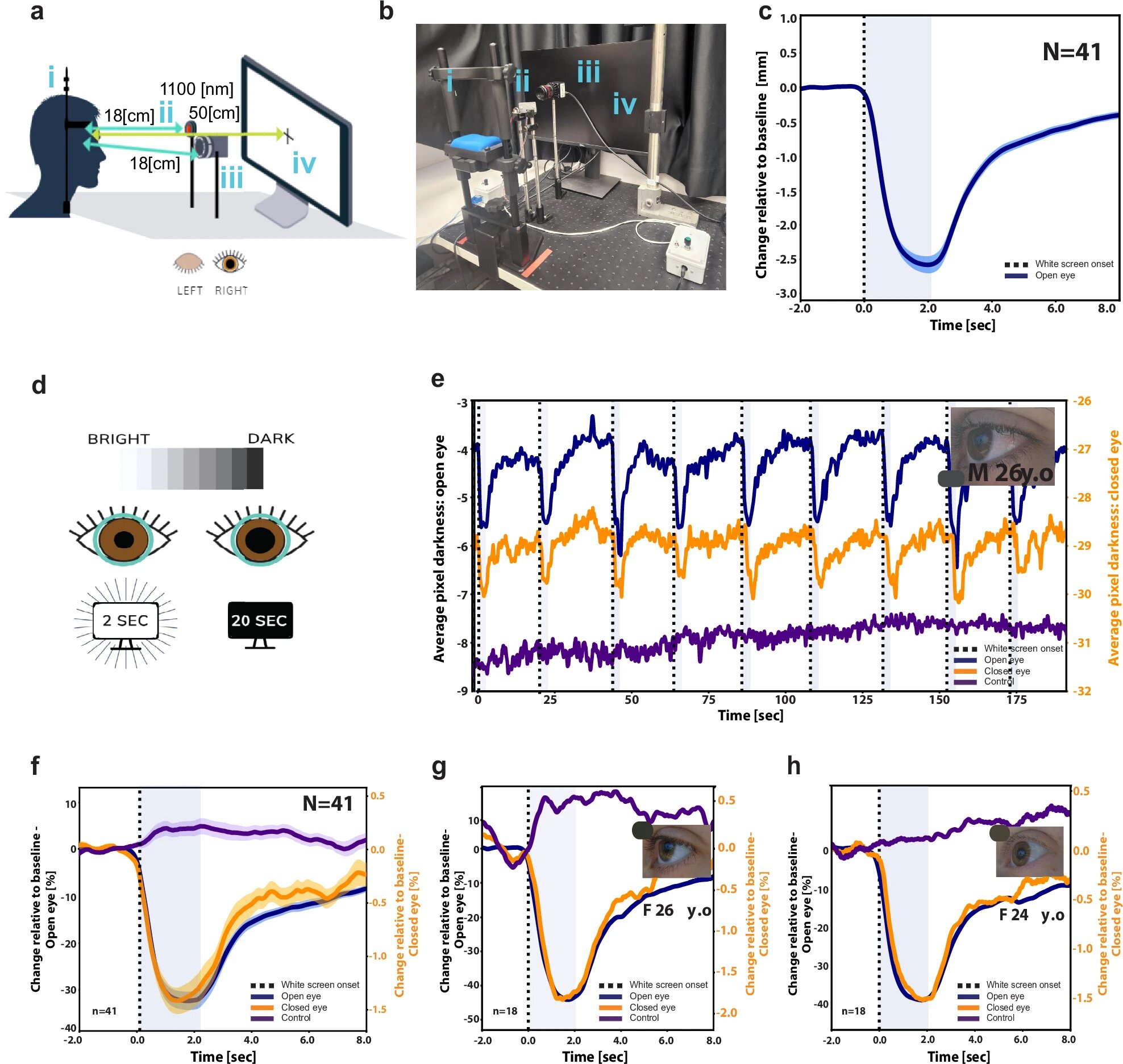
Pupillary light reflex (PLR) assessment in open-eye and closed-eye conditions. Credit: Communications Medicine (2024).

A new technological advancement now enables researchers to observe changes in pupil size and gaze direction behind closed eyelids for the first time, using non-contact infrared imaging. This capability is expected to aid in identifying wakefulness states during sleep, anesthesia, and intensive care by monitoring pupil size variations. It could also be instrumental in gauging sedation levels, detecting seizures and nightmares, and acknowledging pain or responsiveness following trauma or within intensive care settings.

Neuroscientists have uncovered serotonin’s role in resilience.

A recent study using artificial intelligence has yielded a new understanding of how the brain anticipates future occurrences and processes data. It was found that the brain’s inherent activity, even in the absence of external stimuli, is crucial to our cognitive and emotional processes.

New research shows that varied cognitive training, rather than repetitive tasks, helps older adults improve working memory.

Scientists have mapped how propofol, a widely used anesthetic, alters brain connectivity to induce unconsciousness. Using fMRI, they found that propofol disrupts connections in the thalamus, reducing complex information processing and limiting sensory integration.

Research on older individuals indicates that vision impairment may be responsible for one in five dementia cases.

A new technology that uses harmless light waves to measure activity in babies’ brains has provided the most complete picture to date of brain functions like hearing, vision and cognitive processing outside a conventional, restrictive brain scanner.

Heat waves can worsen abnormal excitability of the brain in people with epilepsy, finds a new small-scale patient study.

Scientists have developed an innovative approach to studying brain connections using functional magnetic resonance imaging (fMRI). Recently published in Cell Systemsthis work introduces a new way of understanding brain architecture through dynamic functional networks, challenging the traditional static approach.

New research identifies potential therapeutic target for amyotrophic lateral sclerosis (ALS).

A new study published in Nature Communications examines how the brain initiates spontaneous actions. In addition to demonstrating how spontaneous action emerges without environmental input, this research has implications for the origins of slow ramping of neural activity before movement onset—a commonly-observed but poorly understood phenomenon.

Researchers have published a novel study exploring the effects of delayed feedback on learning in individuals with moderate-to-severe traumatic brain injury (TBI).

A breakthrough in medical imaging is making it possible for researchers to observe brain activity during movement and pick up the early signs of disorders that affect brain-to-body coordination, such as Parkinson’s disease.

A new study investigated the origin of ataxia in the brain of patients with stroke and found a significant number of the stroke lesions in the patients were located outside the cerebellum.

Researchers have developed a noninvasive technique that could dramatically improve the way doctors monitor intracranial hypertension, a condition where increased pressure in the brain can lead to severe outcomes like strokes and hemorrhages.

Robotic ‘coaches’ aiding upper limb rehabilitation for stroke and brain injury survivors have been successfully trialed in Vienna, Austria.

Scientists have created a dynamic technique to monitor swift changes in brain activity, particularly those associated with cravings. This method differs from conventional neuroimaging by offering a continuous perspective on the variations in craving intensity. The research revealed that individuals with intense cravings tend to remain longer in brain states that intensify these cravings and do not activate the brain networks that could diminish them.

A recent study highlights the interaction between brain structure and social context, suggesting that some children are more vulnerable to social stressors than others.

With maps of the connections between neurons and artificial intelligence methods, researchers can now do what they never thought possible: predict the activity of individual neurons without making a single measurement in a living brain.

A review highlighting recent advances in genetically encoded fluorescent tools for labeling and selectively manipulating synapses has been published in Nature Reviews Neuroscience.

Researchers have investigated the correlations between outdoor nighttime light pollution and Alzheimer’s disease, finding that excessive light pollution may elevate the risk of Alzheimer’s, particularly in younger individuals.

Finally this week, brain waves can be manipulated while in rapid eye movement (REM) sleep, a sleep stage associated with memory and cognition, a new study from the University of Surrey finds. 
Weekly Neuroscience Update

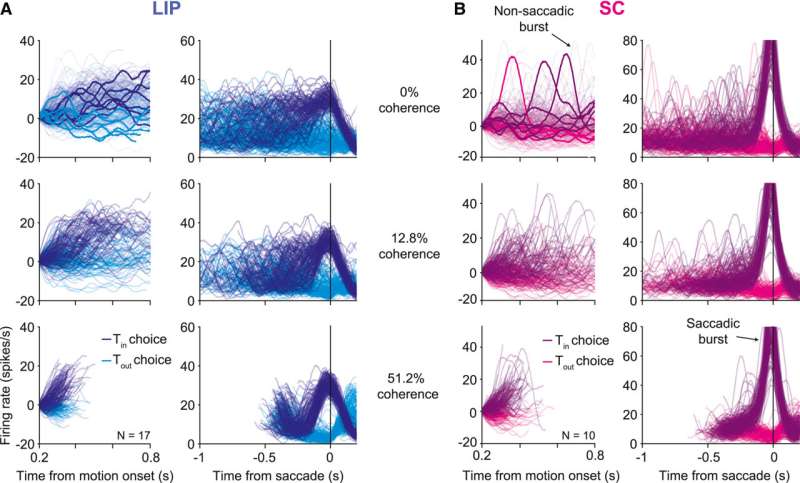
Single-trial dynamics in LIP and SC are different. (Neuron, 2023)

A new paper, published in Neuron, highlights the role of the superior colliculus (SC), a structure in the midbrain, in terminating decisions.

Degeneration of dopaminergic neurons is widely accepted as the first event that leads to Parkinson’s, but a new study suggests that a dysfunction in the neuron’s synapses—the tiny gap across which a neuron can send an impulse to another neuron—leads to deficits in dopamine and precedes the neurodegeneration.

Depression, a challenging condition to diagnose early, may now be detected more promptly using a simple 1-minute Electroencephalogram (EEG) test at home.

Scientists have confirmed that human brains are naturally wired to perform advanced calculations, much like a high-powered computer, to make sense of the world through a process known as Bayesian inference.

New research shows how repeated traumatic brain injury contributes to Alzheimer’s disease.

Racial disparities can be seen in dementia severity, functional impairment, and neuropsychiatric symptoms among patients with frontotemporal dementia (FTD), according to a study recently published in JAMA Neurology.

A new study identifies a potential new approach to PTSD treatment.

Any head injury—even a mild one—raises a person’s risk of later having an ischemic stroke. Having multiple injuries increases that risk, even more so than the severity of a single traumatic brain injury, researchers have found.

New research finds that cerebrospinal fluid net flow is markedly decreased in Huntington’s disease, with the decrease being greater in the later stages of the disease.

The targeted use of ultrasound technology can bring about significant changes in brain function that could pave the way towards treatment of conditions such as depression, addiction, or anxiety, a new study suggests.

Finally this week, new research finds that antidepressants may actually reduce negative memories in individuals suffering from depression while improving overall memory function.

Weekly Neuroscience Update

Credit: Science Advances (2022). DOI: 10.1126/sciadv.abo0171

New evidence that suggests the SARS-CoV-2 virus is able to enter the brain by using nose cells to make nanotube tunnels is published in the journal Science Advances.

Exploring the predictive properties of neuronal metabolism can contribute to our understanding of how humans learn and remember. This key finding from a consideration of molecular mechanisms of learning and memory conducted by scientists from Russia and the U.S. has been published in Neuroscience & Biobehavioral Reviews

Older adults who suffer from hypothyroidism are at increased risk of developing dementia. The risk is even higher in those who require thyroid hormone replacement therapy to treat their condition.

Researchers have shown that the computational imaging technique, known as “ghost imaging”, can be combined with human vision to reconstruct the image of objects hidden from view by analyzing how the brain processes barely visible reflections on a wall.

Scientists have discovered that an injury to one part of the brain changes the connections between nerve cells across the entire brain. 

Researchers have discovered the molecule in the brain responsible for associating good or bad feelings with a memory. Their discovery, published in Nature paves the way for a better understanding of why some people are more likely to retain negative emotions than positive ones—as can occur with anxiety, depression or post-traumatic stress disorder (PTSD).

New research has revealed some of the first detailed molecular clues associated with one of the leading causes of death and disability, a condition known as traumatic brain injury (TBI).

Pollution is widely known to be a risk to individual’s physical health, but can it have adverse effects on mental health as well? A study published in Developmental Psychology suggests that exposure to ozone can be a risk factor for depression in adolescents.

Finally this week, you’re fast asleep. But some regions of your brain tasked with hearing sound aren’t taking the night off, according to new research.

Weekly Neuroscience Update

The return of consciousness after traumatic brain injury (TBI) remains something of a mystery for scientists and is not easy to predict. A series of recently published studies have found that by using technologies to monitor brain functions after TBI, scientists may be able to better predict who will “wake up” after TBI and what brain circuits to target to potentially treat disorders of consciousness.

According to a new report, both genetics and environmental factors contribute to socioeconomic status’ impact in an interplay with effects that spans several areas of the brain.

An immersive virtual-reality anger control training program can reduce the level of anger provoked, according to a new study published in the peer-reviewed journal Cyberpsychology, Behavior, and Social Networking. 

A new study examines the influence of statins on emotional bias, a marker for risk of depression.

Researchers at Karolinska Institutet in Sweden have studied how the screen habits of U.S. children correlate with how their cognitive abilities develop over time. They found that the children who spent an above-average time playing video games increased their intelligence more than the average, while TV watching or social media had neither a positive nor a negative effect.

Finally this week, a new study reveals the mechanisms behind repetitive transcranial magnetic stimulation’s effect on the brain in the treatment of depression.

Weekly Neuroscience Update

The number of axons estimated to interconnect the 360 cortical parcels of the HCP-MMP1.0 atlas. Credit: The researchers

A new study reveals axon density is lower than previously believed between distant regions of the brain.

In a study published in the journal Cell Reports, an international team of investigators used biomarkers, statistical modeling, and other techniques to develop tools for measuring the biological ages of various organ systems. Based on their findings, the researchers report that there are multiple “clocks” within the body that vary widely based on factors including genetics and lifestyle in each individual.

Researchers have identified a new pathway in the brain that plays an important role in our response to fear.

Researchers have now demonstrated that the brain waves during periods of deep sleep in a specific area of the brain can be used to determine the extent of an individual’s propensity for risk during their everyday life.

A study at Boston Children’s Hospital explains for the first time why COVID-19 causes severe inflammation in some people, leading to acute respiratory distress and multi-organ damage. 

A team of researchers has found a link between the use of antibiotics by middle-aged women and cognitive decline later in life. The group has published a paper describing their work on the open-access site PLOS ONE.

Women who experienced childhood trauma had an increased risk of developing multiple sclerosis later in life. The evidence suggests childhood abuse and trauma can alter the immune system and increase the risk of developing autoimmune diseases.

A study has found no increased risk of developing brain tumors regardless of whether a person was a frequent cell phone user or if they had never used a cell phone before.

The consolidation of learning that occurs during sleep is a result of the learning process and not merely because certain brain regions get used a lot during learning. This finding is published in The Journal of Neuroscience and resolves a long-standing debate among sleep researchers.

People who grew up in rural or suburban areas have better spatial navigation skills than those raised in cities, particularly cities with grid-pattern streets, finds a new study.

The return of consciousness after traumatic brain injury (TBI) remains something of a mystery for scientists and is not easy to predict. A series of recently published studies have found that by using technologies to monitor brain functions after TBI, scientists may be able to better predict who will “wake up” after TBI and what brain circuits to target to potentially treat disorders of consciousness.

Finally this week, researchers have established for the first time a link between depressive disorders and mechanical changes in blood cells.