Weekly Neuroscience Update

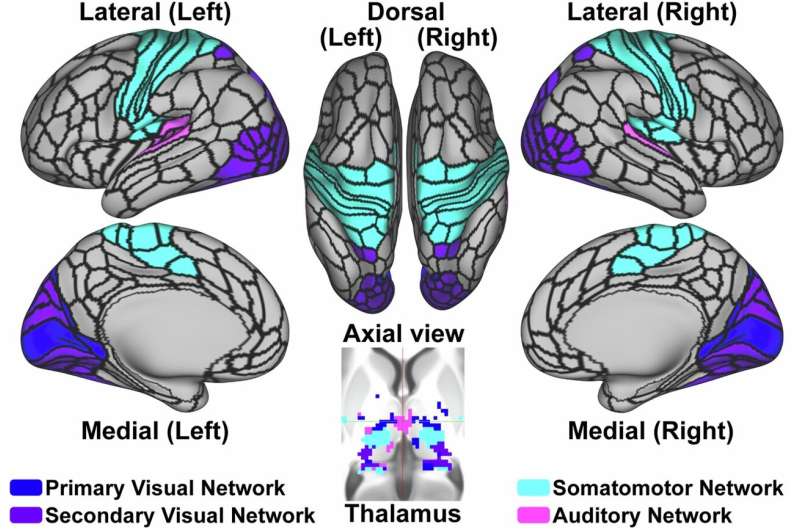
The four sensory networks of the brain network partition. The partition comprises four sensory networks, with the somatomotor network encompassing the somatosensory cortex. The thalamus contains parcels of each sensory network. Credit: Molecular Psychiatry (2024).

Researchers have uncovered a potential new biomarker for psychosis diagnosis.

A new approach to analyzing brain scans could help researchers better understand psychiatric illness using much smaller groups of patients than previously thought necessary, potentially accelerating the development of more precise mental health treatments.

A new study reveals how specific brain cells called interneurons can act as our in-built traffic controllers. The findings are published in the journal PLOS Biology.

Younger and middle-aged patients seem to be disproportionately affected by neurologic manifestations of post-acute sequelae of severe acute respiratory syndrome coronavirus 2 infection (Neuro-PASC), according to a study published in the Annals of Neurology.

Investigators have defined new biologic and clinical biomarkers for better identifying patients with different stages of Parkinson’s disease and Lewy body dementia.

Researchers have developed the most detailed 3D computational models of key brain regions, including the hippocampus and sensory cortices, to better understand their roles in memory formation and connectivity.

Healing the gut may be the key to improving long-term recovery in stroke patients, scientists at Texas A&M University have found.

New research provides critical insights into the role of sleep in motor learning for individuals recovering from traumatic brain injury (TBI). The study sheds light on how sleep, specifically a short nap, influences brain activity associated with motor skill improvement, with implications for optimizing rehabilitation strategies.

A recent study of high school football players found that concussions affect an often-overlooked but important brain signal.

Researchers have uncovered that stress changes how our brain encodes and retrieves aversive memories, and discovered a promising new way to restore appropriate memory specificity in people with post-traumatic stress disorder (PTSD).

Cognitive neuroscientists at Trinity College Dublin have published new research describing a brand new approach to making habit change achievable and lasting.

A new study uncovers constant communication between the human brain’s social cognitive network, responsible for understanding others’ thoughts, and the amygdala, known for processing fear and emotions. High-resolution brain scans revealed that this connection helps the brain integrate emotional importance into social interactions. This insight could lead to non-invasive treatments like transcranial magnetic stimulation (TMS) for anxiety and depression by targeting these regions. The findings highlight how evolutionary brain expansion enhances social understanding while linking it to ancient emotional processing centers.

Neuroscientists have demonstrated that dopamine and serotonin work in opposition to shape learning.

Researchers have identified a novel role for the brain’s ‘locus coeruleus’ in sleep and its disruptions. This brain region facilitates the transition between NREM and REM sleep states while maintaining an unconscious vigilance toward the external world. Stress disrupts its functions and negatively impacts on sleep quality.

A future treatment for Alzheimer disease may involve a nasal spray. 

A new method to profile gene activity in the living human brain has been developed by researchers at FutureNeuro, the Research Ireland Center for Translational Brain Science and RCSI University of Medicine and Health Sciences, in collaboration with international partners. This innovative approach, published in JCI Insight, opens new avenues for understanding and treating neurological conditions such as epilepsy.

A study led by the University of Glasgow has revealed differences in the brains of pediatric and adult patients that might explain the sometimes catastrophic outcomes seen in children following a traumatic brain injury.

Finally this week, new research has examined the relationship of emotion regulation to real-world responses to stress to better understand stress-related increases in suicide risk in depression.

Weekly Neuroscience Update

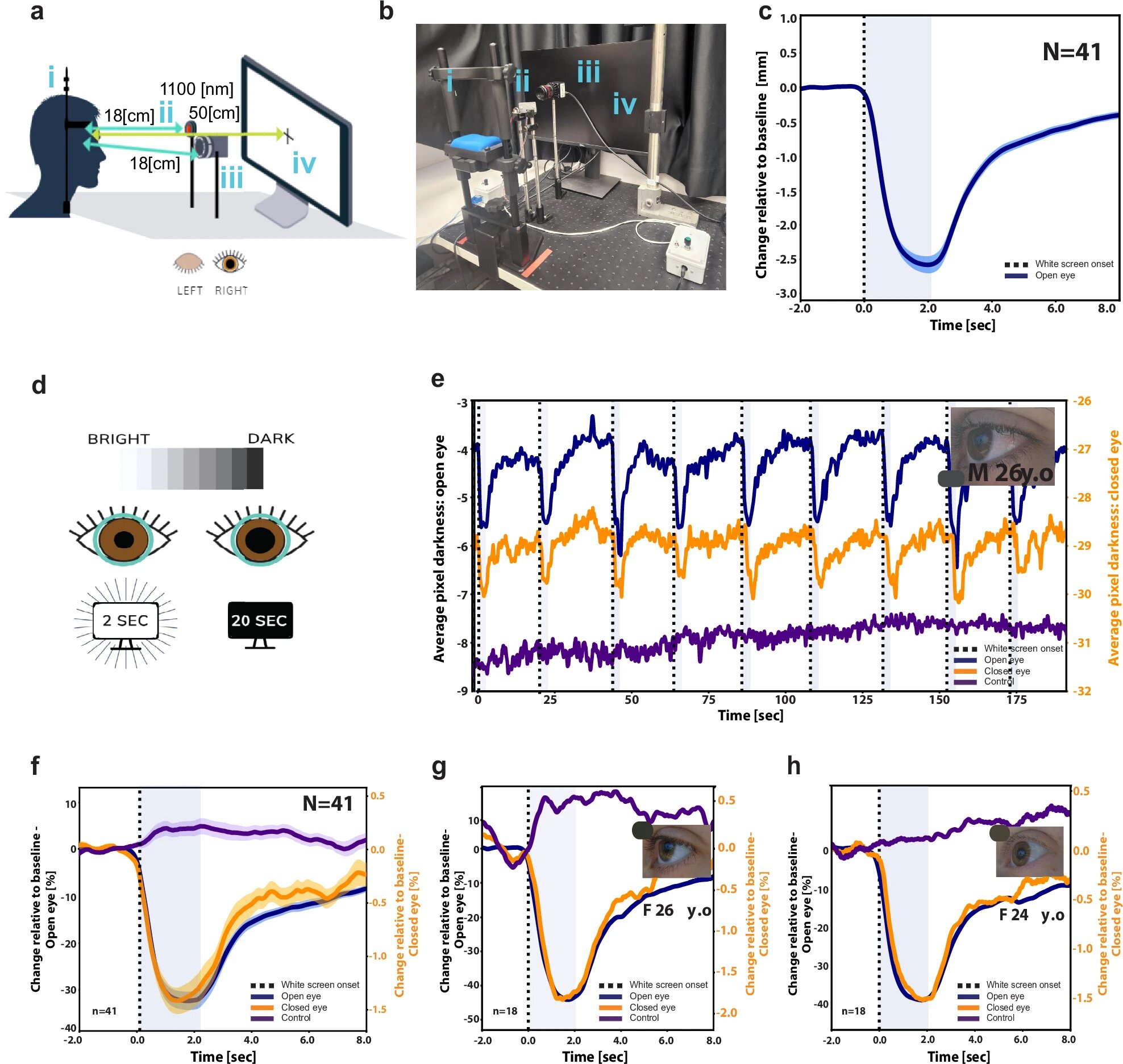
Pupillary light reflex (PLR) assessment in open-eye and closed-eye conditions. Credit: Communications Medicine (2024).

A new technological advancement now enables researchers to observe changes in pupil size and gaze direction behind closed eyelids for the first time, using non-contact infrared imaging. This capability is expected to aid in identifying wakefulness states during sleep, anesthesia, and intensive care by monitoring pupil size variations. It could also be instrumental in gauging sedation levels, detecting seizures and nightmares, and acknowledging pain or responsiveness following trauma or within intensive care settings.

Neuroscientists have uncovered serotonin’s role in resilience.

A recent study using artificial intelligence has yielded a new understanding of how the brain anticipates future occurrences and processes data. It was found that the brain’s inherent activity, even in the absence of external stimuli, is crucial to our cognitive and emotional processes.

New research shows that varied cognitive training, rather than repetitive tasks, helps older adults improve working memory.

Scientists have mapped how propofol, a widely used anesthetic, alters brain connectivity to induce unconsciousness. Using fMRI, they found that propofol disrupts connections in the thalamus, reducing complex information processing and limiting sensory integration.

Research on older individuals indicates that vision impairment may be responsible for one in five dementia cases.

A new technology that uses harmless light waves to measure activity in babies’ brains has provided the most complete picture to date of brain functions like hearing, vision and cognitive processing outside a conventional, restrictive brain scanner.

Heat waves can worsen abnormal excitability of the brain in people with epilepsy, finds a new small-scale patient study.

Scientists have developed an innovative approach to studying brain connections using functional magnetic resonance imaging (fMRI). Recently published in Cell Systemsthis work introduces a new way of understanding brain architecture through dynamic functional networks, challenging the traditional static approach.

New research identifies potential therapeutic target for amyotrophic lateral sclerosis (ALS).

A new study published in Nature Communications examines how the brain initiates spontaneous actions. In addition to demonstrating how spontaneous action emerges without environmental input, this research has implications for the origins of slow ramping of neural activity before movement onset—a commonly-observed but poorly understood phenomenon.

Researchers have published a novel study exploring the effects of delayed feedback on learning in individuals with moderate-to-severe traumatic brain injury (TBI).

A breakthrough in medical imaging is making it possible for researchers to observe brain activity during movement and pick up the early signs of disorders that affect brain-to-body coordination, such as Parkinson’s disease.

A new study investigated the origin of ataxia in the brain of patients with stroke and found a significant number of the stroke lesions in the patients were located outside the cerebellum.

Researchers have developed a noninvasive technique that could dramatically improve the way doctors monitor intracranial hypertension, a condition where increased pressure in the brain can lead to severe outcomes like strokes and hemorrhages.

Robotic ‘coaches’ aiding upper limb rehabilitation for stroke and brain injury survivors have been successfully trialed in Vienna, Austria.

Scientists have created a dynamic technique to monitor swift changes in brain activity, particularly those associated with cravings. This method differs from conventional neuroimaging by offering a continuous perspective on the variations in craving intensity. The research revealed that individuals with intense cravings tend to remain longer in brain states that intensify these cravings and do not activate the brain networks that could diminish them.

A recent study highlights the interaction between brain structure and social context, suggesting that some children are more vulnerable to social stressors than others.

With maps of the connections between neurons and artificial intelligence methods, researchers can now do what they never thought possible: predict the activity of individual neurons without making a single measurement in a living brain.

A review highlighting recent advances in genetically encoded fluorescent tools for labeling and selectively manipulating synapses has been published in Nature Reviews Neuroscience.

Researchers have investigated the correlations between outdoor nighttime light pollution and Alzheimer’s disease, finding that excessive light pollution may elevate the risk of Alzheimer’s, particularly in younger individuals.

Finally this week, brain waves can be manipulated while in rapid eye movement (REM) sleep, a sleep stage associated with memory and cognition, a new study from the University of Surrey finds. 

Decoding Social Decisions: The Role of Dopamine and Serotonin in Human Interaction

Neuroscience has always faced the monumental task of understanding the complexities of the human brain. A recent study has made significant progress in unraveling these complexities, focusing on the chemical neuromodulators dopamine and serotonin, and their roles in decision-making during social interactions.

The Study

The study involved Parkinson’s disease patients who were awake during brain surgery. These patients participated in the “ultimatum game,” a scenario that tests human decision-making in the face of varying monetary offers from both computers and humans. The findings revealed a fascinating insight: people are more inclined to accept unfair offers from computers than from human counterparts. This suggests a unique aspect of human social behavior, closely linked to the interaction between dopamine and serotonin in the brain.

Dopamine and Serotonin: The Dynamic Duo

Researchers found that dopamine levels fluctuate based on the comparison of current offers to previous ones, acting as a continuous tracking system. Meanwhile, serotonin focuses on the current offer’s value. This interaction becomes particularly pronounced in social settings, where the concept of fairness influences dopamine levels, indicating a higher value placed on human interactions over those with computers.

Technological Advancements

The use of advanced carbon-fiber electrodes allowed researchers to measure multiple neurotransmitters simultaneously, enabling the differentiation between dopamine and serotonin dynamics. This provides a clearer picture of how these chemicals influence decision-making in social contexts.

Implications of the Research

  • Parkinson’s Disease: For patients with Parkinson’s disease, this study opens new pathways to understanding the disease’s progression and its impact on social behavior. The interaction between dopamine and serotonin, especially in the context of Parkinson’s, could lead to better treatment options.
  • Psychiatry: This research has broader implications for the field of psychiatry and the treatment of psychiatric conditions. By adding precision and quantification to our understanding of neurotransmitter dynamics, the study paves the way for developing more effective treatments.

Weekly Neuroscience Update


A new study reveals a new role for serotonin in the development of the human neocortex.

When the brain forms a memory of a new experience, neurons called engram cells encode the details of the memory and are later reactivated whenever we recall it. A new study reveals that this process is controlled by large-scale remodeling of cells’ chromatin.

Increasing time spent sleeping immediately following a traumatic event can help to significantly reduce the effects of trauma.

Brain cell dysfunction in low oxygen is, surprisingly, caused by the very same responder system that is intended to be protective, according to a new published study.

A new study reveals a new role for serotonin in the development of the human neocortex.

DNA variation in a gene called ROBO1 is associated with early anatomical differences in a brain region that plays a key role in quantity representation, potentially explaining how genetic variability might shape mathematical performance in children, according to new research.

Early childhood trauma has an impact on glucose metabolism and blood composition, which are passed on to the next generation.

Brain cell dysfunction in low oxygen is, surprisingly, caused by the very same responder system that is intended to be protective, according to a new published study.


Weekly Neuroscience Update

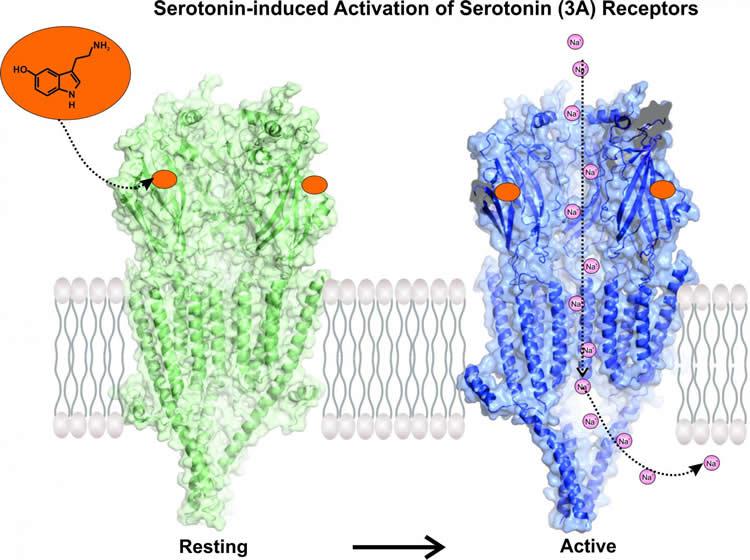
serotonin-receptor-activation-neuroscieneews.jpg

Serotonin-induced activation of serotonin (3A) receptors. NeuroscienceNews.com image is credited to Case Western Reserve University School of Medicine.

Using cryo-electron microscopy, researchers have successfully imaged serotonin attaching to the receptor and twisting open the channel, allowing sodium molecules to travel through.

Researchers report adults who sleep six hours per night, as opposed to the recommended eight, have higher chances of waking up dehydrated.

A new study reports some genetic factors that increase obesity work to lower metabolic risk. 14 genetic variations, researchers report, are linked to higher BMI but lower diabetes risk.

A new method for studying the mircobiome has allowed researchers to identify a connection between metabolism in gut bacteria and the development of diabetes.

Researchers have discovered how the nature of T cells help protect the brain from viruses. The findings shed light on the role the immune system plays in a number of neurodegenerative disorders.

A new study has identified a brain network that may control the diversion of attention to focus on potential threats. Dopamine, they report, is key to the process.

As the adage goes “neurons that fire together, wire together,” but a new paper published today in Neuron demonstrates that, in addition to response similarity, projection target also constrains local connectivity.

A new study reveals common brain activity patterns associated with depressive moods.

Engaging in regular exercise can help preserve the motor and non-motor function of Parkinson’s disease patients, most likely as a result of an increased release of dopamine in the brain, a small study suggests.

Researchers have identified abnormalities in specific neural networks that may be a biomarker to predict the risk of developing schizophrenia.

Researchers find evidence of cognitive issues and miRNA biomarkers, indicating brain injuries from concussions or head-to-head contact, in college football players. The findings indicated lasting damage caused by sports-related concussions occur earlier than expected.


Weekly Neuroscience Update

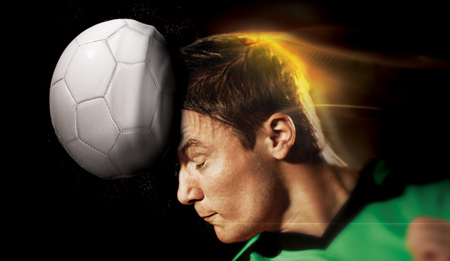
football-header.jpg

Heading a football can significantly affect a player’s brain function and memory for 24 hours, a study has found.

Researchers have successfully transplanted embryonic neurons into damaged neural networks, a new study reports.

Scientists have identified for the first time the region in the brain responsible for the “placebo effect” in pain relief.

Results from a new clinical study conducted suggest that curtailing sleep alters the abundance of bacterial gut species that have previously been linked to compromised human metabolic health.

A new imaging technique that creates 3-D video of serotonin transport could aid antidepressant development.

Researchers have identified the cause of chronic, and currently untreatable, pain in those with amputations and severe nerve damage, as well as a potential treatment which relies on engineering instead of drugs.

A new study could explain why the ‘one size fits all’ approach to treating depression has been ineffective.

Using optogenetics to activate dopamine receptors in the ventral tegmental area could help people regain consciousness following general anesthesia, researchers report.

We all know that as we age, our skin loses its firmness and elasticity. However, researchers have now discovered our brains may also lose its elasticity as we age.

Researchers have identified a common culprit that may cause damage in stoke, brain injury and neurodegenerative disease.

Finally this week, A new study provides the first empirical evidence that self-serving lies gradually escalate and reveals how this happens in our brains.


Weekly Neuroscience Update


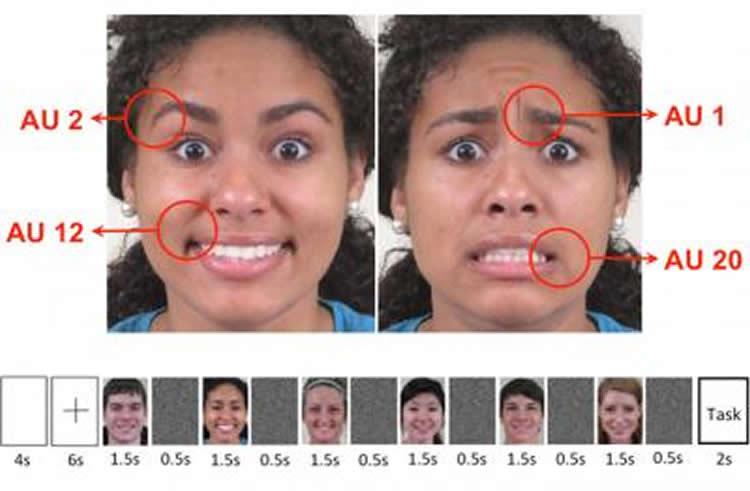
facial-expression-emotion

Test subjects in an Ohio State University study were shown a series of photographs of different facial expressions. Researchers pinpointed an area of the brain that is specifically attuned to picking up key muscle movements (here, labeled AU for ‘action units’) that combine to express emotion. Credit: Ohio State University.

New machine learning algorithm can identify the facial expression a person is looking at based on neural activity.

After a stroke, there is inflammation in the damaged part of the brain. Until now, the inflammation has been seen as a negative consequence that needs to be abolished as soon as possible. But, as it turns out, there are also some positive sides to the inflammation, and it can actually help the brain to self-repair.

A new study reports hungry fish sense objects differently and take more risks when hunting than well fed fish.

In a study exploring the relationship between memory for specific past experiences and recovery from strong negative emotions, research psychologists report that episodic memory may be more important in helping midlife and older adults recover from a negative event than it is for younger adults.

New research reports one brain hemisphere remains more awake than the other when sleeping somewhere new. 

Long before Alzheimer’s disease can be diagnosed clinically, increasing difficulties building cognitive maps of new surroundings may herald the eventual clinical onset of the disorder, according to new research.

New research suggests actin filaments that control the shape of neuron cells may also be the key to the molecular machinery that forms and stores long-term memories.

Scientists have elucidated for the first time how a notoriously elusive serotonin receptor functions with atom-level detail. The receptor transmits electrical signals in neurons and is involved in various disorders, meaning that the discovery opens the way for new treatments.

Researchers have mapped out a circuit of neurons that is responsible for motor impairment–such as difficulty walking–in patients with Parkinson’s disease.

Brain waves that spread through the hippocampus are initiated by a method not seen before–a possible step toward understanding and treating epilepsy, according to researchers at Case Western Reserve University.

Researchers have conducted a study examining the effect ecstasy has on different parts of the brain.

Finally this week researchers have found that drawing pictures of information that needs to be remembered is a strong and reliable strategy to enhance memory.

Weekly Neuroscience Update

3D-printed model of a neuron (credit: Yale University)

3D-printed model of a neuron (credit: Yale University)

A Yale neuroscientist  has created the first 3D-printed neuron.

Studies released today suggest promising new treatments for nicotine and heroin addiction, and further our understanding of pathological gambling and heroin abuse in those suffering chronic pain. This new knowledge, released at Neuroscience 2013, the annual meeting of the Society for Neuroscience (SFN) and the world’s largest source of emerging news about brain science and health, may one day lead to non-pharmaceutical interventions and therapies to treat addiction. Also presented at SFN, new studies revealing links between social status and specific brain structures and activity, particularly in the context of social stress.

A new study has found that people experiencing a depressive episode process information about themselves differently than people who are not depressed.

To flexibly deal with our ever-changing world, we need to learn from both the negative and positive consequences of our behaviour. In other words, from punishment and reward. Hanneke den Ouden from the Donders Institute in Nijmegen demonstrated that serotonin and dopamine related genes influence how we base our choices on past punishments or rewards. This influence depends on which gene variant you inherited from your parents. These results were published in Neuron on November 20.

Brain scans reveal that people with fibromyalgia are not as able to prepare for pain as healthy people, and they are less likely to respond to the promise of pain relief.

Scientists have used RNA interference (RNAi) technology to reveal dozens of genes which may represent new therapeutic targets for treating Parkinson’s disease. The findings also may be relevant to several diseases caused by damage to mitochondria, the biological power plants found in cells throughout the body.

Playing a fast-paced strategy video games can help the brain to become more agile and improve strategic thinking, according to new research.

While young children sleep, connections between the left and the right hemispheres of their brain strengthen, which may help brain functions mature, according to a new study by the University of Colorado Boulder.  And in another sleep study, a team of sleep researchers  has confirmed the mechanism that enables the brain to consolidate memory and found that a commonly prescribed sleep aid enhances the process. Those discoveries could lead to new sleep therapies that will improve memory for aging adults and those with dementia, Alzheimer’s and schizophrenia.

Weekly Neuroscience Update

New research shows that sleep loss markedly exaggerates the degree to which we anticipate impending emotional events, particularly among highly anxious people, who are especially vulnerable.

Music training has a lifelong good impact on the aging process, says a new study out of Northwestern University.

New research by scientists at the University of University of North Carolina School of Medicine may have pinpointed an underlying cause of the seizures that affect 90 percent of people with Angelman syndrome (AS), a neurodevelopmental disorder.

Scientists have shown that brain levels of serotonin, the ‘happy hormone’ are regulated by the amount of bacteria in the gut during early life.

Two U.S. scientists have updated findings that link a form of Chinese meditation to positive changes in brain structure, suggesting that just 11 hours of practising the technique over a month could help prevent mental illness. In a paper to be released this week in the online version of the Proceedings of the National Academy of Sciences, researchers Yi-Yuan Tang and Michael Posner report that the practice known as integrative body-mind training (IBMT) can have a positive physical affect on the brain, boosting connectivity and efficiency.

Researchers at the University of Missouri have demonstrated the effectiveness of a potential new therapy for stroke patients in an article published in the journal Molecular Neurodegeneration. Created to target a specific enzyme known to affect important brain functions, the new compound being studied at MU is designed to stop the spread of brain bleeds and protect brain cells from further damage in the crucial hours after a stroke.

A receptor recently discovered to control the movement of immune cells across the blood-brain barrier may hold the key to treating multiple sclerosis (MS), a neuroinflammatory disease of the central nervous system.

In a pair of related studies, scientists from the Florida campus of The Scripps Research Institute have identified several proteins that help regulate cells’ response to light—and the development of night blindness, a rare disease that abolishes the ability to see in dim light.

A recent breakthrough in the development of an artificial synapse suggests that assistive devices and other prostheses won’t be limited to just missing joints and failing organs. Researchers in Japan have shown that it’s possible to mimic synaptic function with nanotechnology, a breakthrough that could result in not just artificial neural networks, but fixes for the human brain as well.

Patients vary widely in their response to concussion, but scientists haven’t understood why. Now, using a new technique for analyzing data from brain imaging studies, researchers at Albert Einstein College of Medicine of Yeshiva University and Montefiore Medical Center have found that concussion victims have unique spatial patterns of brain abnormalities that change over time.

Using a new and powerful approach to understand the origins of neurodegenerative disorders such as Alzheimer’s disease, researchers at Mayo Clinic in Florida are building the case that these diseases are primarily caused by genes that are too active or not active enough, rather than by harmful gene mutations.

What’s going on with Charlie Sheen?

Is Charlie Sheen suffering from bipolar disorder?

As actor Charlie Sheen’s bizarre media blitz continues, viewers are left to ponder if Sheen’s interviews are some kind of brilliant performance art or evidence of an epic meltdown, or some combination of the two. Or is his current behaviour evidence of a more worrying mental illness.

Some psychologists have stated that Charlie Sheen appears to have bipolar disorder. Dr. Drew Pinsky has said that Charlie Sheen appears to be having a “manic episode.”

Another psychologist says that Charlie Sheen is showing classic symptoms of bipolar disorder. “The symptom I see is the pressured speech.” he says. “[Sheen is] really pushing to get those words out; he’s really on a roll. He’s getting everything coming out pretty fast, almost faster than his brain can think and that’s very common with people who have bipolar disorder.” 1

What is bipolar disorder?

Over 300,000 people in Ireland suffer from depression, however a less common form of depression is manic depression also known as bipolar disorder which affects about 20,000 Irish people. Bipolar disorder is a mood disorder characterised by extreme lows with feelings of hopelessness and sadness followed by elated manic highs where in your mind anything becomes possible. 

Vicious cycles

These extremes of mood often follow each other in regular cycles that may be days, months or even years apart although on average there are twice as many episodes of depression then for mania. Like any other mental illness bipolar disorder is related to genetic background and personality type but can also be triggered by stressful events. However in a lot of cases bipolar disorder can arise ‘out of the blue’ when people’s lives’ are going quite well. 

Similarities to classic depression

The depressive symptoms experienced by people with bipolar disorder are similar to those people who experience classic depression.  One minute you are working away in your garden and the next you can be overtaken by profound feelings of despair – a sense of being totally worthless – that can take you down into the depths of depression. In this situation the mood is very low and daily life can become so overwhelming that it can be difficult to endure. As the feelings deepen – thoughts of suicide and a preoccupation with suicide often emerges. 

Manic depression

The German psychiatrist Emil Krapelin coined the term ‘manic depression’ after examining many patients with this condition back in the 1800’s. Even then Krapelin believed that this condition was caused by a specific abnormality in the brain. 

Where in the brain does depression occur?

Depression is associated with a disturbance in the prefrontal lobe of the brain – found just behind the eyes. This region of the brain is involved in judging things to be good or bad. It is also involved in social behaviour and interpreting social situations so it is not surprising that the low mood, reduced motivation and social withdrawal are key symptoms of depression. For this reason, people who are depressed often feel rejected or cut off from the world and blame themselves for wars in distant lands – even though they may have never visited that country. 

The role of amines in depression

Neuroscientists still don’t know for certain why people develop bipolar disorder but they do know that it is related to imbalances in brain chemicals called neurotransmitters which are involved in communication. However, research over the past 40 years has the confirmed that depression is associated with low levels of family of chemicals called amines. Amines are neurotransmitters that help nerve cells to stay in touch with each other. A lack of these amines particularly dopamine and serotonin which are carried by nerve pathways into the frontal lobe leads to a kind of starvation of nerve cells in the frontal lobe – giving rise to the symptoms of depression. 

Reserpine and depression

The link between low amine levels and depression was made when reserpine a drug to lower blood pressure also lowered brain amine levels and caused very profound depression. Also, addictive drugs such as cocaine, amphetamine and alcohol which inappropriately increase amine levels in the brain can trigger depression upon withdrawal. So the message is simple – in order to avoid depression you need healthy levels of these amines in our brain and you need healthy mental health habits to keep them there. 

Medication for depression

Over the past 25 years neuroscientists been working hard to develop drugs that can safely raise amine levels in the brain – the so-called antidepressant drugs – and better, more effective antidepressants come on the market every decade. 

The manic phase of bipolar disorder

In contrast to the depressive phase, the manic phase of bipolar disorder is the ‘polar’ opposite of depression. Feelings of boundless energy and that anything is possible are often felt. Many people are often creative in this phase.  The German composer Robert Schuman experienced bipolar disorder throughout his life. He completed four works in 1829 when in a depressed phase and twenty-five works a year later when in a manic phase. 

The secret of our success…

If bipolar disorder were due to a bad gene then why has it not been weeded out over the generations? One answer is that despite the truly awful cost to the life of the individual the gene for bipolar depression continues to exist because it confers an advantage on our species such as the creative insights leading to discoveries, inventions and exceptional performances in science, the arts, drama, music, sport and business – contributing to the great advances in our civilization – from which we all benefit. Ironically then, bipolar disorder may be the secret of our success as a species.  

…comes at a very high cost

Very tragically the rate of suicide in bipolar disorder is very high. The cycle of depression and mania lead the German composer Robert Schuman to an attempted suicide in 1854. Almost a quarter (22%) of people with this condition will commit suicide.  This is higher than that observed in schizophrenia. 

Recognizing the manic phase

In severe mania an individual will behave in an uncharacteristic way. They will become very talkative, loud, verbal, very expressive, extremely confident even uncharacteristically confident. Some people will start-up companies in this phase. They will go out and direct traffic, invest unwisely. They don’t see things as being limited by their circumstances or by their personal capacities. In the manic phase literally anything is possible! 

The manic phase can come on quickly or gradually. The person may not be fully aware what is happening to them. They may find themselves drinking more, wanting to be with people, going to pubs and nightclubs and dancing all night despite the fact that they may be too old for it. There is a tremendous pressure to ‘do things’ such as going out to dig the garden at 4am in the morning – for the stay-at-home types. 

The brain, stress and bipolar disorder

Whenever you encounter a stressful situation the pituitary gland in your brain sends a signal to your adrenal glands (just above your kidneys) to release cortisol which in turn gets your body ready for action. However blood cortisol levels are much higher than normal in depression and bipolar disorder causing a general state of high alert including early morning wakening which contributes to mental exhaustion.

Neuroscientists believe that the manic phase is an over activity of the dopamine and serotonin pathways in the frontal lobe.  In this way a dysfunction in the serotonin pathway in the brain has a ‘knock-on’ affect in the regulation the pituitary gland which in turn inappropriately over-activates the adrenals to release too much cortisol. However neuroscientists still don’t know for certain why people develop bipolar disorder.

Lithium and treatment of bipolar disorder

Mania is very resistant to treatment – benzodiazepines, major tranquilizers and antidepressants don’t work adequately. Fortunately there is lithium – an element found as a salt in soil and rocks and thus very cheap to make. Because it is element lithium cannot be patented (owned) by the drug industry. It was for this reason that lithium was largely ignored for years by the pharmaceutical industry. However, even in ancient times lithium was known to be a mild sedative. The mood stabilising effect of lithium was rediscovered by accident by an Australian psychiatrist John Cade in 1949 when working with guinea pigs. After ingesting lithium himself to ensure its safety in humans, Cade published an article “Lithium salts in the treatment of psychotic excitement” – which is still the number one most cited article in the Medical Journal of Australia. Lithium was eventually accepted as a treatment for mania in the 1970s.

Lithium – a truly life saving drug

Initially investigated as a treatment for gout, lithium has the effect of calming nerve cells. While lithium is the conventional treatment for the manic phase of bipolar disorder and reaches the brain within hours it can take up to six weeks to show an effect. Lithium is also very toxic particularly to the thyroid and kidneys. The required dosage 400–600 mg (15–20 mg per kg of body weight) is slightly less than the toxic level, requiring blood levels of lithium to be monitored closely during treatment. Within four to five days of stopping lithium a person can begin to get high again. Despite its limitations lithium is truly is a life saving drug – the only one to have an anti-suicide effect – allowing people to manage their moods and get on with their lives.  

The cup that cheers

Hundreds of soft drinks once included lithium salts or lithia water (naturally occurring mineral waters with higher lithium amounts). An early version of Coca Cola available in pharmacies’ soda fountains was called Lithia Coke and was a mixture of Coca Cola syrup and lithia water. The soft drink 7 Up, originally named “Bib-Label Lithiated Lemon-Lime Soda”, contained lithium citrate until it was reformulated in 1950. Lithia light beer was brewed at the West Bend Lithia Company in Wisconsin.

In 2009, Japanese researchers at Oita University reported that low levels of naturally-occurring lithium in drinking water supplies reduced suicide rates. A previous report had found similar data in the American state of Texas. In response, psychiatrist Peter Kramer raised the hypothetical possibility of adding lithium to drinking water.

A possible future treatment?

Research shows that manic depression seems to run in families so genetics also plays a role. Nobel Prize winner Paul Greengard of Rockefeller University, New York believes that a low-level of expression in a gene called P11 – which regulates serotonin levels in the brain – may underlie bipolar disorder. Gene therapy whereby healthy P11 genes are injected into the brain may be a future treatment.    

1 Source: kfor.com