Weekly Neuroscience Update

Researchers at the University of Birmingham have uncovered a surprising role of the hippocampus—linking this part of the brain to the control of skilled actions such as handwriting, typing, and playing music.

The psychedelic drug psilocybin may rewire brain connectivity to treat body dysmorphic disorder, new research suggests.

A significant breakthrough in the understanding of sleep mechanism opens new promise for treating sleep disorders and associated neuropsychiatric conditions: Scientists have pinpointed the melatonin receptor MT1 as a crucial regulator of REM (Rapid Eye Movement) sleep.

Researchers have developed a new method that allows scientists to cultivate brain organoids with distinct cortical areas and front-to-back patterning.

A recent study published in Science has identified a previously unknown mechanism in the brain that occurs during sleep, helping to reset memory pathways. Researchers found that a burst of neural silence in a specific part of the brain, the hippocampus, allows neurons involved in memory to reset and prepare for new learning the following day. This phenomenon, termed a “barrage of action potentials” or “BARR,” allows neurons to reset, ensuring that our brains can continue storing new information without overwhelming the neural networks responsible for memory.

Monash University-led research, believed to be the first of its kind, has used blood tests and MRI scans to show that the effects of traumatic brain injuries (TBI) can last decades.

Researchers have found that SSRI (selective serotonin reuptake inhibitor) antidepressants have the potential to improve certain cognitive functions, such as verbal memory. They measured brain function in patients before and after taking the SSRI, escitalopram, and correlated this to a drop in the level of one of the serotonin receptors in the brain and to cognitive improvements during treatment.

In the U.K.’s largest study to date, researchers have come to a better understanding of the immediate and long-term impacts of COVID-19 on the brain.

New research has found that cannabis use during pregnancy can cause molecular changes in the genes of exposed children, impacting brain development. The study identified significant DNA alterations in genes related to neurodevelopment, suggesting a direct link between prenatal cannabis exposure and developmental issues.

Finally this week, a new study has uncovered new insights into how the brain processes and integrates pain information.
Weekly Neuroscience Update

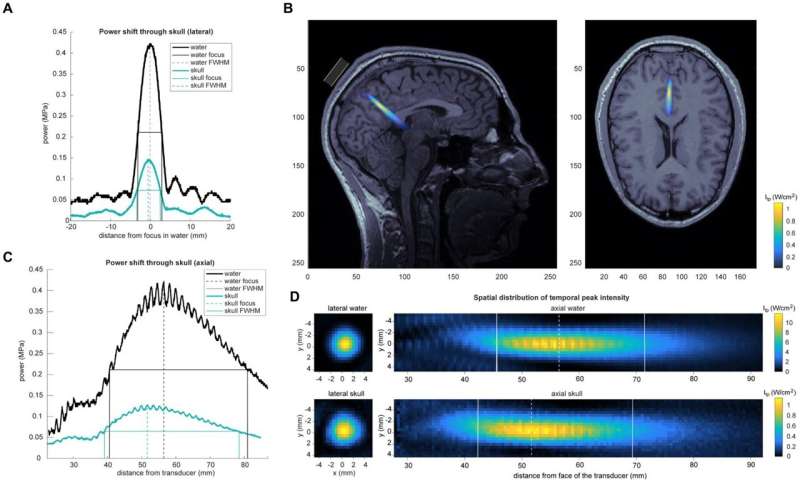
Credit: Frontiers in Human Neuroscience (2024). 

In a new study published in Frontiers in Human Neuroscience, researchers used low-intensity ultrasound technology to noninvasively alter a brain region associated with activities such as daydreaming, recalling memories and envisioning the future. They found that the technique can ultimately enhance mindfulness, marking a major advancement in the field of neuroscience.

New research finds that semaglutide, known as Ozempic/Wegovy, does not negatively impact brain health and may reduce cognitive problems and nicotine dependence.

Exposure to parental smoking (ParS) is associated with an increased risk for multiple sclerosis (MS) in later life in certain populations, according to a study presented at EAN 2024, the 10th Congress of the European Academy of Neurology, held from June 29 to July 2 in Helsinki.

Researchers have identified a new mutation in the ARPP21 gene linked to ALS. This discovery could improve ALS diagnosis and open avenues for personalized therapies. 

A new approach to improving uncertainty estimates in machine-learning models enhances prediction accuracy. The method uses the minimum description length principle to provide more reliable confidence measures for AI decisions, which is crucial in high-stakes settings like healthcare.

A recent study suggests that consciousness evolved not for individual survival, but for social purposes, helping humans communicate ideas and emotions. 

Researchers have discovered a neural activity pattern that can accurately predict and monitor the clinical status of OCD patients undergoing deep brain stimulation (DBS). This study highlights how this biomarker can guide DBS therapy, improving treatment outcomes for those with severe, treatment-resistant OCD.

New research could transform how we understand the way opioids affect the brain. 

A new study has found how the protein CGRP affects the brain’s lymphatic system, contributing to migraine pain. Their study reveals that CGRP prevents cerebrospinal fluid from draining, influencing migraine attacks.

Researchers have developed a neural network that mimics human decision-making by incorporating elements of uncertainty and evidence accumulation. 

Research published in Science Advances shows neurobiological underpinnings of sex and gender in children to better understand how sex (assigned at birth) and gender (identity and expression) influence the brain, and ultimately a person’s health.

A new study shows that by age three, children can understand others’ intentions using active mirror neurons.

For the first time, scientists have found that sleep can be detected by patterns of neuronal activity just milliseconds long, 1,000 times shorter than a second, revealing a new way to study and understand the basic brain wave patterns that govern consciousness. They also show that small regions of the brain can momentarily “flicker” awake while the rest of the brain remains asleep, and vice versa from wake to sleep.

A neuroimaging study of young people who exhibit a persistent pattern of disruptive, aggressive, and antisocial behavior, known as conduct disorder, has revealed extensive changes in brain structure.

Retired rugby players who have suffered multiple concussions have higher levels of certain proteins in their blood, which may make them more prone to developing diseases such as motor neuron disease (MND), according to a new study.

Researchers have used machine learning to define three subtypes of Parkinson’s disease based on the pace at which the disease progresses.

A new study reveals that psilocybin, the active compound in magic mushrooms, temporarily disrupts brain networks involved in introspective thinking, like daydreaming and memory. These changes persist for weeks, potentially making the brain more flexible and improving mental health. The findings could pave the way for psilocybin-based therapies for depression and PTSD. The research underscores the importance of using these drugs under medical supervision.

Scientists have established new criteria for a memory-loss syndrome in older adults that specifically impacts the brain’s limbic system.

A recent study links sleep preferences to brain performance, finding that “night owls” often score higher on cognitive tests than “morning larks.” Researchers analyzed data from over 26,000 people, highlighting that sleeping 7-9 hours a night optimizes brain function.

Finally this week, new research has demonstrated that activation of the brain’s reward system could boost recovery from a heart attack. 

Weekly Neuroscience Update

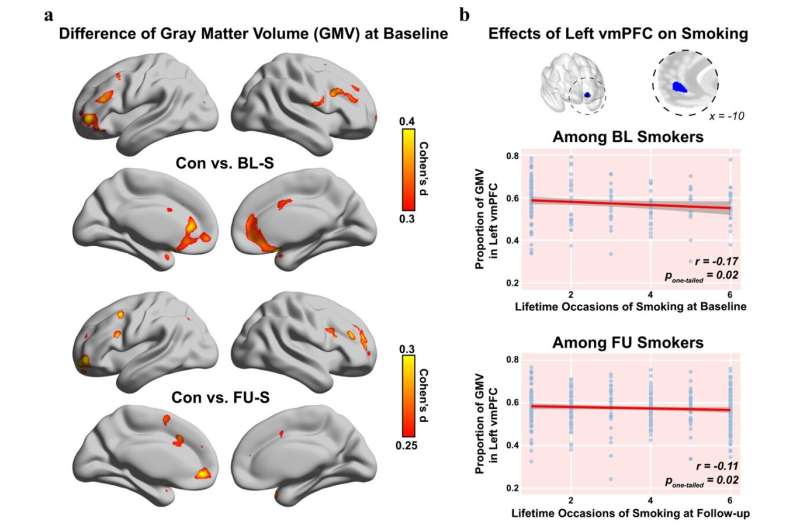
Smaller Left vmPFC was associated with future smoking. Credit: Nature Communications (2023)

Levels of gray matter in two parts of the brain may be linked to a desire to start smoking during adolescence and the strengthening of nicotine addiction, a new study has shown.

Researchers have enabled machine learning to accurately predict Parkinson’s disease subtypes using stem cell images. This breakthrough showcases computer models classifying four Parkinson’s subtypes, with top accuracies reaching 95%. This could revolutionize personalized medicine and aid in more targeted drug research for Parkinson’s.

A large international team of medical researchers has found that the severity of COVID-19 infections in children over the course of the pandemic varied by age and viral variant.

Researchers have illuminated how our brain maintains focus amidst distractions. Their study identifies “visual-movement” neurons in the lateral prefrontal cortex (LPFC) that use coordinated activity called “beta bursts” to suppress distracting stimuli and ensure attention remains on rewarding tasks. This discovery gives a deeper understanding of cognitive focus and offers insights into disorders like ADD and OCD.

More cases of children born with abnormal brain development may have genetic explanations than previously thought, according to a recent study published in JAMA Neurology.

Hearing impairment may cause difficulties in social interactions, but new research indicates that social struggles experienced by deaf individuals are likely not due to brain alterations, but rather due to non-supportive environments.

Scientists have identified a series of processes that help the brain adapt to damage caused by breakdowns in circuits that govern movement, cognition and sensory perception.

For the first time, researchers have discovered that the ventral tegmental area (VTA) of the brain—a key structure involved in motivation and reward appreciation—has altered connectivity patterns with specific brain regions in patients with obesity. Individuals with obesity have hyper-connectivity of the VTA with part of the ventral occipitotemporal cortex (visual processing for food images) and hypo-connectivity with the left inferior frontal gyrus (associated with cognitive control), according to a new study in Obesity.

Researchers have identified a key pathway, involved in inflammation, which appears to be activated in people with long COVID who have symptoms of “brain fog.”

Using a novel approach of precision neuroimaging and high-resolution functional magnetic resonance imaging (fMRI), a team of neuroscientists and physicists have discovered previously unknown cortical networks and shed light on the anatomical organization of the human memory system.

A pioneering scientific study has shown that the effects of multiple concussions in rugby players continue to have an impact on their brain even in retirement. 

Researchers have coupled the measurements of brain waves associated with disorders of consciousness (DoC) with glucose usage in specific brain areas, identifying where in the brain the waves might be generated.

A new study shows that brains with Alzheimer’s disease have subnormal levels of important dietary antioxidants.

A breakthrough project mapping brain changes in nearly 1,300 people diagnosed with six different types of mental illness has revealed the extraordinary diversity of brain changes found in people with conditions like major depression and schizophrenia.

Researchers have unveiled a promising link between adult education and reduced dementia risk. 

Neuroscientists have shown that adversities permanently change the functioning of the brain. Furthermore, an aberrant reaction of the brain to adversities is related to anxiety symptoms. This may have predictive value for the development of psychiatric disorders.

Finally this week, a new study identifies sex differences in the brain cell types responding to stress.

Weekly Neuroscience Update

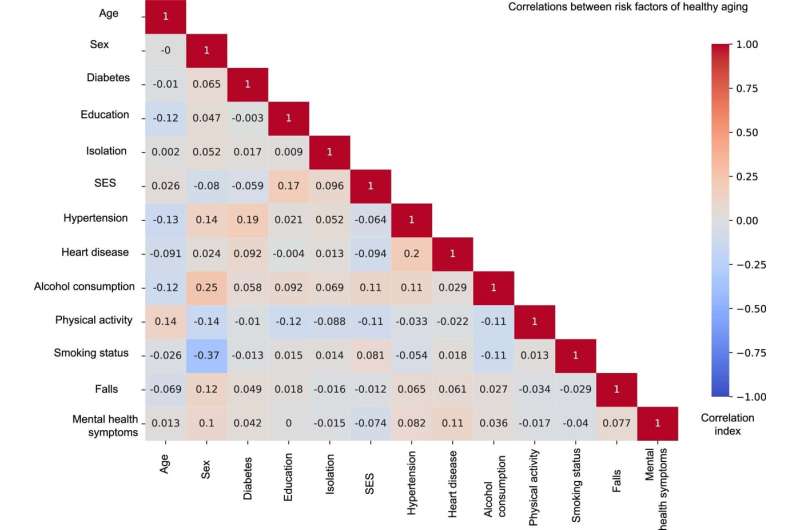
Factors associated with healthy aging in Latin American populations. Credit: Nature Medicine (2023)

Researchers at Trinity College Dublin studying the factors influencing healthy brain aging in Latin American and Caribbean (LAC) countries find the lessons learned there, can also be applied to home.

Immune cells in the brains of people who had Alzheimer’s disease appear to behave differently than those who had healthy brains for their age, according to an analysis of the cells’ gene activity. The finding suggests it might be possible to treat Alzheimer’s disease by altering the behavior of these cells.

The longer a person has type 2 diabetes, the more likely they may be to experience changes in brain structure, a new study finds.

Using human “mini-brain” models known as organoids, scientists have discovered that the roots of autism spectrum disorder may be associated with an imbalance of specific neurons that play a critical role in how the brain communicates and functions. The specific cells are known as excitatory cortical neurons.

Psilocybin, the active ingredient in psychedelic mushrooms, shows promise for the transitional treatment of episodic migraines in early clinical trials, according to a recent review.

Researchers have discovered that a neural marker of error detection in the brain’s visual system previously considered pre-attentive may actually require attention and that subtle visual irregularities may be revealed by other neural markers.

A new study has demonstrated that self-organization of neurons as they learn follows a mathematical theory called the free energy principle.

The neural network related to speech is mostly located in the left cerebral hemisphere, while singing has been primarily associated with the structures of both hemispheres. However, a new study indicates that the left hemisphere has a greater significance, including in terms of singing, than previously thought.

A new digital headset designed to measure alterations in brain function could change decisions about how quickly an athlete is ready to return to play after a concussion.

A new study suggests stimulating the sense of smell can boost memory. Older adults exposed to odors while they slept performed better on verbal memory tests and showed improved function in a brain pathway that supports memory formation, according to the study, published in the journal Frontiers in Neuroscience.

Finally this week, researchers have shown that machine learning can accurately predict subtypes of Parkinson’s disease using images of patient-derived stem cells.