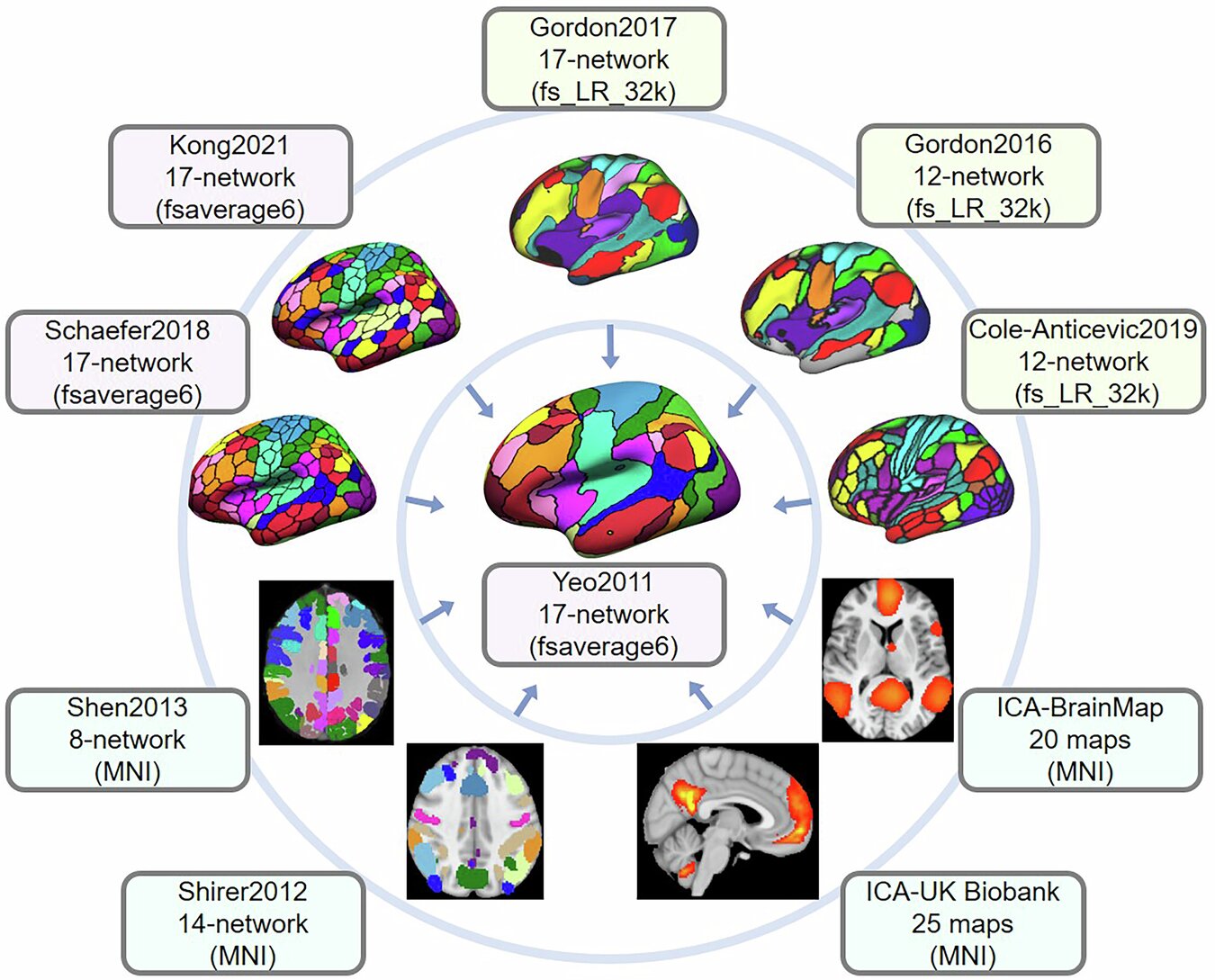
Example atlases included in the Network Correspondence Toolbox (NCT). Credit: Nature Communications (2025)
UCLA Health researchers have helped to develop a new digital toolbox to create a “common language” for brain network studies, potentially accelerating new discoveries and treatments for neurological and psychiatric conditions.
New research published in The Journal of Neuroscience suggests that relieving psychological stress by targeting specific neurons in the brain can lower blood pressure and reduce anxiety.
People who have early signs of heart problems may also have changes in brain health that can be early signs of dementia, such as loss of brain volume, according to a meta-analysis published online in Neurology. The meta-analysis does not prove that early heart problems cause loss of brain cells; it only shows an association.
Scientists have gained greater clarity in the brain regions and neurons that control metabolism, body temperature and energy use.
A recent study published in Science challenges assumptions about infant memory, showing that young minds do indeed form memories. The question remains, however, why these memories become difficult to retrieve later in life.
The brain’s appetite signalling pathways can be disrupted by consuming non-caloric sweeteners, according to new research.
Analysis of stroke patients from 1971 to 2019 showed college graduates exhibited stronger overall cognitive abilities immediately post-stroke. However, stroke survivors with any higher education saw a more rapid deterioration of executive functions, such as working memory and problem-solving, compared to those with lower levels of education.
New research suggests that psychopaths have a distinct pain experience, which can differ from what their bodies register.
A study published in the journal Scientific Reports suggests that virtual reality (VR) may offer a promising avenue for pain management in cancer patients. By immersing patients in realistic underwater environments using VR headsets, researchers observed a significant reduction in self-reported pain. This subjective improvement was further corroborated by real-time brain imaging, which revealed notable alterations in the neural pathways associated with pain perception.
A new review highlights how unpredictable sensory experiences, beyond traditional stressors like abuse and neglect, can disrupt brain development.
Scientists have uncovered a fundamental principle of how brain cells stay connected, and their discovery could change how we understand Alzheimer’s disease. Published in Cell Reports, this study reveals that neurons—the cells that make up our brain—use simple physics to maintain their connections, and that these processes change in Alzheimer’s patients.
New research shows that the brain’s numerical processing involves both absolute and relative quantity, with relative size processing increasing as information moves from the back to the front of the brain.
A pilot study of a post-stroke population has revealed some potential benefits of transcranial direct current stimulation (tDCS) on attention and fatigue. Study findings are published in Frontiers in Human Neuroscience.
Finally this week, marathon runners experience a temporary decline in brain myelin during races, with levels returning to normal after recovery, according to a study published in Nature Metabolism.
Ever wonder what makes our brains so remarkable? Neuroplasticity is your brain’s ability to change and adapt throughout your entire life. Your brain is not a static, unchanging organ – it’s more like a dynamic, ever-evolving landscape. Today, in honour of #TrainYourBrainDay, let’s explore the science behind this process and how we can harness it to improve our cognitive abilities.
How Does Neuroplasticity Work?
Neuroplasticity involves both structural and functional changes in the brain:
Structural changes: These involve altering the physical connections between brain cells (neurons). This can happen through:
Neurogenesis: The birth of new neurons, primarily in the hippocampus, a region crucial for learning and memory.
Synaptic plasticity: Strengthening or weakening existing connections (synapses), making communication between neurons more or less efficient. This can also involve eliminating unused connections (synaptic pruning).
Functional changes: These changes affect how different brain regions work together. This can involve:
Developing new neural pathways: When you learn a new skill, your brain creates new pathways to process and store that information.
Reorganizing existing networks: If one area of the brain is damaged, other areas can sometimes take over its function, as seen in stroke recovery.
Factors that influence neuroplasticity
Several factors can influence how adaptable your brain is:
Age: While plasticity is greatest in childhood, it continues throughout life.
Genetics: Your genes play a role in how your brain develops and adapts.
Environment: A stimulating environment with opportunities for learning and social interaction enhances plasticity.
Lifestyle: Factors like sleep, nutrition, stress, and exercise all impact brain health and plasticity.
How Can You Encourage Neuroplasticity?
The great news is that you can actively influence your brain’s plasticity. Here are some ways to encourage it.
Embrace lifelong learning: Continually challenge your brain with new skills, languages, and information.
Engage in mental exercises: Puzzles, brain games, and critical thinking activities keep your mind sharp.
Stay physically active: Exercise boosts blood flow to the brain, promoting neurogenesis and synaptic plasticity.
Get enough sleep: Sleep is crucial for consolidating memories and allowing your brain to reorganize.
Reduce stress: Chronic stress can negatively impact brain plasticity.
Further Reading
“Neurogenesis in the Adult Human Hippocampus,” Nature Medicine, 1998.
“Physical Exercise and Brain Plasticity,” Brain Sciences, 2020.
“Mindfulness Practices and Brain Structure,” Journal of Cognitive Enhancement, 2017.
What if we could unlock the secrets of the human brain to revolutionize how we teach and learn?
A new science of learning is emerging, fueled by converging insights from fields like developmental psychology, machine learning, and neuroscience. This field is uncovering the biological, cognitive, and social factors that influence how we learn, paving the way for more effective teaching practices and improved learning outcomes. For instance, we now understand the importance of active learning, where students are engaged and challenged to construct their own knowledge rather than passively absorbing information. We also recognize the powerful role emotions play in learning. Positive emotions enhance learning while negative emotions like stress can hinder it, highlighting the need for supportive and engaging learning environments. Furthermore, this new science emphasizes the importance of personalized learning, recognizing that each student learns in their own unique way.
Optimizing Learning by Targeting Different Memory Systems
Neuroscience has shown us that memory is more complex than we once thought. It’s not just one thing, but a system of different types, each with its own job and connected to different parts of the brain.
Episodic memory is like a mental scrapbook. It helps us remember past experiences, like a fun school trip or a birthday party. Teachers can tap into this by using techniques that emphasize narrative construction, real-world applications, and the establishment of personal connections with the subject matter.
Semantic memory is our storehouse of facts and concepts. It’s how we remember things like state capitals or the rules of gravity. Teachers can help students build this type of memory by using visuals, diagrams, and clear explanations.
Procedural memory is all about skills. It’s how we learn to ride a bike or play an instrument. To get better at these things, we need practice, feedback, and to learn skills step-by-step.
Understanding these different memory systems can really change how we teach. When teachers know which type of memory is involved in a lesson, they can plan activities that make it easier for students to learn, remember, and use information.
The Adolescent Brain: A Period of Continued Development
Contrary to earlier assumptions, brain development is not confined to childhood. The prefrontal cortex, the brain’s executive control center responsible for planning, decision-making, and impulse inhibition, continues to mature well into early adulthood, typically around 20-25 years of age. This protracted developmental trajectory explains why adolescents often grapple with impulse control, risk assessment, and delaying gratification. They may engage in actions without fully considering the consequences, undertake risks without a complete understanding of potential dangers, or encounter difficulties prioritizing long-term goals over immediate rewards.
This understanding holds significant implications for educators. It underscores the necessity for patience and support as adolescents navigate the complexities of this developmental period. By providing structured environments, clear expectations, and opportunities to cultivate self-regulation techniques such as mindfulness or organizational strategies, educators can facilitate the strengthening of the prefrontal cortex and the development of essential life skills.
Neuroeducation: Bridging Neuroscience and Education
For much of recent history, the fields of neuroscience and education operated in distinct domains, with limited interaction between researchers. However, this began to shift in the 1990s with the growing recognition of the brain’s remarkable plasticity—its capacity to reorganize and adapt throughout the lifespan in response to experiences. This discovery, coupled with advancements in neuroimaging techniques, fueled increasing interest in how insights from neuroscience could inform and enhance educational practices, ultimately leading to the emergence of neuroeducation.
Neuroeducation is an interdisciplinary field that strives to bridge the gap between neuroscience and education. It investigates how the brain learns, remembers, and processes information, and applies these findings to develop more effective pedagogical approaches. By understanding the neural mechanisms underlying learning and cognition, educators can create learning environments that optimize brain function and promote deeper understanding. For instance, incorporating movement breaks into lessons can capitalize on the benefits of physical activity for cognitive function, while integrating mindfulness practices can assist students in managing stress and enhancing focus.
Neuroeducation emphasizes that learning is not a passive process of absorption but rather an active process that induces physical changes in the brain. Every new experience, every acquired skill, every learned fact—all leave their imprint on the brain’s intricate neural networks. This knowledge empowers educators to design learning experiences that leverage the brain’s inherent learning processes. Examples include incorporating spaced repetition into lesson plans to enhance memory consolidation or utilizing storytelling to engage the emotional dimensions of learning.
The goals of neuroeducation are far-reaching. It aims to improve educational outcomes for all learners, address learning challenges and disabilities such as dyslexia or ADHD, promote creativity and innovation in educational settings, and foster a lifelong love of learning. While a relatively nascent field, neuroeducation holds immense potential to transform educational practices and positively impact learners of all ages.
Neuroeducation: Integrating Neuroscience and Artificial Intelligence in Educational Practice
Augmenting the progress of neuroeducation is the advent of artificial intelligence (AI), which presents transformative potential for educational practices. Imagine AI systems functioning as personalized learning guides, identifying each student’s unique learning style, strengths, and areas for improvement. With this insight, AI can create custom-tailored learning plans, perfectly suited to each student’s needs. AI tutors can then step in, providing real-time support, feedback, and challenges that adapt to the student’s progress—keeping them both engaged and motivated. AI-powered games and simulations also turn learning into an immersive experience, designed to match each student’s pace and interests.
AI is also changing how we assess learning. By analyzing work products like essays or problem-solving exercises, AI can pinpoint areas that need further attention and deliver targeted, constructive feedback. It can even assess a learner’s emotional state and engagement during lessons, enabling teachers to adjust their instructional methods for optimal impact.
Looking ahead, brain-computer interfaces (BCIs) could allow our brains to interact directly with computers. This technology could be life-changing for students with disabilities, giving them new ways to control devices and communicate. BCIs could also provide real-time feedback on brain activity during learning, helping students improve their focus and self-regulation.
Despite these exciting possibilities, the integration of AI in neuroeducation comes with significant ethical and practical challenges. Protecting student data must be a top priority, necessitating AI systems that are built with privacy at their core. Equitable access to AI tools is also crucial to prevent exacerbating existing achievement gaps. Furthermore, teachers will need comprehensive training to effectively incorporate AI technologies into their classrooms. Striking a balance between technological innovation and human interaction is essential to maintaining the critical role of educators in fostering well-rounded student development.
Curiosity, interest, joy, and motivation—these are the cornerstones of effective learning. Neuroeducation, with its focus on understanding the brain’s role in learning, combined with AI’s innovative potential, offers a path toward a more personalized, engaging, and inclusive educational future.
Ever wonder how ballet dancers can spin and spin and spin, but never seem to get dizzy? Neuroplasticity, that’s how. This short video explains how it works, and how you can use your brain in the same way.
For decades, scientists thought that the adult human brain was static and unchanging. But in the last few decades, we have learned that the adult brain is more dynamic than we ever imagined. In fact, the human brain is malleable and can change in response to new experiences. It is adaptable, like plastic – hence the term “neuroplasticity.”
Learn more about neuroplasticity in this infographic.
A short 10 minute story by Wired Science called ‘Mixed Feelings’ showcasing the work of the late Paul Bach-y-Rita, an American neuroscientist whose most notable work was in the field of neuroplasticity. Bach-y-Rita’s revolutionary work sought to rewire the brain so that one sense could potentially compensate for another that was damaged or absent; working to help the blind to acquire a certain form of ‘sight’ using the sense of touch, and also helping ‘wobblers’, people with damaged vestibular function, so their brains might create a new mode for having balance.
Not so long ago many scientists believed that the brain didn’t change after childhood – that it was hard-wired and fixed by the time we became adults – but recent advances in only the last decade now tell us that this is not true. The brain can and does change throughout our lives. It is adaptable, like plastic – hence the term “neuroplasticity.”
Neuroplasticity, also known as brain plasticity, refers to changes in neural pathways and synapses which are due to changes in behavior, environment and neural processes, as well as changes resulting from bodily injury. Learn more about neuroplasticity in this short video.
Scientists have shown that working as a piano tuner may lead to changes in the structure of the memory and navigation areas of the brain. The study, published in the Journal of Neuroscience, shows that these structural differences correlate with the number of years of experience a piano tuner has accumulated.
An unusual kind of circuit fine-tunes the brain’s control over movement and incoming sensory information, and without relying on conventional nerve pathways, according to a study published in the journal Neuron.
The reason we struggle to recall memories from our early childhood is down to high levels of neuron production during the first years of life, say Canadian researchers.
Researchers have identified mutations in several new genes that might be associated with the development of spontaneously occurring cases of the neurodegenerative disease known as amyotrophic lateral sclerosis, or ALS. Also known as Lou Gehrig’s disease, the progressive, fatal condition, in which the motor neurons that control movement and breathing gradually cease to function, has no cure.
Researchers at the Stanford University School of Medicine have found that a naturally occurring protein secreted only in discrete areas of the mammalian brain may act as a Valium-like brake on certain types of epileptic seizures.
Millions of tinnitus sufferers could get relief thanks to a new treatment which stops the brain creating “phantom” noises by playing matching tones over headphones
Earlier evidence out of UCLA suggested that meditating for years thickens the brain (in a good way) and strengthens the connections between brain cells. Now a further report by UCLA researchers suggests yet another benefit. have found that long-term meditators have larger amounts of gyrification (“folding” of the cortex, which may allow the brain to process information faster) than people who do not meditate. Further, a direct correlation was found between the amount of gyrification and the number of meditation years, possibly providing further proof of the brain’s neuroplasticity, or ability to adapt to environmental changes.
Brain scans of Nasa astronauts who have returned to earth after more than a month in space have revealed potentially serious abnormalities that could jeopardise long-term space missions.




 inside-the-brain.com