Weekly Neuroscience Update

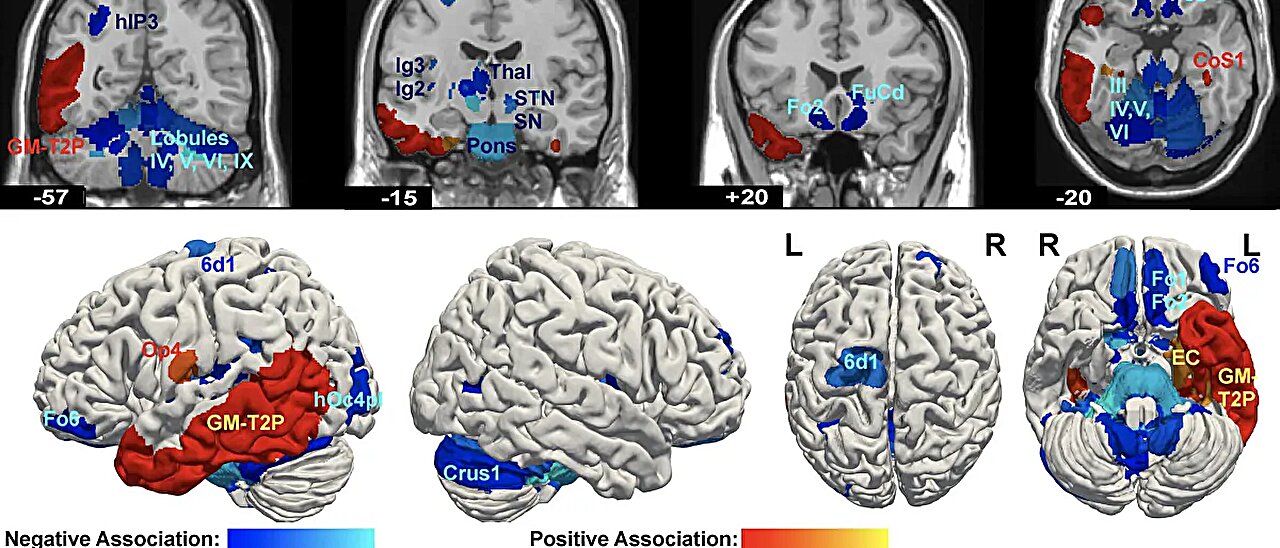
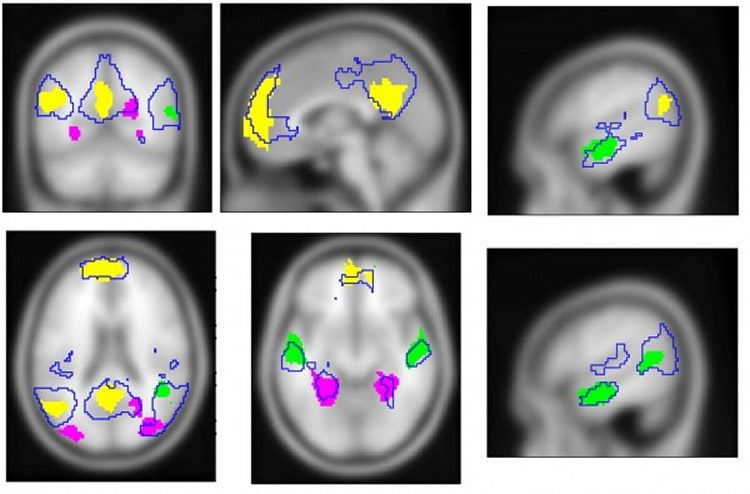
Coloured regions show where brain volume was associated with deviant lifestyle and antisocial behavior in individuals with psychopathic traits. Credit: European Archives of Psychiatry and Clinical Neuroscience (2025).

A recent study has shed light on the brain structure differences associated with psychopathy—a condition known to be one of the strongest predictors of persistent violent behaviour. The findings are published in the journal European Archives of Psychiatry and Clinical Neuroscience.

Researchers are using a new approach to brain imaging that could improve how drugs are prescribed to treat Parkinson’s disease.

An analysis of over 375 trials shows that structured exercise significantly reduces depression and anxiety in children and teens. Low-intensity resistance activities like light weights were most effective for easing anxiety, while moderate mixed-mode programmes worked best for depression, especially when lasting under 12 weeks.

A new technology that uses clinical MRI machines to image metabolic activity in the brain could give researchers and clinicians unique insight into brain function and disease.

Diets rich in phosphate additives, commonly found in processed foods, can increase blood pressure by triggering a brain signaling pathway and overactivating the sympathetic nervous system that regulates cardiovascular function, UT Southwestern researchers discovered. Their findings could lead to treatment strategies for patients with hypertension caused by overconsumption of foods containing high levels of phosphates.

The long-standing belief that left-handed people are more creative has been challenged by a new meta-analysis of over a century of research. 

New research proposes a unified theory of brain function based on criticality—a state where the brain teeters between order and chaos, allowing it to learn, adapt, and process information optimally. When the brain strays from this delicate balance, cognitive performance weakens, and neurological disorders such as Alzheimer’s may begin to take hold.

A drug used for Parkinson’s disease has been shown to be effective in reducing the symptoms of difficult to treat depression, according to a study led by the University of Oxford.

A recent study shows that older adults may compensate for age-related cognitive decline by enhancing activity in a specific brain region linked to attention—the locus coeruleus (LC). In a brain imaging study, older participants showed stronger LC responses when interpreting ambiguous facial expressions, compared to younger adults.

Individuals with versus those without tinnitus have significantly lower scores on cognitive function tests, according to a recent study published in Frontiers in Neurology.

New research shows how the brain navigates emotional transitions, using music as a tool to map changing neural patterns. Scientists found that emotional responses in the brain depend heavily on the listener’s prior emotional state.

A clinical trial has revealed that Ambroxol, a common cough medicine in Europe, may help slow cognitive decline in people with Parkinson’s disease dementia.

In a study of 200 former professional rugby players (aged 30–61 years old), researchers from Imperial College London, University College London and the UK Dementia Research Institute found no cases of early-onset dementia.

Finally this week, new research findings show how synaptic connections in the cerebral cortex can strengthen during sleep, offering insight into how the brain continues learning even while we rest.

Weekly Neuroscience Update

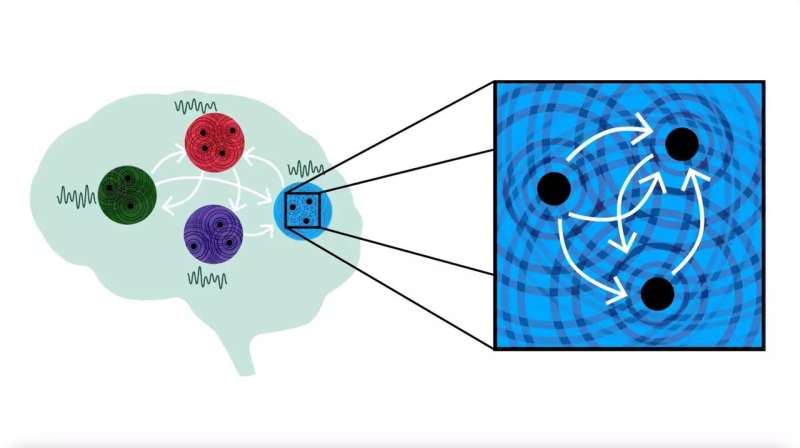
Schematic representation of the “Harmonic Oscillator Recurrent Network Model” (HORN). Credit: ESI

Researchers have made a new discovery in understanding fundamental brain processes. For the first time, the team has provided compelling evidence that the brain’s characteristic rhythmic patterns play a crucial role in information processing. While these oscillatory dynamics have long been observed in the brain, their purpose has remained mostly elusive until now.

Music has the best chance of providing pain relief when it is played at our natural rhythm, a McGill University research team has discovered.

Tiny plastic particles may accumulate at higher levels in the human brain than in the kidney and liver, with greater concentrations detected in postmortem samples from 2024 than in those from 2016, suggests a paper published in Nature Medicine. Although the potential implications for human health remain unclear, these findings may highlight a consequence of rising global concentrations of environmental plastics.

The first-ever ethics checklist developed for portable MRI brain researchers.

A team of scientists from the Center for Neuroscience Imaging Research (CNIR) at the Institute for Basic Science (IBS) has unveiled how the hippocampus orchestrates multiple memory processes, including encoding new information, forming memories, and retrieving them. The study is published in Nature Communications.

A recent study suggests that frequent treatment with intranasal oxytocin a hormone linked to empathy, may help address a key symptom in patients with frontotemporal dementia.

Researchers using intracranial electroencephalogram (EEG) recordings from deep within the brain found that meditation led to changes in activity in the amygdala and hippocampus, key brain regions involved in emotional regulation and memory.

Could the key to easing anxiety be hidden in our gut? Scientists have discovered a crucial connection between gut microbes and anxiety-related behaviour.

People’s ability to interpret emotions or focus on performing a task is reduced by short-term exposure to particulate matter air pollution, potentially making everyday activities more challenging, according to a new study.

New research has revealed clear evidence that changes in the orchestration of brain oxygenation dynamics and neuronal function in Alzheimer’s disease contribute to the neurodegeneration.

Researchers are paving the way for the design of bionic limbs that feel natural to users. They demonstrate the connection between hand movement patterns and motoneuron control patterns. The study, published in Science Robotics, also reports the application of these findings to a soft prosthetic hand, which was successfully tested by individuals with physical impairments.

Occupational exposure to noise and/or vibrations is associated with the presence of vertigo, according to a study recently published in the Journal of Clinical Medicine.

A team of researchers recently carried out a study aimed at exploring the differences among patients with OCD. Their findings, published in Translational Psychiatry, allowed them to identify two broad OCD subtypes, which are associated with different patterns in gray matter volumes and disease epicenters.

A Canadian research team has revealed important new insights into the activation dynamics of neural stem cells (NSCs). These are the stem cells that build our central nervous systems and self-renew.

New research reveals that brain cells use a muscle-like signaling mechanism to relay information over long distances. Scientists discovered that dendrites, the branch-like extensions of neurons, contain a structured network of contact sites that amplify calcium signals—similar to how muscles contract. These contact sites regulate calcium release, activating key proteins involved in learning and memory.

Finally this week, a large study has found that heavy cannabis use, both recent and lifetime, is linked to reduced brain activity during working memory tasks in over 1,000 young adults.

Weekly Neuroscience Update

A new way of mapping activity and connections between different regions of the brain has revealed fresh insights into how higher-order functions like language, thought and attention, are organized.

Researchers at the University of Copenhagen have demonstrated that the brain’s ability to learn certain skills can be significantly enhanced if both the brain and nervous system are primed by carefully-calibrated, precisely-timed electrical and magnetic stimulations. This new research has the potential to open entirely new perspectives in rehabilitation and possibly elite sports.

A study of patients with epilepsy shows how making new neurons benefits cognition.

New AI software can read the brain scans of patients who have had a stroke to more accurately pinpoint when it happened and help doctors work out whether it can be successfully treated. It is hoped that the new technology will ultimately enable faster and more accurate emergency treatment of patients in a hospital setting.

Researchers have discovered the structural details of a brain receptor called GPR6, which could lead to new treatments for Parkinson’s disease.

Living in disadvantaged neighbourhoods is associated with higher blood pressure and lower cognitive performance, even in individuals without mild cognitive impairment. Researchers analyzed over 500 adults, finding that poor social and economic resources in neighborhoods exacerbate cardiometabolic health issues and reduce brain function.

Scientists have developed a new approach to learning through noninvasive manipulation of brain activity patterns.

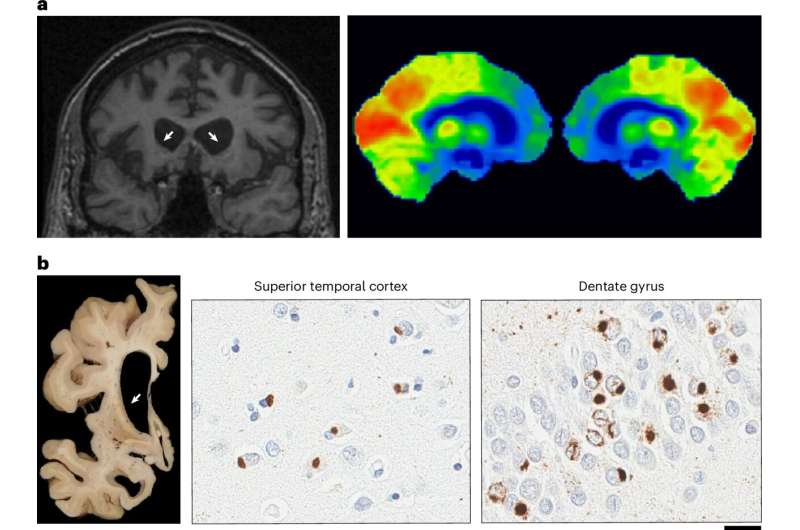
A new study is helping solve the mystery as to why the brain shrinks in a unique pattern, known as atrophy, in chronic traumatic encephalopathy (CTE). Published in Acta Neuropathologica, this research provides novel evidence that cumulative repetitive head impacts are driving the specific patterns of brain degeneration found at the base of the folds of the surface of the brain, known as the cortical sulcus.

A global research collaboration has revealed a hidden cause of a rare intellectual disorder associated with severe language delay, epileptic seizures, motor impairment and brain abnormalities.

A multi-sensory digital treatment protocol, incorporating sensory integration, sensory substitution, and sensory masking (e.g., blindfolding), significantly improved participants’ performance on spatial memory tasks. Resting-state fMRI analysis showed that these improvements were associated with enhanced connectivity between memory-related brain regions, executive frontal areas, and the default mode network (DMN).

People with high blood pressure who also lack sleep may be at increased risk of reduced cognitive performance and greater brain injury, new research has found.

Researchers have uncovered a groundbreaking mechanism called Electro-Calcium (E-Ca) coupling that integrates electrical and calcium signaling in brain capillaries. This process ensures precise blood flow delivery to active neurons, crucial for brain health and cognitive function.

Researchers at the University of Helsinki have made a breakthrough in understanding what neural mechanisms allow the extreme sensitivity of human vision in darkness. 

New research reveals that music can do more than trigger memories—it can alter their emotional tone. When participants recalled neutral stories while listening to emotionally charged music, they later remembered the stories as matching the music’s mood. These findings hint at music’s potential for therapeutic interventions, like reframing negative memories in depression or PTSD.

Finally this week a recent study has found that high blood sugar may impair brain health even in people without diabetes. 

Weekly Neuroscience Update

Researchers have developed a new method of measuring axons using MRI neuroimaging.

People with autism spectrum disorder (ASD) appear to suffer malfunctions in a cell that produces a special coating around nerve fibers that facilitates efficient electrical communication across the brain. 

New findings about dopaminergic neurons in the striatum could have implications for treating Parkinson’s disease and Tourette syndrome.

Researchers have found that it is possible to assess a person’s ability to feel empathy by studying their brain activity while they are resting rather than while they are engaged in specific tasks.

Boys who exhibit inattention-hyperactivity by age 10 have an increased risk for traumatic brain injury later in life.

Combining fMRI and behavioral data, researchers examined gender identity in cisgender and transgender individuals using a new machine learning algorithm. The AI identified at least nine dimensions of brain-gender variation.

New research has provided insights into why people often make unrealistic plans that are doomed to fail.

Finally this week, a new study has found that dopamine — a neurotransmitter that plays an important role in our cognitive, emotional, and behavioral functioning — plays a direct role in the reward experience induced by music. The findings have been published in the Proceedings of the National Academy of Sciences.

Weekly Neuroscience Update

Is music really a “universal language”? Two articles in Science support the idea that music all around the globe shares important commonalities, despite many differences.

Researchers studying six adults who had one of their brain hemispheres removed during childhood to reduce epileptic seizures found that the remaining half of the brain formed unusually strong connections between different functional brain networks, which potentially help the body to function as if the brain were intact. 

Excessive exposure to certain antibiotics can predispose a person to Parkinson’s disease, with a delay of onset of up to 15 years.

Findings debunk the common theory that attention is the only cognitive function affected by sleep deprivation. Lack of sleep also hinders a person’s ability to complete activities that require following multiple steps.

A new study reveals how the insular cortex helps assess and predict physiological states of the body. The findings shed light on the neural basis for interoception.

Finally this week, neuroscientists have discovered how the listening brain scans speech to break it down into syllables. The findings provide for the first time a neural basis for the fundamental atoms of language and insights into our perception of the rhythmic poetry of speech. 

Weekly Neuroscience Update

internal-experience-neurosciencenews.jpg

Simultaneous activity of three cognitive systems found in the study NeuroscienceNews.com image is credited to Vadim Axelrod, Bar-Ilan University.

Internal experiences, such as recalling personal memories, are associated with the simultaneous activity of at least three different cognitive systems, a new study reports.

Neuroscientists have shown how the human brain can predict what our eyes will see next, using functional magnetic resonance imaging (fMRI).

A new study sheds light on ADHD, reporting teens with the disorder fit into one of three specific subgroups with distinct brain impairments and no common abnormalities between them.

Musical training may enhance the ability to process speech in noisy settings, a new study reveals.

Scientists are examining the feasibility of treating autistic children with neuromodulation after a new study showed social impairments can be corrected by brain stimulation.

The fear of losing control over thoughts and actions can impact OCD behaviors and other anxiety disorders, researchers report.

Recent functional studies suggest that noise sensitivity, a trait describing attitudes towards noise and predicting noise annoyance, is associated with altered processing in the central auditory system.

Finally this week, a new study reveals the frontal regions of the brain play a vital role in assessing and interpreting emotions communicated orally.

Weekly Neuroscience Update

standup-comedy-ftr.jpg

A study published in Frontiers in Neuroscience takes a look inside the brains of professional comedians and compares them with less humorous humans. They attempt to home in on the seat of creative humour and ask what it can tell us about creativity.

A new study reports brain cells may preferentially activate a copy of one parent’s genes over the other in offspring.

Music, specifically infant directed song, could have evolved as a means to allow parents to let their children know their needs are being met, while freeing them up to perform other essential tasks, a new study theorizes.

Researchers report a new neuroimaging device can successfully measure brain synchronization during a conversation.

Specialized nerve cells, known as somatostatin-expressing (Sst) interneurons, in the outer part of the mammalian brain (or cerebral cortex) — play a key role in controlling how information flows in the brain when it is awake and alert. This is the finding of a study published online in Science March 2 by a team of neuroscientists at NYU Langone Medical Center and its Neuroscience Institute.

Amygdala reactivity may help predict who will have post-traumatic stress disorder symptoms in the year following a trauma, a recent study from Emory University  finds.

Recent research published in Frontiers in Public Health shows that the effects of vibrations produced by horses during horse-riding lead to the activation of the sympathetic nervous system, which improves learning in children.

A compound called P7C3 provides both protection for neurons following a stroke and improves physical and cognitive outcomes, a new study reports.

MIT researchers have devised a way to measure dopamine in the brain much more precisely than previously possible, which should allow scientists to gain insight into dopamine’s roles in learning, memory, and emotion.

A new study reports the ability to modulate brain activity when it comes to shutting off processes irrelevant to a task may be compromised in older people.

Concrete links between the symptoms of autism and synaesthesia have been discovered and clarified for the first time, according to new research by psychologists at the University of Sussex.

Researchers have identified a potential mechanism for the development of alcoholism.

Finally this week, researchers have discovered a genetic pathway that could lead to people developing anxiety and panic disorders.