The Neurobiology of Kindness #WorldKindnessDay

If we could see the miracle of a single flower clearly, our whole life would change. – The Buddha (c. 563 BCE) 

Look deeply into nature to understand the secrets of the Universe.

Until recently, the task of applying what we know about the brain to the bigger question of personal human experience has been avoided by scientists. However, the emergence of the new discipline of neuroscience – the scientific study of the nervous system—is helping us to bridge this gap by providing new ways to answer such age-old questions as why does kindness exist, and why is it important? To answer these questions we first need to consider an important property of nerve cells (neurons) in the human brain.

What actually is emotion?

Emotion feels so natural and seems so normal, but what if emotion is not there? What if emotion is an emergent phenomenon and only something we experience as macroscopic beings? This might sound strange, but we know that we are sandwiched within the Universe. For example, we do not feel the cosmological expansion that dominates the large scale of the Universe nor do we feel the very small scale where individual atoms inside us collide with our skin. Instead, we have a collective term – temperature – to describe what is happening. Perhaps emotion is the same. This may feel uncomfortable when you ask just where is the ‘you’ and how you feel in all of this.  

Understanding emotion

Perhaps it is best to think of it like this—most of us have come to terms with the fact that we are physically a collection of atoms. We, and our consciousness somehow emerge and we seem to be able to live with this illusion of our being. Maybe all we need to do is the same for how we feel, as we play out our short existence.

Mirror neurons

The discovery of mirror neurons,  a cluster of neurons in the brain that help connect us emotionally to other people, respond sympathetically towards others, and allow us to anticipate others’ intentions, is now believed to be the basis of human empathy. Mirror neurons were first discovered by neuroscientists in the 1990s while recording the activity of neurons in the brain where it was noticed that certain populations of neurons remain silent (observation) and active (imitation) when we watch others perform the same action, hence the name mirror neurons [1,2]. Scientists have extended this finding in the human brain to show that nerve activity in mirror neurons also behaves in the same way when we see another person expressing an emotion, and this nerve activity is not observed in disorders of empathy [3].

Our behaviour mirrors our environment

Each person is a mirror of their environment, which is then in turn mirrored by their own behaviour. This underlies the powerful phenomenon of social contagion – that information, ideas, and behaviours including kindness can spread through networks of people the way that infectious diseases do. For this reason, giving and receiving kindness can have a contagious effect.  Research also shows that optimal learning takes place in an environment that is creative, inclusive, rewarding, and bolstered by firm, healthy boundaries, in an environment that is kind.  Even those in deep distress due to imprisonment, addiction, financial worries, and high anxiety also benefit greatly from an environment that is creative, inclusive and boundaried.

Unkindness

What to do when we encounter unkindness? Behaviours including anxiety, anger, and rudeness can also spread through networks of people the way that infectious diseases do. The antidote to becoming infected with these miserable states is to be aware that every action must be consciously chosen, and not an emotional response.

Kindness is the key to our survival

Why is kindness so important? This question can be answered in the context that every single human being is unique because we each possess a uniquely complex brain, so complex that in all of human history, no two human brains can be identical. This is because the unique combination of about 100 trillion tiny brain connections (synapses) that grow and change throughout life is an ongoing work in progress from conception to death. In this way, each one of us ‘evolves’ as true individuals as we each make our journey through life. Kindness is the green light to keep going. If you are not open to giving and receiving kindness, then you may not be growing. In the same way, humankind will only evolve by making room for each and every individual to express their intellectual and spiritual evolution to the full.  In this way, the evolution of the human race has everything to do with being open to giving and receiving kindness. 


References

[1] Mirror Neurons.  Society for Neuroscience (2013) 

[2] Kraskov A, Dancause N, Quallo MM, Shepherd S and Lemon RN.  (2009) Corticospinal neurons in macaque ventral premotor cortex with mirror properties: A potential mechanism for action suppression? Neuron 64, 922-930.

[3] Corradini A, Antonietti A. (2013) Mirror neurons and their function in cognitively understood empathy. Consciousness and Cognition. 22, 1152–1161.

Weekly Neuroscience Update

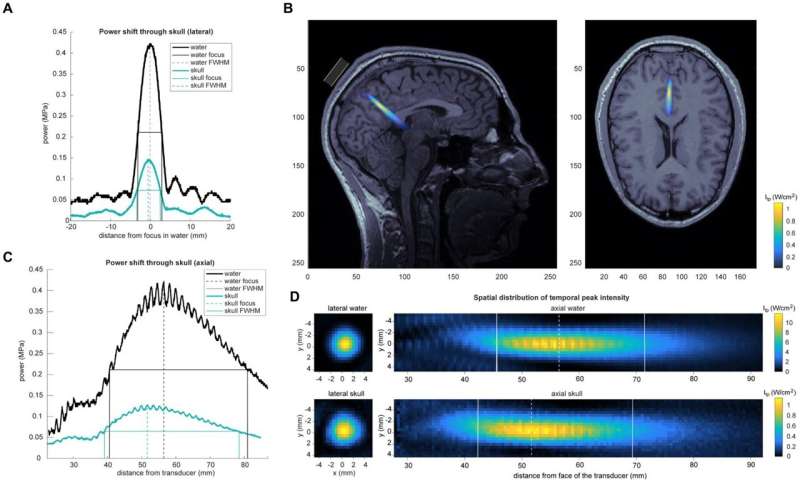
Credit: Frontiers in Human Neuroscience (2024). 

In a new study published in Frontiers in Human Neuroscience, researchers used low-intensity ultrasound technology to noninvasively alter a brain region associated with activities such as daydreaming, recalling memories and envisioning the future. They found that the technique can ultimately enhance mindfulness, marking a major advancement in the field of neuroscience.

New research finds that semaglutide, known as Ozempic/Wegovy, does not negatively impact brain health and may reduce cognitive problems and nicotine dependence.

Exposure to parental smoking (ParS) is associated with an increased risk for multiple sclerosis (MS) in later life in certain populations, according to a study presented at EAN 2024, the 10th Congress of the European Academy of Neurology, held from June 29 to July 2 in Helsinki.

Researchers have identified a new mutation in the ARPP21 gene linked to ALS. This discovery could improve ALS diagnosis and open avenues for personalized therapies. 

A new approach to improving uncertainty estimates in machine-learning models enhances prediction accuracy. The method uses the minimum description length principle to provide more reliable confidence measures for AI decisions, which is crucial in high-stakes settings like healthcare.

A recent study suggests that consciousness evolved not for individual survival, but for social purposes, helping humans communicate ideas and emotions. 

Researchers have discovered a neural activity pattern that can accurately predict and monitor the clinical status of OCD patients undergoing deep brain stimulation (DBS). This study highlights how this biomarker can guide DBS therapy, improving treatment outcomes for those with severe, treatment-resistant OCD.

New research could transform how we understand the way opioids affect the brain. 

A new study has found how the protein CGRP affects the brain’s lymphatic system, contributing to migraine pain. Their study reveals that CGRP prevents cerebrospinal fluid from draining, influencing migraine attacks.

Researchers have developed a neural network that mimics human decision-making by incorporating elements of uncertainty and evidence accumulation. 

Research published in Science Advances shows neurobiological underpinnings of sex and gender in children to better understand how sex (assigned at birth) and gender (identity and expression) influence the brain, and ultimately a person’s health.

A new study shows that by age three, children can understand others’ intentions using active mirror neurons.

For the first time, scientists have found that sleep can be detected by patterns of neuronal activity just milliseconds long, 1,000 times shorter than a second, revealing a new way to study and understand the basic brain wave patterns that govern consciousness. They also show that small regions of the brain can momentarily “flicker” awake while the rest of the brain remains asleep, and vice versa from wake to sleep.

A neuroimaging study of young people who exhibit a persistent pattern of disruptive, aggressive, and antisocial behavior, known as conduct disorder, has revealed extensive changes in brain structure.

Retired rugby players who have suffered multiple concussions have higher levels of certain proteins in their blood, which may make them more prone to developing diseases such as motor neuron disease (MND), according to a new study.

Researchers have used machine learning to define three subtypes of Parkinson’s disease based on the pace at which the disease progresses.

A new study reveals that psilocybin, the active compound in magic mushrooms, temporarily disrupts brain networks involved in introspective thinking, like daydreaming and memory. These changes persist for weeks, potentially making the brain more flexible and improving mental health. The findings could pave the way for psilocybin-based therapies for depression and PTSD. The research underscores the importance of using these drugs under medical supervision.

Scientists have established new criteria for a memory-loss syndrome in older adults that specifically impacts the brain’s limbic system.

A recent study links sleep preferences to brain performance, finding that “night owls” often score higher on cognitive tests than “morning larks.” Researchers analyzed data from over 26,000 people, highlighting that sleeping 7-9 hours a night optimizes brain function.

Finally this week, new research has demonstrated that activation of the brain’s reward system could boost recovery from a heart attack. 

Why Is Yawning So Contagious?

Yawning: A reflex act of opening one’s mouth wide and inhaling deeply.  

Why do we yawn? Snakes do it, fish do it, even babies in the womb do it – but the truth is nobody really knows why.  However the emergence of the new discipline of neuroscience – the scientific study of the nervous system – is investigating why we humans yawn – and the answers might surprise you.

Time to yawn

It happens on hot days more than on cold, which leads to speculation that yawning cools the brain. On the other hand, someone running a fever yawns less than normal, while uncontrollable yawning maybe a symptom of diabetes or a stroke. Yawning often peaks just before bed-time but then, oddly enough, stops when we are lying down – still awake – in bed. Yawning is also common just after we get up – when, presumably, we are not tired at all.  

Theories abound

Different species do it for different reasons – birds may use it as a cooling mechanism while snakes appear to use it to readjust their detachable jaws after swallowing a large meal. In humans yawning is believed to have evolved as a social cue to signal to others – an expectation that something different or novel is about to happen – a kind of non-verbal way of saying ‘time for us all to go to bed’. This might explain the increase in yawning observed in parachutists about to jump and in negotiators – the moment talks take an unexpected turn.

Yawning is catching

But there is another unexpected twist to yawning. Like laughing and vomiting – yawning in humans is a contagious behaviour. Once we see someone else do it we are inclined to copy it.  Yawning is in fact by far the most contagious behaviour for us humans and such a spontaneous copying response to a second person’s signal of mood is an unmistakable sign of empathy; the ability to understand and to react to someone else’s state of mind. This might explain why people with autism or with schizophrenia find it hard to yawn – and they respond less to the yawns of others than do most of us.

Show you care – yawn back

Empathy is what makes us kind and people-friendly and the speed and extent with which a person yawns in response to your yawn may be a fast way of finding out if he or she is on your emotional wavelength – a kind of non-verbal way of saying ‘I feel you brother’.  In this way, yawns are most contagious within families but are less inclined to be copied by strangers. The captain of a football team might yawn in the dressing room before an important game and then watch to see who is ‘with him’.  

Mirror mirror on the wa…. yawn

The recent discovery of the so-called mirror neuron system in the brain which helps us to respond sympathetically and empathetically to others may help explain why yawning is associated with empathy, Mirror neurons help connect us emotionally to other people. They help us to respond sympathetically towards others and allow us to anticipate others intentions. When you watch a good movie with good actors then that’s why you feel the way you do. In this way, yawning may be a powerful non-verbal activator of the mirror neuron system in others – explaining why it is so contagious.

He who dares – yawns

Far from being bad manners, yawning is a sign of our deep humanity. So, go on give a giant yawn for mankind.

Is the search for the cause of autism a hall of mirrors?

The ‘broken mirror’ theory is a popular theory in autism research but it seems that all is not as it appears as  a high-profile paper in Neuron reports that people with autism do not have trouble understanding others’ actions or intentions or even imitating those actions1.

Monkey see, monkey do.

Mirror neurons were discovered by neuroscientists in the 90’s while recording the activity of nerve cells or neurons in the brains of monkeys where it was noticed that certain neurons remain silent when the monkeys observe other monkeys performing the same action2 – hence the name mirror neuron.

Scientists have extended this finding in the human brain to show that nerve activity in mirror neurons also remain silent when observing another person performing an action and/or expressing an emotion3 and this silence is not observed in people with autism – hence the ‘broken mirror’ theory of autism.

Getting it “write”

However in a 2007 study 25 children with autism were compared with non-autistic ‘controls’ on several goal-directed imitation (mirror) tasks shown to activate regions of the brain believed to contain mirror neurons4. In one experiment, the children sat at a table and were asked to copy an adult as she touched a pattern of dots on the tabletop. The study showed that normal healthy children make typical errors on this task – for instance copying the adult’s goal but using the wrong hand. The children with autism made exactly the same error, meaning that they selectively imitate the goal of the action and both groups show the same pattern of brain activity in brain regions believed to contain mirror neurons. These findings suggest that there is nothing wrong with basic mirror systems in people with autism.

Hall of mirrors

Part of the problem may be that the ‘broken mirror’ theory relies on several unsupported assumptions: that the mirror system is responsible for understanding goals and imitation, that goal understanding and imitation are abnormal in autism, and that these deficits cause the social difficulties seen in autism.

It’s all about connections

One possible explanation is that the mirror neuron system itself could be normal in autism, but its projections, or the brain regions it is projecting to, could be abnormal instead.  Also, the mixed findings could be due to the broad spread of the autism spectrum disorders.

References:

  1. Dinstein, I.et al. Neuron 13, 461-469 (2010) PubMed
  2. Rizolatti G. et al. Brain Res. Cogn. Brain Res. 3, 131-141 (1996) PubMed
  3. CochinS. et al. Electroencephalogr. Clin. Neurophysiol. 107, 287-295 (1998) PubMed
  4. HamiltonA. F. et al. Neuropsychologia 45, 1859-1868 (2007) PubMed

Weekly Round Up

Does crossing your arms relieve pain?

In this week’s round up of the latest research in the field of neuroscience, UCLA professor of cognitive neuroscience Sophie Scott explains the psychology behind laughter.

In Scientific American, Katherine Harmon explores how human brains are optimally tuned for the visual hunt.

Many studies suggest that people learn by imitating through mirror neurons. A new study shows for the first time that prosody — the music of speech — also works on a mirror-like system.

A recent report in the Journal Pain reveals that crossing your arms may relieve pain, by confusing the brain.