Weekly Neuroscience Update

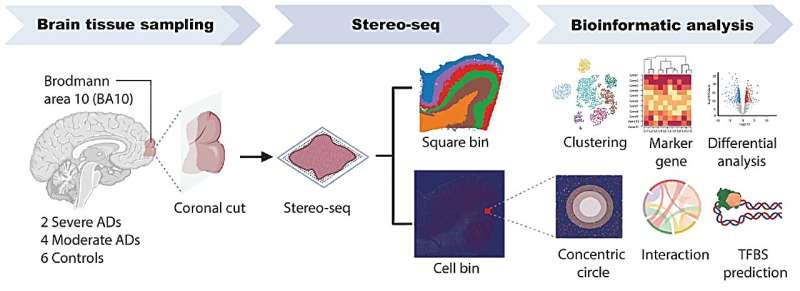
The analysis pipeline of the study, with select figures created using BioRender. Credit: Nature Communications (2025)

Scientists have developed a novel, detailed map at the subcellular level of a brain region frequently impacted by Alzheimer’s disease. This groundbreaking achievement represents a significant advancement in understanding the mechanisms underlying the development of this neurodegenerative condition.

New research shows that AI can identify complex regional pain syndrome (CRPS) with over 90% accuracy by analyzing gut microbiome patterns. 

Mindfulness exercises paired with music were found to engage both neural and cardiac systems, potentially reducing symptoms of anxiety and depression. A recent study showed that live and virtual music mindfulness sessions lowered stress and altered states of consciousness, though only live sessions fostered social connection.

A long-term study shows that teenagers who maintain or increase physical activity levels are less likely to develop symptoms of depression.

Researchers have developed a brain-computer interface (BCI) that enables computer cursor control and clicking, using neural signals from the speech motor cortex. One participant with amyotrophic lateral sclerosis (ALS) used the interface for daily life activities, including independent control of a personal desktop computer and text entry.

New research shows that targeting emotional processing is key to treating and managing chronic pain.

In a first-of-its-kind clinical study, researchers have shown that patients with treatment-resistant PTSD were symptom-free up to six months after completing traditional therapy paired with vagus nerve stimulation (VNS).

Scientists using living human brain tissue have shown for the first time how a toxic form of a protein linked to Alzheimer’s can stick to and damage the connections between brain cells.

People whose biological age is higher than their chronological age may be more likely to develop dementia than people whose biological age matches or is lower than their chronological age, according to a study published online in Neurology. Biological age is based on biomarkers of aging such as lung function, blood pressure and cholesterol.

A recent study reveals that oxygen tension elevation during weeks four to six promotes neurogenesis in brain organoids, regulated by neuroglobin. The research is published in Science Advances.

Obstructive sleep apnea, a condition that causes lower oxygen levels during sleep, is linked to degeneration of brain regions associated with memory through damage to the brain’s small blood vessels, according to a study published in Neurology.

A new theory suggests that psychedelics promote empathy, insight, and psychological flexibility by making the brain’s right hemisphere temporarily dominant over the left. 

A revolutionary microscopy method called LICONN enables scientists to reconstruct brain tissue and map synaptic connections using standard light microscopes. By embedding brain tissue in hydrogel, expanding it, and imaging at nanoscale resolution, researchers achieve a detailed view of neuronal architecture previously only possible with electron microscopy.

A new music therapy-based tool called MuSICCA may transform how healthcare teams assess consciousness in children with severe brain injuries. 

Research from Emory University has identified a biological connection between inflammation and deficits in motivation in individuals with schizophrenia, offering new hope for treating symptoms that have long been resistant to existing therapies.

A Yale-led study shows that the senses stimulate a region of the brain that controls consciousness—a finding that might inform treatment for disorders related to attention, arousal, and more.

Finally this week, a new study has debunked the common myth that autistic people are less effective communicators than non-autistic individuals. Researchers found no difference in how well information was shared between autistic-only, non-autistic-only, or mixed groups.

Weekly Neuroscience Update

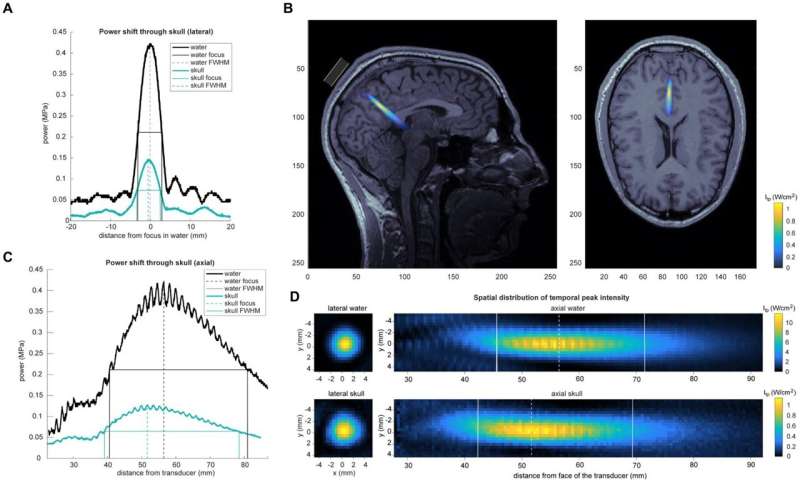
Credit: Frontiers in Human Neuroscience (2024). 

In a new study published in Frontiers in Human Neuroscience, researchers used low-intensity ultrasound technology to noninvasively alter a brain region associated with activities such as daydreaming, recalling memories and envisioning the future. They found that the technique can ultimately enhance mindfulness, marking a major advancement in the field of neuroscience.

New research finds that semaglutide, known as Ozempic/Wegovy, does not negatively impact brain health and may reduce cognitive problems and nicotine dependence.

Exposure to parental smoking (ParS) is associated with an increased risk for multiple sclerosis (MS) in later life in certain populations, according to a study presented at EAN 2024, the 10th Congress of the European Academy of Neurology, held from June 29 to July 2 in Helsinki.

Researchers have identified a new mutation in the ARPP21 gene linked to ALS. This discovery could improve ALS diagnosis and open avenues for personalized therapies. 

A new approach to improving uncertainty estimates in machine-learning models enhances prediction accuracy. The method uses the minimum description length principle to provide more reliable confidence measures for AI decisions, which is crucial in high-stakes settings like healthcare.

A recent study suggests that consciousness evolved not for individual survival, but for social purposes, helping humans communicate ideas and emotions. 

Researchers have discovered a neural activity pattern that can accurately predict and monitor the clinical status of OCD patients undergoing deep brain stimulation (DBS). This study highlights how this biomarker can guide DBS therapy, improving treatment outcomes for those with severe, treatment-resistant OCD.

New research could transform how we understand the way opioids affect the brain. 

A new study has found how the protein CGRP affects the brain’s lymphatic system, contributing to migraine pain. Their study reveals that CGRP prevents cerebrospinal fluid from draining, influencing migraine attacks.

Researchers have developed a neural network that mimics human decision-making by incorporating elements of uncertainty and evidence accumulation. 

Research published in Science Advances shows neurobiological underpinnings of sex and gender in children to better understand how sex (assigned at birth) and gender (identity and expression) influence the brain, and ultimately a person’s health.

A new study shows that by age three, children can understand others’ intentions using active mirror neurons.

For the first time, scientists have found that sleep can be detected by patterns of neuronal activity just milliseconds long, 1,000 times shorter than a second, revealing a new way to study and understand the basic brain wave patterns that govern consciousness. They also show that small regions of the brain can momentarily “flicker” awake while the rest of the brain remains asleep, and vice versa from wake to sleep.

A neuroimaging study of young people who exhibit a persistent pattern of disruptive, aggressive, and antisocial behavior, known as conduct disorder, has revealed extensive changes in brain structure.

Retired rugby players who have suffered multiple concussions have higher levels of certain proteins in their blood, which may make them more prone to developing diseases such as motor neuron disease (MND), according to a new study.

Researchers have used machine learning to define three subtypes of Parkinson’s disease based on the pace at which the disease progresses.

A new study reveals that psilocybin, the active compound in magic mushrooms, temporarily disrupts brain networks involved in introspective thinking, like daydreaming and memory. These changes persist for weeks, potentially making the brain more flexible and improving mental health. The findings could pave the way for psilocybin-based therapies for depression and PTSD. The research underscores the importance of using these drugs under medical supervision.

Scientists have established new criteria for a memory-loss syndrome in older adults that specifically impacts the brain’s limbic system.

A recent study links sleep preferences to brain performance, finding that “night owls” often score higher on cognitive tests than “morning larks.” Researchers analyzed data from over 26,000 people, highlighting that sleeping 7-9 hours a night optimizes brain function.

Finally this week, new research has demonstrated that activation of the brain’s reward system could boost recovery from a heart attack. 

Weekly Neuroscience Update

Those who exercise regularly may lower their risk of developing anxiety by 60%, researchers report.

A study published in the journal Sleep shows that a deep neural network model can accurately predict the brain age of healthy patients based on electroencephalogram data recorded during an overnight sleep study, and EEG-predicted brain age indices display unique characteristics within populations with different diseases.

A new study reveals a correlation between instances of eye contact and higher levels of engagement during conversations.

Researchers have developed a deep learning-based method that can predict the possible onset of Alzheimer’s disease from brain images with an accuracy of over 99 per cent. The method was developed while analysing functional MRI images obtained from 138 subjects and performed better in terms of accuracy, sensitivity and specificity than previously developed methods.

Scientists in Japan have identified metabolic compounds within the blood that are associated with dementia.

New research published in Cortex provides evidence that a brain region known as the ventromedial prefrontal cortex contributes to cognitive biases in decision making. People with damage to this area of the brain often experience changes in personality and social behavior. But the new findings suggest that ventromedial prefrontal cortex damage can also make people more rational under some circumstances.

An immunological molecule called fractalkine can boost the production of brain cells that produce myelin, a key factor in diseases such as multiple sclerosis, according to recent research from the University of Alberta.

According to two studies conducted in Serbia during the COVID-19 lockdown, elite athletes and individuals who engaged in vigorous levels of exercise demonstrated the lowest psychological distress during this time. The findings, published in Frontiers in Psychology, further underscored the importance of adaptability, showing that athletes who reduced their training schedules during the early stages of lockdown showed lower distress than those who maintained them.

Finally this week, a new AI algorithm can predict the onset of Alzheimer’s disease with an accuracy of over 99% by analyzing fMRI brain scans.

Weekly Neuroscience Update

New research reveals that neurons in the visual cortex—the part of the brain that processes visual stimuli—change their responses to the same stimulus over time.

Menopause can mess with your memory, and a new study has identified four profiles of cognitive function that may help researchers understand why memory declines for some women and not others. This adds to the mounting evidence of the memory changes that can happen when menopause approaches and could lead to better guidance and treatment for patients experiencing memory issues.

Testing for some inflammatory proteins associated with the nervous and immune systems will help diagnose the earlier onset and progression of Alzheimer’s disease, according to a Rutgers study.

Researchers have recently carried out a study investigating the role of the X-chromosome on human brain anatomy. Their findings, published in a paper in Nature Neuroscience, highlight the key role of the X-chromosome in human neurodevelopment.

A new study explores a new non-dopamine reward circuitry in the brain.

An analysis of data from 1.5 million people has identified 579 locations in the genome associated with a predisposition to different behaviors and disorders related to self-regulation, including addiction and child behavioral problems.

Virtual reality helps to relieve pain and anxiety for children undergoing medical procedures, researchers report.

Scientists have long suspected that religiosity and spirituality could be mapped to specific brain circuits, but the location of those circuits remains unknown. Now, a new study using novel technology and the human connectome, a map of neural connections, has identified a brain circuit that seems to mediate that aspect of our personality.

Finally this week, researchers reveal the neurobiological basis of why we often find it more difficult to find the right words as we age.

Weekly Neuroscience Update

Two new research studies have identified the neural signals underlying music imagery. These neural signals are related to melodic expectations and predictions.

Short naps of up to 60 minutes in duration do not mitigate the effects of a night of sleep deprivation, a new study reports. However, the amount of slow-wave sleep achieved during a nap was related to reduced impairments associated with sleep deprivation.

30% of people reported changes in cognition, memory, and problems with information processing as a result of social isolation caused by pandemic lockdowns.

Some proteins in cells can separate into small droplets like oil droplets in water, but faults in this process may underlie neurodegenerative diseases in the brains of older people. Now, Rutgers researchers have developed a new method to quantify protein droplets involved in these diseases.

A new study reveals how dopamine may have a central role in maintaining our consciousness.

It’s long been known that opioid overdose deaths are caused by disrupted breathing, but the actual mechanism by which these drugs suppress respiration was not understood. Now, a new study by Salk scientists has identified a group of neurons in the brainstem that plays a key role in this process.

A new advanced imaging technique shows how cholesterol regulates the production of Alzheimer’s associated amyloid beta proteins in astrocytes.

A recent experimental study shows how regular physical exercise modulates iron metabolism in both the brain and the muscles. The findings also help to better understand the benefits of exercise in Alzheimer’s disease.

A new AI model can accurately classify a brain tumor of one of six common cancer types from a single MRI brain scan image.

A tiny region in the middle of the brain plays a far more important role than previously known in helping it respond to changes in the environment, a new study shows.

The brain’s white matter pathway organization during the first year of life may predict language acquisition and development at age five, researchers say.

Finally this week, mindfulness may provide modest benefits to cognition, particularly among older adults, finds a new review of evidence.

Weekly Neuroscience Update

A new algorithm that combines naturalistic driving data with machine learning is 88% accurate at predicting mild cognitive impairment and dementia in older adults.

People with schizophrenia and other neuropsychiatric disorders may have a more permissive blood-brain barrier which allows the immune system to become more actively involved in the central nervous system. The resulting inflammation may contribute to the clinical manifestation of psychosis-like symptoms.

Mindfulness programs can improve the mental health of school-age children and help them to feel more optimistic, according to new research.

A new study finds evidence of inflammation in the blood of patients during the early stages of Parkinson’s disease. The findings support the theory that inflammation is a driver of the neurodegenerative disorder. The effect was most noticeable in women with Parkinson’s.

Taking a daily prebiotic supplement improves general wellbeing, reduces symptoms of anxiety, and promotes better gut health, a new study reports.

Researchers propose a new theory of what happens in the brain when we experience familiar seeming visual stimuli. The theory, dubbed sensory referenced suppression, suggests the brain understands different levels of activation expected for sensory input and corrects for it, leaving behind the signal for familiarity.

A new study shows that heart brain interactions, measured using electroencephalography (EEG), provide a novel diagnostic avenue for patients with disorders of consciousness.

A multidecade study of young adults living in the United Kingdom has found higher rates of mental illness symptoms among those exposed to higher levels of traffic-related air pollutants, particularly nitrogen oxides, during childhood and adolescence.

The brain encodes information about our relationships and the relationships between our friends using areas involved in spatial processing, according to new research published in Journal of Neuroscience.

Weekly Neuroscience Update

mindfulness-pain-neurosciencenews.jpg

Whole brain analyses revealed that higher dispositional mindfulness during painful heat was associated with greater deactivation of a brain region called the posterior cingulate cortex, a central neural node of the default mode network. Further, in those that reported higher pain, there was greater activation of this critically important brain region. image is credited to Zeidan et al.

Ever wonder why some people seem to feel less pain than others? A  new study may have found one of the answers – mindfulness.

Researchers at the Kavli Institute for Systems Neuroscience in Norway in have discovered a network of brain cells that express our sense of time within experiences and memories.

A new study reveals elevated glial activation in the brains of those with fibromyalgia.

Brains of baby boys born prematurely are affected differently and more severely than premature infant girls’ brains. This is according to a study published in the Springer Nature-branded journal Pediatric Research.

According to researchers, the speed at which a person speaks influences the way we hear and understand upcoming words. 

A new study reports under conditions of stress, KCNB1 builds up in the brain, before becoming toxic and promoting the production of amyloid beta. In Alzheimer’s patients, the KCNB1 levels are higher than in those without the condition.

Researchers report pyramidal neurons in the basolateral amygdala help us to recognize and categorize foods.

A new study sheds additional light on how the brain consolidates memory during sleep. Researchers report rapid fluctuations in gamma band activity in the hippocampus during nREM sleep helps facilitate memory reactivation.

Finally this week, researchers report on how the brain learns to recognize an individual face, regardless of where it appears in different visual locations.


Weekly Round Up

How does cigarette addiction affect the brain?

The effects of nicotine upon brain regions involved in addiction mirror those of cocaine, according to new neuroscience research.

Aspirin and other anti-inflammatory drugs taken for pain relief may reduce the effectiveness of anti-depressants such as Prozac, say US researchers.

Moments of absent mindedness such as losing your keys could be the result of tiny parts of the brain taking “naps” to recharge, a study finds.Researchers discovered that contrary to popular opinion the brain is not always entirely asleep or awake but parts of it can go “offline”.

Neuroscientists at the California Institute of Technology and their colleagues have tied the human aversion to losing money to a specific structure in the brain-the amygdala.

Music is not only able to affect your mood — listening to particularly happy or sad music can even change the way we perceive the world, according to researchers from the University of Groningen.

The positive effects of mindfulness meditation on pain and working memory may result from an improved ability to regulate a crucial brain wave called the alpha rhythm. This rhythm is thought to “turn down the volume” on distracting information, which suggests that a key value of meditation may be helping the brain deal with an often-overstimulating world. And in other  mindfulness research – fMRI shows how mindfulness meditation changes the decision making process


Weekly Round Up

Research shows that our brains understand music not only as emotional diversion, but also as a form of motion and activity.

Research shows that our brains understand music not only as emotional diversion, but also as a form of motion and activity. The same areas of the brain that activate when we swing a golf club or sign our name also engage when we hear expressive moments in music. Brain regions associated with empathy are activated, too, even for listeners who are not musicians.

And still on the theme of music and the brain, a recent study of seventy healthy adults ages sixty to eighty-three with various levels of music education starting around the age of ten showed impressive differences in brain functioning far later in life than any other research has previously shown.

A new study has suggested that sustained training in mindfulness meditation may impact distinct domains of human decision-making, enabling them to make decisions rationally.

Older bilingual adults compensate for age-related declines in brainpower by developing new strategies to process language, according to a recent study published in the journal Aging, Neuropsychology, and Cognition.

Emerging research suggest antidepressant medications may aid creation and survival of new brain cells after a brain injury.

New study examines brain processes behind facial recognition 

Finally, here is an interesting post from Chris Mooney on the science of why we don’t believe science.