Weekly Neuroscience Update

An extensive study has shed new light on the global lifespan changes in the brain’s functional connectivity. Their findings reveal developmental patterns in the brain that could provide valuable information for future investigations into various neuropsychiatric and cognitive disorders.

A new meta-analysis reveals that Electroconvulsive Therapy (ECT) reduces suicide risk by 34% and all-cause mortality by 30% in individuals with severe depression. 

The difference between the brain’s predicted age and actual chronological age, called a brain age gap, may influence the relationship between cognitive impairment risk factors, like high blood pressure and diabetes, and a person’s cognitive performance, also known as thinking and memory skills, according to a study published in Neurology.

Scientists have developed a groundbreaking 3D brain model that closely mirrors the architecture and function of the human brain.

New findings challenge the idea that curiosity simply fades with age. Instead, “state curiosity”—a specific drive to learn—actually intensifies later in life. This increased interest in personally relevant topics among older adults may be a key factor in maintaining cognitive health.

A recent study reveals that prenatal exposure to common air pollutants is associated with subtle but measurable changes in fetal brain structure during the second and third trimesters.

New research shows that the brain’s cortex can rapidly reorganize itself after losing neurons, allowing other nerve cells to take over lost functions. Scientists studied neural networks in the auditory cortex and found that although sound-processing patterns were briefly disrupted, the brain formed nearly identical patterns within days.

A novel study aimed at disentangling the neurological underpinnings of depression shows that multiple brain profiles may manifest as the same clinical symptoms, providing evidence to support the presence of both one-to-one and many-to-one heterogeneity in depression.

Heading a soccer ball alters the brain, research spearheaded by the University of Sydney has found, despite having no immediate impact on cognition.

Results from a new clinical trial reveal that a single dose of psilocybin—a naturally occurring psychedelic compound found in mushrooms—can provide sustained reductions in depression and anxiety in individuals with cancer suffering from major depressive disorder. The findings are published in Cancer.

Finally, this week, new research has found a compelling link between the composition of the gut microbiome and the risk of cognitive impairment in adults.
Weekly Neuroscience Update

Scientists have identified how depression alters the brain’s response to positive and negative stimuli, particularly in the amygdala, a key emotional processing center. The study found that depression reduces neural activity linked to positive perceptions while increasing it for negative perceptions.

People with atrial fibrillation (AF) who have a stroke could benefit from blood thinning treatments, known as anticoagulants, at an earlier stage than is currently recommended, finds a new study.

Researchers from the University of Oxford have identified a key biochemical mechanism relevant to the development of Huntington’s disease. This discovery opens up the possibility of studying the disease before its clinical onset and eventually stopping its progression.

Childhood attention issues, coupled with genetic predispositions, increase the likelihood of experiencing psychotic-like symptoms in adolescence.

UCLA Health researchers have found that people who experienced discrimination had pro-inflammatory bacteria and gene activity in their gut microbiome that was different from those who did not experience discrimination. The researchers could also predict with 91% accuracy which study participants faced discrimination by only analyzing their gut microbiome using stool samples.

A new study links hundreds of brain proteins to differences in how brain regions communicate, revealing how microscale molecules can influence macroscale brain connectivity.

Lifetime cannabis use is associated with several changes in brain structure and function in later life, suggests an observational study, but these associations may not be causal, finds a genetic analysis of the same data, published in the open access journal BMJ Mental Health. Meanwhile, new research shows that prenatal exposure to cannabis can negatively impact children’s thinking and behavioral skills, including impulse control, attention, and aggression.

A type of therapy that involves applying a magnetic field to both sides of the brain has been shown to be effective at rapidly treating depression in patients for whom standard treatments have been ineffective. The treatment—known as repetitive transcranial magnetic stimulation (TMS)—involves placing an electromagnetic coil against the scalp to relay a high-frequency magnetic field to the brain.

Scientists have identified new cell clusters in the amygdala for anxiety treatment.

Just one or two sessions of physical activity at the weekend may be just as likely to lower the risk of cognitive decline, which can often precede dementia, as more frequent sessions, concludes research published online in the British Journal of Sports Medicine.

A new study finds a link between genetic markers and neuropathic pain.

Finally this week, ultrasound, once used almost exclusively to take images of the body, is quickly developing into a targeted therapy that can have a potentially life-changing impact on our brains, according to the authors of a new article.


Weekly Neuroscience Update

How Would It Be to Have the Body of a Child Again? Changes in Perception and Behaviors Demonstrated When Embodying a Child Avatar

A research, recently published on the journal Proceedings of the National Academy of Sciences, suggests that a correlate of a body-ownership illusion is that the virtual type of body carries with it a set of temporary changes in perception and behaviours that are appropriate to that type of body.

A new study, published in the New England Journal of Medicine, examined whether or not higher glucose levels without diabetes was a risk factor for dementia.  Diabetes is already a known risk factor for dementia, but this study aimed to determine if the risk factor for diabetes is a risk factor for dementia.  Studying 2,067 participants without dementia, 232 of which already had diabetes, the researchers collected follow-up data after approximately seven years.  They found a significantly higher risk of dementia in individuals with higher than average blood glucose even if they did not have diabetes. Meanwhile, a study by researchers at Umeå University in Sweden suggests nine different factors that can increase the risk of developing dementia before age 65. The results have been published by the journal JAMA Internal Medicine.

Meditating before lectures can lead to better grades according to a new experimental study by George Mason University professor Robert Youmans and University of Illinois doctoral student Jared Ramsburg.

Researchers at Johns Hopkins have uncovered a protein switch that can either increase or decrease memory-building activity in brain cells, depending on the signals it detects. Its dual role means the protein is key to understanding the complex network of signals that shapes our brain’s circuitry, the researchers say.

Different parts of the brain are affected in women with autism than in men with autism, according to a new study.

Ending a 30-year search by scientists, researchers at Boston Children’s Hospital have identified two proteins in the inner ear that are critical for hearing, which, when damaged by genetic mutations, cause a form of delayed, progressive hearing loss.

Researchers have found human brains ‘divide and conquer’ when people learn to navigate around new environments. The research by UQ’s Queensland Brain Institute (QBI) could provide hope for people with spatial memory impairments.

Researchers have discovered how genetic mutations linked to Parkinson’s disease might play a key role in the death of brain cells, potentially paving the way for the development of more effective drug treatments.

The largest genome-wide study of its kind has determined how much five major mental illnesses are traceable to the same common inherited genetic variations. Researchers funded in part by the National Institutes of Health found that the overlap was highest between schizophrenia and bipolar disorder; moderate for bipolar disorder and depression and for ADHD and depression; and low between schizophrenia and autism. Overall, common genetic variation accounted for 17-28 percent of risk for the illnesses.

Weekly Neuroscience Update

Two powerful brain chemical systems work together to paralyze skeletal muscles during rapid eye movement (REM) sleep, according to new research in The Journal of Neuroscience. The finding may help scientists better understand and treat sleep disorders, including narcolepsy, tooth grinding, and REM sleep behavior disorder.

Raising levels of the neurotransmitter dopamine in the frontal cortex of the brain significantly decreased impulsivity in healthy adults, in a study conducted by researchers at the Ernest Gallo Clinic and Research Center at the University of California, San Francisco.

Neuroscientists have found strong evidence that vivid memory and directly experiencing the real moment can trigger similar brain activation patterns.

Severe psychological and physical neglect produces measurable changes in children’s brains, finds a study led by Boston Children’s Hospital. But the study also suggests that positive interventions can partially reverse these changes.

Scientists at Johns Hopkins have discovered a “scaffolding” protein that holds together multiple elements in a complex system responsible for regulating pain, mental illnesses and other complex neurological problems.

Society for Neuroscience Annual Meeting

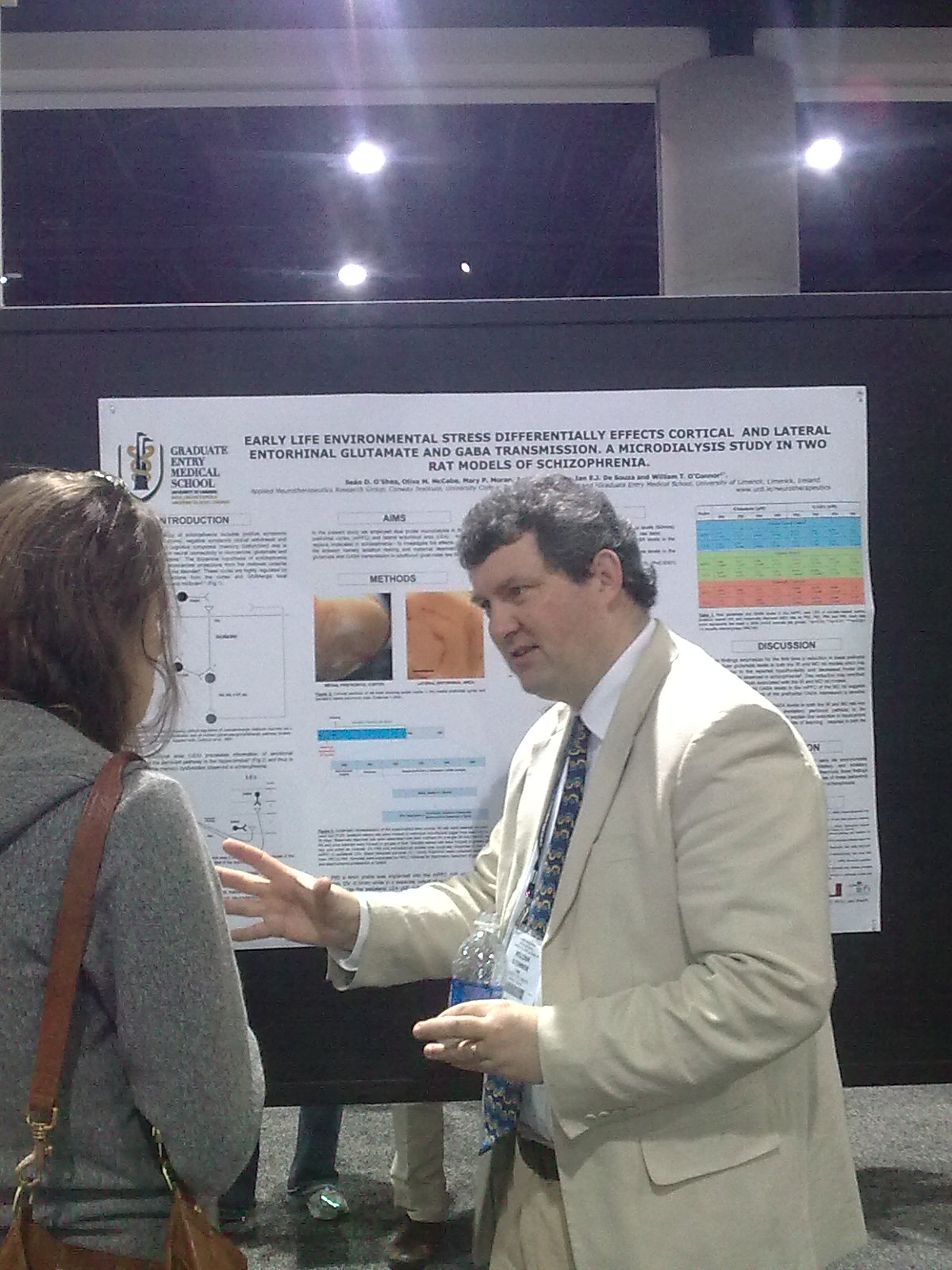
I have just returned from the Society for Neuroscience Annual Meeting in San Diego, California, at which I made a poster presentation.

The Society for Neuroscience annual meeting is the premier venue for neuroscientists from around the world to debut cutting-edge research. Since 1971, the meeting has offered attendees the opportunity to learn about the latest breakthroughs and network with colleagues at top destinations throughout North America.

One of the highlights of the meeting was a talk on Saturday by award-winning actress Glenn Close whose presentation, entitled “Bringing Change to Mind on Mental Illness,” focused on how science and society can work together to change minds on mental illness. Acknowledging that much work must be done to help the American public understand that mental illness is a brain disease, Close tackled questions like: “how do we reduce misconceptions, stigma, and bias that confront those with conditions like depression, bipolar disorder, and PTSD?” and “how can we help the public discern fact from fiction to bring positive change for families struggling with mental illness?” Glenn Close’s nephew, Calen Pick, and her sister, Jessie Close, also spoke about their personal struggles with mental illness.

View the full video of presentation 

On Monday, Rep. Patrick Kennedy, a tireless advocate for biomedical research and for people struggling with brain-based illnesses, highlighted his vision for a new campaign for brain research at Neuroscience 2010. Kennedy delivered the special presentation, entitled “A Neuroscience ‘Moonshot’: Rallying a New Global Race for Brain Research,” to a crowd filled with Neuroscience 2010 attendees and the general public at the San Diego Convention Center. His speech addressed the urgency of helping a generation of veterans affected by PTSD and TBI, and how public advocacy combined with growing science funding can help realize major advances in basic research and translational application for all brain-based conditions.

View the full video of Kennedy’s presentation.

I will be writing more in coming posts on the many interesting insights I gained from the meeting.

My poster presentation, SFN 2010, San Diego