

Ketamine: Lessons from the Death of Matthew Perry

The entertainment world was recently shaken by the tragic passing of Matthew Perry, the beloved actor best known for his role as Chandler Bing on the iconic sitcom “Friends.” Perry’s death, linked to a ketamine overdose, has cast a spotlight on this complex drug, its therapeutic potential, and its inherent dangers. In this post, we’ll explore ketamine’s effects on the brain, its promise in mental health treatment, and the critical need for responsible use and regulation.

Ketamine: A Brief Overview
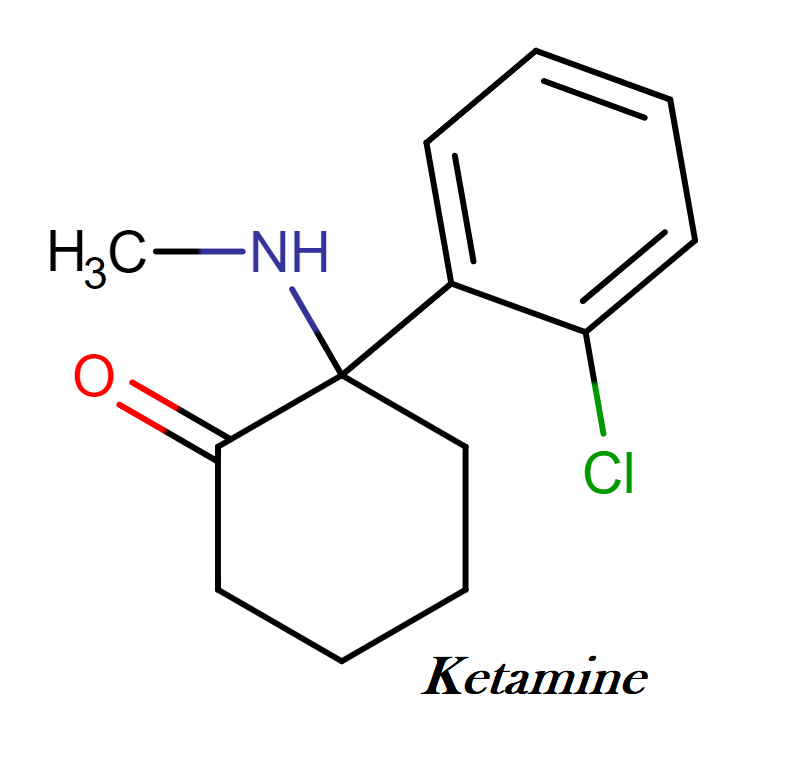
Ketamine, first synthesized in 1962, has a long history as an anesthetic and analgesic. During the late 1960s, ketamine was marketed as the dissociative (out-of-body experience) anesthetic, under the name Ketalar and was used to treat soldiers in the Vietnam War. The abuse potential of ketamine was recognized in the early 1970s, but reports of ketamine abuse in human and veterinary medicine did not appear until the early 1980s in Australia and in the early 1990s in the United States. In recent years, it has gained significant attention for its rapid antidepressant effects, particularly in cases of treatment-resistant depression. Ketamine’s primary mechanism of action involves blocking the NMDA receptor for glutamate in the brain, leading to a dissociative state and a cascade of neurochemical changes.

Ketamine’s Impact on the Brain

Findings from my own laboratory in 1997 showed that repeated ketamine intake alters the balance between the neurotransmitters dopamine and serotonin in the brain. Ketamine’s interaction with the NMDA receptor for glutamate triggers a surge in glutamate, a neurotransmitter vital for learning and memory. This glutamate surge is thought to promote the growth of new synapses and neural connections, particularly in brain regions associated with mood regulation. Additionally, ketamine disrupts the default mode network (DMN), a brain network linked to rumination and self-referential thinking, which may contribute to its antidepressant effects. Research also suggests that ketamine may stimulate neurogenesis (the growth of new neurons) and promote neuroplasticity (changes in neural connections).

Ketamine’s Impact on the Mind

Ketamine’s psychological actions have been characterized as similar to temporary schizophrenia. Healthy volunteers receiving ketamine in an experiment have experienced sensations reminiscent of LSD. Ketamine can prompt people to feel like they are becoming transparent, blending into nearby individuals, or becoming an animal or object. Users may feel like their bodies are transforming into harder or softer substances. Persons may think they remember experiences from a past life. Some users take the drug to enter a semi-paralytic state described as similar to near-death experiences in which people perceive their consciousness as floating above their bodies, sometimes accompanied by meaningful hallucinations and by insights about the user’s life and its proper place in the cosmos.

The Promise of Ketamine in Mental Health

When administered at a therapeutic dose ketamine’s rapid antidepressant effects have revolutionized the field of mental health treatment. Studies have shown that a single therapeutic dose of ketamine can alleviate depressive symptoms within hours, offering hope to individuals who have not responded to traditional antidepressants. In fact, so effective is therapeutic ketamine that it has been proposed as a chemical replacement for electroconvulsive therapy (ECT) and it may eventually replace the need for ECT altogether. Beyond depression, ketamine is being investigated for its potential in treating anxiety disorders, PTSD, and addiction.

The Perils of Ketamine

While ketamine holds immense therapeutic promise, it is crucial to acknowledge its risks. Ketamine can cause dissociative effects, hallucinations, and other adverse reactions. Moreover, it has a potential for abuse and addiction, as tragically illustrated by Matthew Perry’s case. Long-term effects of ketamine use on brain function and cognition remain an area of ongoing research.

Lessons from the Death of Matthew Perry

Matthew Perry’s untimely death serves as a poignant reminder of the dangers of substance abuse, even with substances that have therapeutic potential. It underscores the critical need for responsible use, careful monitoring, and effective regulation of ketamine.

Weekly Neuroscience Update

Credit: Nature Mental Health (2023)

Researchers have identified important new methods for accurately identifying possible biomarkers in adolescent brains that can reliably predict cognitive developments and psychiatric issues.

A new study has examined the neural processes underlying odor processing in the human olfactory system and how the brain handles odor information from different nostrils and details the finding that each nostril has its own sense of smell, recording a distinct representation of the odor information it encounters.

A groundbreaking discovery suggests that dendrites could be pivotal in learning processes and may even influence our understanding of brain states and degenerative diseases.

A new study reveals the brain’s swift response to human errors compared to unintended outcomes. The study found that the brain recognizes an error within one second and then engages in a longer process to prevent future errors. This process was absent when the outcome wasn’t a direct result of an action, indicating a specialized error-awareness mechanism in the brain.

Researchers have identified new therapeutic targets for progressive supranuclear palsy (PSP), an incurable brain disorder with symptoms mimicking Parkinson’s and dementia.

A speech prosthetic developed by a collaborative team of neuroscientists, neurosurgeons, and engineers can translate a person’s brain signals into what they’re trying to say. The new technology might one day help people unable to talk due to neurological disorders regain the ability to communicate through a brain-computer interface.

It’s been debated for decades, but now researchers have suggested that left-handedness is not linked to better spatial skills.

A new study sheds light on when adolescents start thinking like adults. Researchers found that executive function, critical for task-switching and focus, typically matures around 18 years old. Drawing from over 10,000 participants and multiple datasets, this large-scale study offers a developmental chart for teen cognitive growth. These findings are invaluable for education, psychiatry, and the judicial system.

Emerging research underscores the profound connection between mental health and heart disease, with depression and anxiety hastening the onset of cardiovascular risk factors.

Researchers have discovered a potential link between the microbe C. perfringens and the progression of multiple sclerosis (MS). The study hints at the prospect of developing a vaccine or alternative treatments in the near future.

In a new study, researchers use a very large dataset to identify predictive brain imaging-based biomarkers of mental illness in adolescents.

Using advanced brain scanning technology, a research team has revealed insights into what happens in the brain during an advanced form of meditation called jhana. By uncovering distinct patterns of activity in different regions of the brain during jhana, the research suggests exciting possibilities for innovative therapies merging ancient meditation practices with modern neuroscience to improve well-being.

Finally this week, new research suggests your biological age, more than the years you’ve lived, may predict your risk of dementia and stroke in the future.

Using Your Brain To Improve Your Own Mental Health #WorldMentalHealthDay

The key to a happy life

The key to a happy life is the ability to transcend personal suffering, find a balance, and recognise that the world has problems. This requires mental effort and those of us who strive to better understand ourselves in the world come out the other side as a new person, with some peace of mind and a way to live.

Fundamental or accidental?

A limit to understanding ourselves in the world is the fact that we do not know that some of the things we perceive to be truly fundamental today may actually be just accidental. For instance, the brain uses systematic patterns of thought to produce philosophy including science, mathematics, literature, ideas, and beliefs including a belief in a deity to guide us towards new insights. What we need to understand is that none of these may be fundamental in themselves. They are just tools that our ancestors used to probe the unknown and to see what is possible – knowing that what is common for us is just a tiny sliver of what actually exists.

Accidental fundamentalism is often mistaken for truth

In the West, we have made the truth our highest value. This motivation while important is weak compared to the actual power of belief. We are born into a culture that often insists on a particular religious or ideological philosophy as fact and the only way to understand ourselves in the world, but adhering to this belief may cause personal suffering by impeding insights necessary to achieve peace of mind. Resisting enculturation is the highest expression of human psychological development and is a hallmark of what is called in psychology the fully self-actualised person.

Recasting reality

Self-actualisers reject accepted cultural ‘truths’ and see beyond the confines of an era to achieve a clearer perception of reality. A further subtle difference sets these people apart. Most of us see life as striving to get this or that – whether it be material things or having a family or doing well career-wise. Self-actualizers in contrast do not strive as much as develop. They are only ambitious to the extent of being able to express themselves more fully and perfectly, delighting in what they are able to do. Another general point is their profound freedom of mind. In contrast to the conforming pressures around them, self-actualizers are a walking example of free will.

Mental health requires courage

In this way, happiness can be described as personal autonomy. The independence of mind to explore and choose the best skills and tools needed to achieve personal insight. Where you are no longer beholden to culture, creed, or religion and without any attendant guilt or fear in abandoning old ways in order to try new ones as you evolve to become the master of your own fate.

What to believe?

Mental health is two things:(i) being in touch with reality and (ii) being open to new experiences. But here’s the thing – there is no reality only perception. Understand that the world is not necessarily as you perceive it. Everyone has filters and only by acknowledging them can you begin to get a clearer picture. Even in a close relationship, the same simple act can be viewed differently. A man will see paying all the bills as his duty while his wife will see it as an act of love. Appreciate that your views might be prejudices. Most importantly make sure that the perceptions you do retain or adopt are grounded in verifiable facts and can be tested. Otherwise, any actions you take based on your beliefs will be on shaky ground.

Mental Health Requires Courage #WorldMentalHealthDay

He who increases knowledge, increases sorrow but who wants to live a life of ignorance?

The key to a happy life

The key to a happy life is the ability to transcend personal suffering, find a balance, and recognise that the world has problems. This requires mental effort and those of us who strive to better understand ourselves in the world come out the other side as a new person, with some peace of mind and a way to live.

Fundamental or accidental?

A limit to understanding ourselves in the world is the fact that we do not know that some of the things we perceive to be truly fundamental today may actually be just accidental. For instance, the brain uses systematic patterns of thought to produce philosophy including science, mathematics, literature, ideas and beliefs including a belief in a deity to guide us towards new insights. What we need to understand is that none of these may be fundamental in themselves. They are just tools that our ancestors used to probe the unknown and to see what is possible – knowing that what is common for us is just a tiny sliver of what actually exists.

Accidental fundamentalism is often mistaken for truth

In the West we have made the truth our highest value. This motivation while important is weak compared to the actual power of belief. We are born into a culture which often insists on a particular religious or ideological philosophy as fact and the only way to understand ourselves in the world, but adhering to this belief may cause personal suffering by impeding insights necessary to achieve peace of mind. Resisting enculturation is the highest expression of human psychological development and is a hallmark of what is called in psychology as the fully self-actualised person.

Recasting reality

Self-actualisers reject accepted cultural ‘truths’ and see beyond the confines of an era to achieve a clearer perception of reality. A further subtle difference sets these people apart. Most of us see life as striving to get this or that – whether it be material things or having a family or doing well career wise. Self-actualizers in contrast do not strive as much as develop. They are only ambitious to the extent in being able to express themselves more fully and perfectly, delighting in what they are able to do. Another general point is their profound freedom of mind. In contrast to the conforming pressures around them self-actualizers are a walking example of free will.

Mental health requires courage

In this way happiness can be described as personal autonomy. The independence of mind to explore and choose the best skills and tools needed to achieve personal insight. Where you are no longer beholden to culture, creed or religion and without any attendant guilt or fear in abandoning old ways in order to try new ones as you evolve to become the master of your own fate.

What to believe?

Mental health is two things:(i) being in touch with reality and (ii) being open to new experiences. But here’s the thing – there is no reality only perception.

Understand that the world is not necessarily as you perceive it. Everyone has filters and only by acknowledging them can you begin to get a clearer picture. Even in a close relationship the same simple act can be viewed differently. A man will see paying all the bills as his duty while his wife will see it as an act of love. Appreciate that your views might be prejudices.

Most importantly make sure that the perceptions you do retain or adopt are grounded in verifiable fact and can be tested. Otherwise any actions you take based on your beliefs will be on shaky ground.

Using Your Brain To Improve Your Own Mental Health

He who increases knowledge, increases sorrow but who wants to live a life of ignorance?

The key to a happy life

The key to a happy life is the ability to transcend personal suffering, find a balance, and recognise that the world has problems. This requires mental effort and those of us who strive to better understand ourselves in the world come out the other side as a new person, with some peace of mind and a way to live.

Fundamental or accidental?

A limit to understanding ourselves in the world is the fact that we do not know that some of the things we perceive to be truly fundamental today may actually be just accidental. For instance, the brain uses systematic patterns of thought to produce philosophy including science, mathematics, literature, ideas and beliefs including a belief in a deity to guide us towards new insights. What we need to understand is that none of these may be fundamental in themselves. They are just tools that our ancestors used to probe the unknown and to see what is possible – knowing that what is common for us is just a tiny sliver of what actually exists.

Accidental fundamentalism is often mistaken for truth

In the West we have made the truth our highest value. This motivation while important is weak compared to the actual power of belief. We are born into a culture which often insists on a particular religious or ideological philosophy as fact and the only way to understand ourselves in the world, but adhering to this belief may cause personal suffering by impeding insights necessary to achieve peace of mind. Resisting enculturation is the highest expression of human psychological development and is a hallmark of what is called in psychology as the fully self-actualised person.

Recasting reality

Self-actualisers reject accepted cultural ‘truths’ and see beyond the confines of an era to achieve a clearer perception of reality. A further subtle difference sets these people apart. Most of us see life as striving to get this or that – whether it be material things or having a family or doing well career wise. Self-actualizers in contrast do not strive as much as develop. They are only ambitious to the extent in being able to express themselves more fully and perfectly, delighting in what they are able to do. Another general point is their profound freedom of mind. In contrast to the conforming pressures around them self-actualizers are a walking example of free will.

Mental health requires courage

In this way happiness can be described as personal autonomy. The independence of mind to explore and choose the best skills and tools needed to achieve personal insight. Where you are no longer beholden to culture, creed or religion and without any attendant guilt or fear in abandoning old ways in order to try new ones as you evolve to become the master of your own fate.

What to believe?

Mental health is two things:(i) being in touch with reality and (ii) being open to new experiences. But here’s the thing – there is no reality only perception. Understand that the world is not necessarily as you perceive it. Everyone has filters and only by acknowledging them can you begin to get a clearer picture. Even in a close relationship the same simple act can be viewed differently. A man will see paying all the bills as his duty while his wife will see it as an act of love. Appreciate that your views might be prejudices. Most importantly make sure that the perceptions you do retain or adopt are grounded in verifiable fact and can be tested. Otherwise any actions you take based on your beliefs will be on shaky ground.

As part of the Limerick Lifelong Learning Festival 2021 I will give a public talk on Thursday, May 27th @ 4pm entitled: What to believe? The brain and the nature of truth in a post-COVID world. In this talk you will learn how the brain provides insights, values and priorities in informing the mind as to what it believes to be true, and how you can use this information to improve your own mental health

Click here to register via Eventbrite https://bit.ly/3ffa2LQ 

Weekly Neuroscience Update

Newly formed emotional memories can be erased from the human brain. This is shown by researchers from Uppsala University in a new study now being published by the academic journal Science. The findings may represent a breakthrough in research on memory and fear.

A growing body of research shows that children who suffer severe neglect and social isolation have cognitive and social impairments as adults. A study from Boston Children’s Hospital shows, for the first time, how these functional impairments arise: Social isolation during early life prevents the cells that make up the brain’s white matter from maturing and producing the right amount of myelin, the fatty “insulation” on nerve fibers that helps them transmit long-distance messages within the brain.

People with psychopathic tendencies have an impaired sense of smell, which points to inefficient processing in the front part of the brain [orbitofrontal cortex]. These findings by Mehmet Mahmut and Richard Stevenson, from Macquarie University in Australia, are published online in Springer’s journal Chemosensory Perception.

According to new research of MRI scans of children’s appetite and pleasure centers in their brains, the logos of such fast-food giants as McDonald’s, Pizza Hut, and Burger King causes those areas to “light up”.

New signs of future Alzheimer’s disease have been identified by researchers at Lund University and Skane University in Sweden. Dr. Peder Buchhave and his team explain that disease-modifying treatments are more beneficial if started early, so it is essential identify Alzheimer’s disease patients as quickly as possible.

A new study from MIT neuroscientists sheds light on a neural circuit that makes us likelier to remember what we’re seeing when our brains are in a more attentive state.

Neuroscience News Update

University of Georgia researchers have developed a map of the human brain that shows great promise as a new guide to the inner workings of the body’s most complex and critical organ.

Brains that maintain healthy nerve connections as we age help keep us sharp in later life, new research funded by the charity Age UK has found.

The brain reward systems of women with anorexia may work differently from those of women who are obese, a new study suggests.

Emotional stress caused by last year’s tsunami caused a part of some survivors’ brains to shrink, according to scientists in Japan who grasped a unique chance to study the neurological effects of trauma. On a quest to better understand post-traumatic stress disorder (PTSD), the researchers compared brain scans they had taken of 42 healthy adolescents in other studies in the two years before the killer wave, with new images taken three to four months thereafter. Among those with PTSD symptoms, they found a shrinking in the orbitofrontal cortex, a part of the brain involved in decision-making and the regulation of emotion, said a study published in the Nature journal Molecular Psychiatry.

Weekly Round Up


All in the mind: Repressing bad memories for long enough can lead to us forgetting them completely, researchers claim

Fear burns memories into our brain, according to new research by University of California, Berkeley and if those memories are causing you distress, a team of researchers from Lund University in Sweden may have the answer. People can train their minds to erase embarrassing moments from their mind, according to their research. Scientists used EEG scans to monitor the parts of the brain that became active when volunteers actively tried to forget something. They were also able to pinpoint the exact moment a memory is ‘forgotten’, and claim that long-term suppression of a memory is a sure-fire way of permanently erasing it. The researchers say that mastering the technique could be useful for people who suffer from depression or post traumatic stress disorder, where constantly dwelling on upsetting or traumatic memories has a devastating effect on mental health.

And on the subject of PTSD, researchers at the Max Planck Institute of Psychiatry in Munich, are looking into the link between post-traumatic stress disorder and shrinkage of the hippocampus structure in the brain. (The hippocampus, which is Greek for “seahorse,” is a paired structure tucked inside each temporal lobe and shaped like a pair of seahorses, thence its name).

When we find something funny, our brains as well as our faces “light up” and the funnier we find a joke, the more activity is seen in “reward centres” – specific neurons which create feelings of pleasure, recent research shows.

Another region of the brain which also ‘lights up’  is in the medial orbito-frontal cortex when we experience beauty in a piece of art or a musical excerpt, according to new research funded by the Wellcome Trust. The study, published July 6 in the open access journal PLoS One, suggests that the one characteristic that all works of art, whatever their nature, have in common is that they lead to activity in that same region of the brain, and goes some way to supporting the belief that beauty does indeed lie in the beholder.


Set Your Brain to Meditate

Ursula Bates, Billy O'Connor

Ms Ursula Bates, keynote speaker, UL Research Forum and Professor Billy O'Connor

I was delighted to host the  Fourth Annual  University of Limerick Medical School Research Forum last Wednesday, 19 January, where over twenty researchers from the University of Limerick and local teaching hospitals made presentations on topics ranging from pharmaceuticals, biomedical devices, medical technology, community health, gastrointestinal and vascular surgery, psychiatry and communications.

A leading clinical psychologist and Director of Psychosocial and Bereavement Services at Blackrock Hospice, Dublin, Ms Ursula Bates, delivered the keynote address  Mindfulness Based Interventions in Oncology and Palliative Care and Bereavement-Research Advances”.

Ursula’s talk has prompted me to explore in more detail the nature of mindfulness and how its practice can lead to improved brain function and  mental health.

Let’s start by taking a look at the latest scientific research which has shown that  the practice of meditation  actually changes the shape of the brain, allowing specific areas in the brain to grow or change.  This finding has established a new field of contemplative neuroscience – the brain science of meditation – and helps to explain how meditation acts to improve brain function and mental health.

Mindfulness and mindlessness

Have you ever written a cheque in January with the previous years date? …for most of us the answer is probably yes. Scientists now know that these small mistakes are actually the tip of a mindlessness iceberg!  Mindfulness harnesses one of the great themes in all self help literature – the need to be free of unconsciously accepted habits and norms.

Five qualities of a mindful person

  1. Ability to create new categories
  2. Openness to new information
  3. Awareness of more than one perspective
  4. Attention to process (i.e. ‘doing’) rather than outcome or results.
  5. Trusting in one’s own intuition

Over the coming week we will explore these points in more detail and look at ways in which we can learn to break free from the trap of mindlessness.