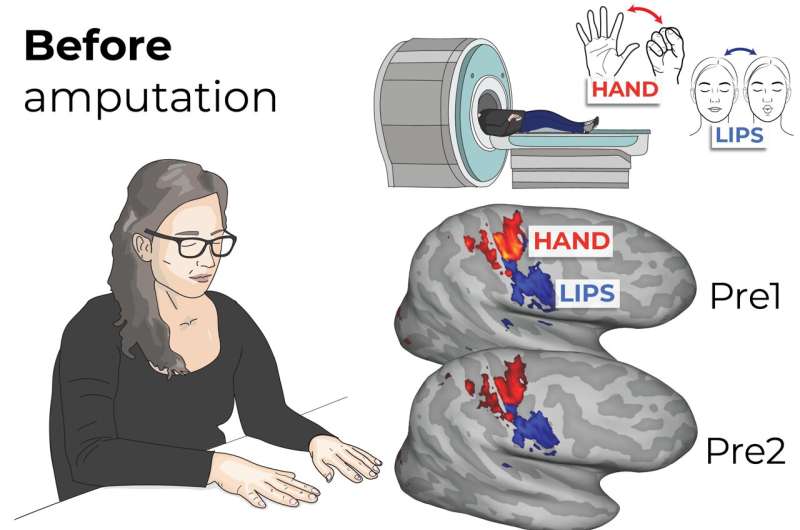
Brain activity maps for the hand (shown in red) and lips (blue) before the amputation (Pre1 and Pre2) and after amputation (three, six and 18 months post-amputation). Credit: Tamar Makin / Hunter Schone
The brain holds a “map” of the body that remains unchanged even after a limb has been amputated, contrary to the prevailing view that it rearranges itself to compensate for the loss, according to new research.
A fading sense of smell can be one of the earliest signs of Alzheimer’s disease even before cognitive impairments manifest.
Scientists have developed a computational framework that maps how the striosomal compartment of the striatum governs everyday decision-making. By integrating biology, decision theory, and mathematical modeling, different levels of striosomal activity can push individuals toward impulsive, balanced, or overly complex decisions.
A recent study has shown that the brain leaves subtle traces of creativity minutes before an “aha!” moment.
New research has raised concerns about the safety of acetaminophen use during pregnancy, linking prenatal exposure to higher risks of autism and ADHD. While the evidence does not prove causation, it highlights biological mechanisms such as oxidative stress and hormone disruption that may affect fetal brain development. Researchers recommend cautious, time-limited use under medical supervision and call for safer treatment alternatives.
A new study has found that people who lived in areas with high levels of leaded gasoline emissions in the 1960s and ’70s are more likely to report memory problems today.
A multi-institution research team reports that gaze patterns can serve as a sensitive marker of cognitive decline, with associated reductions in explorative, adaptive, and differentiated visual sampling of the environment.
New research reveals that different types of music shape the emotional tone of the memories they evoke.
A genetic study has identified more than 400 genes that drive different forms of unhealthy aging, from cognitive decline to metabolic problems. The findings show that frailty is not a single condition but multiple subtypes with distinct biological pathways.
Finally, this week, a new study suggests the brain may be a missing link in certain forms of high blood pressure or hypertension.
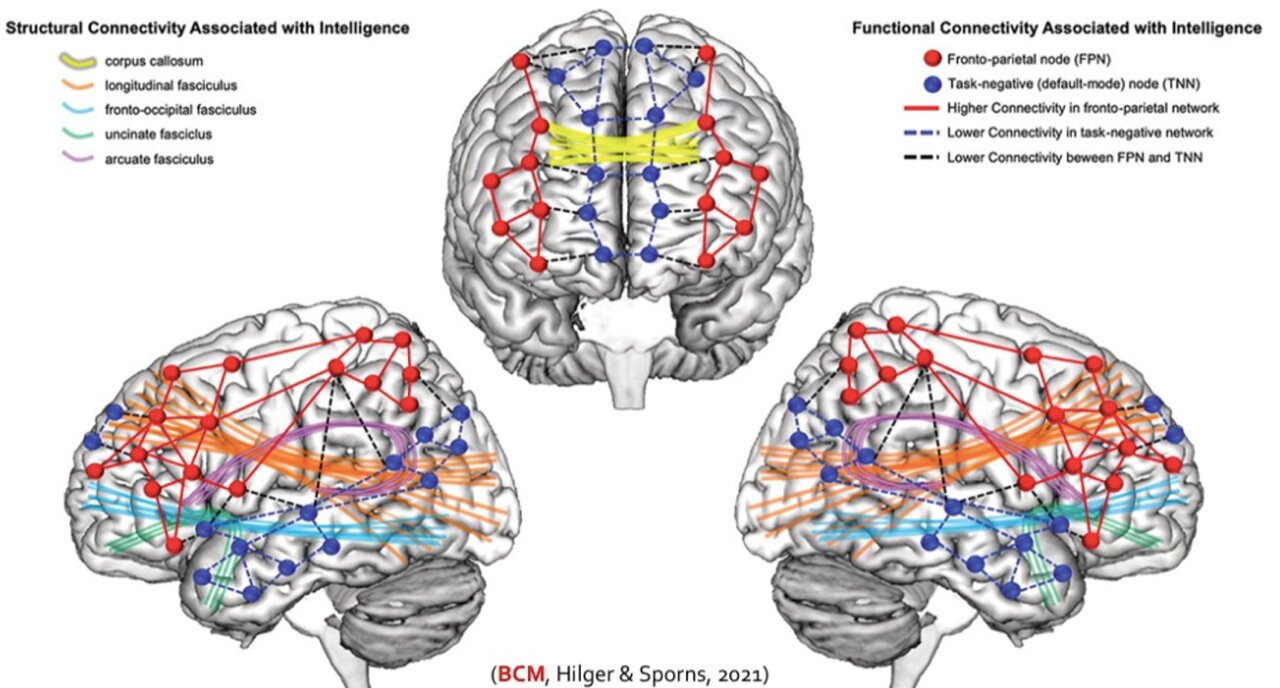
The Brain Connectivity Model of Intelligence. Schematic illustration of selected brain connections that have been linked to intelligence differences across studies. Adapted from Hilger & Sporns, 2021. Credit: Thiele et al.
Neuroscientists have developed machine learning models to predict human intelligence.
Researchers have found that incorporating specific nutrients into a regular diet may reduce iron buildup in the brain—a factor associated with cognitive decline in normal aging. The research team said the findings offer valuable insights for future clinical trials aimed at evaluating the impact of similar nutritional intake on brain iron accumulation and cognitive function.
The short-term boost our brains get after we do exercise persists throughout the following day, suggests a study led by UCL (University College London) researchers.
Thirteen proteins linked to brain aging in humans areidentifiedin a Nature Aging paper. Changes in the concentrations of these blood proteins may peak at 57, 70, and 78 years old in humans, and suggest that these ages may be important for potential interventions in the brain aging process.
A team of scientists has uncovered a novel mechanism that reshapes our understanding of how blood flow is regulated in the brain. The study, published in The Proceedings of the National Academy of Sciences introduces Electro-Calcium (E-Ca) Coupling, a process that integrates electrical and calcium signaling in brain capillaries to ensure precise blood flow delivery to active neurons.
Researchers at the Yale School of Medicine found structural and functional alterations in specific brain regions of individuals with opioid use disorder. The study’s results were published in Radiology.
A new study has identified a unique brain network that links varied patterns of brain atrophy, or shrinkage, associated with schizophrenia. By combining neuroimaging data from multiple studies involving more than 8,000 participants, the research team found a specific connectivity pattern of atrophy that was present across different stages and symptoms of schizophrenia—and distinct from brain networks associated with other psychiatric disorders.
New research provides valuable insights into the brain-body immune connection, identifying key communication hubs in the dural sinuses and skull bone marrow at the back of the head.
New research shows that slow-wave sleep strengthens synaptic connections in the neocortex, making it more receptive to long-term memory formation. Researchers found that during deep sleep, synapses in the neocortex reach peak efficiency at precise moments within slow-wave oscillations.
A new study suggests how brain, with sleep, learns meaningful maps of spaces.
A large-scale study revealed that genetic variants linked to dyslexia are associated with differences in brain areas controlling motor coordination, vision, and language. Using data from over a million individuals, researchers calculated genetic “polygenic scores” for dyslexia and analyzed their relationship to brain structures. Higher genetic risk for dyslexia was tied to lower volumes in brain regions related to speech processing and movement, and increased volumes in the visual cortex. Differences in the brain’s internal capsule, which connects regions, were also observed.
Cognitive impairment, especially in learning and memory, is more likely among people with epilepsy, according to a newly published study.
A recent study explores how connections across the entire brain predict human intelligence, moving beyond traditional focus on specific brain areas like the prefrontal cortex. Using fMRI data from over 800 individuals, researchers analyzed communication between brain regions to predict fluid, crystallized, and general intelligence scores. Findings reveal that distributed brain-wide connections play a crucial role, surpassing existing models that emphasize localized regions. This research highlights intelligence as a global property of the brain, offering fresh perspectives for understanding cognitive processes.
The chromosomal disorder 22q11.2 deletion syndrome (22q) has emerged as one of the strongest risks for schizophrenia.
New research reveals that brain structure varies with reading ability, particularly in the left hemisphere. Better readers have distinct traits, including a larger anterior temporal lobe for integrating word meaning and a thicker left Heschl’s gyrus for phonological processing.
Night shifts and poor sleep quality are associated with an increased risk for incident epilepsy, according to a study published in BMC Public Health.
People with severe, treatment-resistant depression who received a nerve-stimulating therapy showed significant improvement in depressive symptoms, quality of life and ability to complete everyday tasks after a year, according to the results of a national, multicenter clinical trial.
Finally this week, researchers have found a relationship between lifestyle choices that affect dementia risk and early signs of aging in the brain.
Loneliness, often considered a pervasive and silent epidemic, extends its influence far beyond emotions. Recent research has delved into the relationship between loneliness and the brain, revealing a complex interplay between loneliness and our brain’s neural patterns. The findings reveal that irrespective of social connections, lonely individuals exhibit distinct brain responses, underscoring the profound influence of this emotional state on neurological function.
The Stress Response and Cortisol
Loneliness emerges as a trigger for the stress response embedded in the brain’s complex architecture. This emotional state sets off a cascade of physiological reactions, with the release of stress hormones, particularly cortisol. Cortisol, often referred to as the “stress hormone,” serves as a vital player in the body’s response to challenging situations. However, when loneliness becomes a persistent companion, the continuous surge of cortisol can become a double-edged sword, influencing various aspects of brain health.
Memory, a fundamental component of cognitive function, becomes susceptible to the influence of heightened cortisol levels. Chronic exposure to stress hormones has been associated with memory impairment, affecting both the formation of new memories and the retrieval of existing ones. The toll on memory processes paints a vivid picture of how loneliness, as a chronic stressor, can compromise cognitive abilities.
Moreover, the prefrontal cortex, a pivotal region of the brain responsible for higher-order functions such as decision-making, emotional regulation, and social behavior, becomes a focal point of the impact of loneliness. Prolonged exposure to elevated cortisol levels has been linked to structural changes in the prefrontal cortex, including a reduction in size. This structural alteration may contribute to difficulties in decision-making and emotional regulation, creating a cognitive landscape where the challenges faced by lonely individuals extend beyond mere feelings of isolation.
Inflammation: Loneliness’s Silent Companion
Loneliness has been linked to a silent companion—increased levels of inflammation in both the body and the brain. This chronic inflammatory state may have broader implications for neurological health, potentially contributing to cognitive decline and various neurological conditions.
In response to chronic loneliness, the body’s immune system becomes activated, leading to a persistent state of inflammation. This inflammatory response is not confined to peripheral tissues; it permeates the central nervous system, reaching the brain. The intricate crosstalk between the immune system and the brain reveals the far-reaching consequences of loneliness on neurological health.
The chronic inflammatory state associated with loneliness is of particular concern due to its potential implications for cognitive function. Research suggests that prolonged exposure to elevated levels of inflammation may contribute to cognitive decline and an increased risk of various neurological conditions. The brain, normally resilient and adaptive, can become vulnerable to the systemic effects of inflammation, leading to disruptions in neural circuits and cognitive processes.
In the context of loneliness, the inflammatory response may compromise the integrity of the blood-brain barrier, a protective barrier that regulates the passage of substances between the bloodstream and the brain. This compromise can allow inflammatory molecules to enter the brain, where they may trigger localized inflammation and disrupt normal neural function.
Moreover, the chronic inflammatory state linked to loneliness may contribute to oxidative stress—a condition characterized by an imbalance between free radicals and antioxidants in the body. Oxidative stress is known to play a role in neurodegenerative processes and has been implicated in conditions such as Alzheimer’s disease and other cognitive disorders.
Structural Changes in the Brain
Loneliness isn’t merely a psychological state—it extends its influence to cognitive performance. A growing body of research paints a compelling picture of the relationship between loneliness and cognitive performance, emphasizing that loneliness isn’t merely a psychological state—it’s a cognitive challenge that leaves its mark on the brain.
As previously stated, the brain, intricately sensitive to the nuances of social connection, undergoes structural changes in response to loneliness. The hippocampus, a vital region for learning and memory, appears to be particularly susceptible. Research suggests that alterations in the volume of the hippocampus may occur in lonely individuals. These structural changes may not only be markers of the cognitive challenges associated with loneliness but could also contribute to a cycle where loneliness begets cognitive difficulties, and cognitive difficulties perpetuate feelings of isolation.
Lonely individuals, it appears, may navigate a more demanding cognitive landscape compared to their socially connected counterparts. Executive functions, the high-order cognitive processes responsible for tasks such as decision-making, problem-solving, and planning, may be particularly vulnerable in the face of loneliness. Research suggests that lonely individuals may encounter challenges in efficiently executing these cognitive processes, potentially impacting their ability to navigate complex situations and make sound decisions.
Attention, a cornerstone of cognitive performance, also falls under the sway of loneliness. Lonely individuals may exhibit difficulties in sustaining attention and may be more prone to distractions, contributing to decreased cognitive efficiency. The persistent feeling of social isolation can divert cognitive resources towards monitoring social threats or interpreting ambiguous social cues, leaving fewer resources available for tasks that require sustained attention and focus.
Memory, another pillar of cognitive function, is not immune to the influence of loneliness. Studies indicate that lonely individuals may experience alterations in memory processes, affecting both the encoding and retrieval of information. The emotional toll of loneliness can introduce a cognitive bias, influencing the way memories are stored and recalled, potentially contributing to a distorted perception of social experiences.
Sleep Disturbances and Cognitive Consequences
Poor sleep quality, a well-established consequence of loneliness, is more than just a nightly inconvenience. It is a significant factor influencing overall brain health. During sleep, the brain undergoes crucial processes that contribute to cognitive functioning, memory consolidation, and emotional regulation. Disruptions in these processes due to poor sleep quality can result in cognitive consequences that exacerbate the challenges faced by lonely individuals.
Attention, concentration, and decision-making—all critical components of cognitive function—can be impaired when sleep quality is suboptimal. The brain’s ability to process information, learn new things, and adapt to changing circumstances may suffer, amplifying the cognitive challenges faced by those contending with both loneliness and sleep disturbances.
The link between loneliness and sleep disturbances is multifaceted. The emotional distress associated with loneliness can manifest as heightened arousal, anxiety, or rumination during the night, impeding the ability to initiate or maintain restful sleep. Individuals grappling with loneliness may find themselves caught in a cycle where the quiet solitude of the night magnifies their feelings of isolation, further complicating their struggle for a peaceful night’s sleep.
Mental Health and the Loneliness Connection
Loneliness, far from being a fleeting emotion, is intricately intertwined with mental health, and the consequences of this connection reverberate deep within the neural circuits of the brain. Research consistently underscores the heightened risk of mental health issues, particularly depression and anxiety, in individuals grappling with loneliness. The psychological distress stemming from a perceived lack of social connection can cast a shadow over an individual’s thoughts and emotions, contributing to the development or exacerbation of these conditions.
At the neurobiological level, loneliness influences neurotransmitter levels, the chemical messengers that facilitate communication between nerve cells in the brain. Dopamine, serotonin, and norepinephrine, crucial players in regulating mood and emotional states, are particularly affected. Loneliness may lead to imbalances in these neurotransmitter systems, contributing to the manifestation of depressive symptoms and heightened anxiety.
Furthermore, loneliness disrupts the delicate neural circuits responsible for mood regulation. The brain regions involved in emotional processing, such as the amygdala and the prefrontal cortex, experience altered activity in response to chronic loneliness. The amygdala, known for its role in processing emotions, may become hyperactive, amplifying the perception of social threats and fostering a heightened state of emotional arousal. Meanwhile, the prefrontal cortex, essential for regulating emotional responses, may exhibit decreased function, leading to difficulties in emotion regulation and decision-making.
The neural changes associated with loneliness create a feedback loop, reinforcing emotional distress and further compromising mental well-being. Prolonged exposure to these alterations can contribute to the persistence and exacerbation of mental health conditions, creating a challenging cycle for individuals trapped in the grip of loneliness.
Social Pain and Pleasure Systems
Neuroscientific studies reveal that loneliness triggers brain regions associated with physical pain. The neural patterns that activate during experiences of loneliness mirror those observed in response to physical distress, reinforcing the concept of loneliness as a form of social pain. The brain, it seems, interprets social isolation with a response akin to physical injury.
Conversely, positive social interactions, genuine connections, and shared moments of companionship activate the brain’s reward centers. The pleasure derived from such interactions is not merely subjective; it is deeply rooted in the brain’s intricate circuitry. Dopaminergic pathways, particularly those associated with the brain’s reward system, light up, releasing neurotransmitters that generate feelings of happiness, satisfaction, and contentment.
The neurological impact of loneliness is a multifaceted phenomenon, with implications that extend beyond emotional well-being. Understanding and addressing the neuroscience of loneliness becomes imperative for fostering a healthier, more resilient brain.
Deep sleep, also known as non-REM slow-wave sleep, may help reduce memory loss in older adults facing a heightened burden of Alzheimer’s disease. The research indicates that superior amounts of deep sleep can act as a protective factor against memory decline in those with existing high amounts of Alzheimer’s disease pathology, potentially helping to alleviate some of dementia’s most devastating outcomes.
Researchers have discovered new genetic risk factors for non-Alzheimer’s dementia, specifically Lewy body dementia (LBD) and frontotemporal dementia (FTD).
Scientists have made strides in uncovering the mechanisms underlying memory formation and consolidation in the brain during rest or sleep. A new study focuses on the role of the hippocampus, a brain region important for memory, and its place cells which “replay” neuronal sequences. The researchers built an artificial intelligence model to better understand these processes, discovering that sequences of experiences are prioritized during replay based on familiarity and rewards. The AI agent was found to learn spatial information more effectively when replaying these prioritized sequences, offering valuable insight into the way our brains learn and process information.
New research finds that the brains of otherwise healthy military personnel who are exposed to explosions show an abnormal brain accumulation of amyloid-beta protein—a protein that plays a role in the development of Alzheimer’s disease.
A new study has found that people with a genetic risk for psychosis have an imbalance of glutamate and GABA neurotransmitters in their brains, specifically in the hippocampus. This imbalance is associated with hippocampal atrophy, which may lead to the development of psychotic symptoms.
Researchers have developed human brain organoids that contain microglia, the immune cells of the brain. These organoids allow researchers to study how microglia develop and function in a more realistic setting than previous models.
Researchers used artificial intelligence to analyze speech in Parkinson’s disease patients, revealing distinct patterns. The AI found Parkinson’s patients used more verbs but fewer nouns and fillers in their speech, even before cognitive decline typically associated with PD was evident.
A research team has found that the risk of long COVID and its symptoms present very differently across diverse populations.
A new study sheds light on the potential role of diet in preventing dementia. The analysis explored the relationship between gut health and Alzheimer’s disease, uncovering a strong link between specific types of gut bacteria and the likelihood of developing dementia. The findings highlight the significance of gut microbiota in brain health and provide insights into the underlying mechanisms of Alzheimer’s disease.
Finally this week, researchers have created a revolutionary device that emulates the human eye’s ability to see colour.
Viewing interactive art online can improve our mood and reduce anxiety. People reported significant improvements in mood and anxiety after just a few minutes of viewing an interactive Monet Water Lily art exhibition.
The way our senses adjust while playing virtual reality (VR) games affects the severity of cybersickness experienced. Researchers measured how participants perceived the orientation of vertical lines before and after playing two VR games, one high-intensity, and one low-intensity. They found that those who experienced less sickness were more likely to have the largest change in the subjective visual vertical following exposure to VR. The findings could be useful for VR designers and developers in creating more comfortable and enjoyable experiences.
In a new study, scientists have discovered anatomical changes that occur in the brains of patients after their sight is restored.
Scientists have explored the links between three measures known to independently predict healthy aging: nutrient intake, brain structure and cognitive function. Their analysis adds to the evidence that these factors jointly contribute to brain health in older adults.
Young men with cannabis use disorder are more likely to develop schizophrenia, according to a new study.
A new study challenges conventional thinking on the role of short and long-term memories in relearning motor skills. Researchers found that fleeting short-term memories, rather than long-term ones, are responsible for rapid motor learning, indicating the existence of mechanisms for regulating the learning rates for memories that are distinct from the memories themselves.
Poor verbal memory may increase the risk of psychiatric hospitalization for patients diagnosed with bipolar disorder or depression. The severity of the illness was previously thought to have an impact on poor memory, but new research shows that poor memory may also have an impact on the risk of being hospitalized.
Researchers have uncovered crucial findings regarding Long COVID, discovering significant immune system and nervous system changes that could explain the neurological symptoms experienced by patients.
A new study from Aarhus University indicates that certain types of epilepsy medication taken during pregnancy may increase the risk of severe psychiatric disorders in children.The research found a worrying link between the antiseizure medication valproate and the child’s risk of developing psychiatric disorders such as autism, ADHD and intellectual disability.
Finally this week,scientists have recently identified a unique form of cell messaging occurring in the human brain that’s not been seen before. Excitingly, the discovery hints that our brains might be even more powerful units of computation than we realized.
New artificial intelligence technology reveals previously unknown cell components. The findings may shed new light on human development and diseases.
A new mathematical modelexplains how the brain has the ability to continuously acquire new skills, specifically movement-based skills, without forgetting or degrading old ones. The theory, dubbed COIN, suggests identifying current context is key to learning how to move our bodies when acquiring skills.
Playing video games that are heavy on action can make you better at some new tasks. New research reveals that these games are helping by teaching players to be quicker learners.
The “background noise” in the brain disrupts long-memory signals by neurons. This noise interrupts the consistent rhythm of long-memory alpha wave signals in people experiencing identity confusion.
Memory errors may indicate a way in which the human cognitive system is optimally running, researchers say.
Housework is linked to sharper memory, attention span, and better leg strength, and by extension, greater protection against falls, in older adults, finds research published in the open access journal BMJ Open.
Repetitive transcranial magnetic stimulation (rTMS) can be used to modulate brain rhythms and cognitive behaviors related to “giving up” during problem-solving tasks.
New research reveals that specialized cells within neural circuitry that triggers complex learning in songbirds bears a striking resemblance to a type of neural cell associated with the development of fine motor skills in the cortex of the human brain.
Finally this week, a new study links a propensity to binge-watch TV shows with personality traits. Researchers found those who lack impulse control and emotional clarity are most likely to binge-watch a television series.
Distinct information about familiar faces is encoded in a neural code that is shared across brains, according to a new study published in the Proceedings of the National Academy of Sciences.
A new study conducted in adults with a history of childhood maltreatment showed that two groups – those with a history of sexual abuse and those with posttraumatic stress disorder (PTSD) – had reduced brain connectivity in the attention systems known as the ventral and dorsal attention network (VAN-DAN).
New findings reveals dopamine neurons that play a role in learning and memory also drive motivation.
For the first time, researchers have used human data to quantify the speed of different processes that lead to Alzheimer’s disease and found that it develops in a very different way than previously thought. Their resultscould have important implications for the development of potential treatments.
Musical therapy can help to improve fine motor skills in patients with Parkinson’s disease according to new research.
A genetic predisposition for depression combined with exposure to high-particulate-matter air pollution greatly elevates the risk that healthy people will experience depression, according to a first-of-its-kind studypublished in the Proceedings of the National Academies of Sciences (PNAS).
Recently published research found people who continued to spend a higher amount of time sitting between April and June 2020 were likely to have higher symptoms of depression.
A new study, published in the International Journal of MS Care, found that the vibration training improved not only physical symptoms associated with multiple sclerosis, such as increased walking speeds, but also cognitive functions, such as memory capacity and executive function.
A newly developed AI algorithm can directly predict eye position and movement during an MRI scan. The technology could provide new diagnostics for neurological disorders that manifest in changes in eye-movement patterns.
A team of researchers has found a possible connection between depression and anxiety for IBD patientsand the vascular barrier in the brain choroid plexus closing. In their paper published in the journal Science, the group describes their study of the gut-brain axis response to inflammation and its link to psychiatric illnesses.
Researchers have created the first body map of sensations experienced during hallucinations in people experiencing psychosis.
Recent resarch reveals the severity of PTSD symptoms was associated with fewer risky choices and increased activation of the amygdala. Decreased activity in the ventral striatum, an area of the brain associated with processing positive valence such as reward, predicted more severe PTSD symptoms 14 months post-trauma.
Finally this week, people who consume a diet containing anti-inflammatory foods, including fruits, vegetables, and coffee, are less likely to develop dementia as they age, a new study reports.
Thousands of branches and branchlets emanate from an astrocyte’s cell body, which is the dense portion in the middle of the image.
A new study published in Neuron challenges the idea that astrocytes across the brain are largely identical.
Researchers have identified a new protein, CIB2, that is key to helping the auditory system to turn soundwaves into meaningful brain signals. Mutations of this gene leave people unable to convert the soundwaves into signals that the brain can interpret, and are deaf.
The more regularly people report doing word puzzles such as crosswords, the better their brain function in later life, a large-scale online trial has found.
How short-term memories become long-term ones has frequently been explored by researchers. While a definitive answer remains elusive, scientists conclude that this transformation is best explained by a “temporal hierarchy” of “time windows” that collectively alter the state of the brain.
Greater muscle strength is associated with better cognitive function in ageing men and women, according to a new Finnish study.
Researchers at King’s College London have identified a molecular mechanism that allows neural connections to adapt as a result of experience. This adaptation fuels our ability for memory and learning.
Researchers have developed a concept called Empowerment to help robots and humans to work and live side-by-side safely and effectively.
A study of post-traumatic stress disorder (PTSD) has identified a new potential mechanism contributing to the biology of the disorder that may be targeted by future treatments.
A new study reveals those who die at 100 tend to suffer from fewer diseases than those who die at younger ages.
A new paper identifies 100 of the most cited neuroscience research papers. Of these papers, 78 focus on five topics. According to the authors of the paper, the most cited neuroscience research topics include the prefrontal cortex, neural connectivity, methodology, brain mapping and neurological disorders. The findings could have significant impact for future neuroscience studies.
Changes in the brain’s structure that could be the result of depression have been identified in a major scanning study.
The same mechanisms that quickly separate mixtures of oil and water are at play when controlling the organization in an unusual part of our DNA called heterochromatin, according to a new study.
New researchhas shown just how adaptive the brain can be, knowledge that could one day be applied to recovery from conditions such as stroke.
Changes in the orbitofrontal cortex and basolateral amygdala may help explain a person’s preference for uncertain outcomes, as well as a preference for order and certainty, a new study reports.
Finally this week, a small patch of neurons in the braincan encode the movements of many body parts, according to new research.
Our brain is especially good at perceiving lines and contours even if they do not actually exist, such as the blue triangle in the foreground of this optical illusion. The pattern of neuronal connections in the brain supports this ability.
Researchers have identified how our brains are so good at perceiving contours and edges. The study, published in Nature, reports neurons are most likely to connect if they react to edges that lie on a common axis and the structure of the world around us is mirrored in the pattern of synapses.
A new study reports bilingual people think about time differently depending on the language context they are estimating event duration.
The first large study to rigorously examine brain-training games using cognitive tests and brain imaging adds to evidence that they are not particularly good at training brains and appear to have no more effect on healthy brains than video games.
Scientists report that listening to something while looking in a different direction may slow reaction times and increase the effort for auditory attention.
The part of the brain that helps control emotion may be larger in people who develop post-traumatic stress disorder (PTSD) after brain injury compared to those with a brain injury without PTSD, according to a new study.
Researchers are investigating why certain language abilities are lost as a result of a traumatic brain injury, and how others can be regained.
A recently published study investigates time perception and temporal information processing in people with schizophrenia. It reveals the internal clock in schizophrenics does not necessarily run slower or faster than in healthy individuals, but rather it does not run at a consistent speed.
Finally, this week, using music to learn a physical task develops an important part of the brain, according to a new study.





 inside-the-brain.com