

Ketamine: Lessons from the Death of Matthew Perry

The entertainment world was recently shaken by the tragic passing of Matthew Perry, the beloved actor best known for his role as Chandler Bing on the iconic sitcom “Friends.” Perry’s death, linked to a ketamine overdose, has cast a spotlight on this complex drug, its therapeutic potential, and its inherent dangers. In this post, we’ll explore ketamine’s effects on the brain, its promise in mental health treatment, and the critical need for responsible use and regulation.

Ketamine: A Brief Overview
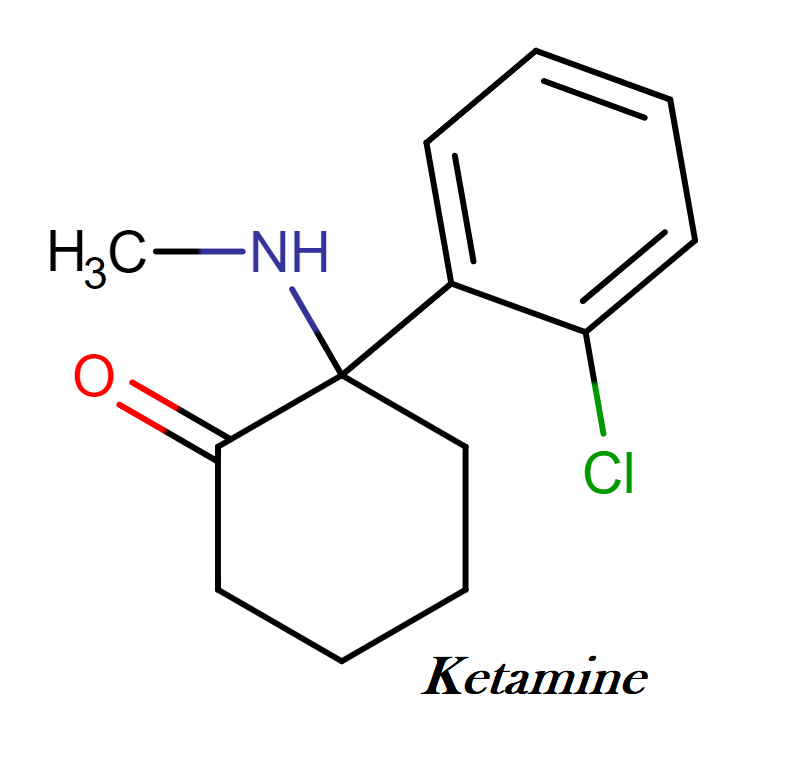
Ketamine, first synthesized in 1962, has a long history as an anesthetic and analgesic. During the late 1960s, ketamine was marketed as the dissociative (out-of-body experience) anesthetic, under the name Ketalar and was used to treat soldiers in the Vietnam War. The abuse potential of ketamine was recognized in the early 1970s, but reports of ketamine abuse in human and veterinary medicine did not appear until the early 1980s in Australia and in the early 1990s in the United States. In recent years, it has gained significant attention for its rapid antidepressant effects, particularly in cases of treatment-resistant depression. Ketamine’s primary mechanism of action involves blocking the NMDA receptor for glutamate in the brain, leading to a dissociative state and a cascade of neurochemical changes.

Ketamine’s Impact on the Brain

Findings from my own laboratory in 1997 showed that repeated ketamine intake alters the balance between the neurotransmitters dopamine and serotonin in the brain. Ketamine’s interaction with the NMDA receptor for glutamate triggers a surge in glutamate, a neurotransmitter vital for learning and memory. This glutamate surge is thought to promote the growth of new synapses and neural connections, particularly in brain regions associated with mood regulation. Additionally, ketamine disrupts the default mode network (DMN), a brain network linked to rumination and self-referential thinking, which may contribute to its antidepressant effects. Research also suggests that ketamine may stimulate neurogenesis (the growth of new neurons) and promote neuroplasticity (changes in neural connections).

Ketamine’s Impact on the Mind

Ketamine’s psychological actions have been characterized as similar to temporary schizophrenia. Healthy volunteers receiving ketamine in an experiment have experienced sensations reminiscent of LSD. Ketamine can prompt people to feel like they are becoming transparent, blending into nearby individuals, or becoming an animal or object. Users may feel like their bodies are transforming into harder or softer substances. Persons may think they remember experiences from a past life. Some users take the drug to enter a semi-paralytic state described as similar to near-death experiences in which people perceive their consciousness as floating above their bodies, sometimes accompanied by meaningful hallucinations and by insights about the user’s life and its proper place in the cosmos.

The Promise of Ketamine in Mental Health

When administered at a therapeutic dose ketamine’s rapid antidepressant effects have revolutionized the field of mental health treatment. Studies have shown that a single therapeutic dose of ketamine can alleviate depressive symptoms within hours, offering hope to individuals who have not responded to traditional antidepressants. In fact, so effective is therapeutic ketamine that it has been proposed as a chemical replacement for electroconvulsive therapy (ECT) and it may eventually replace the need for ECT altogether. Beyond depression, ketamine is being investigated for its potential in treating anxiety disorders, PTSD, and addiction.

The Perils of Ketamine

While ketamine holds immense therapeutic promise, it is crucial to acknowledge its risks. Ketamine can cause dissociative effects, hallucinations, and other adverse reactions. Moreover, it has a potential for abuse and addiction, as tragically illustrated by Matthew Perry’s case. Long-term effects of ketamine use on brain function and cognition remain an area of ongoing research.

Lessons from the Death of Matthew Perry

Matthew Perry’s untimely death serves as a poignant reminder of the dangers of substance abuse, even with substances that have therapeutic potential. It underscores the critical need for responsible use, careful monitoring, and effective regulation of ketamine.

Does Addiction Exist?

Addiction (1)American actor and addiction-awareness activist Matthew Perry and journalist Peter Hitchens traded blows in a televised interview last week,  with the latter questioning the reality of drug addiction. Hitchens questions how Perry has suffered in his ‘battle with addiction’ and for his motives in supporting special courts for people who buy and use illegal drugs.  Hitchens has gone further to question if in fact ‘addiction’ actually exists at all.  Not surprisingly this has resulted in one hell of a row.

Over the past two decades I have visited high schools and colleges to talk on how addictive drugs affect the brain and to explain the many theories about why certain people become addicted.

What is an addictive drug?

All addictive drugs release the neurotransmitter dopamine in the brain and this is thought to contribute to their addictive properties. Dopamine is carried in a nerve pathway called the reward pathway which controls the brain’s reward and pleasure centers. The reward pathway does this by regulating emotional responses that enable us not only to see rewards but also to take action to move toward them.  Addictive drugs hijack the reward pathway by causing it to release dopamine and this leads to the compulsive behavior including the loss of control in limiting intake found in addiction.

Are some drugs more addictive than others?

Yes. The type of drug taken is important as some drugs are more addictive than others.  This is because drugs differ in their ability to release dopamine in the reward pathway.  How a drug is taken is also very important. Nicotine is very addictive because it is smoked.  Smoking is the quickest way to get a substance into the brain and this makes it more addictive.

Don’t forget the buzz

The initial use of addictive drugs such as cocaine, heroin, alcohol and marijuana is often driven by the immediate euphoria – the buzz – that accompanies it and because their brains are so rich in dopamine this is of great importance to adolescents and young adults.  In this way drug addiction is predominantly a disease of the young.

Why do people take addictive drugs?

People dabble in addictive drugs for all sorts of reasons  – availability, affluence, to rebel, to seek attention, for a sense of adventure, naivety, the pressure to conform  or just plain boredom.

Who becomes an addict?

Addiction is complex and there are as many reasons why someone becomes addicted as there are addicts. This situation is not helped by the fact that we cannot yet predict who will become addicted, or how to cure it.

Addiction is a three-legged stool

The problem is that not everyone who takes addictive drugs becomes addicted. In fact, most drug users can with a little effort, drop their habit.  In order to explain who becomes addicted it is best to think of addiction as a three-legged stool and just as a stool needs all three legs in place- all three legs must also be in place for addiction to take hold. The three legs of addiction are

  • Biological.  For instance, children of alcoholics are four times more likely to become addicted to drink, even if they’re brought up away from their natural parents.
  • Psychological.  For instance, chronic, inescapable stress including the stress of boredom contributes to addictive behavior.
  • Social.  For instance, the availability of a drug is important – it’s harder to become an alcoholic in Saudi Arabia where the sale of alcohol is forbidden.

Hitchens is right – addiction doesn’t exist – that is, until you become an addict.

So, in one way Hitchens is right- addiction doesn’t exist – that is, until you become an addict. Then it controls your every waking and sleeping moment, it can destroy your life and those of your loved ones, shatter talent and ambition, wreck communities and economies.

Drug taking as a way of coping

The row between Perry and Hitchens over the nature of addiction might not be in vain if it opens up a debate on how we as a society deal with stress. We all know of, or have heard of someone suffering from chronic addiction and we are led to surmise that alcohol and drug taking is their way of coping.  In this we are not alone. As the world economy continues on its downward slide, and unemployment and financial worries beset us, are we going to turn more and more to these quick fixes to handle our dis-stress?

Probably the most important lesson to be taken from this row is the realization that the stresses of life and how we manage them IS the difference between life and death. I look forward to developing this theme in greater detail including drug-free tips on how to avoid worry and stress in future posts, but in the meantime, I salute both Perry and Hitchens for bringing addiction back into the spotlight.