Weekly Neuroscience Update

runners-635906_960_720.jpg

Researchers report running can help mitigate the impact chronic stress has on the hippocampus.

A small study recently published in Translational Psychiatry showed that people living with schizophrenia could use a video game paired with an MRI scanner to curb verbal hallucinations.

A Neuron study reports brain-machine interface technology may shed light on how mentally running through a routine improves performance.

Neuroscientists have demonstrated the astounding flexibility of the brain by training neurons that normally process input from the eyes to develop new skills, in this case, to control a computer-generated tone.

Researchers report our inner thoughts and interpretations of our experiences have consequences for both physical and mental health.

A new study finds listening to music may help people extend the time they are capable of enduring a cardiac stress test. The study also reports the findings could help healthy people to exercise for longer periods of time.

Concussions and other traumatic brain injuries may increase the risk of developing Alzheimer’s disease earlier in life, according to a study.

Researchers report elevated dopamine levels may make those with schizophrenia rely more on expectations, which results in them experiencing auditory hallucinations.

A new study will examine how the brain learns to make predictions over our lifespan.

Contrary to previous findings, new research has found no evidence Omega-3 fish oil supplements help aid or improve the reading ability or memory function of underperforming school-children.

Finally this week, neuroscientists have produced a collection of computer-generated models that accurately replicate cortical neuron activity.


Weekly Neuroscience Update

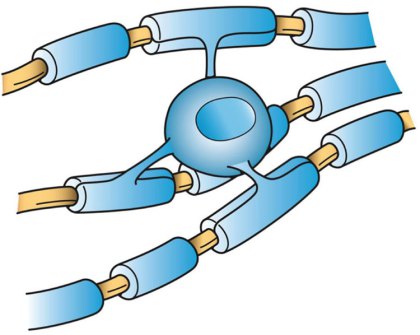
Oligodendrocytes are formed by a type of stem cell in the brain called oligodendrocyte progenitor cells (OPCs), and are responsible for re-wrapping, or remyelinating, the bare axons with myelin in response to injuries or diseases. This image is for illustrative purposes only and shows and artist’s representation of an oligodendrocyte. Credit Holly Fischer.

Oligodendrocytes are formed by a type of stem cell in the brain called oligodendrocyte progenitor cells (OPCs), and are responsible for re-wrapping, or remyelinating, the bare axons with myelin in response to injuries or diseases. This image is for illustrative purposes only and shows and artist’s representation of an oligodendrocyte. Credit Holly Fischer.

Like conducting an errant orchestra to play together, researchers are guiding processes that go awry in multiple sclerosis to repair themselves.

For the first time, scientists have discovered the exact mechanism rabies uses to efficiently enter the central nervous system, where it erupts in a toxic explosion of symptoms.

Neurons in human skin perform advanced calculations, previously believed that only the brain could perform.

Brain scans of college students have shed light on why people learn more effectively when their curiosity is piqued than when they are bored stiff. Researchers in the US found evidence that curiosity ramped up the activity of a brain chemical called dopamine, which in turn seemed to strengthen people’s memories.Students who took part in the study were better at remembering answers to trivia questions when they were curious, but their memories also improved for unrelated information they were shown at the same time.The findings suggest that while grades may have their place in motivating students, stimulating their natural curiosity could help them even more.

Researchers have discovered that T-cells – a type of white blood cell that learns to recognize and attack microbial pathogens – are activated by a pain receptor.

Quantitative tools dissect how two genes mutated in early-onset Parkinson’s disease collaborate in flagging damaged mitochondria.

A new study suggests a neural link between curiosity, motivation, and memory.

In a recent study published in the journal PLOS One, scientists uncovered a new pathway by which the brain uses an unusual steroid to control blood pressure. The study also suggests new approaches for treating high blood pressure and heart failure

Research using state-of-the-art eye-tracking technology has found that people suffering from chronic pain pay more frequent and longer attention to pain-related words than individuals who are pain-free.

The traditional view is that learning is based on the strengthening or weakening of the contacts between the nerve cells in the brain. However, this has been challenged by new research findings from Lund University in Sweden. These indicate that there is also a third mechanism – a kind of clock function that gives individual nerve cells the ability to time their reactions.

And finally this week, how your brain decides who to make friends with when you start university.

Weekly Neuroscience Update

Granule cells connect with other cells via long projections (dendrites). The actual junctions (synapses) are located on thorn-like protuberances called “spines”. Spines are shown in green in the computer reconstruction Credit DZNE/Michaela Müller.

Granule cells connect with other cells via long projections (dendrites). The actual junctions (synapses) are located on thorn-like protuberances called “spines”. Spines are shown in green in the computer reconstruction Credit DZNE/Michaela Müller.

New findings on the link between nerve cells at the interface to the hippocampus may have an influence on learning and memory.

People choosing between two or more equally positive outcomes experience paradoxical feelings of pleasure and anxiety, feelings associated with activity in different regions of the brain, according to research at the Princeton Neuroscience Institute at Princeton University.

Latest findings on how stress hormones promote the brain’s building of negative memories.

Researchers have studied the changes in the brain that are associated with impulsiveness, a personality trait that causes difficulties in inhibiting a response in the face of a stimulus and leads to unplanned actions without considering the negative consequences. These patterns can serve as an indicator for predicting the risk of behavioural problems.

People taking dopamine for Parkinson’s disease sometimes begin to generate a lot of artwork. New research differentiates their expressiveness from obsessive or impulsive tendencies.

Researchers have uncovered more than 100 genetic markers linked to developing schizophrenia.

A type of immune cell widely believed to exacerbate chronic adult brain diseases, such as Alzheimer’s disease and multiple sclerosis (MS), can actually protect the brain from traumatic brain injury (TBI) and may slow the progression of neurodegenerative diseases, according to research published in the online journal Nature Communications.

Weekly Neuroscience Update

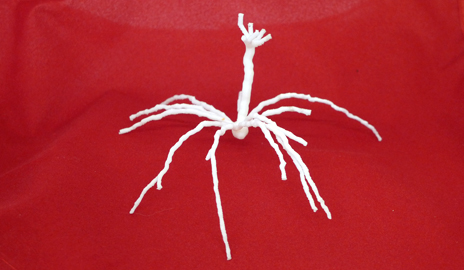
3D-printed model of a neuron (credit: Yale University)

3D-printed model of a neuron (credit: Yale University)

A Yale neuroscientist  has created the first 3D-printed neuron.

Studies released today suggest promising new treatments for nicotine and heroin addiction, and further our understanding of pathological gambling and heroin abuse in those suffering chronic pain. This new knowledge, released at Neuroscience 2013, the annual meeting of the Society for Neuroscience (SFN) and the world’s largest source of emerging news about brain science and health, may one day lead to non-pharmaceutical interventions and therapies to treat addiction. Also presented at SFN, new studies revealing links between social status and specific brain structures and activity, particularly in the context of social stress.

A new study has found that people experiencing a depressive episode process information about themselves differently than people who are not depressed.

To flexibly deal with our ever-changing world, we need to learn from both the negative and positive consequences of our behaviour. In other words, from punishment and reward. Hanneke den Ouden from the Donders Institute in Nijmegen demonstrated that serotonin and dopamine related genes influence how we base our choices on past punishments or rewards. This influence depends on which gene variant you inherited from your parents. These results were published in Neuron on November 20.

Brain scans reveal that people with fibromyalgia are not as able to prepare for pain as healthy people, and they are less likely to respond to the promise of pain relief.

Scientists have used RNA interference (RNAi) technology to reveal dozens of genes which may represent new therapeutic targets for treating Parkinson’s disease. The findings also may be relevant to several diseases caused by damage to mitochondria, the biological power plants found in cells throughout the body.

Playing a fast-paced strategy video games can help the brain to become more agile and improve strategic thinking, according to new research.

While young children sleep, connections between the left and the right hemispheres of their brain strengthen, which may help brain functions mature, according to a new study by the University of Colorado Boulder.  And in another sleep study, a team of sleep researchers  has confirmed the mechanism that enables the brain to consolidate memory and found that a commonly prescribed sleep aid enhances the process. Those discoveries could lead to new sleep therapies that will improve memory for aging adults and those with dementia, Alzheimer’s and schizophrenia.

Weekly Neuroscience Update

Conceptual scheme of controlled release of ODN from a hydrogel composed of a CyD-containing molecular network by mechanical compression. (Credit: Image courtesy of National Institute for Materials Science)

A research group has succeeded in developing a gel material which is capable of releasing drugs in response to pressure applied by the patient.

New findings about how the brain functions to suppress pain have been published in the leading journal in the field Pain, by National University of Ireland Galway (NUI Galway) researchers. For the first time, it has been shown that suppression of pain during times of fear involves complex interplay between marijuana-like chemicals and other neurotransmitters in a brain region called the amygdala.

Researchers report that they have found a biological mechanism that appears to play a vital role in learning to read. This finding provides significant clues into the workings behind dyslexia — a collection of impairments unrelated to intelligence, hearing or vision that makes learning to read a struggle.

A new study suggests neural ‘synchrony’ may be key to understanding how the human brain perceives.

Sleep plays an important role in the brain’s ability to consolidate learning when two new potentially competing tasks are learned in the same day, research at the University of Chicago demonstrates.

New research for the first time explains exactly how two brain regions interact to promote emotionally motivated behaviors associated with anxiety and reward. The findings could lead to new mental health therapies for disorders such as addiction, anxiety, and depression.

Researchers have designed a decoded functional MRI neurofeedback method that induces a pre-recorded activation pattern in targeted early visual brain areas that could also produce the pattern through regular learning.

A new study conducted by monitoring the brain waves of sleeping adolescents has found that remarkable changes occur in the brain as it prunes away neuronal connections and makes the major transition from childhood to adulthood.

New research suggests that depression, even in children, can increase the risk of heart problems later in life. Teens who were depressed as children are far more likely than their peers to be obese, smoke cigarettes and lead sedentary lives, even if they no longer suffer from depression.

Alcohol consumption affects the brain in multiple ways, ranging from acute changes in behavior to permanent molecular and functional alterations. The general consensus is that in the brain, alcohol targets mainly neurons. However, recent research suggests that other cells of the brain known as astrocytic glial cells or astrocytes are necessary for the rewarding effects of alcohol and the development of alcohol tolerance.

New research published in The Journal of Neuroscience suggests that modifying signals sent by astrocytes, our star-shaped brain cells, may help to limit the spread of damage after an ischemic brain stroke.

The prefrontal cortex is a region of the brain that acts like a filter, keeping any irrelevant thoughts, memories and perceptions from interfering with the task-at-hand. In a new study, researchers have shown that inhibiting this filter can enhance unfiltered, creative thinking.

A new study suggests that depression results from a disturbance in the ability of brain cells to communicate with each other. The study indicates a major shift in our understanding of how depression is caused and how it should be treated.




Weekly Neuroscience Update

A run of poor sleep can have a potentially profound effect on the internal workings of the human body, say UK researchers.

As a bird sings, some neurons in its brain prepare to make the next sounds while others are synchronized with the current notes—a coordination of physical actions and brain activity that is needed to produce complex movements, new research at the University of Chicago shows. In an article in the current issue of Nature, neuroscientist Daniel Margoliash and colleagues show, for the first time, how the brain is organized to govern skilled performance—a finding that may lead to new ways of understanding human speech production.

Deep brain stimulation has helped people with severe obsessive-compulsive disorder, and new research begins to explain why. A Dutch study appearing in the Feb. 24 online issue of the journal Nature Neuroscience found the procedure essentially restored normal function in a part of the brain called the nucleus accumbens.

Researchers have identified a possible treatment window of several years for plaques in the brain that are thought to cause memory loss in diseases such as Alzheimer’s. The Mayo Clinic study is published in the Feb. 27 online issue of Neurology.

Though it’s most often associated with disorders like diabetes, Harvard researchers have shown how the signaling pathway of insulin and insulin-like peptides plays another critical role in the body – helping to regulate learning and memory.

Researchers in Scotland and Germany have discovered a molecular mechanism that shows promise for developing a cure for Huntington’s Disease (HD).

Some people do not learn from their mistakes because of the way their brain works, according to research led by an academic at Goldsmiths, University of London. The research examined what it is about the brain that defines someone as a ‘good learner’ from those who do not learn from their mistakes.

Scientists from the University of Oxford say they have discovered how the brain protects itself from damage that occurs in stroke.

A team of French researchers has discovered that the human brain is capable of distinguishing between different types of syllables as early as three months prior to full term birth. 

Weekly Neuroscience Update

medium_46044113

A research team at Northwestern University are studying the connection between memory and sleep, and the possibilities of boosting memory storage while you snooze.

For the first time, scientists have used a new combination of neural imaging methods to discover how the human brain adapts to injury. The research, published in Cerebral Cortex, shows that when one brain area loses functionality, a “back-up” team of secondary brain areas immediately activates, replacing not only the unavailable area but also its confederates.

New research suggests that testing a portion of a person’s saliva gland may be a way to diagnose Parkinson’s disease. The study was released today and will be presented at the American Academy of Neurology’s 65th Annual Meeting in San Diego, March 16 to 23, 2013.

In a promising finding for epileptic patients suffering from persistent seizures known as status epilepticus, researchers have reported that new medication could help halt these devastating seizures.

Tübingen neuroscientists have shown how decision-making processes are influenced by neurons.

EPFL scientists find evidence that psychological wounds inflicted when young leave lasting biological traces—and a predisposition toward violence later in life

The production of new neurons, known as neurogenesis, was found to be induced in the adult normal cortex by the antidepressant fluoxetine, as reported in a study published online last week in Neuropsychopharmacology. This finding highlights the potential neuroprotective response induced by this antidepressant drug. It also lends further support to the thesis that induction of adult neurogenesis in cortex is a relevant prevention/treatment option for neurodegenerative diseases and psychiatric disorders.

photo credit: Toni Blay via photopin cc

Weekly Neuroscience Research Update

Several specific regions of our brains are activated in a two-part process when we are exposed to deceptive advertising, according to new research conducted by a North Carolina State University professor. The work opens the door to further research that could help us understand how brain injury and aging may affect our susceptibility to fraud or misleading marketing.

We make our eye movements earlier or later in order to coordinate with movements of our arms, New York University neuroscientists have found. Their study, which appears in the journal Neuron, points to a mechanism in the brain that allows for this coordination and may have implications for rehabilitation and prosthetics.

The brain has a remarkable ability to learn new cognitive tasks while maintaining previously acquired knowledge about various functions necessary for everyday life. But exactly how new information is incorporated into brain systems that control cognitive functions has remained a mystery. A study by researchers at Wake Forest Baptist Medical Center and the McGovern Institute of the Massachusetts Institute of Technology shows how new information is encoded in neurons of the prefrontal cortex, the area of the brain involved in planning, decision making, working memory and learning.

A team of academic researchers has identified the intracellular mechanisms regulated by vitamin D3 that may help the body clear the brain of amyloid beta, the main component of plaques associated with Alzheimer’s disease.

Opening the door to the development of thought-controlled prosthetic devices to help people with spinal cord injuries, amputations and other impairments, neuroscientists at the University of California, Berkeley, and the Champalimaud Center for the Unknown in Portugal have demonstrated that the brain is more flexible and trainable than previously thought.

Emotion-sensing computer software that models and responds to students’ cognitive and emotional states – including frustration and boredom – has been developed by University of Notre Dame Assistant Professor of Psychology Sidney D’Mello and colleagues from the University of Memphis and Massachusetts Institute of Technology.

Weekly Neuroscience News

Scientists identify link between size of brain region and conformity.

Although there are several drugs and experimental conditions that can block cognitive function and impair learning and memory, researchers have recently shown that some drugs can actually improve cognitive function. The new multi-national study, published in the 21 February issue of the open-access journal PLoS Biology, reveals that these findings may implicate scientists’ understanding of cognitive disorders like Alzheimer’s disease.

New connections between brain cells emerge in clusters in the brain according to a study published in Nature on February 19 (advance online publication). Led by researchers at the University of California, Santa Cruz, the study reveals details of how brain circuits are rewired during the formation of new motor memories.

A new study shows that depression is linked to hyperconnectivity of brain regions.

A study in the February issue of Neurosurgery reveals that deep brain stimulation (DBS), commonly used to treat individuals with movement disorders or chronic pain, also affects respiratory function.