Weekly Neuroscience Update

Scientists have highlighted the most effective treatments for neurological diseases by overcoming one of medicine’s most difficult challenges: the blood–brain barrier. The findings offer new hope for patients with conditions including Alzheimer’s, and Parkinson’s disease, brain tumors, and epilepsy.

A study conducted in Finland showed that changes in the functioning of opioid neurotransmitters in the brain may underlie anorexia.

Poorer cardiovascular health in childhood and adolescence may be linked to early differences in brain structure, particularly in areas of the brain known to be affected in dementia in later life, according to a new scientific study.

Researchers have uncovered how specific patterns in brain activity can predict an individual’s sensitivity to pain, expanding opportunities for improved pain management strategies.

Delayed rapid eye movement (REM) sleep may be an early indicator of Alzheimer’s disease. Researchers found that participants with delayed REM sleep had higher levels of toxic proteins associated with Alzheimer’s and reduced levels of brain-derived neurotrophic factor (BDNF), which supports memory.

The microbial ecosystems in our mouths may impact cognitive function as we age, with pathogenic bacteria linked to cognitive decline.

New research suggests that mood swings in bipolar disorder are regulated by two clocks: the body’s 24-hour circadian rhythm and a dopamine-based clock that influences alertness. When these clocks align at specific intervals, they may trigger shifts between mania and depression.

A study in the Journal of Neuroscience reveals a new mechanism for how brain cells transmit signals from their tips to their nucleus, triggering gene activation crucial for learning and memory.

Investigators have discovered that activity in two widely distributed brain networks previously considered separate are actually correlated with each other and together play a key role in recognition memory, according to a study published in Cell Reports.

Cannabinoids offer new hope for safe and effective pain relief.

Researchers analyzed the genetic connection of retinal cells and several neuropsychiatric disorders. By combining different datasets, they found that schizophrenia risk genes were associated with specific neurons in the retina. The involved risk genes suggest an impairment of synapse biology, so the ability of neurons to communicate with each other. This impairment might also be present in the brains of schizophrenia patients.

Researchers at the University of Barcelona have identified a deficit in contrast perception in people with schizophrenia.

A study of nearly 1,000 people with post-COVID-19 syndrome (PCS) revealed that two-thirds still experienced significant symptoms, including reduced exercise capacity and cognitive performance, two years after infection. Persistent symptom clusters included fatigue, neurocognitive disturbances, and post-exertional malaise, with worse outcomes in individuals with obesity, lower education, or severe initial infections.

Finally this week, new research shows diets high in processed meat, fast food, and sugary drinks accelerate biological aging, even in young adults.

Weekly Neuroscience Update

A new way of mapping activity and connections between different regions of the brain has revealed fresh insights into how higher-order functions like language, thought and attention, are organized.

Researchers at the University of Copenhagen have demonstrated that the brain’s ability to learn certain skills can be significantly enhanced if both the brain and nervous system are primed by carefully-calibrated, precisely-timed electrical and magnetic stimulations. This new research has the potential to open entirely new perspectives in rehabilitation and possibly elite sports.

A study of patients with epilepsy shows how making new neurons benefits cognition.

New AI software can read the brain scans of patients who have had a stroke to more accurately pinpoint when it happened and help doctors work out whether it can be successfully treated. It is hoped that the new technology will ultimately enable faster and more accurate emergency treatment of patients in a hospital setting.

Researchers have discovered the structural details of a brain receptor called GPR6, which could lead to new treatments for Parkinson’s disease.

Living in disadvantaged neighbourhoods is associated with higher blood pressure and lower cognitive performance, even in individuals without mild cognitive impairment. Researchers analyzed over 500 adults, finding that poor social and economic resources in neighborhoods exacerbate cardiometabolic health issues and reduce brain function.

Scientists have developed a new approach to learning through noninvasive manipulation of brain activity patterns.

A new study is helping solve the mystery as to why the brain shrinks in a unique pattern, known as atrophy, in chronic traumatic encephalopathy (CTE). Published in Acta Neuropathologica, this research provides novel evidence that cumulative repetitive head impacts are driving the specific patterns of brain degeneration found at the base of the folds of the surface of the brain, known as the cortical sulcus.

A global research collaboration has revealed a hidden cause of a rare intellectual disorder associated with severe language delay, epileptic seizures, motor impairment and brain abnormalities.

A multi-sensory digital treatment protocol, incorporating sensory integration, sensory substitution, and sensory masking (e.g., blindfolding), significantly improved participants’ performance on spatial memory tasks. Resting-state fMRI analysis showed that these improvements were associated with enhanced connectivity between memory-related brain regions, executive frontal areas, and the default mode network (DMN).

People with high blood pressure who also lack sleep may be at increased risk of reduced cognitive performance and greater brain injury, new research has found.

Researchers have uncovered a groundbreaking mechanism called Electro-Calcium (E-Ca) coupling that integrates electrical and calcium signaling in brain capillaries. This process ensures precise blood flow delivery to active neurons, crucial for brain health and cognitive function.

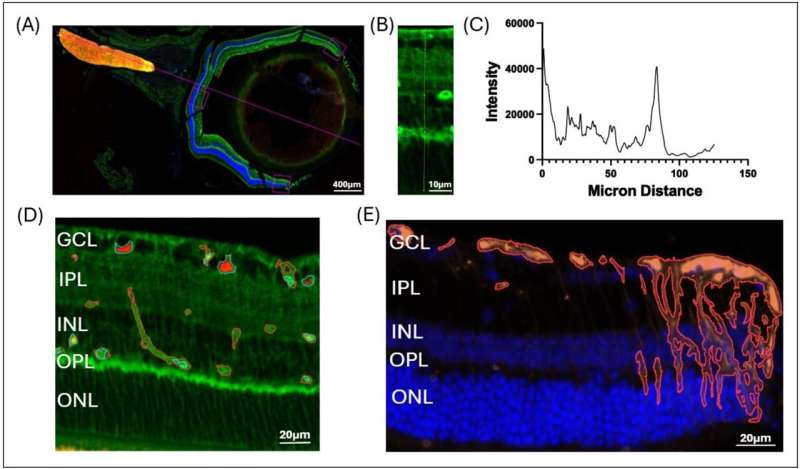
Researchers at the University of Helsinki have made a breakthrough in understanding what neural mechanisms allow the extreme sensitivity of human vision in darkness. 

New research reveals that music can do more than trigger memories—it can alter their emotional tone. When participants recalled neutral stories while listening to emotionally charged music, they later remembered the stories as matching the music’s mood. These findings hint at music’s potential for therapeutic interventions, like reframing negative memories in depression or PTSD.

Finally this week a recent study has found that high blood sugar may impair brain health even in people without diabetes. 

Weekly Neuroscience Update

child-85321_960_720.jpgSleep researchers report for the first time evidence that naps and overnight sleep may work together to benefit memory in early childhood.

A group of researchers has found that our learning capabilities are limited during slow wave sleep. Using magnetoencephalography (MEG), they showed that while our brain is still able to perceive sounds during sleep, it is unable to group these sounds according to their organisation in a sequence.

Neuroscientists have debunked claims that getting better at a brain training game can translate to improved performance in other, untrained cognitive tasks.

Adults who hold back-and-forth conversations with young children rather than just talking to them may be helping to strengthen connections between the language regions of the children’s brains, new research shows.

Researchers say, to better understand working memory, it is important to resolve the debate over how we hold and judge multiple pieces of information in mind.

According to a new study dehydration can lead to more errors on task performance. Additionally, fMRI neuroimaging showed dehydration can alter brain structure temporarily.

It may be possible in the future to screen patients for Alzheimer’s disease using an eye exam.

Researchers used neuroimaging technology to identify brain differences between those who procrastinate and those who are doers. The study reveals people with poor action control have a larger amygdala, and the connection between the dorsal ACC and amygdala is less pronounced.

A new study reports lifestyle choices, such as smoking or drinking alcohol during early adulthood, can increase the risk of developing dementia or having a stroke later in life.

Scientists have discovered a network of brain cells that express our sense of time within experiences and memories.

In the first peer-reviewed published report of its kind, University of Toronto researchers have demonstrated that focused ultrasound can be used to safely open the blood-brain barrier (BBB) in patients with Alzheimer’s disease.

Finally, this week neuroscientists have discovered that ketamine works as an antidepressant at least in part by activating the brain’s opioid system.

Weekly Neuroscience Update

eye-1132531_960_720.jpg

Where objects appear in a person’s visual field can affect the ability to determine what the object is, researchers say.

Scientists have identified the brain networks that allow you to think of an object name and then verbalize that thought. The study appeared in the July issue of BRAIN. It represents a significant advance in the understanding of how the brain connects meaning to words and will help with the planning of brain surgeries.

New research suggests that shifts in the bacteria within a child’s mouth could provide objective biomarkers for identifying autism spectrum disorder. 

Researchers studying the functional connections among parts of the brain are finding that the “fingerprint” of these patterns can be used to identify individuals over many years and to distinguish their relatives from strangers.

Breaking with the long-held idea that working memory has fixed limits, a new study suggests that these limits adapt themselves to the task that one is performing. 

Young children who are regularly engaged in conversation by adults may have stronger connections between two developing brain regions critical for language, according to a study of healthy young children that confirms a hypothesis registered with the Open Science Framework.

A new study reports estrogen and other sex hormones may be responsible for the higher prevalence of migraines in women.

New therapies could be on the horizon for people living with epilepsy or anxiety, thanks to a breakthrough discovery by an international team of researchers studying how proteins interact to control the firing of brain cells.

Researchers report the interaction between two regions of the prefrontal cortex may underlie our motivation to cling to a desirable notion about the future.

A new study sheds light on the role the caudate nucleus plays in pessimism. The study reports stimulating this area of the brain generates a negative outlook that clouds decision making.

Exercise can help prevent relapses into cocaine addiction, according to new research.

A new study reveals a short time meditating can help to boost cognitive performance. Researchers report students exposed to a ten-minute meditation tape were able to complete simple cognitive tasks more quickly and accurately than their peers.

Researchers report transcranial alternating current stimulation applied during sleep can help accelerate learning, memory and skill acquisition.

Heavy alcohol drinkers attempt to acquire alcohol despite the threat of a negative consequence more so than light drinkers, a study in Biological Psychiatry: Cognitive Neuroscience and Neuroimaging has found, and this behavior is associated with unique activation of brain circuitry in heavy drinkers.

Finally this week,  new neuroimaging study reveals the dorsolateral prefrontal cortex plays a vital role in suppressing the act of revenge.


Weekly Neuroscience Update

pianist-1149172_960_720.jpgTrained pianists have higher levels of brain wave synchronization when improvising pieces of music, a new study reveals.

A new study in SLEEP, published by Oxford University Press, indicates that delaying school start times results in students getting more sleep, and feeling better, even within societies where trading sleep for academic success is common.

Researchers have created a silicon mesh that can be crafted to help stimulate neurons, limbs and tissue.

Using a new advanced imaging technology, scientists have captured new patterns of molecular organization as connections between neurons strengthen during learning tasks.

A new study reports a strong hand grip is correlated with better visual memory and reaction times in people with psychiatric disorders, such as schizophrenia.

Children and adults diagnosed with brain conditions such as cerebral palsy, multiple sclerosis and dementia may be one step closer to obtaining new treatments that could help to restore normal function. Researchers have identified a molecule in white matter that prevents the brain from repairing itself following injury. By blocking the production of the molecule, researchers say it may allow an effective pathway for neuroregeneration.

A new study reveals both genetics and environment play a role in shaping brain connectivity.

A new mechanism regulating the early development of connections between the two sides of the nervous system has been identified in a paper published in eNeuro. The work demonstrates that neuronal activity is required for this process, a finding that may provide new insight into brain connectivity disorders such as autism.

Finally this week, a new Nature Communications study reveals 80 newly identified genes that may be linked to an increased risk of developing major depressive disorder.

Weekly Neuroscience Update

pianist-1149172_960_720.jpgTrained pianists have higher levels of brain wave synchronization when improvising pieces of music, a new study reveals.

A new study in SLEEP, published by Oxford University Press, indicates that delaying school start times results in students getting more sleep, and feeling better, even within societies where trading sleep for academic success is common.

Researchers have created a silicon mesh that can be crafted to help stimulate neurons, limbs and tissue.

Using a new advanced imaging technology, scientists have captured new patterns of molecular organization as connections between neurons strengthen during learning tasks.

A new study reports a strong hand grip is correlated with better visual memory and reaction times in people with psychiatric disorders, such as schizophrenia.

Children and adults diagnosed with brain conditions such as cerebral palsy, multiple sclerosis and dementia may be one step closer to obtaining new treatments that could help to restore normal function. Researchers have identified a molecule in white matter that prevents the brain from repairing itself following injury. By blocking the production of the molecule, researchers say it may allow an effective pathway for neuroregeneration.

A new study reveals both genetics and environment play a role in shaping brain connectivity.

A new mechanism regulating the early development of connections between the two sides of the nervous system has been identified in a paper published in eNeuro. The work demonstrates that neuronal activity is required for this process, a finding that may provide new insight into brain connectivity disorders such as autism.

Finally this week, a new Nature Communications study reveals 80 newly identified genes that may be linked to an increased risk of developing major depressive disorder.

Weekly Neuroscience Update

pianist-1149172_960_720Trained pianists have higher levels of brain wave synchronization when improvising pieces of music, a new study reveals.

A new study in SLEEP, published by Oxford University Press, indicates that delaying school start times results in students getting more sleep, and feeling better, even within societies where trading sleep for academic success is common.

Researchers have created a silicon mesh that can be crafted to help stimulate neurons, limbs and tissue.

Using a new advanced imaging technology, scientists have captured new patterns of molecular organization as connections between neurons strengthen during learning tasks.

A new study reports a strong hand grip is correlated with better visual memory and reaction times in people with psychiatric disorders, such as schizophrenia.

Children and adults diagnosed with brain conditions such as cerebral palsy, multiple sclerosis and dementia may be one step closer to obtaining new treatments that could help to restore normal function. Researchers have identified a molecule in white matter that prevents the brain from repairing itself following injury. By blocking the production of the molecule, researchers say it may allow an effective pathway for neuroregeneration.

A new study reveals both genetics and environment play a role in shaping brain connectivity.

A new mechanism regulating the early development of connections between the two sides of the nervous system has been identified in a paper published in eNeuro. The work demonstrates that neuronal activity is required for this process, a finding that may provide new insight into brain connectivity disorders such as autism.

Finally this week, a new Nature Communications study reveals 80 newly identified genes that may be linked to an increased risk of developing major depressive disorder.

Neuroscience research may help brain injury recovery

New research shows that the way the brain first captures and encodes a situation or event is quite different from how it processes subsequent similar events.

I was interested to read a special report from the Center for Neuro Skills which describes the latest developments into how the brain registers new memory and equally importantly, how it strengthens older memories.

It has been known for years that the so-called NMDA receptor – a  lock on the skin of the nerve cell which is ‘opened’ by a special key – the neurotransmitter glutamate – is involved in new learning and memory.

However this research shows that the way the brain first captures and encodes a situation or event is quite different from how it processes subsequent similar events,  and suggests a whole new NMDA-independent system involving the so-called AMPA receptor – a less powerful type of NMDA receptor –  involved in strengthening older memories.
Why is this so important?   

Well, this new system is known to be critically involved in Alzheimer’s disease and other kinds of brain deficit memory impairment including stroke and head injury.

In fact, you may be interested to know that several drug companies have developed drugs that open the AMPA receptors called ampakines – a class of compounds known to enhance attention span and alertness, and facilitate learning and memory.

Unlike earlier stimulants such as caffeine, methylphenidate (Ritalin), and the amphetamines, ampakines do not seem to have unpleasant, long-lasting side effects such as sleeplessness.

These new memory enhancing drugs will be coming to a pharmacy near you within the next few years!

Don’t forget!