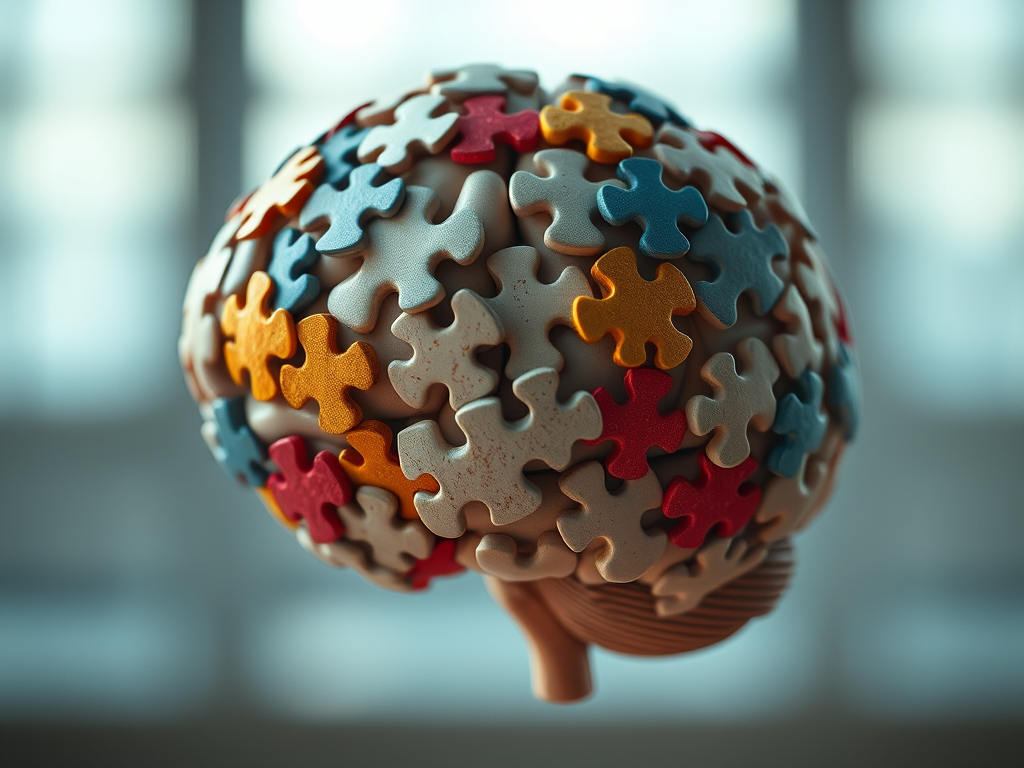
Harnessing the Power of Neuroplasticity #TrainYour BrainDay

Ever wonder what makes our brains so remarkable? Neuroplasticity is your brain’s ability to change and adapt throughout your entire life. Your brain is not a static, unchanging organ – it’s more like a dynamic, ever-evolving landscape.  Today, in honour of #TrainYourBrainDay, let’s explore the science behind this process and how we can harness it to improve our cognitive abilities.

How Does Neuroplasticity Work?

Neuroplasticity involves both structural and functional changes in the brain:

  • Structural changes: These involve altering the physical connections between brain cells (neurons). This can happen through:
    • Neurogenesis: The birth of new neurons, primarily in the hippocampus, a region crucial for learning and memory.
    • Synaptic plasticity: Strengthening or weakening existing connections (synapses), making communication between neurons more or less efficient. This can also involve eliminating unused connections (synaptic pruning).
  • Functional changes: These changes affect how different brain regions work together. This can involve:
    • Developing new neural pathways: When you learn a new skill, your brain creates new pathways to process and store that information.
    • Reorganizing existing networks: If one area of the brain is damaged, other areas can sometimes take over its function, as seen in stroke recovery.

Factors that influence neuroplasticity

Several factors can influence how adaptable your brain is:

  • Age: While plasticity is greatest in childhood, it continues throughout life.
  • Genetics: Your genes play a role in how your brain develops and adapts.
  • Environment: A stimulating environment with opportunities for learning and social interaction enhances plasticity.
  • Lifestyle: Factors like sleep, nutrition, stress, and exercise all impact brain health and plasticity.

How Can You Encourage Neuroplasticity?

The great news is that you can actively influence your brain’s plasticity. Here are some ways to encourage it.

  • Embrace lifelong learning: Continually challenge your brain with new skills, languages, and information.
  • Engage in mental exercises: Puzzles, brain games, and critical thinking activities keep your mind sharp.
  • Stay physically active: Exercise boosts blood flow to the brain, promoting neurogenesis and synaptic plasticity.
  • Get enough sleep: Sleep is crucial for consolidating memories and allowing your brain to reorganize.
  • Reduce stress: Chronic stress can negatively impact brain plasticity.

Further Reading

  1. “Neurogenesis in the Adult Human Hippocampus,” Nature Medicine, 1998.
  2. “Physical Exercise and Brain Plasticity,” Brain Sciences, 2020.
  3. “Mindfulness Practices and Brain Structure,” Journal of Cognitive Enhancement, 2017.

Weekly Neuroscience Update

Mapped is the proportion of participants with a high rate of atrophy in cortical (left) and subcortical (right) areas. AD, Alzheimer’s disease; MCI, mild cognitive impairment. Credit: Alzheimer’s & Dementia (2024).

The way in which brains shrink in those who develop Alzheimer’s disease follows no specific or uniform pattern, finds a new study by researchers at UCL and Radboud University in the Netherlands.

A McGill University study has shown that hearing plays a crucial role in how people coordinate and control speech movements in real-time. Published in The Journal of the Acoustical Society of America, the research shows that when people cannot hear their own speech, even briefly, their ability to move their jaw and tongue in a coordinated manner is impaired.

Recent research offers novel insights about the biological mechanisms behind major depressive disorder and especially on the role of the immune system.

A new analysis from Imperial’s human challenge study of COVID-19 has revealed subtle differences in the memory and cognition scores of healthy volunteers infected with SARS-CoV-2, which lasted up to a year after infection. The findings, published in the journal eClinicalMedicine, show a small but measurable difference following highly intensive cognitive testing of 18 healthy young people with infection compared to those who did not become infected, monitored under controlled clinical conditions

A simple scoring system may help doctors predict which patients will likely become seizure-free after minimally invasive epilepsy surgery.

The European Commission has released the 10-year assessment of the Human Brain Project (HBP), an EU-Flagship initiative that concluded in 2023. The report highlights that the HBP made major contributions and had a transformative impact on brain research. One of the main outcomes of the HBP is EBRAINS, the open research infrastructure that continues to push neuroscience research forward.

A new, large study from France underscores the link between adult hearing loss and dementia. In addition, hearing loss is linked to loss of volume in critical areas of the brain.

Scientists are investigating the extraordinary longevity of neurons, which can survive for over 90 years, in a new research project. The findings could not only improve understanding of neural aging but also lead to treatments for neurodegenerative diseases like Parkinson’s and ALS. The research could potentially expand beyond neurons, offering insights into extending the health span of other cell types.

Bright light therapy is an effective adjunctive treatment for nonseasonal depressive disorder, according to a review published in JAMA Psychiatry.

A recent study has shown that conscious thought relies on synchronized brain rhythms to maintain communication between sensory and cognitive brain regions. Under general anesthesia, this rhythm-based communication breaks down, disrupting the brain’s ability to detect and process surprising stimuli.

A new trial reveals that weekly injections of the weight-loss drug Wegovy (semaglutide) lowered the risk of death from COVID-19 by about a third and reduced overall mortality by 19%.

In a breakthrough study, researchers have imaged a network of pathways in the human brain believed to clear waste proteins that can lead to Alzheimer’s and dementia. Using advanced MRI techniques, they revealed perivascular channels that guide cerebrospinal fluid through the brain, providing strong evidence of the glymphatic system’s role in waste removal.

New research has discovered that disruptions in the brain’s salience network, often tied to tau protein buildup, correlate strongly with behavioural changes in people with early-stage dementia.

A research team has published a comprehensive review on the application of brain network models (BNMs) in the medical field. This study summarizes recent advances and challenges in using BNMs to simulate brain activities, understand neuropathological mechanisms, evaluate therapeutic effects, and predict disease progression.

New research reveals that immune responses play a crucial role in the formation of Lewy bodies, protein aggregates that mark Parkinson’s disease and other neurological conditions. 

A new study has found microplastics in human brains for the first time, raising concerns about the potential health impact. Researchers analyzed samples from autopsies and discovered an accumulation of plastic particles in brain tissue, likely due to exposure through food, water, and air. Although the study is still in its preliminary stages, it highlights the need for further investigation into the effects of microplastics on brain health. While microplastics have been shown to cause inflammation and damage in laboratory experiments, their long-term impact on human health remains unclear.

Finally this week, researchers are working on a novel gene therapy that holds potential in treating patients with epilepsy.

Using Your Brain To Improve Your Own Mental Health #WorldMentalHealthDay

The key to a happy life lies in transcending personal suffering, finding balance, and recognizing that the world has its own set of problems. Achieving this requires mental effort and self-awareness. Those who strive to better understand themselves and the world around them often emerge transformed—with greater peace of mind and a clearer way to live.

Fundamental or Accidental?

Our understanding of ourselves and the world is often limited by our perception of what is fundamental versus accidental. For example, the brain uses systematic thought patterns to create philosophy, science, mathematics, literature, and religious beliefs—guiding us toward new insights. Yet, these tools, essential as they seem, may not be as fundamental as we think. They are just methods our ancestors used to explore the unknown and push boundaries, all while acknowledging that our view of reality is just a fraction of what truly exists.

The Pitfall of Accidental Fundamentalism

In many cultures, particularly in the West, we tend to elevate truth as the highest value. While this pursuit is important, it pales in comparison to the power of belief. We are often born into religious or ideological systems that present themselves as the ultimate truth. However rigid adherence to these systems can stifle personal growth and impede the insights necessary for true peace of mind. Resisting the pull of these cultural norms is a crucial part of psychological growth, often referred to as self-actualization in psychology.

Recasting Reality

Self-actualizers—the people who achieve the highest levels of personal development—are those who challenge accepted cultural ‘truths’ and look beyond the norms of their time. Unlike most, who view life as a series of goals—acquiring material wealth, building a family, or advancing in a career—self-actualizers focus on personal growth and expression. They are ambitious, but only in the sense that they seek to fully develop and express their unique potential. Their freedom of mind and refusal to conform to societal pressures make them living examples of true autonomy.

Courage and Mental Health

Mental health requires courage—the courage to explore, adapt, and grow. Personal happiness is deeply tied to autonomy: the ability to break free from cultural expectations, guilt, or fear and embrace new ways of thinking and being. Achieving mental wellness is about mastering your own fate, learning what works for you, and being unafraid to change course when necessary.

What to Believe?

At its core, mental health is about two things: staying in touch with reality and being open to new experiences. However, it’s essential to remember that there is no one “reality”—only perception. Each of us views the world through a personal lens, shaped by our experiences, biases, and cultural conditioning. To achieve true mental clarity, we must recognize these filters and strive for a clearer understanding of the world.

Even in close relationships, the same action can be perceived differently. For example, one person may see paying the bills as a duty, while their partner views it as an act of love. Appreciating that your perspectives may be shaped by biases or cultural conditioning is crucial. Most importantly, ensure that the beliefs you choose to retain or adopt are grounded in verifiable facts and are open to scrutiny. Otherwise, any actions you take based on these beliefs may be built on shaky ground.

Weekly Neuroscience Update

Credit: The Journal of Physiology (2024). 

The team that first recorded vagus nerve signals in humans has now isolated the electrical activity of individual neurons responsible for cardiovascular regulation. Published in the Journal of Physiology, the Monash University-led discovery paves the way for more research into how and why cardiovascular disease develops.

New research reveals that dopamine is not directly responsible for the formation of placebo analgesia, contrary to previous beliefs.

Scientists have developed a new brain-mapping tool called START, which combines transcriptomics and viral tracing to map the connections between specific neuronal subtypes with unprecedented detail. This technology allows researchers to identify distinct patterns of connectivity in inhibitory neurons within the cerebral cortex, providing a blueprint of the brain’s circuits.

A new study has demonstrated that emotion enhances memory for contextual details, challenging the view that emotion impairs the ability to remember such information.

Researchers compared the diagnostic accuracy of GPT-4 based ChatGPT and radiologists using 150 brain tumor MRI reports. ChatGPT achieved 73% accuracy, slightly outperforming neuroradiologists (72%) and general radiologists (68%).

Deep brain stimulation may provide immediate improvement in arm and hand strength and function weakened by traumatic brain injury or stroke.

People with Parkinson’s disease (PD) who experience visual hallucinations have reduced brain responses to unexpected visual changes, a marker known as visual mismatch negativity (vMMN). Using EEG, researchers compared brain activity in PD patients with and without hallucinations and discovered that those with hallucinations showed weaker vMMN signals

Lower attention ability in adolescence can predict cigarette and cannabis use in young adulthood, according to new research from Trinity College Dublin.

New research has found that frequent consumption of fizzy drinks and fruit juice significantly increases the risk of stroke. The study, which analyzed data from nearly 27,000 participants across 27 countries, showed a 22% increased risk of stroke from drinking fizzy drinks, with the risk rising further with multiple servings per day. Additionally, drinking more than four cups of coffee daily raised stroke risk by 37%, while tea consumption was associated with a reduced stroke risk. 

New research shows that even pollution levels that are below government air-quality standards are associated with differences in children’s brains.

University of Queensland researchers have made a significant step towards enabling women with epilepsy safer access to a common and highly effective anti-seizure medication.

A new study shows that brain synchronization between a neurotypical person and someone with autism is weaker compared to two neurotypical individuals interacting. Using EEG hyperscanning, researchers observed reduced inter-brain synchrony during hand movement imitation between mixed pairs, with autistic individuals more likely to follow than lead.

Certain immune cells play an important role in the early stages of multiple sclerosis, a twin study shows.

New evidence from the Centre for Healthy Brain Ageing indicates that older adults who experience a stroke for the first time will have substantial immediate and accelerated long term-cognitive decline. The new research, published iJAMA Network Open, looked at finding out exactly how a stroke impacts a person’s cognitive abilities.

A new study shows how individual brain cells in the hippocampus respond to pronouns.

Scientists are examining the brains of individuals with asymptomatic Alzheimer’s disease who, despite having amyloid plaque and tau buildup—the primary indicators of Alzheimer’s—did not show diagnosable dementia symptoms while alive. They’ve identified crucial mechanisms that may safeguard against cognitive decline in Alzheimer’s disease.

Finally this week, In a first-of-its-kind study, University of South Florida researchers are finding that music can help boost cognition in patients undergoing chemotherapy. 

Weekly Neuroscience Update

Researchers at the University of Birmingham have uncovered a surprising role of the hippocampus—linking this part of the brain to the control of skilled actions such as handwriting, typing, and playing music.

The psychedelic drug psilocybin may rewire brain connectivity to treat body dysmorphic disorder, new research suggests.

A significant breakthrough in the understanding of sleep mechanism opens new promise for treating sleep disorders and associated neuropsychiatric conditions: Scientists have pinpointed the melatonin receptor MT1 as a crucial regulator of REM (Rapid Eye Movement) sleep.

Researchers have developed a new method that allows scientists to cultivate brain organoids with distinct cortical areas and front-to-back patterning.

A recent study published in Science has identified a previously unknown mechanism in the brain that occurs during sleep, helping to reset memory pathways. Researchers found that a burst of neural silence in a specific part of the brain, the hippocampus, allows neurons involved in memory to reset and prepare for new learning the following day. This phenomenon, termed a “barrage of action potentials” or “BARR,” allows neurons to reset, ensuring that our brains can continue storing new information without overwhelming the neural networks responsible for memory.

Monash University-led research, believed to be the first of its kind, has used blood tests and MRI scans to show that the effects of traumatic brain injuries (TBI) can last decades.

Researchers have found that SSRI (selective serotonin reuptake inhibitor) antidepressants have the potential to improve certain cognitive functions, such as verbal memory. They measured brain function in patients before and after taking the SSRI, escitalopram, and correlated this to a drop in the level of one of the serotonin receptors in the brain and to cognitive improvements during treatment.

In the U.K.’s largest study to date, researchers have come to a better understanding of the immediate and long-term impacts of COVID-19 on the brain.

New research has found that cannabis use during pregnancy can cause molecular changes in the genes of exposed children, impacting brain development. The study identified significant DNA alterations in genes related to neurodevelopment, suggesting a direct link between prenatal cannabis exposure and developmental issues.

Finally this week, a new study has uncovered new insights into how the brain processes and integrates pain information.

Weekly Neuroscience Update

Newly formed emotional memories can be erased from the human brain. This is shown by researchers from Uppsala University in a new study now being published by the academic journal Science. The findings may represent a breakthrough in research on memory and fear.

A growing body of research shows that children who suffer severe neglect and social isolation have cognitive and social impairments as adults. A study from Boston Children’s Hospital shows, for the first time, how these functional impairments arise: Social isolation during early life prevents the cells that make up the brain’s white matter from maturing and producing the right amount of myelin, the fatty “insulation” on nerve fibers that helps them transmit long-distance messages within the brain.

People with psychopathic tendencies have an impaired sense of smell, which points to inefficient processing in the front part of the brain [orbitofrontal cortex]. These findings by Mehmet Mahmut and Richard Stevenson, from Macquarie University in Australia, are published online in Springer’s journal Chemosensory Perception.

According to new research of MRI scans of children’s appetite and pleasure centers in their brains, the logos of such fast-food giants as McDonald’s, Pizza Hut, and Burger King causes those areas to “light up”.

New signs of future Alzheimer’s disease have been identified by researchers at Lund University and Skane University in Sweden. Dr. Peder Buchhave and his team explain that disease-modifying treatments are more beneficial if started early, so it is essential identify Alzheimer’s disease patients as quickly as possible.

A new study from MIT neuroscientists sheds light on a neural circuit that makes us likelier to remember what we’re seeing when our brains are in a more attentive state.

Weekly Neuroscience Update

Scientists have discovered that older honey bees effectively reverse brain aging when they take on nest responsibilities typically handled by much younger bees. While current research on human age-related dementia focuses on potential new drug treatments, researchers say these findings suggest that social interventions may be used to slow or treat age-related dementia.

Although many areas of the human brain are devoted to social tasks like detecting another person nearby, a new study has found that one small region carries information only for decisions during social interactions. Specifically, the area is active when we encounter a worthy opponent and decide whether to deceive them.

Scientists tracked brain activity in 40 people with new back injuries and found a pattern of activity that could predict — with 85% accuracy — which patients were destined to develop chronic pain and which weren’t.

Scientists have discovered a mechanism which stops the process of forgetting anxiety after a stress event. In experiments they showed that feelings of anxiety don’t subside if too little dynorphin is released into the brain. The results can help open up new paths in the treatment of trauma patients.

Research published in Neuron reveals that underdevelopment of an impulse control center in the brain is, at least in part, the reason children who fully understand the concept of fairness fail to act accordingly.

Researchers are developing a robotic system with ability to predict the specific action or movement that they should perform when handling an object.

The widely used diabetes drug metformin comes with a rather unexpected and  side effect: it encourages the growth of new neurons in the brain.

Researchers have long been interested in discovering the ways that human brains represent thoughts through a complex interplay of electrical signals. Recent improvements in brain recording and statistical methods have given researchers unprecedented insight into the physical processes under-lying thoughts. For example, researchers have begun to show that it is possible to use brain recordings to reconstruct aspects of an image or movie clip someone is viewing, a sound someone is hearing or even the text someone is reading.

A new brain scanner has been developed to help people who are completely paralysed speak by enabling them to spell words using their thoughts.

Easing the pain of migraine attacks

Dr Chad Beyer

Welcome to Part Three of this series on migraine attacks. Today, I am stepping into the world of guest blogging and am delighted to host Inside The Brain’s first guest blogger – Dr Chad Beyer, who explains how the race is on to discover better and safer drugs to diminish migraine pain and prevent future attacks.  

If you belong to the 1 in 4 households in theUnited States or the 11% of the world who suffer from acute migraines, you have about a 50/50 chance of being prescribed a “triptan” or a non-steroidal anti-inflammatory drug (NSAID) such as aspirin.  Unfortunately for patients, both treatment options are routinely accompanied by severe safety liabilities.  Most people are probably aware of the gastrointestinal and cardiovascular side-effects associated with NSAIDs and selective COX-2 inhibitors – if you are not, just Google Vioxx or Celebrex!

Collectively, the triptans (exemplified by sumatriptan) are not a squeaky clean class of molecules either and bring with them potential cardiovascular liabilities that make them contraindicated in roughly 20% of migraineurs who are also diagnosed with high blood pressure, angina and several other cardiovascular-related events.  This is due to the non-specific vasoconstriction induced by triptans – which is great in the middle cerebral and meningeal arteries where migraines are suspected to occur but notsomuch in other arteries within the cardiovascular, pulmonary and renal systems.

Therefore, despite the marked advances in our understanding of the complex biology of migraines (i.e., the vasoconstriction and neuropeptide (CGRP) hypotheses) and the discovery of a variety of prescription medicines used to manage the clinical symptoms (the triptans), there remain considerable unmet needs requiring a focused eye towards improving both the efficacy and safety profile of future migraine treatments.

Although commercially-available triptans only work in about 40% of migraine patients, they continue to be the market leader used to combat migraine.  My opinion is that not all migraines are created equal and if you have found a treatment strategy (e.g., a triptan) that works well for you and one that you can tolerate – then by all means, keep doing what you are doing!

However, there is clear evidence that exists to support the discovery and development of therapies designed to work by a novel mechanism to treat migraine.  We (and other companies focused on this problem) are excited about the possibility to bring to the world a novel medication that demonstrates superior safety and possibly efficacy for the millions of patients suffering from acute migraine.  To find out more about our treatment approach for migraine and our company, please visit arielpharma.com to learn more.

For additional information on the prevalence of migraine, current treatment options or to read patient testimonials, the following websites are an excellent starting point:

www.migraineresearchfoundation.org

www.headaches.org


Read the first two parts of this series:

The Anatomy Of A Migraine Attack (Part One)

What Happens During A Migraine Attack (Part Two)