Weekly Neuroscience Update

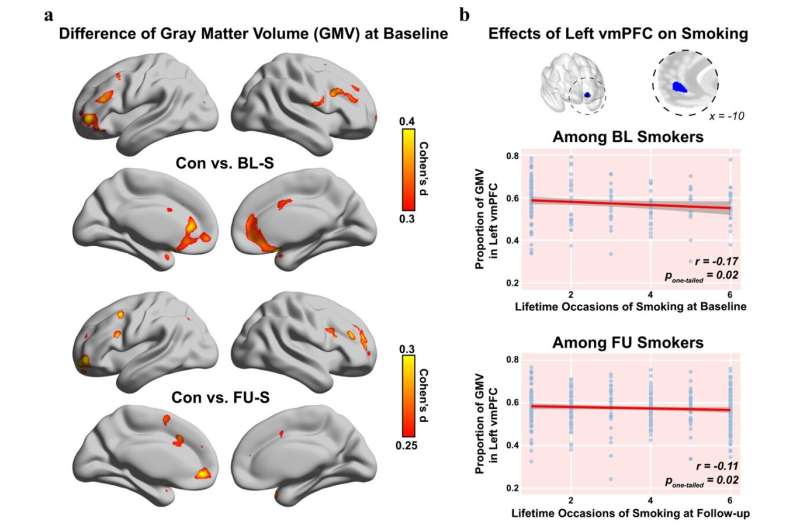
Smaller Left vmPFC was associated with future smoking. Credit: Nature Communications (2023)

Levels of gray matter in two parts of the brain may be linked to a desire to start smoking during adolescence and the strengthening of nicotine addiction, a new study has shown.

Researchers have enabled machine learning to accurately predict Parkinson’s disease subtypes using stem cell images. This breakthrough showcases computer models classifying four Parkinson’s subtypes, with top accuracies reaching 95%. This could revolutionize personalized medicine and aid in more targeted drug research for Parkinson’s.

A large international team of medical researchers has found that the severity of COVID-19 infections in children over the course of the pandemic varied by age and viral variant.

Researchers have illuminated how our brain maintains focus amidst distractions. Their study identifies “visual-movement” neurons in the lateral prefrontal cortex (LPFC) that use coordinated activity called “beta bursts” to suppress distracting stimuli and ensure attention remains on rewarding tasks. This discovery gives a deeper understanding of cognitive focus and offers insights into disorders like ADD and OCD.

More cases of children born with abnormal brain development may have genetic explanations than previously thought, according to a recent study published in JAMA Neurology.

Hearing impairment may cause difficulties in social interactions, but new research indicates that social struggles experienced by deaf individuals are likely not due to brain alterations, but rather due to non-supportive environments.

Scientists have identified a series of processes that help the brain adapt to damage caused by breakdowns in circuits that govern movement, cognition and sensory perception.

For the first time, researchers have discovered that the ventral tegmental area (VTA) of the brain—a key structure involved in motivation and reward appreciation—has altered connectivity patterns with specific brain regions in patients with obesity. Individuals with obesity have hyper-connectivity of the VTA with part of the ventral occipitotemporal cortex (visual processing for food images) and hypo-connectivity with the left inferior frontal gyrus (associated with cognitive control), according to a new study in Obesity.

Researchers have identified a key pathway, involved in inflammation, which appears to be activated in people with long COVID who have symptoms of “brain fog.”

Using a novel approach of precision neuroimaging and high-resolution functional magnetic resonance imaging (fMRI), a team of neuroscientists and physicists have discovered previously unknown cortical networks and shed light on the anatomical organization of the human memory system.

A pioneering scientific study has shown that the effects of multiple concussions in rugby players continue to have an impact on their brain even in retirement. 

Researchers have coupled the measurements of brain waves associated with disorders of consciousness (DoC) with glucose usage in specific brain areas, identifying where in the brain the waves might be generated.

A new study shows that brains with Alzheimer’s disease have subnormal levels of important dietary antioxidants.

A breakthrough project mapping brain changes in nearly 1,300 people diagnosed with six different types of mental illness has revealed the extraordinary diversity of brain changes found in people with conditions like major depression and schizophrenia.

Researchers have unveiled a promising link between adult education and reduced dementia risk. 

Neuroscientists have shown that adversities permanently change the functioning of the brain. Furthermore, an aberrant reaction of the brain to adversities is related to anxiety symptoms. This may have predictive value for the development of psychiatric disorders.

Finally this week, a new study identifies sex differences in the brain cell types responding to stress.

Weekly Neuroscience Update

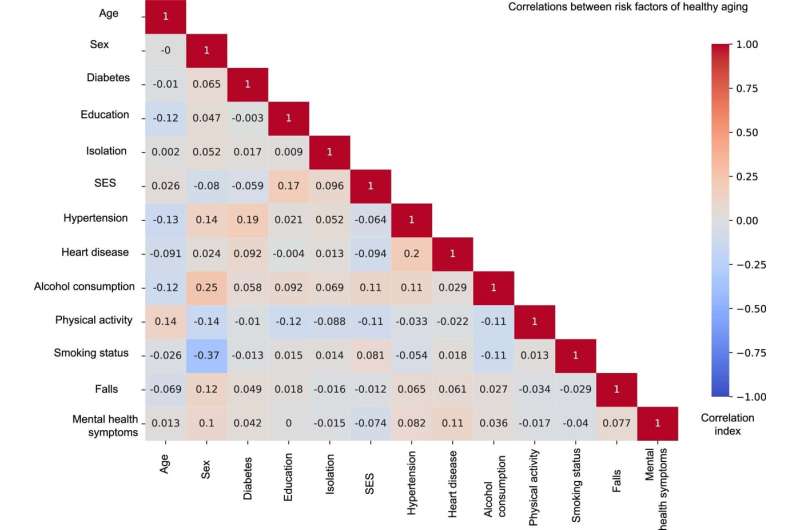
Factors associated with healthy aging in Latin American populations. Credit: Nature Medicine (2023)

Researchers at Trinity College Dublin studying the factors influencing healthy brain aging in Latin American and Caribbean (LAC) countries find the lessons learned there, can also be applied to home.

Immune cells in the brains of people who had Alzheimer’s disease appear to behave differently than those who had healthy brains for their age, according to an analysis of the cells’ gene activity. The finding suggests it might be possible to treat Alzheimer’s disease by altering the behavior of these cells.

The longer a person has type 2 diabetes, the more likely they may be to experience changes in brain structure, a new study finds.

Using human “mini-brain” models known as organoids, scientists have discovered that the roots of autism spectrum disorder may be associated with an imbalance of specific neurons that play a critical role in how the brain communicates and functions. The specific cells are known as excitatory cortical neurons.

Psilocybin, the active ingredient in psychedelic mushrooms, shows promise for the transitional treatment of episodic migraines in early clinical trials, according to a recent review.

Researchers have discovered that a neural marker of error detection in the brain’s visual system previously considered pre-attentive may actually require attention and that subtle visual irregularities may be revealed by other neural markers.

A new study has demonstrated that self-organization of neurons as they learn follows a mathematical theory called the free energy principle.

The neural network related to speech is mostly located in the left cerebral hemisphere, while singing has been primarily associated with the structures of both hemispheres. However, a new study indicates that the left hemisphere has a greater significance, including in terms of singing, than previously thought.

A new digital headset designed to measure alterations in brain function could change decisions about how quickly an athlete is ready to return to play after a concussion.

A new study suggests stimulating the sense of smell can boost memory. Older adults exposed to odors while they slept performed better on verbal memory tests and showed improved function in a brain pathway that supports memory formation, according to the study, published in the journal Frontiers in Neuroscience.

Finally this week, researchers have shown that machine learning can accurately predict subtypes of Parkinson’s disease using images of patient-derived stem cells.

Weekly Neuroscience Update

A new study sheds light on gender differences in risk-taking behavior. The research reveals women are more averse to risk than men due to heightened sensitivity to potential losses. Conversely, men, exhibiting greater optimism, are more willing to engage in risk-taking.

Researchers have identified specific brain network connections associated with anosognosia, a condition where patients are unaware of their neurological or psychiatric deficits.

Scientists have discovered children’s ability to process emotional cues is largely established by the time they start school. Analyzing brain scans from children aged five to 15, the study revealed that such brain activity becomes increasingly similar to their peers as they reach adolescence. The research emphasizes the importance of early intervention to address issues related to understanding emotional cues.

Recent neuroscience studies underscore the profound impact of sleep and sleep disorders on memory.

In a paper published in Science Advances, an international team reveal the discovery of sequence variants in the gene ABCC9 that influence the pitch of voices. The scientists found that ABCC9 variants associate with higher voice pitch in both men and women. The same sequence variants are also linked to higher pulse pressure, a cardiovascular risk factor, highlighting links between voice pitch and health-related traits.

Researchers have discovered a promising new avenue for treating glioblastoma, a deadly brain cancer.

Research led by the University of Texas Health Science Center, San Antonio, Texas, has looked into premature brain aging in individuals with type 1 diabetes. The findings of this study show an increase in brain aging among individuals with type 1 diabetes without any early signs of AD-related neurodegeneration. These increases were associated with reduced cognitive performance, but according to the authors, the abnormal patterns observed in the samples were modest.

Finally this week, intricate links between breathing and memory recall have been unraveled by recent scientific research, painting a more complex picture of our cognitive processes.

Weekly Neuroscience Update

Percentage of known neuron-, astrocyte- and oligodendrocyte-enriched genes in 32 modules, ordered by proportion of neuron-enriched gene membership. (credit: Michael Hawrylycz et al./Nature Neuroscience)

Percentage of known neuron-, astrocyte- and oligodendrocyte-enriched genes in 32 modules, ordered by proportion of neuron-enriched gene membership. (credit: Michael Hawrylycz et al./Nature Neuroscience)

Allen Institute researchers have identified a surprisingly small set of just 32 gene-expression patterns for all 20,000 genes across 132 functionally distinct human brain regions, and these patterns appear to be common to all individuals.

Evidence is mounting that gratitude makes a powerful impact on our bodies, including our immune and cardiovascular health. But how does gratitude work in the brain? A team at the University of Southern California has shed light on the neural nuts and bolts of gratitude in a new study, offering insights into the complexity of this social emotion and how it relates to other cognitive processes.

Subjective memory complaints (SMCs) are associated with cognitive impairment nearly two decades later among older women, a prospective study of aging has demonstrated.

Older adults that improved their fitness through a moderate intensity exercise program increased the thickness of their brain’s cortex, the outer layer of the brain that typically atrophies with Alzheimer’s disease, according to a new study. These effects were found in both healthy older adults and those diagnosed with mild cognitive impairment (MCI), an early stage of Alzheimer’s disease.

When it comes to the brain, “more is better” seems like an obvious assumption. But in the case of synapses, which are the connections between brain cells, too many or too few can both disrupt brain function. Research, recently published in the Journal of Neuroscience, reports  that an immune-system protein called MHCI, or major histocompatibility complex class I, moonlights in the nervous system to help regulate the number of synapses, which transmit chemical and electrical signals between neurons. MHCI could play an unexpected role in conditions such as Alzheimer’s disease, type II diabetes and autism.

Researchers have developed a simple technique to measure an individual’s visual processing speed–the speed at which an individual can comprehend visual information–in order to identify whether or not they may have cognitive issues.

Sleep is usually considered an all-or-nothing state: The brain is either entirely awake or entirely asleep. However, MIT neuroscientists have discovered a brain circuit that can trigger small regions of the brain to fall asleep or become less alert, while the rest of the brain remains awake.

Weekly Neuroscience Update

Findings suggest that physiological reactivity to sad stimuli, assessed using pupillometry, serves as one potential biomarker of depression risk among children of depressed mothers. Image credit: Jonathan Cohen, Binghamton University Photographer.

Findings suggest that physiological reactivity to sad stimuli, assessed using pupillometry, serves as one potential biomarker of depression risk among children of depressed mothers. Image credit: Jonathan Cohen, Binghamton University Photographer.

How much a child’s pupil dilates in response to seeing an emotional image can predict his or her risk of depression over the next two years, according to new research from Binghamton University.

Unwanted, intrusive visual memories are a core feature of stress- and trauma-related clinical disorders such as posttraumatic stress disorder (PTSD), but they can also crop up in everyday life. New research shows that even once intrusive memories have been laid down, playing a visually-demanding computer game after reactivating the memories may reduce their occurrence over time.

Rapid eye movement or REM sleep actively converts waking experiences into lasting memories and abilities in young brains reports a new study.

People who have diabetes and experience high rates of complications are more likely to develop dementia as they age than people who have fewer diabetic complications, according to a new study published in the Endocrine Society’s Journal of Clinical Endocrinology & Metabolism.

New research suggests that when deciding which of several possible actions to perform, the human brain plans multiple actions simultaneously prior to selecting one of them to execute.

In the first study of its kind researchers found that neurons in a specific brain region play a key role in rapidly forming memories about every day events, a finding that may result in a better understanding of memory loss and new methods to fight it in Alzheimer’s and other neurological diseases.

A major epidemiological registry-based study indicates that Parkinson’s disease begins in the gastrointestinal tract; the study is the largest in the field so far.

The activity of the emotion centres in the brain, the amygdala, is influenced by motivation rather than by the emotions themselves. This can be concluded from research carried out at Radboud University into the hormone testosterone. Testosterone increases amygdala activity in a person who is approaching a socially threatening situation and decreases the activity when such a situation is avoided.

An imaging study by Stanford University School of Medicine investigators has found distinct differences between the brains of patients with chronic fatigue syndrome and those of healthy people.

According to a new study, women experiencing difficulty with time management, attention, organization, memory, and problem solving – often referred to as executive functions – related to menopause may find improvement with a drug already being used to treat attention deficit hyperactivity disorder (ADHD

A new staining method could help map the entire brain.

Finally this week, Yale researchers have determined how a key component of the nervous system develops at the embryonic stage. Their work may ultimately offer new approaches to combat major diseases such as diabetes and peripheral artery disease.


Weekly Neuroscience Update

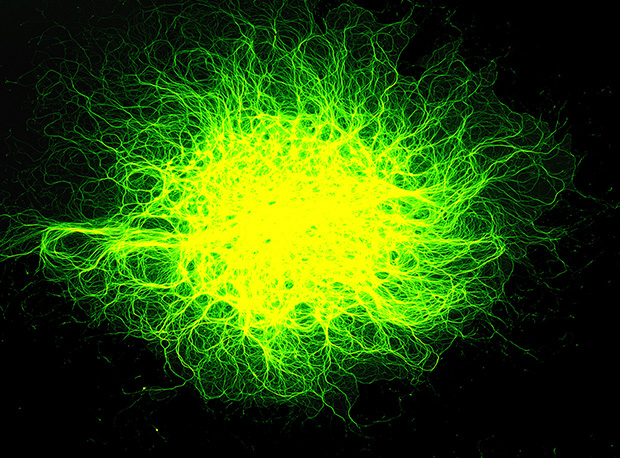
To study how nerve cells respond to injuries in their branches, Washington University researcher Valeria Cavalli grows them in “spots” like the one shown above. Cavalli recently identified a chain reaction that enables repair of these branches when they are cut. Credit Yongcheol Cho/Washington University at St. Louis.

To study how nerve cells respond to injuries in their branches, Washington University researcher Valeria Cavalli grows them in “spots” like the one shown above. Cavalli recently identified a chain reaction that enables repair of these branches when they are cut. Credit Yongcheol Cho/Washington University at St. Louis.

Researchers have identified a chain reaction that triggers the regrowth of some damaged nerve cell branches, a discovery that one day may help improve treatments for nerve injuries that can cause loss of sensation or paralysis.

Groundbreaking research nearly two decades ago linking a mother’s educational background to her children’s literacy and cognitive abilities stands out among decades of social science studies demonstrating the adverse effects of poverty. Now new research has taken that finding in a neuroscientific direction: linking poor processing of auditory information in the adolescent brain to a lower maternal educational background.

A review of new research says there is growing evidence to support the idea that the brain plays a key role in normal glucose regulation and the development of type 2 diabetes.

University of Queensland (UQ) scientists have made a fundamental breakthrough into how the brain decodes the visual world.

Cocaine addicts may become trapped in drug binges not because they are always seeking euphoric highs but rather to avoid emotional lows, says a study in Psychopharmacology.

Researchers have developed a therapeutic at-home gaming program for stroke patients who experience motor weakness affecting 80 percent of survivors.

Learning a musical instrument as a child gives the brain a boost that lasts long into adult life, say scientists.

The birth of new neurons depend upon activation of an important molecular pathway in stem cells, a new Yale School of Medicine study shows.

Researchers have taken a major step towards understanding the causes of Alzheimer’s disease with the largest study yet into the genetics of the disorder.

Light enhances brain activity during a cognitive task even in some people who are totally blind, according to a new study.

Scientists have discovered biological mechanisms that may link Parkinson’s disease to Alzheimer’s disease, according to a study published in the journal Acta Neuropathologica.


Weekly Neuroscience Update

Getting a grip—literally— by clenching your right fist before remembering information and your left when you want to remember it can boost your recall, according to the latest study. This strange trick may work because clenching your hands activates the side of the brain that handles the function— in right-handed people, for instance, the left side of the brain is primarily responsible for encoding information and the right for recalling memory. (If you are left-handed, the opposite applies).

Mathematicians from Queen Mary, University of London will bring researchers one-step closer to understanding how the structure of the brain relates to its function in two recently published studies.

Greater adherence to a Mediterranean diet (MeD) is associated with a lower likelihood of incident cognitive impairment (ICI), especially among those without diabetes, according to a study published in the April 30 issue of Neurology.

The widespread belief that dopamine regulates pleasure could go down in history with the latest research results on the role of this neurotransmitter. Researchers have proved that it regulates motivation, causing individuals to initiate and persevere to obtain something either positive or negative.

Supposedly ‘primitive’ reflexes may involve more sophisticated brain function than previously thought, according to researchers at Imperial College London.

The production of a certain kind of brain cell that had been considered an impediment to healing may actually be needed to staunch bleeding and promote repair after a stroke or head trauma, researchers at Duke Medicine report.

For any addiction, external  cues and stress can trigger  cravings that are hard to resist, and the latest research points to an area of  the brain that might be responsible  for sabotaging recovery.

Your Weekly Neuroscience Update

You’re running late for work and you can’t find your keys. What’s really annoying is that in your frantic search, you pick up and move them without realising. This may be because the brain systems involved in the task are working at different speeds, with the system responsible for perception unable to keep pace. So says Grayden Solman and his colleagues at the University of Waterloo in Ontario, Canada.

Scientists have now discovered how different brain regions cooperate during short-term memory  and in other research -findings that a prion-like protein plays a key role in storing long-term memories

Memories in our brains are maintained by connections between neurons called “synapses”. But how do these synapses stay strong and keep memories alive for decades? Neuroscientists at the Stowers Institute for Medical Research have discovered a major clue from a study in fruit flies: Hardy, self-copying clusters or oligomers of a synapse protein are an essential ingredient for the formation of long-term memory.

Researchers reveal a novel mechanism through which the brain may become more reluctant to function as we grow older.

New research from Uppsala University shows that reduced insulin sensitivity is linked to smaller brain size and deteriorated language skills in seniors. The findings are now published in the scientific journal Diabetes Care.

Age-related delays in neural timing are not inevitable and can be avoided or offset with musical training, according to a new study from Northwestern University. The study is the first to provide biological evidence that lifelong musical experience has an impact on the aging process.

Could brain size determine whether you are good at maintaining friendships? Researchers are suggesting that there is a link between the number of friends you have and the size of the region of the brain – known as the orbital prefrontal cortex – that is found just above the eyes. A new study, published today in the journal Proceedings of the Royal Society B, shows that this brain region is bigger in people who have a larger number of friendships.

Scientists have long believed that human speech is processed towards the back of the brain’s cerebral cortex, behind auditory cortex where all sounds are received – a place famously known as Wernicke’s area after the German neurologist who proposed this site in the late 1800s based on his study of brain injuries and strokes. But, now, research that analyzed more than 100 imaging studies concludes that Wernicke’s area is in the wrong location. The site newly identified is about 3 centimeters closer to the front of the brain and on the other side of auditory cortex – miles away in terms of brain architecture and function.

New research from Cold Spring Harbor Laboratory (CSHL) might help explain how a gene mutation found in some autistic individuals leads to difficulties in processing auditory cues and paying spatial attention to sound.

Neuroscientists may one day be able to hear the imagined speech of a patient unable to speak due to stroke or paralysis, according to University of California, Berkeley, researchers.

Cocaine-dependent men and women might benefit from different treatment options, according to a study conducted by Yale School of Medicine researchers.

New research finds problems that require a flash of illumination to solve are best approached during the time of day when you’re not at your peak.

Researchers for the first time are documenting the basic wiring of the brain, the complex relationships among billions of neurons that are responsible for reason, memory and emotion. The work eventually could lead to better understanding of schizophrenia, autism, multiple sclerosis and other disorders.