Weekly Neuroscience Update

age-brain-related-changes-autism

Researchers at the University of Miami find that large-scale connectivity in autism changes with age.

Although scientists know that depression affects the brain, they don’t know why some people respond to treatment while others do not. Now a team of researchers has shown for the first time in a large cohort of patients that electroconvulsive therapy (ECT), sometimes referred to as shock treatment, change certain areas of the brain that play a role in how people feel, learn and respond to positive and negative environmental factors.

Research by biologists at the University of York has identified new mechanisms potentially driving progression of an aggressive form of dementia.

A new study shows that the act of remembering leads to the subtle forgetting of other memories.

When we look at a known word, our brain sees it like a picture, not a group of letters needing to be processed. That’s the finding from a Georgetown University Medical Center (GUMC) study published in the Journal of Neuroscience, which shows the brain learns words quickly by tuning neurons to respond to a complete word, not parts of it.

Scientists at the University of Bonn have discovered a new cause of temporal lobe epilepsy.

Brown fat tissue, the body’s “good fat,” communicates with the brain through sensory nerves, possibly sharing information that is important for fighting human obesity, such as how much fat we have and how much fat we’ve lost, according to research published in the Journal of Neuroscience.

Finally this week, people who have suffered serious head injuries show changes in brain structure resembling those seen in older people, according to a new study.


Weekly Neuroscience Update

Reviewing MRI data, researchers found the brain anatomy of people with autism above the age of six was mostly indistinguishable from that of typically developing individuals. This image is for illustrative purposes only. Credit McZusatz.

Reviewing MRI data, researchers found the brain anatomy of people with autism above the age of six was mostly indistinguishable from that of typically developing individuals. This image is for illustrative purposes only. Credit McZusatz.

Brain anatomy in MRI scans of people with autism above age six is mostly indistinguishable from that of typically developing individuals and, therefore, of little clinical or scientific value.

Some types of dementia are actually a result of many tiny, unnoticed strokes damaging the brain over time, researchers at the Krembil Neuroscience Centre in Toronto, Canada, have found. This suggests that this type of dementia could be treatable — probably through lifestyle changes.

Therapists could pick up signs of depression just be listening to how their patients talk, after a study found that unhappy people speak in a different tone.

Why do we remember some things and not others? In a unique imaging study researchers have discovered how neurons in the brain might allow some experiences to be remembered while others are forgotten. It turns out, if you want to remember something about your environment, you better involve your dendrites.

Looking at the brain as a highly interactive network of nodes, rather than a collection of individual areas of activity, could offer a new way to diagnose the memory disorders that tend to affect older people.

An international study has identified genetic markers that may help in identifying individuals who could benefit from the alcoholism treatment drug acamprosate. The findings, published in the journal Translational Psychiatry, show that patients carrying these genetic variants have longer periods of abstinence during the first three months of acamprosate treatment.

New research on how the brain leads us to believe we have sharp vision.

Disturbances in the early stages of brain growth, such as preterm birth – when many of the brain’s structures have not yet fully developed – appears to affect the brain’s neuro-circuitry, which may explain premature babies’ higher risk of neurodevelopmental disorders including ADHD and autism spectrum disorder.

Data from 50 laboratories around the world has found that rare mutations in dozens of genes may be responsible for 30% or more cases of autism.

Researchers have been tracking the traces of implicit and explicit memories of fear in human. The study was published in the journal Neurobiology of Learning and Memory; it describes how, in a context of fear, our brain differently encodes contextual memory of a negative event and the emotional response associated.

A major breakthrough in the development of stem cell-derived brain cells has put researchers on a firm path towards the first ever stem cell transplantations in people with Parkinson’s disease. A new study presents the next generation of transplantable dopamine neurons produced from stem cells. These cells carry the same properties as the dopamine neurons found in the human brain.

The brain’s plasticity and its adaptability to new situations do not function the way researchers previously thought, according to a new study published in the journal Cell.

Finally this week, researchers have shown how a single neuron can perform multiple functions in a model organism, illuminating for the first time this fundamental biological mechanism and shedding light on the human brain.


Weekly Neuroscience Update

The patterns of brain activity recorded in this fMRI scanner revealed how mental rest and reflection on past learning activities can boost future learning. Credit Jeff Luci.

The patterns of brain activity recorded in this fMRI scanner revealed how mental rest and reflection on past learning activities can boost future learning. Credit Jeff Luci.

A new study, which may have implications for approaches to education, finds that brain mechanisms engaged when people allow their minds to rest and reflect on things they’ve learned before may boost later learning.

Sixty-nine scientists at Stanford University and other institutions issued a statement that the scientific track record does not support the claims that so-called “brain games” actually help older adults boost their mental powers.

A new study examines link between brain cortex and food buying habits.

New research shows for the first time that engaging brain areas linked to so-called “off-task” mental activities (such as mind-wandering and reminiscing) can actually boost performance on some challenging mental tasks. The results advance our understanding of how externally and internally focused neural networks interact to facilitate complex thought.

We are more likely to be receptive to good news than bad, and researchers have gone some way to explaining why we prefer to look on the bright side.

Researchers have found a definitive link between gait – the way someone walks – and early changes in cognitive function in people with Parkinson’s diseaseAnd the findings, published in the journal Frontiers in Aging Neuroscience could mean that gait may be used as an early warning sign to help predict the development of cognitive impairment and dementia in Parkinson’s.

Exercise is one of the best ways to protect against dementia in later life and the earlier you start, the greater the effect, research suggests.

Finally this week, a previously unknown mechanism through which the brain produces new nerve cells after a stroke has been discovered at Lund University and Karolinska Institutet in Sweden. The findings have been published in the journal Science.

Weekly Neuroscience Update

The study revealed that EGFR signaling is suppressed in a subset of glioblastomas. This image is for illustrative purposes only and shows an MRI brain scan of a person with glioblastoma brain cancer. Credit The Armed Forces Institute of Pathology.

The study revealed that EGFR signaling is suppressed in a subset of glioblastomas. This image is for illustrative purposes only and shows an MRI brain scan of a person with glioblastoma brain cancer. Credit The Armed Forces Institute of Pathology.

Researchers have found one of the keys to why certain glioblastomas – the primary form of a deadly brain cancer – are resistant to drug therapy. The answer lies not in the DNA sequence of the tumor, but in its epigenetic signature. These findings have been published online as a priority report in the journal Oncotarget.

It has been proposed that green tea extract may have a beneficial impact on cognitive functioning, suggesting promising clinical implications. However, the neural mechanisms underlying this putative cognitive enhancing effect of green tea extract still remain unknown.

According to researchers at the University of Montreal, the regions of the brain below the cortex play an important role as we train our bodies’ movements and, critically, they interact more effectively after a night of sleep.

Researchers find that the risk of future stroke is 39% higher among patients with cognitive impairment than those with normal cognitive function, according to a new study published in the Canadian Medical Association Journal (CMAJ).

A study is shining new light on a sleep disorder called “sleep drunkenness.” The disorder may be as prevalent as affecting one in every seven people. The research is published in Neurology.

A mindfulness-based therapy for depression has the added benefit of reducing health-care visits among patients who often see their family doctors, according to a new study.

In what may be the largest study of sleep problems among individuals with multiple sclerosis (MS), researchers at UC Davis have found that widely undiagnosed sleep disorders may be at the root of the most common and disabling symptom of the disease: fatigue.

Scientists have provided the first evidence that the lack of a naturally occurring protein is linked to early signs of dementia.

Weekly Neuroscience Update

Scientists used gene chips to help discover new genes that may be involved with Parkinson’s disease. Credit National Human Genome Research Institute.

cientists used gene chips to help discover new genes that may be involved with Parkinson’s disease. Credit National Human Genome Research Institute.

Using data from over 18,000 patients, scientists have identified more than two dozen genetic risk factors involved in Parkinson’s disease, including six that had not been previously reported.

Latest research says depression is a risk factor for dementia.

The happiness of over 18,000 people worldwide has been predicted by a mathematical equation, with results showing that moment-to-moment happiness reflects not just how well things are going, but whether things are going better than expected. And in another study, research suggests the right kind of happiness can change the code that defines our very being: our genes.

New research has mapped out the complex set of genes which interact with the environment to crystalise  reading and math abilities.

Children who have been abused or neglected early in life are at risk for developing both emotional and physical health problems. In a new study, scientists have found that maltreatment affects the way genes are activated, which has implications for children’s long-term development.

Scientists have discovered which brain networks are responsible when frustration leads to rage.

Adolescents who behave aggressively are more likely to drink alcohol and in larger quantities than their peers, according to a recent study completed in Finland. Depression and anxiety, on the other hand, were not linked to increased alcohol use. The study investigated the association between psychosocial problems and alcohol use among 4074 Finnish 13- to 18-year-old adolescents. The results were published in Journal of Adolescence.

New findings suggests that mild concussion may cause cognitive and memory problems.

Finally this week research conducted at the University of Adelaide, suggests that at least one part of the human brain may be able to process information the same way in older age as it does in the prime of life.


Weekly Neuroscience Update

scientists develop video game for stroke

Scientists have developed a therapeutic at-home 3D gaming programme to help stroke patients overcome motor weakness, which affects 80 per cent of survivors.

Using a video game in which people navigate through a virtual town delivering objects to specific locations, a team of neuroscientists has discovered how brain cells that encode spatial information form “geotags” for specific memories and are activated immediately before those memories are recalled.

Establishing links between genes, the brain and human behavior is a central issue in cognitive neuroscience research, but studying how genes influence cognitive abilities and behavior as the brain develops from childhood to adulthood has proven difficult. Now, an international team of scientists has made inroads to understanding how genes influence brain structure and cognitive abilities and how neural circuits produce language.

Stanford University School of Medicine neuroscientists have discovered a new role played by a common but mysterious class of brain cells.

A new study using brain imaging has shown the effect of the chronic pain drug pregalbin on the brain, giving researchers new insight on the treatment of fibromyalgia and other chronic pain disorders.

A study published recently in the Journal of Neuroscience points, for the first time, to the gene trkC as a factor in susceptibility to panic disorder. The researchers define the specific mechanism for the formation of fear memories which will help in the development of new pharmacological and cognitive treatments.

Finally, in the largest study on the topic to date, research shows that speaking a second language may delay the onset of three types of dementias.  The study found that people who spoke two languages developed dementia four and a half years later than people who only spoke one language.


Weekly Neuroscience Update

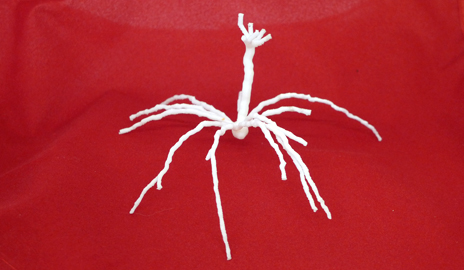
3D-printed model of a neuron (credit: Yale University)

3D-printed model of a neuron (credit: Yale University)

A Yale neuroscientist  has created the first 3D-printed neuron.

Studies released today suggest promising new treatments for nicotine and heroin addiction, and further our understanding of pathological gambling and heroin abuse in those suffering chronic pain. This new knowledge, released at Neuroscience 2013, the annual meeting of the Society for Neuroscience (SFN) and the world’s largest source of emerging news about brain science and health, may one day lead to non-pharmaceutical interventions and therapies to treat addiction. Also presented at SFN, new studies revealing links between social status and specific brain structures and activity, particularly in the context of social stress.

A new study has found that people experiencing a depressive episode process information about themselves differently than people who are not depressed.

To flexibly deal with our ever-changing world, we need to learn from both the negative and positive consequences of our behaviour. In other words, from punishment and reward. Hanneke den Ouden from the Donders Institute in Nijmegen demonstrated that serotonin and dopamine related genes influence how we base our choices on past punishments or rewards. This influence depends on which gene variant you inherited from your parents. These results were published in Neuron on November 20.

Brain scans reveal that people with fibromyalgia are not as able to prepare for pain as healthy people, and they are less likely to respond to the promise of pain relief.

Scientists have used RNA interference (RNAi) technology to reveal dozens of genes which may represent new therapeutic targets for treating Parkinson’s disease. The findings also may be relevant to several diseases caused by damage to mitochondria, the biological power plants found in cells throughout the body.

Playing a fast-paced strategy video games can help the brain to become more agile and improve strategic thinking, according to new research.

While young children sleep, connections between the left and the right hemispheres of their brain strengthen, which may help brain functions mature, according to a new study by the University of Colorado Boulder.  And in another sleep study, a team of sleep researchers  has confirmed the mechanism that enables the brain to consolidate memory and found that a commonly prescribed sleep aid enhances the process. Those discoveries could lead to new sleep therapies that will improve memory for aging adults and those with dementia, Alzheimer’s and schizophrenia.

Weekly Neuroscience Update

japanesesupe

Researchers in Japan have used the powerful K computer, the world’s fastest supercomputer, to simulate the complex neural structure of our brain.

Heavy drinking as a teenager is the single biggest risk factor for developing dementia unusually early, according to new research. A study of almost 500,000 Swedish men identified “alcohol intoxication” as a late adolescent as the most serious of nine separate risk factors for young onset dementia (YOD) – that is, dementia before reaching 65.

For the first time, researchers have documented irregular brain activity within the first 24 hours of a concussive injury, as well as an increased level of brain activity weeks later—suggesting that the brain may compensate for the injury during the recovery time. The findings are published in the September issue of the Journal of the International Neuropsychological Society.

New findings may help neuroscientists pinpoint better targets for anti-anxiety treatments.

The synapses in the brain act as key communication points between approximately one hundred billion neurons. They form a complex network connecting various centres in the brain through electrical impulses. New research from Lund University suggests that it is precisely here, in the synapses, that Huntington’s disease might begin.

In patients with early Alzheimer’s disease, disruptions in brain networks emerge about the same time as chemical markers of the disease appear in the spinal fluid, researchers at Washington University School of Medicine in St. Louis have shown.

New research indicates that teens with anorexia nervosa have bigger brains than teens that do not have the eating disorder.

Assessing consciousness in patients with severe brain trauma is a difficult challenge for doctors, as the injury effectively takes away any ability to blink, squeeze a hand or otherwise respond. But scientists have found a way to measure the brain’s response to a magnetic pulse, helping them determine a person’s level of awareness.


Weekly Neuroscience Update

How Would It Be to Have the Body of a Child Again? Changes in Perception and Behaviors Demonstrated When Embodying a Child Avatar

A research, recently published on the journal Proceedings of the National Academy of Sciences, suggests that a correlate of a body-ownership illusion is that the virtual type of body carries with it a set of temporary changes in perception and behaviours that are appropriate to that type of body.

A new study, published in the New England Journal of Medicine, examined whether or not higher glucose levels without diabetes was a risk factor for dementia.  Diabetes is already a known risk factor for dementia, but this study aimed to determine if the risk factor for diabetes is a risk factor for dementia.  Studying 2,067 participants without dementia, 232 of which already had diabetes, the researchers collected follow-up data after approximately seven years.  They found a significantly higher risk of dementia in individuals with higher than average blood glucose even if they did not have diabetes. Meanwhile, a study by researchers at Umeå University in Sweden suggests nine different factors that can increase the risk of developing dementia before age 65. The results have been published by the journal JAMA Internal Medicine.

Meditating before lectures can lead to better grades according to a new experimental study by George Mason University professor Robert Youmans and University of Illinois doctoral student Jared Ramsburg.

Researchers at Johns Hopkins have uncovered a protein switch that can either increase or decrease memory-building activity in brain cells, depending on the signals it detects. Its dual role means the protein is key to understanding the complex network of signals that shapes our brain’s circuitry, the researchers say.

Different parts of the brain are affected in women with autism than in men with autism, according to a new study.

Ending a 30-year search by scientists, researchers at Boston Children’s Hospital have identified two proteins in the inner ear that are critical for hearing, which, when damaged by genetic mutations, cause a form of delayed, progressive hearing loss.

Researchers have found human brains ‘divide and conquer’ when people learn to navigate around new environments. The research by UQ’s Queensland Brain Institute (QBI) could provide hope for people with spatial memory impairments.

Researchers have discovered how genetic mutations linked to Parkinson’s disease might play a key role in the death of brain cells, potentially paving the way for the development of more effective drug treatments.

The largest genome-wide study of its kind has determined how much five major mental illnesses are traceable to the same common inherited genetic variations. Researchers funded in part by the National Institutes of Health found that the overlap was highest between schizophrenia and bipolar disorder; moderate for bipolar disorder and depression and for ADHD and depression; and low between schizophrenia and autism. Overall, common genetic variation accounted for 17-28 percent of risk for the illnesses.

Weekly Neuroscience Update

FASD impacts brain development throughout childhood and adolescence not just at birth

Highlighted areas are some of the white matter tracts the research group studied. Credit: U of A

Medical researchers at the University of Alberta recently published findings showing that brain development is delayed throughout childhood and adolescence for people born with Fetal Alcohol Spectrum Disorder (FASD).

Whenever we have to acquire new knowledge under stress, the brain deploys unconscious rather than conscious learning processes. Neuroscientists at the Ruhr-Universität Bochum have discovered that this switch from conscious to unconscious learning systems is triggered by the intact function of mineralocorticoid receptors.

Researchers have reverse-engineered the outlines of a disrupted prenatal gene network in schizophrenia, by tracing spontaneous mutations to where and when they likely cause damage in the brain. Some people with the brain disorder may suffer from impaired birth of new neurons, or neurogenesis, in the front of their brain during prenatal development, suggests the study.

Autism is marked by several core features — impairments in social functioning, difficulty communicating, and a restriction of interests. Though researchers have attempted to pinpoint factors that might account for all three of these characteristics, the underlying causes are still unclear. Now, a new study suggests that two key attentional abilities — moving attention fluidly and orienting to social information — can be checked off the list, as neither seems to account for the diversity of symptoms we find in people with autism.

Anemia, or low levels of red blood cells, may increase the risk of dementia, according to a study published in the July 31, 2013, online issue of Neurology, the medical journal of the American Academy of Neurology

Physicists and neuroscientists from The University of Nottingham and University of Birmingham have unlocked one of the mysteries of the human brain, thanks to new research using Functional Magnetic Resonance Imaging (fMRI) and electroencephalography (EEG). The work will enable neuroscientists to map a kind of brain function that up to now could not be studied, allowing a more accurate exploration of how both healthy and diseased brains work.