A new study has shown neurotransmitters in the human brain are released during the processing of the emotional content of language, providing new insights into how people interpret the significance of words.
Researchers have identified how cerebrovascular disease disrupts brain connectivity, contributing to cognitive decline and neurodegeneration alongside Alzheimer’s disease.
There may be a link between hearing impairment and an increased risk of developing Parkinson’s according to research led by Lancaster University. Researchers analyzed data from over 159,000 individuals, finding that every 10-decibel increase in hearing loss corresponded to a 57% higher risk of Parkinson’s. While the findings highlight a strong association, the causality between hearing loss and Parkinson’s remains unclear.
A new systematic literature search has identified the highest priority clinical actions aimed at improving post-acute care for non-hospitalized traumatic brain injury.
Researchers are making strides in restoring touch sensations to prosthetic limbs through brain stimulation. By using electrodes in the brain’s touch center, they can evoke stable, precise sensations, even allowing users to feel the shape and motion of objects.
New research reveals that certain cells inactivate one parent’s copy of a gene, leading to a bias in gene activity that may explain why some individuals with disease-causing mutations remain symptom-free. This selective gene inactivation, known as monoallelic expression, affects about 1 in 20 genes and varies between cell types.
A new study from Karolinska Institutet and Mayo Clinic has revealed important insights into brain degeneration in dementia with Lewy bodies.
Tourette syndrome is currently diagnosed about three times more frequently in males than in females. A new study finds that females are less likely to be diagnosed with the syndrome, take longer to receive a diagnosis and are older when they are diagnosed than male individuals.
Finally this week, a new study has found that eating greater quantities of red meat, especially in processed forms, increasesthe risk for dementia.
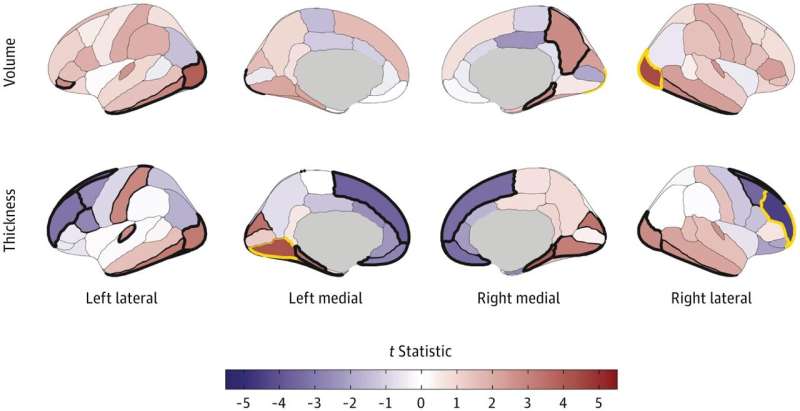
Regional Cortical Volume and Thickness Associations With Early Substance Use Initiation in the Adolescent Brain Cognitive Development (ABCD) Study. Credit: JAMA Network Open (2024).
A new study has identified neuroanatomical differences in children associated with early substance use initiation.
Vagus nerve stimulation (VNS) shows a positive treatment effect and improved quality of life (QoL) among patients with treatment-resistant depression according to two studies published in Brain Stimulation.
A new analysis of U.S. mortality data reveals the disproportionate impact of traumatic brain injuries on older adults, males and certain racial and ethnic groups.
Gender differences define how the human brain ages and telltale biomarkers in the blood may be strongly suggestive of cognitive impairment and dementia, according to a comprehensive new study involving more than 500 people.
Researchers have identified genetic variations in brain cells, particularly microglia and oligodendrocytes, that influence both aging and Alzheimer’s risk.
New research shows that not all brain cells age equally, with certain cells, such as those in the hypothalamus, experiencing more age-related genetic changes. These changes include reduced activity in neuronal circuitry genes and increased activity in immunity-related genes.
A recent study has found that menopause revs up the progression of multiple sclerosis (MS).
Researchers have discovered that pupil size during non-REM sleep correlates with memory consolidation. When pupils contract, the brain focuses on consolidating new memories; when dilated, it processes older ones. This separation prevents “catastrophic forgetting,” allowing the brain to efficiently manage both new and existing knowledge. These findings could lead to better memory enhancement techniques for humans and inspire more efficient artificial neural networks.
A new study shows head trauma may activate latent viruses, leading to neurodegeneration.
A collaborative effort between Mount Sinai and Memorial Sloan Kettering Cancer Center has shed valuable light on how monoamine neurotransmitters such as serotonin, dopamine, and now histamine help regulate brain physiology and behavior through chemical bonding of these monoamines to histone proteins, the core DNA-packaging proteins of our cells.
Finally this week, sex differences in brain structure are present from birth, new research shows.
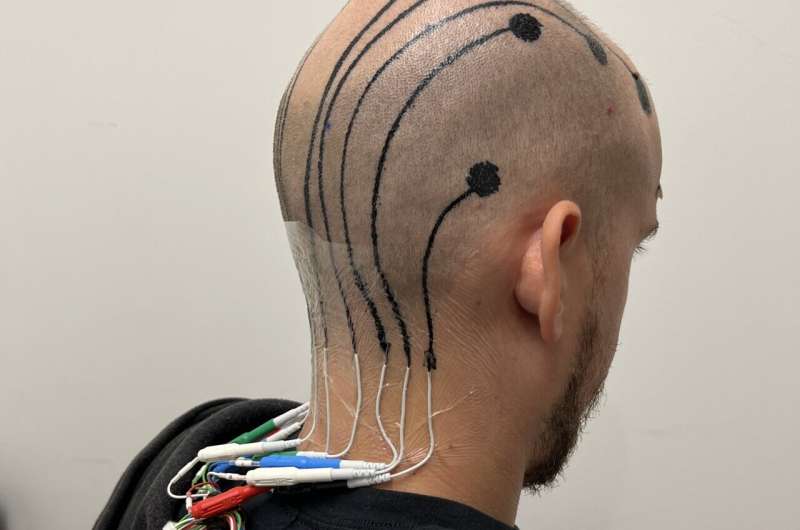
EEG setup with e-tattoo electrodes. Credit: Nanshu Lu
For the first time, scientists have invented a liquid ink that doctors can print onto a patient’s scalp to measure brain activity. The technology offers a promising alternative to the cumbersome process currently used for monitoring brainwaves and diagnosing neurological conditions. It also has the potential to enhance non-invasive brain-computer interface applications.
People who have chronic traumatic encephalopathy (CTE) who have a family history of mental illness may have a higher risk of aggression in middle age, according to a new study.
A loss of brain volume associated with new immunotherapies for Alzheimer’s disease may be caused by the removal of amyloid plaques, rather than the loss of neurons or brain tissue, finds a study led by UCL researchers.
A common heart drug may slow the progression of Huntington’s disease according to new research.
Men with cardiovascular disease risk factors, including obesity, face brain health decline a decade earlier—from their mid 50s to mid 70s—than similarly affected women who are most susceptible from their mid 60s to mid 70s, suggest the findings of a long term study, published online in the Journal of Neurology Neurosurgery & Psychiatry.
In a new study published in Briefings in Bioinformatics, researchers have found that depression can increase the chances of a person experiencing menstrual pain (dysmenorrhea).
Researchers have achieved a major milestone in the treatment of spinal cord injuries (SCI). By applying deep brain stimulation (DBS) to an unexpected region in the brain—the lateral hypothalamus (LH)—the team has improved the recovery of lower limb movements in two individuals with partial SCI, greatly improving their autonomy and well-being.
Soccer heading may cause more damage to the brain than previously thought, according to a study presented at the annual meeting of the Radiological Society of North America (RSNA).
New research reveals subtle changes in the visual pathways of individuals with chronic mild traumatic brain injury (TBI), even when standard eye examinations show no abnormalities. These findings include structural and functional deficits despite participants showing normal visual acuity during clinical examination.
A recent study identifies research strategies for tying brain function and structure to behaviour and health.
COVID-19 may be a risk factor for multiple sclerosis (MS). This has been shown by new research at Örebro University and Örebro University Hospital, Sweden. The study is published in the journal Brain Communications.
A study appearing in Nature Neuroscience has linked distinct neural and behavioral characteristics in autism spectrum disorder (ASD) to a simple computational principle.
Everyday physical activity, like going for a short walk or playing with the kids, may provide short-term benefits for cognitive health, equivalent to reversing four years of cognitive aging. That was a key finding anew study, published in the journal Annals of Behavioral Medicine.
Voice experiments in people with epilepsy have helped trace the circuit of electrical signals in the brain that allow its hearing center to sort out background sounds from their own voices.
A study led by University College London researchers found that large language models, a type of AI that analyzes text, can predict the results of proposed neuroscience studies more accurately than human experts.
Skeletal muscle loss is a risk factor for developing dementia, according to a study presented at the annual meeting of the Radiological Society of North America (RSNA).
A pioneering study has meticulously mapped the brain’s intricate neural pathways, shedding light on how specific regions work together to control impulsive actions. By employing advanced neuroimaging and noninvasive brain stimulation techniques, researchers uncover the mechanisms that allow us to halt unwanted actions.
Finally this week, new research reveals the unique human ability to conceptualize numbers may be rooted deep within the brain.
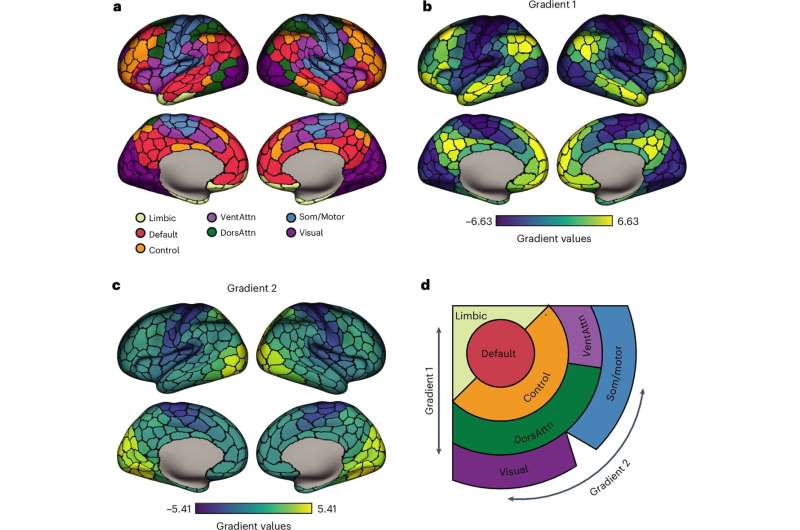
Large-scale functional networks are embedded along two principal gradients. Credit: Nature Neuroscience (2024).
Scientists have uncovered how different types of brain cells work together to form large-scale functional networks in the human brain—interconnected systems that support everything from sensory processing to complex decision-making—paving the way for new insights into brain health and disease.
A new neuroimaging marker of cerebral small vessel disease is related to general cognition and may serve to identify persons at risk of dementia in future clinical trials, a landmark study has found.
A recent study reveals that the genetic mutation causing Huntington’s disease (HD) enhances brain development and intelligence in early life, but leads to degeneration in adulthood. Children with the HD gene exhibit larger brains and higher IQs than those without the mutation.
In what could one day become a new treatment for epilepsy, researchers have used pulses of light to prevent seizure-like activity in neurons.
A team of researchers has found that certain factors are linked to faster brain shrinkage and quicker progression from normal thinking abilities to mild cognitive impairment (MCI). People with type 2 diabetes and low levels of specific proteins in their cerebrospinal fluid showed more rapid brain changes and developed MCI sooner than others.
Neuroscientists have identified the binding site of low-dose ketamine, providing critical insight into how the medication, often described as a wonder drug, alleviates symptoms of major depression in as little as a few hours with effects lasting for several days.
New research indicates that cannabis use causes cellular damage that increases the risk of highly cancerous tumors by disrupting mitochondria and damaging DNA.
Fampridine, used for improving walking in multiple sclerosis, may also enhance working memory in individuals with schizophrenia or depression. A study found that the drug significantly improved working memory in participants with initially poor performance, but had no effect on those with strong baseline memory.
A recent study links satellite and brain imaging data to identify how environmental factors can impact mental health, cognition and brain development in young people.
A new Alzheimer’s test collects just a few drops of blood from a finger prick, which can be mailed to a lab for analysis. The test measures biomarkers like pTau217 and has shown similar accuracy to traditional venous blood sampling.
Researchers have shed light on the puzzling relationship between dopamine and rest tremor in Parkinson’s disease, finding that preserved dopamine in certain brain regions may actually contribute to tremor symptoms, challenging common beliefs.
New research has revealed the diverse assembly and regulation of Type-A GABA receptors (GABAARs), which are crucial for balancing brain activity.
A recent study has found fascinating similarities in how the human brain and artificial intelligence models process language. The research, published in Nature Communications, suggests that the brain, like AI systems such as GPT-2, may use a continuous, context-sensitive embedding space to derive meaning from language, a breakthrough that could reshape our understanding of neural language processing.
A team of researchers has investigated the composition and communication of cells in so-called subcortical lesions, tissue damage to deep brain structures at different stages of multiple sclerosis.
Care for stroke survivors urgently needs to focus on non-motor skill outcomes such as fatigue, anxiety and reduced social participation to improve survivors’ quality of life and minimize care needs, according to a new study.
An international research collaboration has discovered how unusual spherical structures form in the brains of people with a mutation that causes a form of inherited Alzheimer’s disease.
A new study identifies previously hidden brain network patterns in schizophrenia by focusing on nonlinear connectivity, offering potential biomarkers for early diagnosis. Traditional imaging methods often overlook these patterns, but researchers developed advanced statistical tools to uncover this new dimension of brain organization.
Finally this week, research published in the Journal of the American Geriatrics Society has identified several community-level factors that may increase people’s risk of experiencing cognitive impairment.
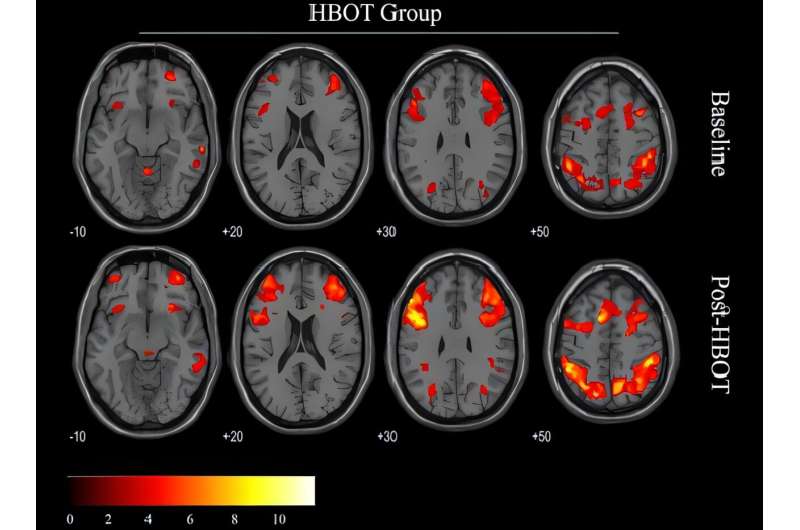
Functional MRI before and after HBOT. Credit: The Shamir Medical Center
Researchers have demonstrated that hyperbaric oxygen therapy (HBOT) improves the condition of PTSD sufferers who have not responded to psychotherapy or psychiatric medications.
Scientists have discovered for the first time a neural mechanism for memory integration that stretches across both time and personal experience. These findings, reported in Nature, demonstrate how memories stored in neural ensembles in the brain are constantly being updated and reorganized with salient information, and represent an important step in deciphering how our memories stay current with the most recently available information.
Neuroscientists have discovered brain cells that form multiple coordinate systems to tell us “where we are” in a sequence of behaviours. The findings help us understand the algorithms used by the brain to flexibly generate complex behaviors, such as planning and reasoning, and might be useful in understanding how such processes go wrong in psychiatric conditions such as schizophrenia.
New research finds that even single bouts of intense exercise can improve cognitive performance in young adults, particularly in memory, attention, and executive functioning.
By scanning the brains of people while they watched movie clips, neuroscientists have created the most detailed functional map of the brain to date. The fMRI analysis, published in Neuron, shows how different brain networks light up when participants viewed short clips from a range of independent and Hollywood films, including Inception, The Social Network, and Home Alone.
Asthma is associated with memory difficulties in children, and early onset of asthma may exacerbate memory deficits, according to a new study.
Older adults with significant fluctuations in cholesterol levels are at increased risk for dementia and cognitive decline, even without medication changes. Researchers studied nearly 10,000 older adults, tracking their cholesterol levels and cognitive function over six years. High variability in total and LDL (“bad”) cholesterol was associated with a 60% increase in dementia and 23% increase in cognitive decline.
Scientists have successfully reprogrammed astroglia, a type of brain support cell, into neurons that mimic specific interneurons critical for brain function.
Exercise has been shown to improve brain health and reduce the risk of cognitive decline and dementia over the long-term. But engaging in everyday physical activity has immediate benefits for brain health, according to a new study.
New research highlights neuroglia (or glia cells) as critical players in mental health, potentially influencing conditions like depression and schizophrenia. Glia cells, long considered “support cells” in the brain, have now been shown to communicate through unique calcium signaling, impacting neuronal function and stress responses. Studies suggest that compromised astrocyte function, a glial cell type, may relate to depressive symptoms and schizophrenia.
A study investigated how cannabis use influences metabolomic patterns linked to psychotic-like experiences in adolescents. Blood samples revealed that non-cannabis users showed inflammatory metabolic changes associated with hallucinations, while cannabis users exhibited shifts in energy-related metabolites tied to brain ketogenesis.
Finally this week, a new study links satellite data with brain imaging to reveal how environmental factors like light pollution, green spaces, and urban density affect the mental health and brain development of children.
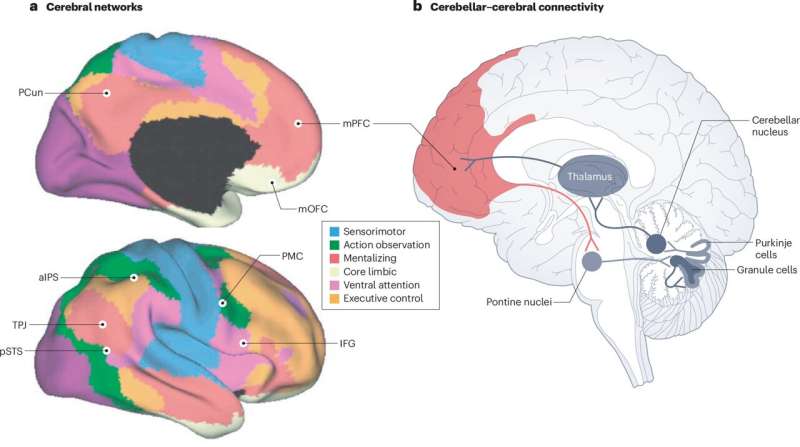
Cerebral networks and reciprocal connectivity between the cerebellum and cerebrum, supporting social and emotional learning. Credit: Nature Reviews Neuroscience (2024).
A recent publication in Nature Reviews Neuroscience sheds light on the often-overlooked role of the cerebellum in both motor and social-cognitive processes.
New research has shown that Alzheimer’s disease impacts the brain in two primary phases: an early, gradual phase that damages select cell types and a late phase marked by rapid, widespread damage as symptoms emerge.
Playing video games may boost your cognitive abilities and exercise can improve your mental health, but not the other way around, a large-scale study has found.
A large meta-analysis of over 600,000 people shows that experiencing loneliness significantly raises the risk of developing dementia by 31%. Researchers found that loneliness is a key factor in cognitive decline, contributing to conditions like Alzheimer’s disease, regardless of age or sex.
Researchers have found that senescent cells—non-dividing “zombie” cells—accumulate in the skin as people age and may influence aging in other parts of the body.
A new study reveals that visual clutter alters how information flows between neurons in the brain’s primary visual cortex, but not the order in which it’s processed. Researchers found that the efficiency of information transfer changes depending on the location of clutter in the visual field.
An innovative study, published in Nature Communications, reveals the mechanism behind two seemingly contradictory effects of fear memories: the inability to forget yet the difficulty to recall.
After only one to three days of a whiplash injury, scientists can predict which patients will develop chronic pain based on the extent of cross “talk” between two regions of the brain, and the person’s anxiety level after the injury, according to a new Northwestern Medicine study.
Women who began an aerobic exercise program during chemotherapy for breast cancer reported improved cognitive function and quality of life compared to those who received standard care.
A new study reveals that setting reminders can eliminate some age-related declines in memory. The findings offer a significant breakthrough in addressing the cognitive challenges faced by older adults, particularly in the context of prospective memory, which is the ability to remember to perform an intended action at the right moment, like taking medication or attending appointments.
Concussion researchers have recognized a new concussion sign that could identify up to 33% of undiagnosed concussions.
In a study publishedin the journal Bilingualism: Language and Cognition, Concordia researchers use neuroimaging methods to examine brain resilience in regions of the brain linked to language and aging. They found that the hippocampus in bilinguals with Alzheimer’s disease was noticeably larger than those who were monolingual when matched for age, education, cognitive function and memory.
People in early middle age who have poor sleep quality, including having difficulty falling or staying asleep, have more signs of poor brain health in late middle age, according to a recent study.
New research shows that prolonged mental exertion weakens connectivity between the brain’s frontal and parietal lobes, impacting cognitive efficiency. However, the brain has built-in compensatory mechanisms that adjust neural connections to preserve function under fatigue.
Finally this week, cannabis use may lead to thinning of the cerebral cortex in adolescents, according to a recent study published in The Journal of Neuroscience.
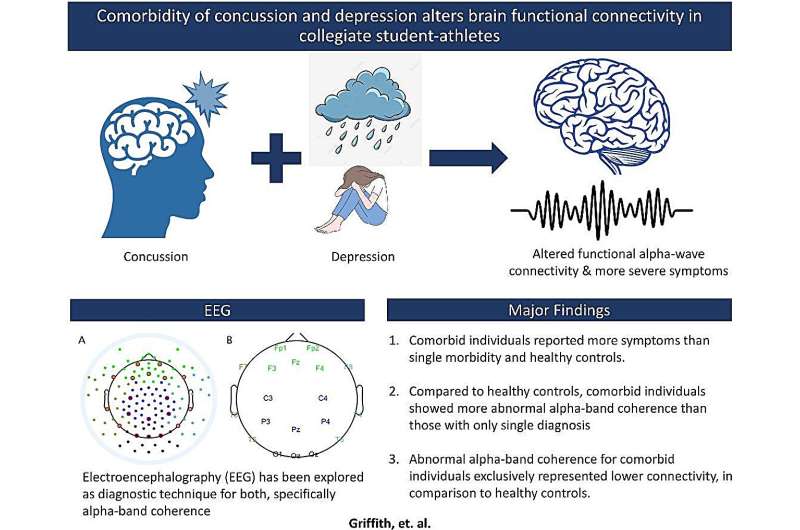
Researchers have demonstrated that the co-occurrence of depression and concussion was associated with significantly worse symptoms for both conditions.
A recent study has mapped how molecules in food interact with gut bacteria, revealing why people respond differently to the same diets. By examining 150 dietary compounds, researchers found that these molecules can reshape gut microbiomes in some individuals while having little effect in others. This breakthrough could enable personalized nutrition strategies to better manage health risks. The findings offer a deeper understanding of the gut microbiome’s role in health and disease.
A new computer simulation of how our brains develop and grow neurons has been built by scientists from the University of Surrey. Along with improving our understanding of how the brain works, researchers hope that the models will contribute to neurodegenerative disease research and, someday, stem cell research that helps regenerate brain tissue.
Brain endurance training (BET), a combined cognitive and exercise approach, has been shown to significantly improve cognitive and physical performance in older adults.
New research demonstrates that learning a second language enhances brain connectivity, particularly when started in childhood. Scientists found that bilingual individuals have more efficient communication between brain regions, notably between the cerebellum and left frontal cortex.
In a new study evaluating meditation for chronic lower back pain, researchers have discovered that men and women utilize different biological systems to relieve pain. While men relieve pain by releasing endogenous opioids, the body’s natural painkillers, women rely instead on other, non-opioid based pathways.
A study has identified mutations arising during brain development that may contribute to schizophrenia. Unlike inherited genes, these somatic mutations occur after conception and were found more frequently in schizophrenia patients’ brain tissue.
There is an imbalance in the gut flora of patients with epilepsy compared with healthy controls, according to a study published in the Journal of Health, Population and Nutrition.
Researchers have developed a breakthrough technology using magnetic fields to control specific brain circuits non-invasively, potentially transforming treatments for conditions like Parkinson’s and depression. This technique, termed “magnetogenetics,” delivers gene therapy to target neurons and uses magnetic fields to activate or inhibit them, allowing precise manipulation without invasive implants.
A recent study reveals that specific brain cells respond not only to smells but also to images and written words related to those scents, providing deeper insight into human odour perception. Researchers found that neurons in the olfactory cortex and other brain regions, like the hippocampus and amygdala, distinguish between different smells and associate them with visual cues.
A collaborative study has identified genetic mutations that occur during brain development and may contribute to the development of schizophrenia.
A research team has published a randomized clinical trial demonstrating for the first time that a multidisciplinary approach integrating specific physiotherapy and cognitive-behavioral therapy is effective in improving the symptoms and physical aspects of the quality of life of patients with functional movement disorders.
Finally this week, scientists have discovered an unexpected link between genes involved in human brain evolution and developmental disorders.
Mapped is the proportion of participants with a high rate of atrophy in cortical (left) and subcortical (right) areas. AD, Alzheimer’s disease; MCI, mild cognitive impairment. Credit: Alzheimer’s & Dementia (2024).
The way in which brains shrink in those who develop Alzheimer’s disease follows no specific or uniform pattern, finds a new study by researchers at UCL and Radboud University in the Netherlands.
A McGill University study has shown that hearing plays a crucial role in how people coordinate and control speech movements in real-time. Published in The Journal of the Acoustical Society of America, the researchshows that when people cannot hear their own speech, even briefly, their ability to move their jaw and tongue in a coordinated manner is impaired.
Recent research offers novel insights about the biological mechanisms behind major depressive disorder and especially on the role of the immune system.
A new analysis from Imperial’s human challenge study of COVID-19 has revealed subtle differences in the memory and cognition scores of healthy volunteers infected with SARS-CoV-2, which lasted up to a year after infection. The findings, published in the journal eClinicalMedicine, show a small but measurable difference following highly intensive cognitive testing of 18 healthy young people with infection compared to those who did not become infected, monitored under controlled clinical conditions
A simple scoring system may help doctors predict which patients will likely become seizure-free after minimally invasive epilepsy surgery.
The European Commission has released the 10-year assessment of the Human Brain Project (HBP), an EU-Flagship initiative that concluded in 2023. The report highlights that the HBP made major contributions and had a transformative impact on brain research. One of the main outcomes of the HBP is EBRAINS, the open research infrastructure that continues to push neuroscience research forward.
A new, large study from France underscores the link between adult hearing loss and dementia. In addition, hearing loss is linked to loss of volume in critical areas of the brain.
Scientists are investigating the extraordinary longevity of neurons, which can survive for over 90 years, in a new research project. The findings could not only improve understanding of neural aging but also lead to treatments for neurodegenerative diseases like Parkinson’s and ALS. The research could potentially expand beyond neurons, offering insights into extending the health span of other cell types.
Bright light therapy is an effective adjunctive treatment for nonseasonal depressive disorder, according to a review published in JAMA Psychiatry.
A recent study has shown that conscious thought relies on synchronized brain rhythms to maintain communication between sensory and cognitive brain regions. Under general anesthesia, this rhythm-based communication breaks down, disrupting the brain’s ability to detect and process surprising stimuli.
A new trial reveals that weekly injections of the weight-loss drug Wegovy (semaglutide) lowered the risk of death from COVID-19 by about a third and reduced overall mortality by 19%.
In a breakthrough study, researchers have imaged a network of pathways in the human brain believed to clear waste proteins that can lead to Alzheimer’s and dementia. Using advanced MRI techniques, they revealed perivascular channels that guide cerebrospinal fluid through the brain, providing strong evidence of the glymphatic system’s role in waste removal.
New research has discovered that disruptions in the brain’s salience network, often tied to tau protein buildup, correlate strongly with behavioural changes in people with early-stage dementia.
A research team has publisheda comprehensive review on the application of brain network models (BNMs) in the medical field. This study summarizes recent advances and challenges in using BNMs to simulate brain activities, understand neuropathological mechanisms, evaluate therapeutic effects, and predict disease progression.
New research reveals that immune responses play a crucial role in the formation of Lewy bodies, protein aggregates that mark Parkinson’s disease and other neurological conditions.
A new study has found microplastics in human brains for the first time, raising concerns about the potential health impact. Researchers analyzed samples from autopsies and discovered an accumulation of plastic particles in brain tissue, likely due to exposure through food, water, and air. Although the study is still in its preliminary stages, it highlights the need for further investigation into the effects of microplastics on brain health. While microplastics have been shown to cause inflammation and damage in laboratory experiments, their long-term impact on human health remains unclear.
Finally this week, researchers are working on a novel gene therapy that holds potential in treating patients with epilepsy.
The team that first recorded vagus nerve signals in humans has now isolated the electrical activity of individual neurons responsible for cardiovascular regulation. Published in the Journal of Physiology, the Monash University-led discovery paves the way for more research into how and why cardiovascular disease develops.
New research reveals that dopamine is not directly responsible for the formation of placebo analgesia, contrary to previous beliefs.
Scientists have developed a new brain-mapping tool called START, which combines transcriptomics and viral tracing to map the connections between specific neuronal subtypes with unprecedented detail. This technology allows researchers to identify distinct patterns of connectivity in inhibitory neurons within the cerebral cortex, providing a blueprint of the brain’s circuits.
A new study has demonstrated that emotion enhances memory for contextual details, challenging the view that emotion impairs the ability to remember such information.
Researchers compared the diagnostic accuracy of GPT-4 based ChatGPT and radiologists using 150 brain tumor MRI reports. ChatGPT achieved 73% accuracy, slightly outperforming neuroradiologists (72%) and general radiologists (68%).
Deep brain stimulation may provide immediate improvement in arm and hand strength and function weakened by traumatic brain injury or stroke.
People with Parkinson’s disease (PD) who experience visual hallucinations have reduced brain responses to unexpected visual changes, a marker known as visual mismatch negativity (vMMN). Using EEG, researchers compared brain activity in PD patients with and without hallucinations and discovered that those with hallucinations showed weaker vMMN signals
Lower attention ability in adolescence can predict cigarette and cannabis use in young adulthood, according to new research from Trinity College Dublin.
New research has found that frequent consumption of fizzy drinks and fruit juice significantly increases the risk of stroke. The study, which analyzed data from nearly 27,000 participants across 27 countries, showed a 22% increased risk of stroke from drinking fizzy drinks, with the risk rising further with multiple servings per day. Additionally, drinking more than four cups of coffee daily raised stroke risk by 37%, while tea consumption was associated with a reduced stroke risk.
New research shows that even pollution levels that are below government air-quality standards are associated with differences in children’s brains.
University of Queensland researchers have made a significant step towards enabling women with epilepsy safer access to a common and highly effective anti-seizure medication.
A new study shows that brain synchronization between a neurotypical person and someone with autism is weaker compared to two neurotypical individuals interacting. Using EEG hyperscanning, researchers observed reduced inter-brain synchrony during hand movement imitation between mixed pairs, with autistic individuals more likely to follow than lead.
Certain immune cells play an important role in the early stages of multiple sclerosis, a twin study shows.
New evidence from the Centre for Healthy Brain Ageing indicates that older adults who experience a stroke for the first time will have substantial immediate and accelerated long term-cognitive decline. The new research, published in JAMA Network Open, looked at finding out exactly how a stroke impacts a person’s cognitive abilities.
Scientists are examining the brains of individuals with asymptomatic Alzheimer’s disease who, despite having amyloid plaque and tau buildup—the primary indicators of Alzheimer’s—did not show diagnosable dementia symptoms while alive. They’ve identified crucial mechanisms that may safeguard against cognitive decline in Alzheimer’s disease.
Finally this week, In a first-of-its-kind study, University of South Florida researchers are finding that music can help boost cognition in patients undergoing chemotherapy.
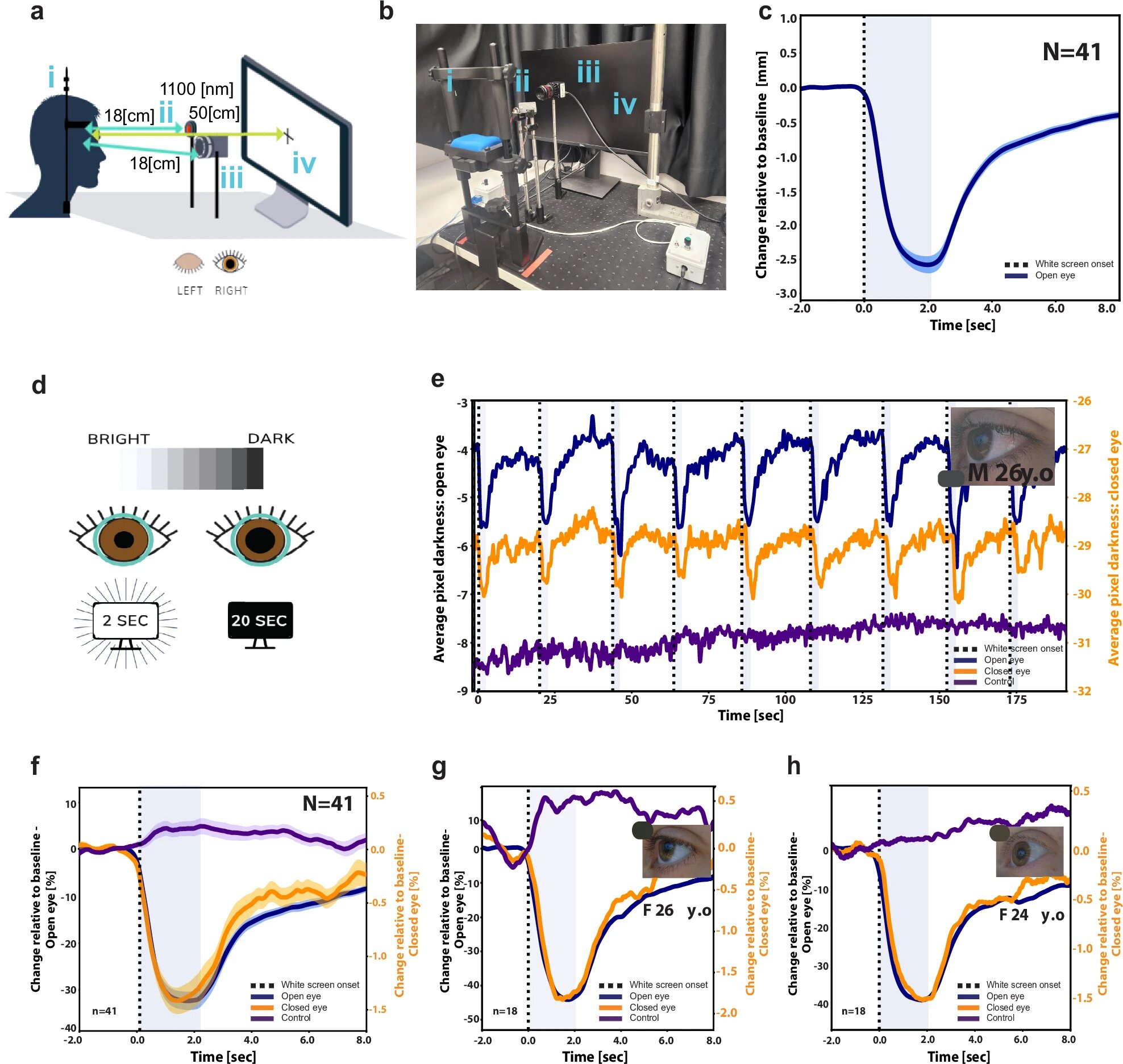
Pupillary light reflex (PLR) assessment in open-eye and closed-eye conditions. Credit: Communications Medicine (2024).
A new technological advancement now enables researchers to observe changes in pupil size and gaze direction behind closed eyelids for the first time, using non-contact infrared imaging. This capability is expected to aid in identifying wakefulness states during sleep, anesthesia, and intensive care by monitoring pupil size variations. It could also be instrumental in gauging sedation levels, detecting seizures and nightmares, and acknowledging pain or responsiveness following trauma or within intensive care settings.
A recent study using artificial intelligence has yielded a new understanding of how the brain anticipates future occurrences and processes data. It was found that the brain’s inherent activity, even in the absence of external stimuli, is crucial to our cognitive and emotional processes.
New research shows that varied cognitive training, rather than repetitive tasks, helps older adults improve working memory.
Scientists have mapped how propofol, a widely used anesthetic, alters brain connectivity to induce unconsciousness. Using fMRI, they found that propofol disrupts connections in the thalamus, reducing complex information processing and limiting sensory integration.
Research on older individuals indicates that vision impairment may be responsible for one in five dementia cases.
A new technology that uses harmless light waves to measure activity in babies’ brains has provided the most complete picture to date of brain functions like hearing, vision and cognitive processing outside a conventional, restrictive brain scanner.
Scientists have developed an innovative approach to studying brain connections using functional magnetic resonance imaging (fMRI). Recently published in Cell Systems, this workintroduces a new way of understanding brain architecture through dynamic functional networks, challenging the traditional static approach.
A new study publishedin Nature Communications examines how the brain initiates spontaneous actions. In addition to demonstrating how spontaneous action emerges without environmental input, this research has implications for the origins of slow ramping of neural activity before movement onset—a commonly-observed but poorly understood phenomenon.
Researchers have published a novel study exploring the effects of delayed feedback on learning in individuals with moderate-to-severe traumatic brain injury (TBI).
A breakthrough in medical imaging is making it possible for researchers to observe brain activity during movement and pick up the early signs of disorders that affect brain-to-body coordination, such as Parkinson’s disease.
A new study investigated the origin of ataxia in the brain of patients with stroke and found a significant number of the stroke lesions in the patients were located outside the cerebellum.
Researchers have developed a noninvasive technique that could dramatically improve the way doctors monitor intracranial hypertension, a condition where increased pressure in the brain can lead to severe outcomes like strokes and hemorrhages.
Robotic ‘coaches’ aiding upper limb rehabilitation for stroke and brain injury survivors have been successfully trialed in Vienna, Austria.
Scientists have created a dynamic technique to monitor swift changes in brain activity, particularly those associated with cravings. This method differs from conventional neuroimaging by offering a continuous perspective on the variations in craving intensity. The research revealed that individuals with intense cravings tend to remain longer in brain states that intensify these cravings and do not activate the brain networks that could diminish them.
A recent study highlights the interaction between brain structure and social context, suggesting that some children are more vulnerable to social stressors than others.
With maps of the connections between neurons and artificial intelligence methods, researchers can now do what they never thought possible: predict the activity of individual neurons without making a single measurement in a living brain.
A review highlighting recent advances in genetically encoded fluorescent tools for labeling and selectively manipulating synapses has been published in Nature Reviews Neuroscience.



 inside-the-brain.com