Weekly Neuroscience Update

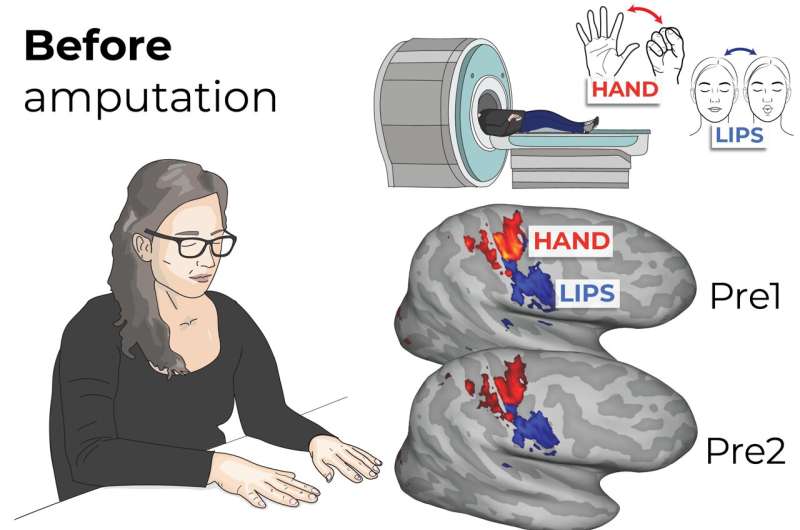
Brain activity maps for the hand (shown in red) and lips (blue) before the amputation (Pre1 and Pre2) and after amputation (three, six and 18 months post-amputation). Credit: Tamar Makin / Hunter Schone

The brain holds a “map” of the body that remains unchanged even after a limb has been amputated, contrary to the prevailing view that it rearranges itself to compensate for the loss, according to new research.

A fading sense of smell can be one of the earliest signs of Alzheimer’s disease even before cognitive impairments manifest. 

Scientists have developed a computational framework that maps how the striosomal compartment of the striatum governs everyday decision-making. By integrating biology, decision theory, and mathematical modeling, different levels of striosomal activity can push individuals toward impulsive, balanced, or overly complex decisions.

A recent study has shown that the brain leaves subtle traces of creativity minutes before an “aha!” moment.

New research has raised concerns about the safety of acetaminophen use during pregnancy, linking prenatal exposure to higher risks of autism and ADHD. While the evidence does not prove causation, it highlights biological mechanisms such as oxidative stress and hormone disruption that may affect fetal brain development. Researchers recommend cautious, time-limited use under medical supervision and call for safer treatment alternatives.

A new study has found that people who lived in areas with high levels of leaded gasoline emissions in the 1960s and ’70s are more likely to report memory problems today.

A multi-institution research team reports that gaze patterns can serve as a sensitive marker of cognitive decline, with associated reductions in explorative, adaptive, and differentiated visual sampling of the environment.

New research reveals that different types of music shape the emotional tone of the memories they evoke. 

A genetic study has identified more than 400 genes that drive different forms of unhealthy aging, from cognitive decline to metabolic problems. The findings show that frailty is not a single condition but multiple subtypes with distinct biological pathways.

Finally, this week, a new study suggests the brain may be a missing link in certain forms of high blood pressure or hypertension.
Weekly Neuroscience Update

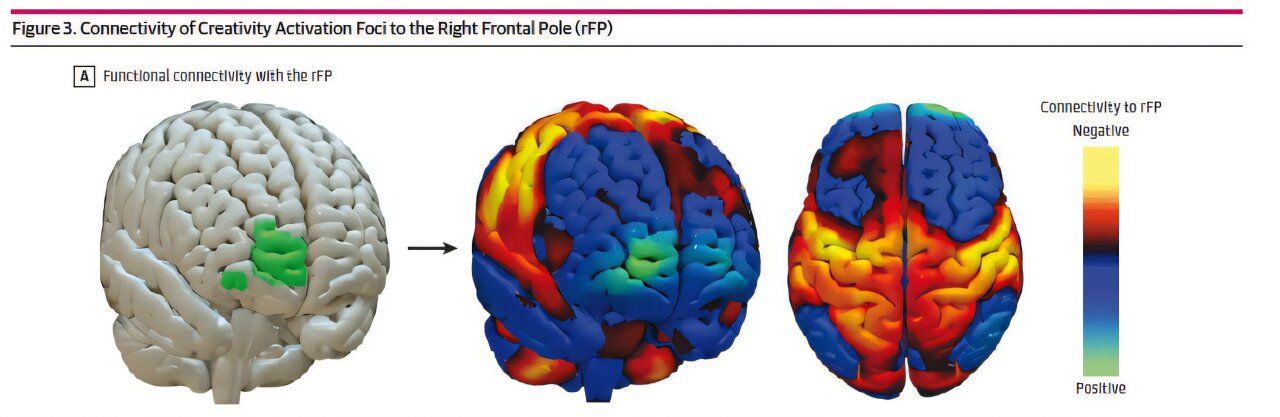
Functional connectivity with the rFP (green, left) defines a distributed brain circuit (right) that will encompass coordinates activated by creativity tasks. Credit: Brigham and Women’s Hospital

A new study suggests that different brain regions activated by creative tasks are part of one common brain circuit. By evaluating data from 857 participants across 36 fMRI studies, researchers identified a brain circuit for creativity and found people with brain injuries or neurodegenerative diseases that affect this circuit may have increased creativity.

New research has uncovered why males and females may experience stress differently, providing insights into how the brain’s molecular mechanisms adapt to acute challenges.

How can nerve pathways in the brain be visualized to improve the planning of complex surgeries? A research team has investigated an AI-powered method that makes these reconstructions more precise. The study, recently published in NeuroImage: Clinical, could ultimately help make neurosurgical procedures safer.

Three studies at the University of Zurich demonstrate that hypnosis alters activity in the large-scale functional networks of the brain. It also affects the neurochemical milieu of specific brain areas.

New research reveals that brain cells use a muscle-like signaling mechanism to relay information over long distances. Scientists discovered that dendrites, the branch-like extensions of neurons, contain a structured network of contact sites that amplify calcium signals—similar to how muscles contract. These contact sites regulate calcium release, activating key proteins involved in learning and memory.

Researchers have made a major breakthrough in understanding the link between genetics and cognition.

A recent large-scale study published in Science Advances has revealed a connection between genetic variations associated with dyslexia and structural differences in the brain. These differences were found in areas involved in motor coordination, vision, and language. This provides new insights into the neurological underpinnings of this common learning difficulty.

According to a recent study, a diet low in vegetables and fruits and high in red meat, fast food, and sugar-sweetened soft drinks was associated with accelerated biological aging.

A new mathematical model sheds light on how the brain processes different cues, such as sights and sounds, during decision making. The findings may one day improve how brain circuits go awry in neurological disorders, such as Alzheimer’s, and could help artificial brains, like Alexa or self-driving car technology, more helpful.

New research has shown just one 20-minute session of moderate intensity aerobic exercise can improve an athlete’s executive function and concussion symptoms in the early stages of recovery.

A recent study using brain imaging technology discovered that experiencing beauty in music involves increased communication between brain areas associated with reward and visual processing, while listening to music considered less beautiful is linked to more activity in brain regions responsible for basic sensory processing. 

Finally this week, women with epilepsy may have offspring with decreased bone metabolism and lower birth weight, according to a study published in the Annals of Clinical and Translational Neurology.

Weekly Neuroscience Update

Synergetic framework. Credit: Trends in Cognitive Sciences

A new model for understanding the brain paves the way for more accurate diagnoses and treatments.

For people with drug-resistant epilepsy, having a dog companion trained in detecting seizures and other epilepsy-related tasks may reduce the amount of seizures they have, according to new research published in Neurology

New research shows that continued cocaine use disrupts communication between major brain networks.

Researchers are embarking on a pioneering study to uncover how genes associated with autism spectrum disorders (ASD) converge to affect brain neurons, particularly leading to heightened sound sensitivity. This research aims to identify common neural circuit mechanisms that may underlie the diverse genetic pathways contributing to ASD, focusing on auditory hypersensitivity, a condition that significantly impacts individuals’ lives.

Two new studies explore how closely attention and eye movements are linked and reveal how the brain coordinates the two processes.

A pioneering new study using virtual reality (VR) aims to identify early signs of Alzheimer’s disease through impaired spatial navigation in asymptomatic adults at risk. By testing 100 middle-aged adults with genetic, familial, or lifestyle risk factors for Alzheimer’s, the study discovered that spatial navigation difficulties in VR environments precede traditional cognitive decline symptoms. Notably, this impairment was more pronounced in men than women, suggesting a gender-specific vulnerability

Mounting research shows that COVID-19 leaves its mark on the brain, including significant drops in IQ scores.

A daily fiber supplement improved brain function in people over 60 in just 12 weeks. The study, published recently in Nature Communications showed that this simple and cheap addition to diet can improve performance in memory tests associated with early signs of Alzheimer’s disease.

A new study has found mutations in key brain cells among individuals with chronic opioid use that could shift how we think about treatment strategies for opioid use disorder.

According to a Mayo Clinic study published in Nature Neuroscience, the cells that act as the central nervous system’s first line of defense against harm also play a role in helping the brain awaken from anesthesia. This discovery could help pave the way for innovative methods that address post-anesthesia complications.

Scientists have trained a bank of AI models to identify patterns of brain activity that signal memory formation.

People who experience sleep apnea may be more likely to also have memory or thinking problems, according to a preliminary study that will be presented at the American Academy of Neurology’s 76th Annual Meeting taking place April 13–18, 2024.

Schizophrenia is associated with an increased risk of subsequent cardiovascular disease events, with the association stronger in women, according to a new study.

New research delves into the genetic underpinnings of language development in early childhood and its implications for later cognitive abilities and neurodevelopmental disorders such as Attention-Deficit/Hyperactivity Disorder (ADHD) and Autism Spectrum Disorder (ASD). Interestingly, the research highlights a developmental shift in the genetic associations with ADHD symptoms, suggesting that the role of genetics in language development and its impact on neurodevelopmental outcomes is complex and changes over time. This study underscores the importance of understanding the early linguistic journey as a window into a child’s future mental health and cognitive prowess.

Finally this week, a new neuroimaging study is the first to reveal how the brain gets to the creative flow state.

Weekly Neuroscience Update

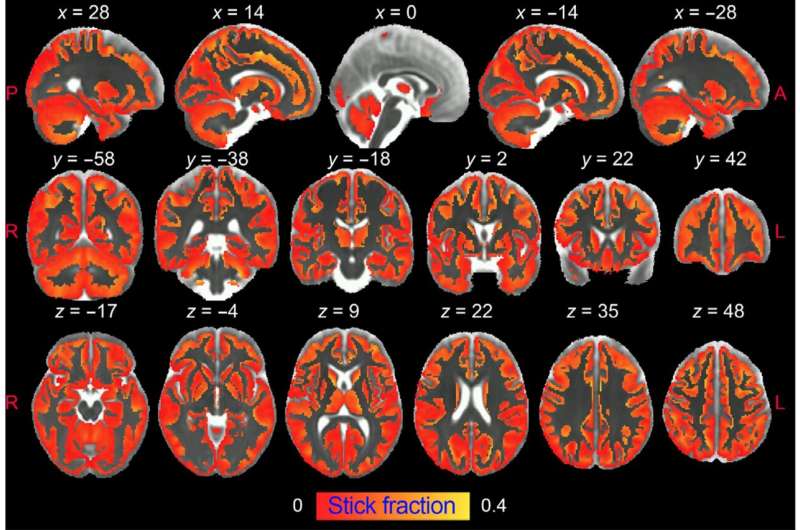
Researchers from the UMH-CSIC Neurosciences Institute have developed an innovative strategy that allows imaging of microglial and astrocyte activation in the gray matter of the brain using diffusion-weighted magnetic resonance imaging (dw-MRI). Credit: IN-CSIC-UMH

Research has made it possible to visualize for the first time and in great detail brain inflammation using diffusion-weighted Magnetic Resonance Imaging. This detailed “X-ray” of inflammation cannot be obtained with conventional MRI, but requires data acquisition sequences and special mathematical models. Once the method was developed, the researchers were able to quantify the alterations in the morphology of the different cell populations involved in the inflammatory process in the brain.

A new study conducted at 38 schools in Barcelona suggests that traffic noise at schools has a detrimental effect on the development of working memory and attention in primary-school students.

People who can frequently recall their dreams tend to be more creative and exhibit increased functional connectivity in a key brain network, according to new research published in the journal Nature and Science of Sleep. The findings provide new insights into the neurophysiological correlates of dreaming.

Researchers have identified elevated levels of a biomarker in the blood that persists for months in long COVID patients who experience neuropsychiatric symptoms.

Plenty of people claim they can’t function without their morning coffee, but is there a neurological basis to it? A study published in Scientific Reports suggests that coffee does have beneficial effects on cognitive function, and it may do this by reorganizing brain functional connectivity.

Low exposure to gonadal hormones during early gestation and infancy predicts higher recalled childhood gender nonconformity in men, according to new research.

Researchers at Carnegie Mellon University have explored the regions of the brain where concrete and abstract concepts materialize. A new study now explores if people who grow up in different cultures and speak different languages form these concepts in the same regions of the brain.

Finally this week, new research will explore how psilocybin affects specific brain pathways in autistic adults and is the first-ever mechanistic study of psilocybin in autistic adults.

Weekly Neuroscience Update

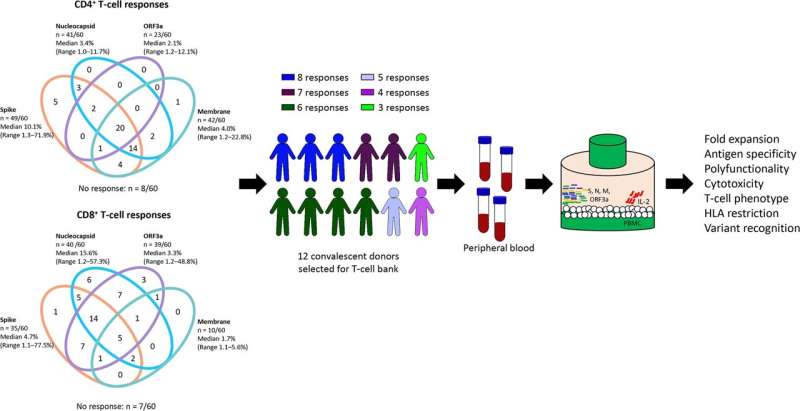
Credit: PLOS Pathogens (2022). DOI: 10.1371/journal.ppat.1010339

New research is providing hope to immunocompromised people who are vulnerable to COVID-19. Scientists have discovered promising evidence that T cell immunotherapy could help them to fight against multiple strains of the virus.

Treatments integrating music and auditory beat stimulation are effective in reducing state anxiety in some patients, according to a new study published in the open-access journal PLOS ONE.

The underlying molecular mechanisms that promote autoimmune diseases are multilayered and complex. Now, scientists have succeeded in deciphering new details of these processes. Their work supports the notion that excessive consumption of glucose directly promotes the pathogenic functions of certain cells of the immune system and that, conversely, a calorie-reduced diet can have a beneficial effect on immune diseases.

Teens who had an insecure attachment to their mothers as toddlers are more likely to overestimate the trustworthiness of strangers, a new study reports.

A new study reveals that oleic acid produced in the brain is an essential regulator of the process that enables learning and memory and supports proper mood regulation. The finding has paved the path to discovering potential new therapeutic strategies to counteract cognitive and mood decline in patients with neurological disorders.

A small study found people who received lithium, a drug commonly associated with the treatment of bipolar disorder, are less likely to develop dementia.

Scientists have found that people with Parkinson’s disease have a clear “genetic signature” of the disease in their memory T cells. The scientists hope that targeting these genes may open the door to new Parkinson’s treatments and diagnostics.

If you are forgetful or make mistakes when in a hurry, a new study found that meditation could help you to become less error-prone.

Older adults who take statin drugs have a lower risk of developing Parkinson’s disease or parkinsonism symptoms later in life compared to those who do not take statins. Researchers speculate this may be because statins have a neuroprotective effect on arteries in the brain.

Finally this week, researchers have developed a new, fully automated prosthetic arm that learns during normal use and adapts to varying conditions.

Weekly Neuroscience Update

Credit: Johnson et al.

Researchers recently carried out a large-scale analysis of the brains of patients with Alzheimer’s disease (AD). Their findings, published in Nature Neuroscience, unveiled a series of disease-related changes in protein co-expression modules, which were not identified when examining RNA networks in the same brain regions.

A new study, published in the journal PNAS, proposes how the brain stays stable despite changes in the neural code.

Cognitive decline is the biggest factor in determining how long patients with Alzheimer’s disease will live after being diagnosed, according to a new research study. The findings, published in the Journal of Alzheimer’s Disease, are a first step that could help health care providers provide reliable prediction and planning assistance for patients with Alzheimer’s disease and their families.

An increase in depressive symptoms in adolescence has been linked to ozone exposure as a result of air pollution, even in areas that meet air quality standards.

Seven in ten long COVID patients experience concentration and memory problems several months after the initial onset of their disease, with many performing worse than their peers on cognitive tests, according to new research from the University of Cambridge.

Finally this week, researchers have developed a new method for training people to be creative, one that shows promise of succeeding far better than current ways of sparking innovation.

Are We Born Creative?

blue box

Since the dawn of human evolution, our world has been driven by creative flashes of inspiration.  Creativity often appear as a spontaneous burst of new ideas but it is really the ability to derive new ideas from old ones – the reassembly of information that we already possess.  While everyone can learn to be creative to some degree, new research is revealing that the extent to which we inherit our creativity may be greater that previously thought.

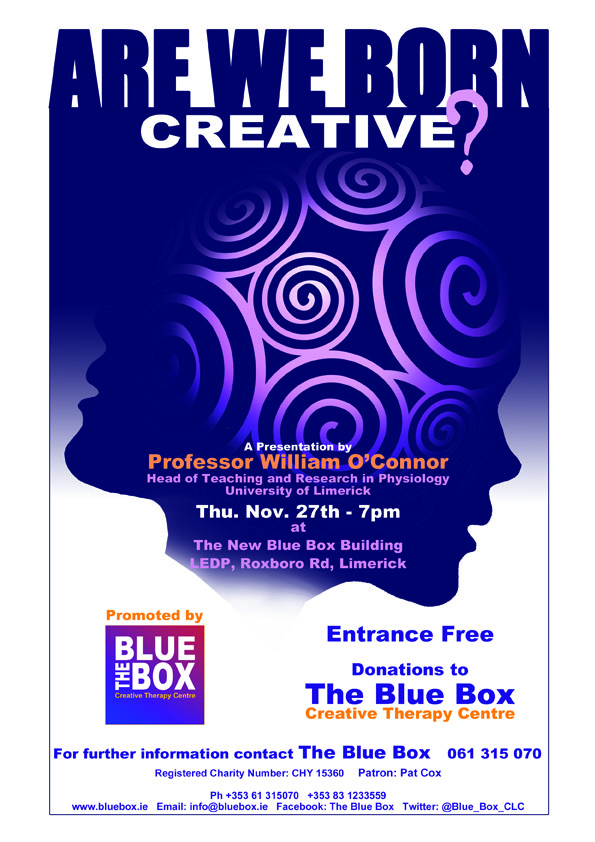
This Thursday, November 27, I will be giving a public talk on creativity and how we can foster it. The talk will take place at The Blue Box Creative Therapy Centre in Limerick city centre.  Entrance is free; donations to this worthy cause are welcome.

Book your ticket


Your Brain On Improv


What happens in the brain during musical improv? Researcher Charles Limb scanned the brains of jazz musicians to find out.

About Charles Limb

Dr. Charles Limb is an Associate Professor in the Johns Hopkins Department of Otolaryngology — Head and Neck Surgery, as well as faculty at the Peabody Conservatory of Music. He combines his two passions to study the way the brain creates and perceives music. He’s a hearing specialist and surgeon at Johns Hopkins who performs cochlear implantations. In his free time, he plays sax, piano and bass.

In search of a better understanding of how the mind processes complex auditory stimuli such as music, Dr. Limb has been working with Dr. Allen Braun to look at the brains of improvising musicians and study what parts of the brain are involved when a musician is really in the groove.