Weekly Neuroscience Update

A research collaboration has identified the specific nerve pathways responsible for relaying pain signals from the bowel to the brain, paving the way for new irritable bowel syndrome (IBS) and inflammatory bowel disease (IBD) treatments.

Game-based training improves not only the cognitive abilities of people with initial signs of developing dementia, but also leads to positive changes in the brain, according to two new studies.

A next-generation neuroprosthetic hand that restores a sense of touch is moving into a pivotal home-use clinical trial. The “iSens” system uses implanted electrodes to read muscle intent and stimulate nerves, relaying fingertip sensations to the brain so the prosthesis feels embodied.

A new breakthrough demonstrates how robots can now integrate both sight and touch to handle objects with greater accuracy, much like humans. 

Researchers have traced a neural mechanism that explains why humans explore more aggressively when avoiding losses than when pursuing gains. Their work reveals how neuronal firing and noise in the amygdala shape exploratory decision-making.

Scientists have found a way to stop brain cancer cells spreading by essentially ‘freezing’ a key molecule in the brain.

Researchers have developed an ultrasound device that can precisely stimulate areas deep in the brain without surgery, opening up new possibilities for neurological research and the treatment of disorders such as Parkinson’s disease.

Artificial intelligence can detect and interpret social features between people from images and videos almost as reliably as humans, according to a new study published in the journal Imaging Neuroscience.

A large study of nearly 13,000 adults found that consuming high levels of certain artificial sweeteners is associated with faster declines in memory and cognitive function over an eight-year period. The effect was particularly strong in people with diabetes and those under 60.  While the study does not prove causation, it raises concerns about the long-term brain health risks associated with common sugar substitutes.

Experiments have shown that AI can develop in-context learning abilities after extensive incremental practice, much like humans do.

A new study suggests that autism may be linked to the rapid evolution of brain cell types unique to humans. Researchers have found that outer-layer neurons in the human brain evolved significantly faster than in other apes, with notable changes in autism-associated genes.

A new study shows that brain iron levels, measured using a specialized MRI technique, can predict cognitive decline years before symptoms of Alzheimer’s disease appear.

People with chronic insomnia may experience faster declines in memory and thinking skills as they age—along with brain changes that can be seen on imaging scans—than people who do not have chronic insomnia, according to a study published in Neurology.

Researchers have discovered how the brain develops reliable visual processing once the eyes open.

Scientists discovered how the brain uses objects to anchor our sense of direction, solving part of the mystery of spatial navigation. Experiments in mice showed that cells in the postsubiculum fired strongly when facing an object, while cells in other directions were suppressed, sharpening orientation.

In adults aged 60 years and older, tinnitus, especially severe and prolonged tinnitus, is significantly associated with cognitive impairment, according to a study published in Brain Sciences.

A more precise and personalized form of electric brain stimulation may be a more effective and faster treatment for people with moderate to major depression compared to other similar treatments, according to a UCLA Health study.

Finally this week, researchers may have found a way to limit the debilitating damage strokes can cause.

Weekly Neuroscience Update

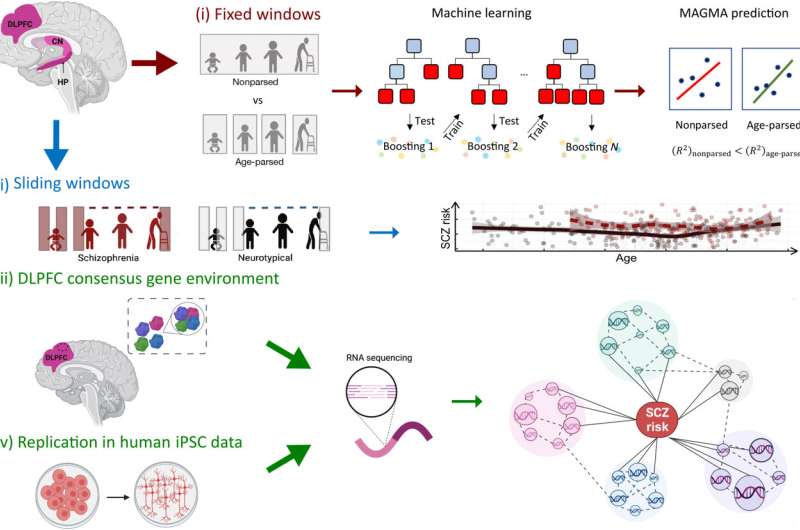
 Credit: Science Advances (2023)

Researchers have published a study in Science Advances that looks into the genetic mechanisms behind the development of schizophrenia.

Students whose brainwaves are more in sync with their classmates and teacher are likely to learn better than those lacking this “brain-to-brain synchrony,” shows a new study by a team of psychology and education researchers. The findings, which appear in the journal Psychological Science, offer new insights into the learning process. 

Scientists are testing a new personalized immunotherapy approach that is designed to work similarly to a vaccine by training the immune system to fight glioblastoma brain cancer.

People experiencing hearing loss who are not using a hearing aid may have a higher risk of dementia than people without hearing loss, suggests a new study published in The Lancet Public Health journal. However, using a hearing aid may reduce this risk to the same level as that of people without hearing loss.

Researchers have shown for the first time that in middle-aged men, Obstructive Sleep Apnea may cause early cognitive decline, even in patients who are otherwise healthy and not obese.

In a new study, teens who added walnuts to their diet for 100 days showed improvements in attention function, and for those with ADHD, frequent walnut consumption was associated with improvements in behavior. Researchers also noted an increase in fluid intelligence in those who frequently consumed walnuts as part of their daily diet.

Listening to or practicing music had positive implications on cognitive decline in older adults by stimulating the production of gray matter in key brain areas, a new study reveals.

Researchers have used machine learning to investigate the molecular and neural mechanisms that could underlie differences among individuals diagnosed with autism spectrum disorder (ASD). Their paper, published in Nature Neuroscience, identifies different subgroups of ASD associated with distinct functional connections in the brain and symptomatology, which could be related to the expression of different ASD-related genes.

A novel imaging technique is capable of showing reactive astrocyte-neuron interactions. The technique sheds new light on Alzheimer’s pathologies and offers a potential breakthrough for the diagnosis and treatment of dementia.

An international team of 79 researchers has collaborated on a study published in Nature Medicine to delve into perivascular spaces (PVS), a poorly understood artifact seen in magnetic resonance imaging of cerebral small vessel disease, a leading cause of stroke and dementia.

Finally this week, new research findings show that probiotic supplementation could be a positive strategy to counteract oxidative stress and inflammation promoted by sleep loss.

Weekly Neuroscience Update


A new study reveals a high fructose diet could contribute to bipolar disorder, ADHD, and behavioral aggression.

In Alzheimer’s disease, impaired blood flow to brain regions coincides with tau protein buildup. This relationship strengthens as cognition declines, according to new research published in Journal of Neuroscience.

A new lab test can accurately pinpoint and analyze the deadliest cells in the most common and aggressive brain cancer in adults.

A greater density of cells in a key reward center of the brain is associated with obesity in children and predicts future weight gain, a new study finds.

A team of researchers has found that an amino acid produced by the brain could play a crucial role in preventing a type of epileptic seizure.

The characteristics of language structure and writing system may explain why some bilingual people are dyslexic in English, but not in their other proficient language.

Finally this week,  a study of four drugs to combat chronic neuropathic pain finds Nortriptyline has the highest efficacious percentage and lowest quit rate.


Weekly Neuroscience Update

The study revealed that EGFR signaling is suppressed in a subset of glioblastomas. This image is for illustrative purposes only and shows an MRI brain scan of a person with glioblastoma brain cancer. Credit The Armed Forces Institute of Pathology.

The study revealed that EGFR signaling is suppressed in a subset of glioblastomas. This image is for illustrative purposes only and shows an MRI brain scan of a person with glioblastoma brain cancer. Credit The Armed Forces Institute of Pathology.

Researchers have found one of the keys to why certain glioblastomas – the primary form of a deadly brain cancer – are resistant to drug therapy. The answer lies not in the DNA sequence of the tumor, but in its epigenetic signature. These findings have been published online as a priority report in the journal Oncotarget.

It has been proposed that green tea extract may have a beneficial impact on cognitive functioning, suggesting promising clinical implications. However, the neural mechanisms underlying this putative cognitive enhancing effect of green tea extract still remain unknown.

According to researchers at the University of Montreal, the regions of the brain below the cortex play an important role as we train our bodies’ movements and, critically, they interact more effectively after a night of sleep.

Researchers find that the risk of future stroke is 39% higher among patients with cognitive impairment than those with normal cognitive function, according to a new study published in the Canadian Medical Association Journal (CMAJ).

A study is shining new light on a sleep disorder called “sleep drunkenness.” The disorder may be as prevalent as affecting one in every seven people. The research is published in Neurology.

A mindfulness-based therapy for depression has the added benefit of reducing health-care visits among patients who often see their family doctors, according to a new study.

In what may be the largest study of sleep problems among individuals with multiple sclerosis (MS), researchers at UC Davis have found that widely undiagnosed sleep disorders may be at the root of the most common and disabling symptom of the disease: fatigue.

Scientists have provided the first evidence that the lack of a naturally occurring protein is linked to early signs of dementia.

Weekly Neuroscience Update

Brain scans show a correlation between how well participants could make a connection between a new word and a sound, and the gray matter volume in the hippocampus and cerebellum. (Credit: Photo/Qinghua He)

A combination of brain scans and reading tests has revealed that several regions in the brain are responsible for allowing humans to read. The findings open up the possibility that individuals who have difficulty reading may only need additional training for specific parts of the brain — targeted therapies that could more directly address their individual weaknesses.

Children with Asperger’s syndrome show patterns of brain connectivity distinct from those of children with autism, according to a new study. 

Scientists have discovered that the brain circuits we engage when we think about social matters, such as considering other people’s views, or moral issues, inhibit the circuits that we use when we think about inanimate, analytical things, such as working on a physics problem or making sure the numbers add up when we balance our budget. And they say, the same happens the other way around: the analytic brain network inhibits the social network.

Using direct human brain recordings, a research team has identified a new type of cell in the brain that helps people to keep track of their relative location while navigating an unfamiliar environment.

A collaborative team of researchers has uncovered evidence that a specific genetic alteration appears to contribute to disorders of brain development, including schizophrenia. They also found that schizophrenia shares a common biological pathway with Fragile X mental syndrome, a disorder associated with both intellectual impairment and autism.
A team of researchers has identified 18 new genes responsible for driving glioblastoma multiforme, the most common—and most aggressive—form of brain cancer in adults. The study was published August 5, 2013, in Nature Genetics.

Johns Hopkins biophysicists have discovered that full activation of a protein ensemble essential for communication between nerve cells in the brain and spinal cord requires a lot of organized back-and-forth motion of some of the ensemble’s segments. Their research, they say, may reveal multiple sites within the protein ensemble that could be used as drug targets to normalize its activity in such neurological disorders as epilepsy, schizophrenia, Parkinson’s and Alzheimer’s disease.

A sleepless night makes us more likely to reach for doughnuts or pizza than for whole grains and leafy green vegetables, suggests a new study from UC Berkeley that examines the brain regions that control food choices. The findings shed new light on the link between poor sleep and obesity