Weekly Neuroscience Update

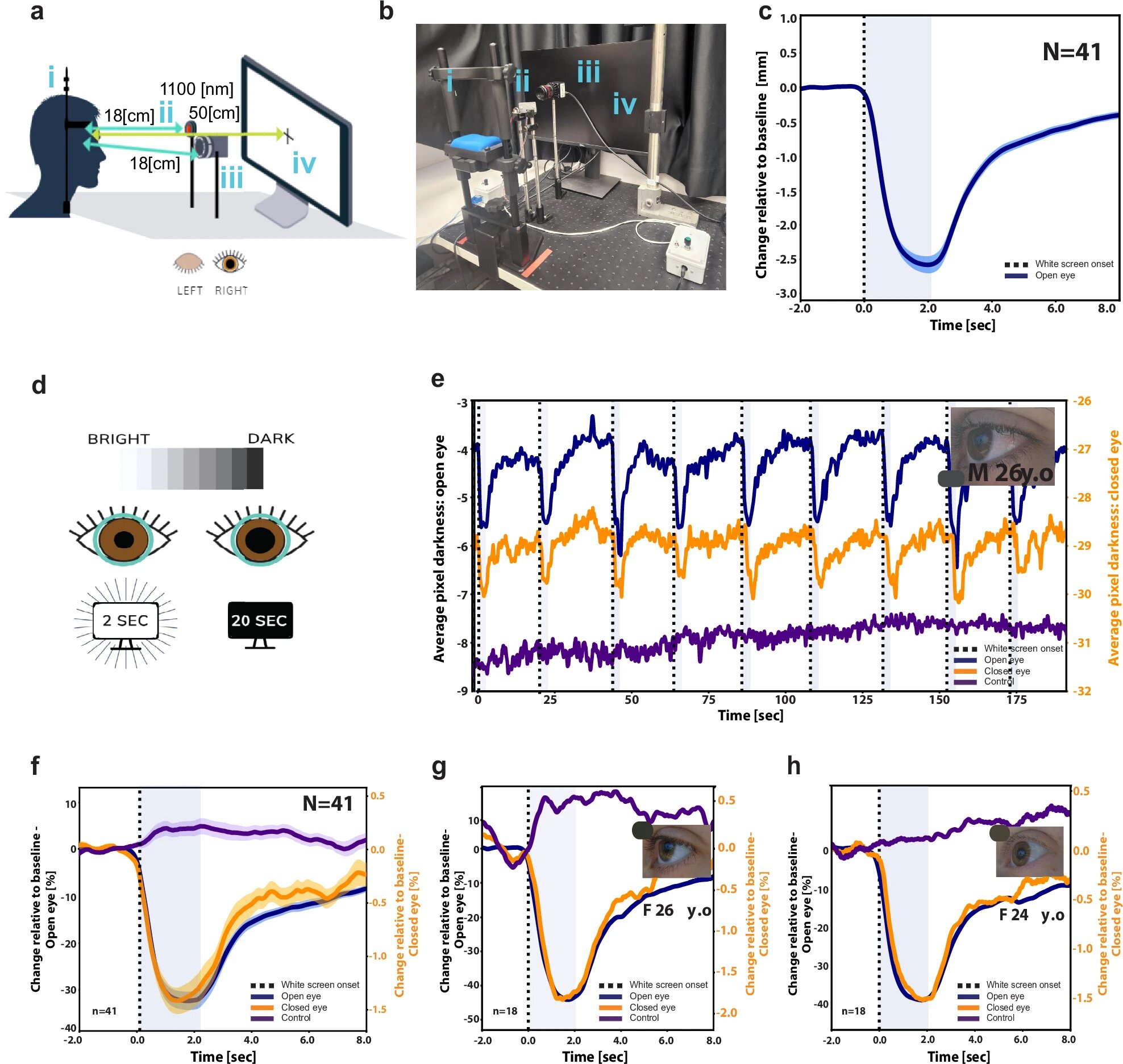
Pupillary light reflex (PLR) assessment in open-eye and closed-eye conditions. Credit: Communications Medicine (2024).

A new technological advancement now enables researchers to observe changes in pupil size and gaze direction behind closed eyelids for the first time, using non-contact infrared imaging. This capability is expected to aid in identifying wakefulness states during sleep, anesthesia, and intensive care by monitoring pupil size variations. It could also be instrumental in gauging sedation levels, detecting seizures and nightmares, and acknowledging pain or responsiveness following trauma or within intensive care settings.

Neuroscientists have uncovered serotonin’s role in resilience.

A recent study using artificial intelligence has yielded a new understanding of how the brain anticipates future occurrences and processes data. It was found that the brain’s inherent activity, even in the absence of external stimuli, is crucial to our cognitive and emotional processes.

New research shows that varied cognitive training, rather than repetitive tasks, helps older adults improve working memory.

Scientists have mapped how propofol, a widely used anesthetic, alters brain connectivity to induce unconsciousness. Using fMRI, they found that propofol disrupts connections in the thalamus, reducing complex information processing and limiting sensory integration.

Research on older individuals indicates that vision impairment may be responsible for one in five dementia cases.

A new technology that uses harmless light waves to measure activity in babies’ brains has provided the most complete picture to date of brain functions like hearing, vision and cognitive processing outside a conventional, restrictive brain scanner.

Heat waves can worsen abnormal excitability of the brain in people with epilepsy, finds a new small-scale patient study.

Scientists have developed an innovative approach to studying brain connections using functional magnetic resonance imaging (fMRI). Recently published in Cell Systemsthis work introduces a new way of understanding brain architecture through dynamic functional networks, challenging the traditional static approach.

New research identifies potential therapeutic target for amyotrophic lateral sclerosis (ALS).

A new study published in Nature Communications examines how the brain initiates spontaneous actions. In addition to demonstrating how spontaneous action emerges without environmental input, this research has implications for the origins of slow ramping of neural activity before movement onset—a commonly-observed but poorly understood phenomenon.

Researchers have published a novel study exploring the effects of delayed feedback on learning in individuals with moderate-to-severe traumatic brain injury (TBI).

A breakthrough in medical imaging is making it possible for researchers to observe brain activity during movement and pick up the early signs of disorders that affect brain-to-body coordination, such as Parkinson’s disease.

A new study investigated the origin of ataxia in the brain of patients with stroke and found a significant number of the stroke lesions in the patients were located outside the cerebellum.

Researchers have developed a noninvasive technique that could dramatically improve the way doctors monitor intracranial hypertension, a condition where increased pressure in the brain can lead to severe outcomes like strokes and hemorrhages.

Robotic ‘coaches’ aiding upper limb rehabilitation for stroke and brain injury survivors have been successfully trialed in Vienna, Austria.

Scientists have created a dynamic technique to monitor swift changes in brain activity, particularly those associated with cravings. This method differs from conventional neuroimaging by offering a continuous perspective on the variations in craving intensity. The research revealed that individuals with intense cravings tend to remain longer in brain states that intensify these cravings and do not activate the brain networks that could diminish them.

A recent study highlights the interaction between brain structure and social context, suggesting that some children are more vulnerable to social stressors than others.

With maps of the connections between neurons and artificial intelligence methods, researchers can now do what they never thought possible: predict the activity of individual neurons without making a single measurement in a living brain.

A review highlighting recent advances in genetically encoded fluorescent tools for labeling and selectively manipulating synapses has been published in Nature Reviews Neuroscience.

Researchers have investigated the correlations between outdoor nighttime light pollution and Alzheimer’s disease, finding that excessive light pollution may elevate the risk of Alzheimer’s, particularly in younger individuals.

Finally this week, brain waves can be manipulated while in rapid eye movement (REM) sleep, a sleep stage associated with memory and cognition, a new study from the University of Surrey finds. 

Weekly Neuroscience Update

To the left of the figure, the red-yellow color denotes the regions that degenerate earlier than the rest of the brain, and are vulnerable to Alzheimer’s disease. These brain areas are higher-order regions that process and combine information coming from our different senses. To the right of the figure, each dot represents the brain data from one UK Biobank participant. The overall curve shows that, in these particularly fragile regions of the brain, there is accelerated degeneration with age. Credit: G. Douaud and J. Manuello.

In a new study published in Nature Communications, researchers investigated the genetic and modifiable influences on fragile brain regions by looking at the brain scans of 40,000 UK Biobank participants aged over 45.

Scientists have shown for the first time that a type of thinking that has been described for over a century as a developmental milestone of adolescence may grow teenagers’ brains over time.

A team of neurologists, stem cell specialists and molecular biologists affiliated with several institutions in the U.S. and led by a group at Stanford University School of Medicine has found evidence that the root cause of Alzheimer’s disease may be fat buildup in brain cells. The study is published in the journal Nature.

New research highlights the critical role of unique gut bacteria in newborns, producing serotonin to educate immune cells and prevent allergic reactions early in life.

People continuously exposed to bright, artificial light at night may be at increased risk of developing conditions that affect blood flow to the brain and having a stroke, according to research published in Stroke.

Researchers reveal new findings on the complexity of age-related memory decline and neural dedifferentiation, challenging existing theories on cognitive aging.

A new study has found that amyotrophic lateral sclerosis (ALS) and frontotemporal lobar degeneration (FTLD) exhibit strikingly similar cellular and molecular characteristics, despite affecting different brain regions and showing distinct clinical symptoms.

New research reveals how the human brain processes vital signals from the heart and lungs, offering new insights into the complex brain-body integration essential for health and cognition.

In a new study, AI processed text from health histories and neurologic examinations to locate lesions in the brain. The study, which looked specifically at the large language model called generative pre-trained transformer 4 (GPT-4), is published in the online issue of Neurology Clinical Practice.

New research shows that disturbed gut flora during the first years of life is associated with diagnoses such as autism and ADHD later in life.

Bilingualism may serve as a powerful tool against age-related cognitive decline, particularly in social cognition areas such as the theory of mind. A new study demonstrates that early bilingualism leads to beneficial structural changes in the brain, including increased gray matter volume and cortical thickness, which contribute to a stronger cognitive reserve.

In a study published in Nature Mental Health, scientists have found that individuals suffering from chronic musculoskeletal pain (CMP) may face a higher risk of brain aging.

A new analysis involving over 13,000 people has found changes to blood vessels in the brain that can increase the risk of stroke and dementia are common in people with a range of heart conditions, regardless of whether they have experienced a stroke.

A Canadian-led study has identified genes that may be partially responsible for the development of cerebral palsy.

Researchers have introduced a new, refined method for analyzing brain signals, enhancing our understanding of brain functionality. This research has the potential to improve treatments for neurological conditions such as Parkinson’s disease, pain, epilepsy and depression.

A study reveals that Lewy body disease, a major neurodegenerative disorder, may start developing in individuals as early as middle age, well before symptoms manifest.

Researchers have shown that the brain chemical GABA regulates activity in the retina of the eye in autistic and non-autistic individuals differently. Autistic people have larger responses to single light flashes in the retina of the eye and this new study shows that increasing GABA activity can reduce this response.

Finally this week, a study by the University of Sheffield has cast doubt on the efficacy of non-invasive brain stimulation techniques in improving visual working memory.

Weekly Neuroscience Update

Researchers have investigated whether the perception of time changes with age, and if so, how, and why we perceive the passage of time differently.

In a study recently published in Dementia and Geriatric Cognitive Disorders, researchers have revealed changes in the cerebral neural network that could function as a biomarker for degenerative neurological conditions such as Alzheimer’s disease and dementia with Lewy bodies—abnormal protein deposits in the brain.

Experiencing three or more concussions is linked with worsened brain function in later life, according to new research.

Levodopa, a drug commonly prescribed for the treatment of Parkinson’s disease that increases dopamine in the brain has been found to have the potential to reverse the effects of inflammation on brain reward circuitry, ultimately improving symptoms of depression.

A team of researchers has found evidence linking motor neurons’ large cell size and supporting structure with the genes that underlie their vulnerability to degeneration in ALS.

A new study has examined the pain perception among people with autism and found that they experience pain at a higher intensity than the general population and are less adaptable to the sensation. This finding is contrary to the prevalent belief that people with autism are supposedly ‘indifferent to pain’. The researchers expressed the hope that the findings of their study will lead to more appropriate treatment on the part of medical staff, caregivers, and parents toward people with autism, who do not always express the experience of pain in the usual way.

Researchers have identified two distinct processes that are triggered in the brain when a person is exposed to prolonged or repeated sensory input.

Among people who received more intensive treatment for high blood pressure, evaluations of MRI scans indicated a positive change in brain structures involved in its ability to clear toxins and other byproducts, according to preliminary research to be presented at the American Stroke Association’s International Stroke Conference 2023.

New research has linked major depression in older adults to mitochondrial deterioration.

People exposed to noise pollution as a result of heavy traffic close to their homes are at greater risk of developing tinnitus, a new study reports. Tinnitus is a condition where an individual hears ringing, buzzing, or whistling sounds in their ears, even when there is no external source of the sound. Prolonged exposure to loud noise can cause damage to the hair cells in the inner ear, which are responsible for transmitting sound to the brain. As a result, the brain can create its own sounds, leading to tinnitus.

Finally this week, cinnamon could do more than just wake up your taste buds. A new study reveals eating products with cinnamon can help improve memory and learning, and may also reduce some symptoms of anxiety.

Weekly Neuroscience Update

New research suggests that the brain of a bilingual person who knows two alphabets is different from that of a bilingual person who only knows one alphabet. The differences occur in a region called the visual word form area (VWFA).

A new study reports chronic infections of the upper gastrointestinal tract could be linked to Parkinson’s disease. Researchers say alpha synuclein, a Parkinson’s linked protein, is released during upper GI infections, inducing an immune response. Findings suggest frequent chronic infections could overwhelm the body’s ability to remove the protein, leading to the onset of Parkinson’s.

New research has found significant changes in fathers’ brains between the prenatal and the postpartum period. The main changes occurred in cortical areas associated with visual processing, attention, and empathy toward their baby.

A novel deep learning method that uses graph convolutional neural networks (gCNNs) can predict cognitive function based on the brain’s size and structure. The algorithm may provide insights into the relationship between brain morphology and different cognitive functions, as well as declines in cognitive function.

A study led by researchers at the Hospital del Mar Medical Research Institute links psychological trauma in childhood with an increased risk of developing some kind of mental disorder years later.

Music can induce a range of emotions and help us to better understand different cultures. But what is it that makes us tune in to some songs more than others? Researchers say when we listen to a song, our brains predict what happens next, and that prediction dictates whether we like that song or not.

Finally this week, a new study published by University of Oxford researchers in JMIR Pediatrics and Parenting, shows that although many school-age adolescents are spending considerable time gaming, it is not having a negative impact on their well-being.

Weekly Neuroscience Update

A new study published in the journal Molecular Psychiatry offers evidence that a simple walk through nature can lower activity in stress-related brain regions. The experiment revealed that participants who walked for an hour in a forest showed decreased amygdala activity during a stress task, while those who walked for an hour in the city did not.

A team of scientists has developed the first computer model predicting the role of cortical glial cells in cognition.

A number of studies have suggested that eating a healthy diet may reduce a person’s risk of dementia, but a new study has found that two diets, including the Mediterranean diet, are not linked to a reduced risk of dementia.

A new theory proposes there is an underlying relationship between nap transition in young children, brain development, and memory formation.

The dose of nicotine from a single cigarette blocks estrogen production in the brain, causing behavioral changes. These findings may shed new light on why quitting smoking may be more difficult for women than men.

A new study suggests quantum processes are part of cognitive and conscious brain functions.

Proteins associated with motor neuron disease, or ALS are present in the gut many years before disease pathologies can be found in the brain. A stool sample or gut biopsy could help identify the presence of MND-associated proteins years before symptoms appear.

Crossword puzzles have an edge over computerized memory games in improving memory function in older adults with mild cognitive impairment.

A team of neuroscientists has recently uncovered how the brain works to make distinctions between “right” and “wrong” sounds—research that provides a deeper understanding of how we learn complex audio-motor tasks like speaking or playing music.

A new study looks deep inside the brain, where previous learning was reactivated during sleep, resulting in improved memory.

Finally this week, a study of nearly 2,000 children found that those who reported playing video games for three hours per day or more performed better on cognitive skills tests involving impulse control and working memory compared to children who had never played video games.

Weekly Neuroscience Update

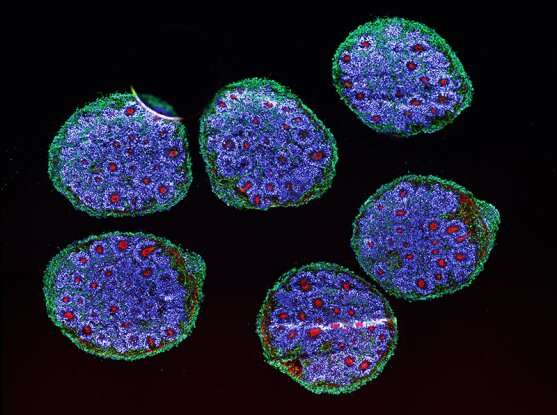
Human brain organoids showing neurons and their dendrites (green), telencephalic (forebrain) cells (blue), and a kind of cell-cell contact called tight junctions (red). By Allessandra DiCorato A single-cell analysis of 3D models of the human cerebral cortex suggests they can be used to study important brain processes that have been difficult to investigate. Credit: Noelia Anton Bolanos and Irene Faravelli

Researchers have found that human brain organoids replicate many important cellular and molecular events of the developing human cortex, the part of the brain responsible for movement, perception, and thought.

Loneliness, restless sleep, and unhappiness have a significant effect on biological aging, a new study reports.

A Brazilian study published in the journal PNAS describes some of the effects infection by SARS-CoV-2 can have on the central nervous system. A preliminary version (not yet peer-reviewed) posted in 2020 was one of the first to show that the virus that causes COVID-19 can infect brain cells, especially astrocytes. It also broke new ground by describing alterations in the structure of the cortex, the most neuron-rich brain region, even in cases of mild COVID-19.

New research reveals how changes in pupil size affect the way we perceive our surroundings.

Human Brain Project (HBP) researchers have identified a new marker for predicting the clinical outcome of patients with Amyotrophic Lateral Sclerosis (ALS) through magnetoencephalography. This marker can be measured in the brain during its resting state and highlights the importance of brain flexibility for ALS patients.

A new theory of consciousness suggests decisions are made unconsciously, then about half a second later, they become conscious.

Strenuous cognitive work leads to an accumulation of glutamate in the prefrontal cortex, according to new research published in the journal Current Biology. The new findings suggest that mental fatigue is a neuropsychological mechanism that helps to avert the build-up of potentially toxic byproducts of prolonged cognitive activity.

A research team has identified a specific cell group in the brain responsible for shifts in the sleep-wake rhythm caused by psychostimulants.

Amid much speculation and research about how our genetics affect the way we age, new research shows that individual differences in our DNA matter less as we get older and become prone to diseases of aging, such as diabetes and cancer.

Finally, this week, listening to birdsong reduces anxiety and paranoia, a new study reports.

Weekly Neuroscience Update

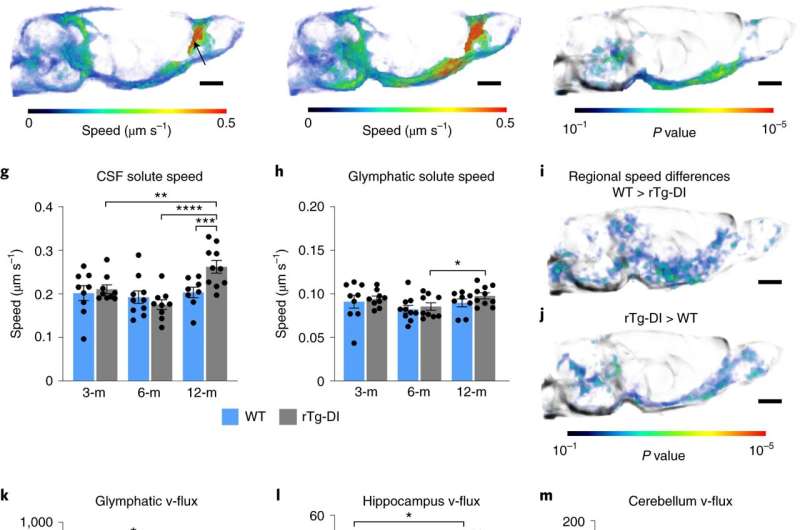
CSF flow speed becomes hyperdynamic with severe CAA. Credit: Nature Aging (2022). DOI: 10.1038/s43587-022-00181-4

A new study suggests that a contributing factor in dementia may come down to a double dose of bad waste management in the brain.

The first major study to compare brain scans of people before and after they catch Covid has revealed shrinkage and tissue damage in regions linked to smell and mental capacities months after subjects tested positive.

Light-to-moderate regular alcohol consumption is linked to reductions in overall brain volume, a new study reports.

Researchers have discovered two types of brain cells that play a key role in dividing continuous human experience into distinct segments that can be recalled later. The discovery provides new promise as a path toward development of novel treatments for memory disorders such as dementia and Alzheimer’s disease. 

Stanford Medicine researchers have linked a specific gene known to be associated with ALS with a characteristic of the disease, opening avenues for a targeted therapy.

A research group from the University of Bologna discovered the first causal evidence of the double dissociation between what we see and what we believe we see: these two different mechanisms derive from the frequency and amplitude of alpha oscillations.

A new, first-of-its-kind clinical trial will examine how the brain adapts to advanced, bionic arms in children born without a limb, with the ultimate goal of improving children’s control of their prosthetic.

People who suffer from a neurological or mental health condition are at increased risk of developing another disorder later in life. Parkinson’s disease patients are four times more likely to develop dementia, and those with mental health disorders were also at greater risk of developing dementia later in life.

Finally this week, new research shows if the circadian clock is disrupted, we might be at greater risk of retinal degeneration as we age.

Weekly Neuroscience Update

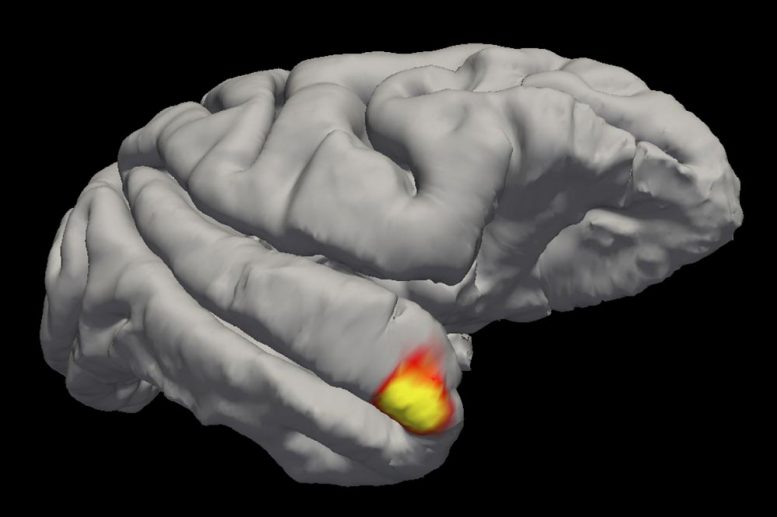
An area (red-yellow) in the brain’s temporal pole specializes in familiar face recognition. Credit: Sofia Landi

New research reveals a class of neurons in the brain’s temporal pole region that links face perception to long-term memory. It’s not quite the apocryphal grandmother neuron — rather than a single cell, it’s a population of cells that collectively remembers grandma’s face. The findings, published in Science, are the first to explain how our brains inculcate the faces of those we hold dear.

Researchers have discovered a previously unknown repair process in the brain that they hope could be harnessed and enhanced to treat seizure-related brain injuries.

A new study demonstrates that puppets can attract and hold the attention of children with autism spectrum disorder (ASD), raising the potential for developing more engaging therapies that strengthen social engagement and facilitate learning.

Artificial neural networks is helping researchers uncover new clues as to why people on the autism spectrum have trouble interpreting facial expressions.

Researchers have revealed how proteins accumulate in the incorrect parts of brain cells in amyotrophic lateral sclerosis (ALS) and demonstrate how it may be possible to reverse the accumulation. ALS, more commonly known as motor neuron disease, is a progressive fatal disease that affects nerve cells in the brain and spinal cord, causing loss of muscle control, with patients become increasingly paralyzed and losing the ability to speak, eat and breathe. 

Combining artificial intelligence, mathematical modeling, and brain imaging data, researchers have shed light on the neural processes that occur when people use mental abstraction.

A team of scientists has uncovered a system in the brain used in the processing of information and in the storing of memories—akin to how railroad switches control a train’s destination. The findings offer new insights into how the brain functions.

Finally this week, researchers have developed a powerful miniature brain platform to study the mechanistic causes of Alzheimer’s disease and to test dementia drugs in development.

Weekly Neuroscience Update


A new study identifies the neural markers of beat synchronization in the brain and sheds light on how auditory perception and motor processes work together.

Current sleep patterns could help determine your risk of developing Alzheimer’s disease as you age. People who experience more fragmented sleep and less non-REM slow-wave sleep are more likely to have increased levels of amyloid-beta.

An international research team reports that problems in spatial navigation can also be detected in people with a genetic risk for Alzheimer’s. 

A new study demonstrates that a technology developed at the University of Central Florida could serve as a more reliable clinically-based model of amyotrophic lateral sclerosis (ALS) and a better screening tool for novel therapies than currently use preclinical models.

New long-term brain monitoring technologies that can continuously record brain activity could help improve the treatment and management of epilepsy.

Scientists have developed a new theory as to how hearing loss may cause dementia and believe that tackling this sensory impairment early may help to prevent the disease.

A new study compares adolescent siblings to determine the impact of early and frequent use of marijuana on cognitive function

Finally this week a new two-stage model seeks to answer a longstanding philosophical debate over whether consciousness is continuous or discrete. Findings suggest discrete consciousness is preceded by a long-lasting unconscious processing period.


Weekly Neuroscience Update

covid-4948866_640

A new review of neurological symptoms of COVID-19 patients reveals the disease poses a global threat to the entire nervous system, reports a study in Annals of Neurology.

Researchers have combined tools from machine learning and neuroscience to discover that the brain uses a mathematical system to organize visual objects according to their principal components.

A new system for high-density EEG helps with the imaging of the origin and path of both normal and abnormal neural activity.

Brain function depends on inhibitory cells that balance or ‘brake’ excitation. These neurons allow the brain to process information and also prevent runaway seizures. A new study however, reports that in some critical structures of the developing brain, the inhibitory neurons cause excitation rather than suppression of brain activity. The findings, published in Science Advances, could have implications for the treatment of neonatal seizures.

New research shows changes in gut mucus may contribute to Alzheimer’s, Parkinson’s, and other neurological disorders.

Researchers have identified how specific genetic mutations cause ALS. The pathway, they believe, may also be responsible for the development of frontotemporal dementia.

Cancer itself, rather than chemotherapy alone, may contribute to the development of neuropathy some patients experience.

Finally this week, results from a new study suggest that whether certain genes are expressed — turned on or off– may play a role in susceptibility to post-traumatic stress disorder (PTSD).