Is the search for the cause of autism a hall of mirrors?

The ‘broken mirror’ theory is a popular theory in autism research but it seems that all is not as it appears as  a high-profile paper in Neuron reports that people with autism do not have trouble understanding others’ actions or intentions or even imitating those actions1.

Monkey see, monkey do.

Mirror neurons were discovered by neuroscientists in the 90’s while recording the activity of nerve cells or neurons in the brains of monkeys where it was noticed that certain neurons remain silent when the monkeys observe other monkeys performing the same action2 – hence the name mirror neuron.

Scientists have extended this finding in the human brain to show that nerve activity in mirror neurons also remain silent when observing another person performing an action and/or expressing an emotion3 and this silence is not observed in people with autism – hence the ‘broken mirror’ theory of autism.

Getting it “write”

However in a 2007 study 25 children with autism were compared with non-autistic ‘controls’ on several goal-directed imitation (mirror) tasks shown to activate regions of the brain believed to contain mirror neurons4. In one experiment, the children sat at a table and were asked to copy an adult as she touched a pattern of dots on the tabletop. The study showed that normal healthy children make typical errors on this task – for instance copying the adult’s goal but using the wrong hand. The children with autism made exactly the same error, meaning that they selectively imitate the goal of the action and both groups show the same pattern of brain activity in brain regions believed to contain mirror neurons. These findings suggest that there is nothing wrong with basic mirror systems in people with autism.

Hall of mirrors

Part of the problem may be that the ‘broken mirror’ theory relies on several unsupported assumptions: that the mirror system is responsible for understanding goals and imitation, that goal understanding and imitation are abnormal in autism, and that these deficits cause the social difficulties seen in autism.

It’s all about connections

One possible explanation is that the mirror neuron system itself could be normal in autism, but its projections, or the brain regions it is projecting to, could be abnormal instead.  Also, the mixed findings could be due to the broad spread of the autism spectrum disorders.

References:

  1. Dinstein, I.et al. Neuron 13, 461-469 (2010) PubMed
  2. Rizolatti G. et al. Brain Res. Cogn. Brain Res. 3, 131-141 (1996) PubMed
  3. CochinS. et al. Electroencephalogr. Clin. Neurophysiol. 107, 287-295 (1998) PubMed
  4. HamiltonA. F. et al. Neuropsychologia 45, 1859-1868 (2007) PubMed

Weekly Round Up


All in the mind: Repressing bad memories for long enough can lead to us forgetting them completely, researchers claim

Fear burns memories into our brain, according to new research by University of California, Berkeley and if those memories are causing you distress, a team of researchers from Lund University in Sweden may have the answer. People can train their minds to erase embarrassing moments from their mind, according to their research. Scientists used EEG scans to monitor the parts of the brain that became active when volunteers actively tried to forget something. They were also able to pinpoint the exact moment a memory is ‘forgotten’, and claim that long-term suppression of a memory is a sure-fire way of permanently erasing it. The researchers say that mastering the technique could be useful for people who suffer from depression or post traumatic stress disorder, where constantly dwelling on upsetting or traumatic memories has a devastating effect on mental health.

And on the subject of PTSD, researchers at the Max Planck Institute of Psychiatry in Munich, are looking into the link between post-traumatic stress disorder and shrinkage of the hippocampus structure in the brain. (The hippocampus, which is Greek for “seahorse,” is a paired structure tucked inside each temporal lobe and shaped like a pair of seahorses, thence its name).

When we find something funny, our brains as well as our faces “light up” and the funnier we find a joke, the more activity is seen in “reward centres” – specific neurons which create feelings of pleasure, recent research shows.

Another region of the brain which also ‘lights up’  is in the medial orbito-frontal cortex when we experience beauty in a piece of art or a musical excerpt, according to new research funded by the Wellcome Trust. The study, published July 6 in the open access journal PLoS One, suggests that the one characteristic that all works of art, whatever their nature, have in common is that they lead to activity in that same region of the brain, and goes some way to supporting the belief that beauty does indeed lie in the beholder.


Your brain and the art of confusion

It’s good that the brain gets some airtime every now and then and so it was last Thursday when I was a guest on the Limerick Today morning radio with Joe Nash. The topic was confusion and what we can do about it. The discussion during the show, ranged from confusion to the role of the brain in sleep, dreams, memories, the subconscious and the practice of mindfulness. I particularly enjoyed being able to respond to callers and their questions.

How to focus on being focussed

One thing became clear to me over the course of the show – the lack of awareness of mindfulness mediation as a drug free way to increase concentration.  As a neuroscientist and teacher I have a keen interest in this area. During the show I mentioned to listeners that meditation exercises can be accessed for free on the internet. Click below for one of the best sources of free online meditations that I have found.

http://www.themeditationpodcast.com/index.html

These exercises are a great way of sharpening your focus. They require little time and have no nasty side-effects. Try it! Your brain will thank you later.

Click here to hear a podcast of the show.

Weekly Round Up

Pathways within the brain can be strengthened by reading and language exposure

 Recent research shows that reading  boosts brain pathways and can actually affect understanding in nearly all school subjects – a great reason to encourage the reading habit in your children.

Scientists at the University of Michigan Health System have demonstrated how memory circuits in the brain refine themselves in a living organism through two distinct types of competition between cells. Their results, published  in Neuron, mark a step forward in the search for the causes of neurological disorders associated with abnormal brain circuits, such as Alzheimer’s disease, autism and schizophrenia.

The left and right halves of the brain have separate stores for working memory, the information we actively keep in mind, suggests a study published online yesterday by the Proceedings of the National Academy of Sciences.

Over time, and with enough Internet usage, the structure of our brains can actually physically change, according to a new study.

Bringing the real world into the brain scanner, researchers at The University of Western Ontario from The Centre for Brain and Mind can now determine the action a person was planning, mere moments before that action is actually executed.

And finally good news at last for coffee addicts.For years we’ve been told that caffeinated coffee was bad for us. It’s unhealthy and addictive, doctors warned. But as vindication for all who stuck by their energizing elixir, a new study published early online in the Journal of Alzheimer’s Disease,  shows that guzzling caffeinated coffee may actually be good for our brains. In fact, it may help keep Alzheimer’s at bay.  So enjoy that cuppa joe!

University of Limerick medical graduates conferred

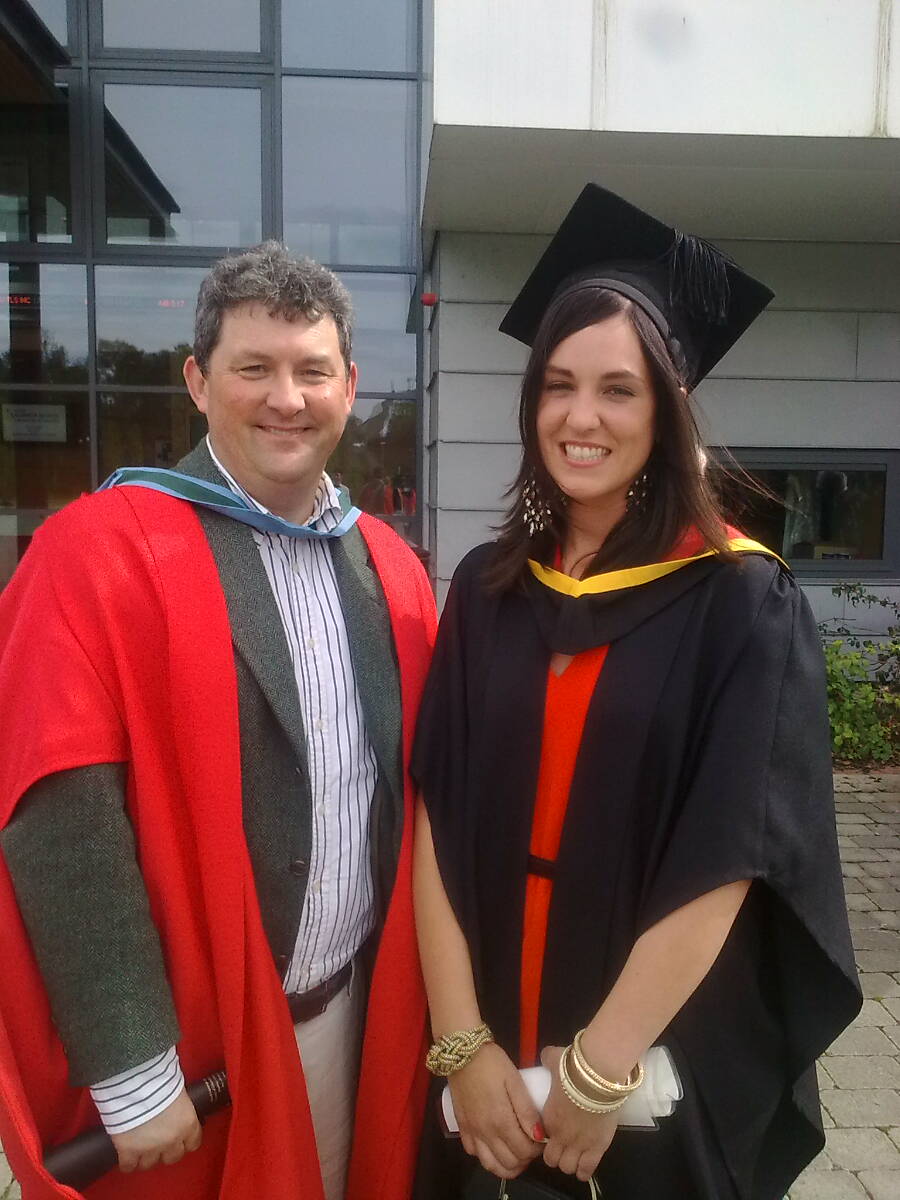
Pictured with Dr. Neasa Starr at UL Medical Graduation

Last Tuesday, 14 June, was an historic day in the life of the University of Limerick Graduate Entry Medical School  (GEMS) in which I am Foundation Head of Teaching and Research in Physiology.

Four years ago on September 10th we welcomed 32 students, from a variety of degree disciplines, to Limerick to study at Ireland’s first graduate entry medical school. Last week those students, who came from backgrounds as diverse as music, engineering, science, and education, were conferred with their Bachelor of Medicine and Bachelor of Surgery degrees.

Last week’s conferring ceremony for students marks a number of firsts – the first medical school to be founded in Ireland in over 150 years, the first graduate entry medical school in Ireland, and the first to integrate problem based learning techniques into its four-year curriculum.

I join with all my colleagues at GEMS in wishing this cohort of new doctors every success in their future careers.

Weekly Round Up

Are teenage brains wired to predict the next big music hit?

The brain is constantly changing as it perceives the outside world, processing and learning about everything it encounters. In a new study, which will be published in an upcoming issue of Psychological Science, scientists find a surprising connection between two types of perception: If you’re looking at a group of objects and getting a general sense of them, it’s difficult for your brain to learn relationships between the objects.

Recent research published in the Journal of Consumer Psychology.suggests that the activity in teen brains may have some Nostradamus-like qualities when it comes to predicting the hits or misses of popular music.

Fear burns memories into our brain, and new research by University of California, Berkeley neuroscientists explains how in findings that have implications for the treatment of PTSD.

Ands speaking of memory…have you forgotten where you put your keys recently? Your brain might be in a better state to recall where you put them at some times than at others, according to new research from UC Davis.

Limerick Lifelong Learning Festival

neurons

It was an honour to kick off proceedings today at the inaugural Limerick Lifelong Learning Festival with a talk on using your brain to beat addiction. The festival which runs until the 19th June focusses on the benefits of lifelong learning, promoting and celebrating learning in all its forms.

Festival Co-ordinator, Yvonne Lane believes that the week-long festivities offers something for everyone and looking through the list of demonstrations, tours, plays, performances, workshops, information sessions and opportunities on the programme listing, I would have to agree!

The Festival Programme is available on www.limerick.ie/lovelearning or the Limerick Lifelong Learning Festival 2011 Facebook page and if you can attend any of the sessions, I would certainly encourage you to do so.

Is the internet changing your brain?

Is the internet changing the way we think?

This Saturday, 11 June, I am looking forward to giving a talk at 3D Camp at the University of Limerick on how the internet is changing our brain. I will be exploring the question of whether our brains are being altered due to our increasing reliance on search engines, social networking sites and other digital technologies.

Using a basic understanding of brain structure (neurology) I will explain the concept of ‘brain plasticity’- the ability of the brain to constantly rewire itself – and will show how all learning changes the shape of the brain, allowing specific areas in the brain to grow or change. I will also be demonstrating how the new ‘cybertherapies’ are being used to help patients suffering from addiction and post traumatic stress disorder back to health.  I believe this new resource has the potential to dramatically improve mental health including new opportunities to learn healthy habits to lift our mood and enhance our brains longevity.

There are still places left on this themed Barcamp which looks at The Internet Beyond Web 2.0. Areas. Attendance is FREE! 

Click here to register

Where is your brain taking you?

Let me take you on a little trip..a trip to the future.

As we enter the 21st Century we need a compelling vision for the human race including our spiritual and mental evolution as understood by the evolution of our brains.  The following insights may strike you as free ranging, radical or even abstract but I believe that the question of human evolution connects perfectly with what many of us are beginning to ask of ourselves and how we might fit into a ‘bigger picture’.

Self-refection IS evolution 

Modern evolutionary theory needs to switch focus to the human mind – not just the physical brain. It is not enough to work out that we evolved from the apes – we now need to focus on how the human psyche is evolving and where it is taking us. Evidence from a branch of science called evolutionary biology shows that the size and shape of the human brain has not changed radically in thousands of years despite huge technological advances. Why is this so? Evidence is mounting that once humans learned to think in a different way by living in a state of reflectiveness our progress was inevitable. By discovering how to harness the full power of the brain – human beings did not just survive but started to enjoy an ‘ultra’ life.

The past is the key to the future

Until recently, the task of applying evolutionary science to the bigger question of human destiny has been avoided by scientists  too wary of speculation. However the emergence of the new discipline of neuroscience – the scientific study of the nervous system – is helping us to bridge this gap by providing new ways to answer old questions.  Neuroscientists have recently discovered that the same brain regions are involved in the processing of memory and in creative thought suggesting that the more we learn and remember the better we can predict the future. 

Science and true science

The great paradox of science is that while its strength is the deep analysis it uses to solve a problem – it can only really come of age when it goes beyond seeing man only in terms of the physical body. True science will see man in his wholeness and as part of a coherent picture of the world. The fact is that neither the sciences nor the humanities have yet to properly explain what it is to be human. True science will probably need to take into account all the challenges, achievements and events of human history as if they were all part of one continuum. This will require a new type of analysis – the origins of which may be seen in the new disciplines called informatics and systems analysis.

Ticket to where?

Humankind is a very young concept – only coined in the last 100 years. It is based on the recognition of unity within the human race – despite all the wars, division of wealth and racism. Contrary to what some people like to think – humankind is not the centre of the world but rather a very actively growing branch of the evolutionary tree. We are not destined to ‘lift ourselves above nature’- but rather to dramatically raise the intelligence and complexity of this thing we call ‘life’ through our intellectual and spiritual evolution. In fact, the more complex and intelligent we become the more we will free ourselves from our physical surroundings (the physical universe).

Personality equals evolution – neurolution

Just as our physical universe – space, the stars and galaxies – is expanding outwards, the same universe can – under the right conditions – also just as naturally ‘focus inwards’ from the simple to the increasingly complex and it is according to this ‘law’ that the human mind also develops.  Is there an end point to us becoming more human or the fulfilment of its potential? The evidence suggests that for us humans – personality equals evolution. 

The neuroscience of US

Every single human being on the planet is unique because they posses a uniquely complex brain. In fact, the brain is so complex that in all of human history no two brains were the same.  Furthermore this unique combination of about 100 trillion tiny connections grows and changes through life – a work in progress from conception to death. In this way we each evolve as we journey through life.

All hands on deck for human evolution

The evolution of the human race is not going to proceed by trying to transcend it – rather we will move forward as a race by making room for everyone to express their personalities to the full.  In this way the evolution of the human race has everything to do with our own personal development. Yet evolution does not happen at an even speed so don’t be alarmed when your subconscious asks you to take that leap; change job, pick a partner or just follow your dream. These great leaps of faith are part of your evolution in your journey through life and following a period of self refection just assure yourself it’s all happening for your own good (and the good of your species!) and go to the next level.

In a series of future blogs I will explore these ideas further including how mental and spiritual evolution is nourished by the network society.
 

Mapping the Brain

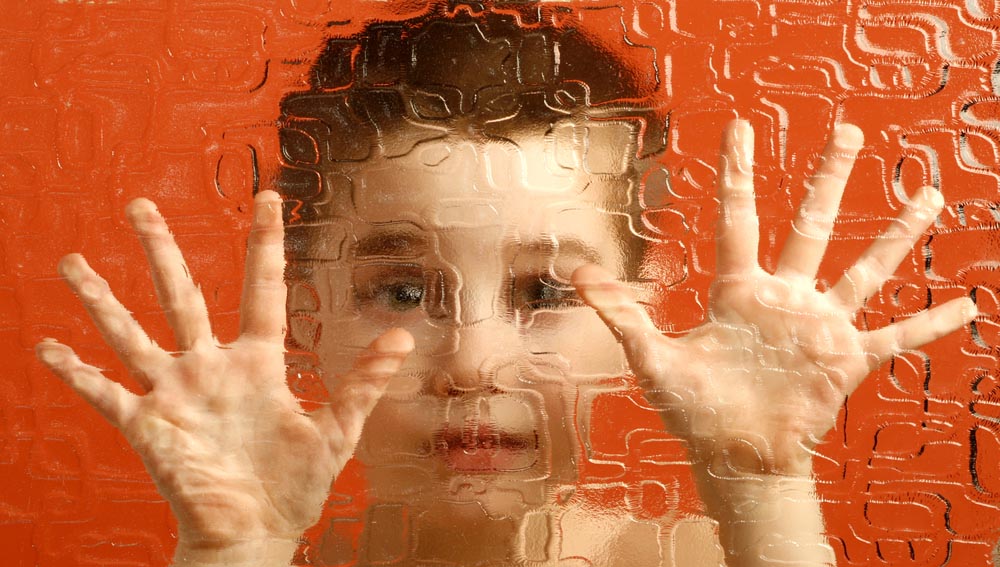
Mapping the Brain, is an exhibition of pictorial stories created by people with an acquired brain injury at the National Rehabilitation Hospital in Dún Laoghaire, Co Dublin.

The objective is to create a series of visual stories using pictures to create the narrative. One of the symptoms of acquired brain injury is that it affects the part of the brain that controls language. This can affect anything from speech, to difficulty with reading and interpreting verbal language.

Their finished work is on show in the Mill Theatre, Dundrum, Dublin 14, from Thursday26 May to June 30th.