University of Limerick medical graduates conferred

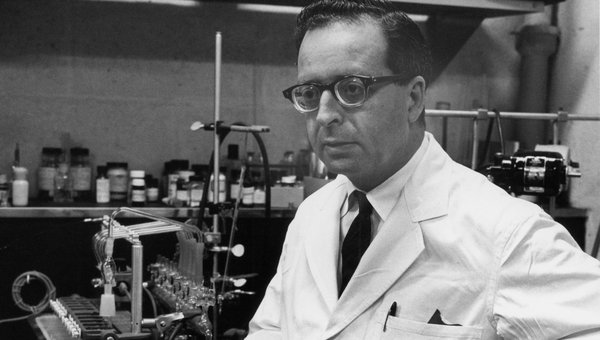
Pictured with Dr. Neasa Starr at UL Medical Graduation

Last Tuesday, 14 June, was an historic day in the life of the University of Limerick Graduate Entry Medical School  (GEMS) in which I am Foundation Head of Teaching and Research in Physiology.

Four years ago on September 10th we welcomed 32 students, from a variety of degree disciplines, to Limerick to study at Ireland’s first graduate entry medical school. Last week those students, who came from backgrounds as diverse as music, engineering, science, and education, were conferred with their Bachelor of Medicine and Bachelor of Surgery degrees.

Last week’s conferring ceremony for students marks a number of firsts – the first medical school to be founded in Ireland in over 150 years, the first graduate entry medical school in Ireland, and the first to integrate problem based learning techniques into its four-year curriculum.

I join with all my colleagues at GEMS in wishing this cohort of new doctors every success in their future careers.

Weekly Round Up

Are teenage brains wired to predict the next big music hit?

The brain is constantly changing as it perceives the outside world, processing and learning about everything it encounters. In a new study, which will be published in an upcoming issue of Psychological Science, scientists find a surprising connection between two types of perception: If you’re looking at a group of objects and getting a general sense of them, it’s difficult for your brain to learn relationships between the objects.

Recent research published in the Journal of Consumer Psychology.suggests that the activity in teen brains may have some Nostradamus-like qualities when it comes to predicting the hits or misses of popular music.

Fear burns memories into our brain, and new research by University of California, Berkeley neuroscientists explains how in findings that have implications for the treatment of PTSD.

Ands speaking of memory…have you forgotten where you put your keys recently? Your brain might be in a better state to recall where you put them at some times than at others, according to new research from UC Davis.

Limerick Lifelong Learning Festival

neurons

It was an honour to kick off proceedings today at the inaugural Limerick Lifelong Learning Festival with a talk on using your brain to beat addiction. The festival which runs until the 19th June focusses on the benefits of lifelong learning, promoting and celebrating learning in all its forms.

Festival Co-ordinator, Yvonne Lane believes that the week-long festivities offers something for everyone and looking through the list of demonstrations, tours, plays, performances, workshops, information sessions and opportunities on the programme listing, I would have to agree!

The Festival Programme is available on www.limerick.ie/lovelearning or the Limerick Lifelong Learning Festival 2011 Facebook page and if you can attend any of the sessions, I would certainly encourage you to do so.

Is the internet changing your brain?

Is the internet changing the way we think?

This Saturday, 11 June, I am looking forward to giving a talk at 3D Camp at the University of Limerick on how the internet is changing our brain. I will be exploring the question of whether our brains are being altered due to our increasing reliance on search engines, social networking sites and other digital technologies.

Using a basic understanding of brain structure (neurology) I will explain the concept of ‘brain plasticity’- the ability of the brain to constantly rewire itself – and will show how all learning changes the shape of the brain, allowing specific areas in the brain to grow or change. I will also be demonstrating how the new ‘cybertherapies’ are being used to help patients suffering from addiction and post traumatic stress disorder back to health.  I believe this new resource has the potential to dramatically improve mental health including new opportunities to learn healthy habits to lift our mood and enhance our brains longevity.

There are still places left on this themed Barcamp which looks at The Internet Beyond Web 2.0. Areas. Attendance is FREE! 

Click here to register

Where is your brain taking you?

Let me take you on a little trip..a trip to the future.

As we enter the 21st Century we need a compelling vision for the human race including our spiritual and mental evolution as understood by the evolution of our brains.  The following insights may strike you as free ranging, radical or even abstract but I believe that the question of human evolution connects perfectly with what many of us are beginning to ask of ourselves and how we might fit into a ‘bigger picture’.

Self-refection IS evolution 

Modern evolutionary theory needs to switch focus to the human mind – not just the physical brain. It is not enough to work out that we evolved from the apes – we now need to focus on how the human psyche is evolving and where it is taking us. Evidence from a branch of science called evolutionary biology shows that the size and shape of the human brain has not changed radically in thousands of years despite huge technological advances. Why is this so? Evidence is mounting that once humans learned to think in a different way by living in a state of reflectiveness our progress was inevitable. By discovering how to harness the full power of the brain – human beings did not just survive but started to enjoy an ‘ultra’ life.

The past is the key to the future

Until recently, the task of applying evolutionary science to the bigger question of human destiny has been avoided by scientists  too wary of speculation. However the emergence of the new discipline of neuroscience – the scientific study of the nervous system – is helping us to bridge this gap by providing new ways to answer old questions.  Neuroscientists have recently discovered that the same brain regions are involved in the processing of memory and in creative thought suggesting that the more we learn and remember the better we can predict the future. 

Science and true science

The great paradox of science is that while its strength is the deep analysis it uses to solve a problem – it can only really come of age when it goes beyond seeing man only in terms of the physical body. True science will see man in his wholeness and as part of a coherent picture of the world. The fact is that neither the sciences nor the humanities have yet to properly explain what it is to be human. True science will probably need to take into account all the challenges, achievements and events of human history as if they were all part of one continuum. This will require a new type of analysis – the origins of which may be seen in the new disciplines called informatics and systems analysis.

Ticket to where?

Humankind is a very young concept – only coined in the last 100 years. It is based on the recognition of unity within the human race – despite all the wars, division of wealth and racism. Contrary to what some people like to think – humankind is not the centre of the world but rather a very actively growing branch of the evolutionary tree. We are not destined to ‘lift ourselves above nature’- but rather to dramatically raise the intelligence and complexity of this thing we call ‘life’ through our intellectual and spiritual evolution. In fact, the more complex and intelligent we become the more we will free ourselves from our physical surroundings (the physical universe).

Personality equals evolution – neurolution

Just as our physical universe – space, the stars and galaxies – is expanding outwards, the same universe can – under the right conditions – also just as naturally ‘focus inwards’ from the simple to the increasingly complex and it is according to this ‘law’ that the human mind also develops.  Is there an end point to us becoming more human or the fulfilment of its potential? The evidence suggests that for us humans – personality equals evolution. 

The neuroscience of US

Every single human being on the planet is unique because they posses a uniquely complex brain. In fact, the brain is so complex that in all of human history no two brains were the same.  Furthermore this unique combination of about 100 trillion tiny connections grows and changes through life – a work in progress from conception to death. In this way we each evolve as we journey through life.

All hands on deck for human evolution

The evolution of the human race is not going to proceed by trying to transcend it – rather we will move forward as a race by making room for everyone to express their personalities to the full.  In this way the evolution of the human race has everything to do with our own personal development. Yet evolution does not happen at an even speed so don’t be alarmed when your subconscious asks you to take that leap; change job, pick a partner or just follow your dream. These great leaps of faith are part of your evolution in your journey through life and following a period of self refection just assure yourself it’s all happening for your own good (and the good of your species!) and go to the next level.

In a series of future blogs I will explore these ideas further including how mental and spiritual evolution is nourished by the network society.


Mapping the Brain

Mapping the Brain, is an exhibition of pictorial stories created by people with an acquired brain injury at the National Rehabilitation Hospital in Dún Laoghaire, Co Dublin.

The objective is to create a series of visual stories using pictures to create the narrative. One of the symptoms of acquired brain injury is that it affects the part of the brain that controls language. This can affect anything from speech, to difficulty with reading and interpreting verbal language.

Their finished work is on show in the Mill Theatre, Dundrum, Dublin 14, from Thursday26 May to June 30th.

Weekly Round Up

Does crossing your arms relieve pain?

In this week’s round up of the latest research in the field of neuroscience, UCLA professor of cognitive neuroscience Sophie Scott explains the psychology behind laughter.

In Scientific American, Katherine Harmon explores how human brains are optimally tuned for the visual hunt.

Many studies suggest that people learn by imitating through mirror neurons. A new study shows for the first time that prosody — the music of speech — also works on a mirror-like system.

A recent report in the Journal Pain reveals that crossing your arms may relieve pain, by confusing the brain.

Silencing illusion

Check out this award-winning video, a demonstration of silencing* – an illusion that shows it’s hard to notice when moving objects change.

The illusion, titled “Silencing awareness of change by background motion,” was the recent recipient of Best Illusion of the Year contest. Jordan Suchow, a Harvard University graduate student, and George Alvarez, an assistant professor in Harvard’s psychology department, created the winning entry.

Please read the instructions below

Keep your eyes fixed on the small white mark in the center. At first, the ring is stationary and it’s easy to tell that the dots are changing. A few seconds later, the ring begins to rotate and the dots suddenly appear to stop changing. (Or, more precisely, they appear to change much less than when the dots are motionless.)

But play the movie again, this time looking directly at one of the dots and following it as the ring rotates. You will see that, in fact, the dots had been changing at the same rate the whole time, even during the rotation—you just didn’t notice it. This failure to detect that moving objects are changing is silencing.

References

*Suchow, J.W., & Alvarez, G.A. (2011). Motion silences awareness of visual change Current Biology. doi:10.1016/j.cub.2010.12.019

Weekly Round Up

The brain has an inbuilt sense of justice

In this week’s round-up of the latest discoveries in the field of neuroscience,  New Scientist is asking the question of why we remember some dreams but not others? And Live Science takes a look at the top 10 mysteries of the mind, while a new study from the Karolinska Institute and Stockholm School of Economics shows that the brain has a built-in sense of justice.

The Telegraph reports on how brain scans reveal the power of art while researchers in Oslo and Sweden revealed that musicians’ brains are highly developed in a way that makes the musicians alert, interested in learning, disposed to see the whole picture, calm, and playful. The same traits have previously been found among world-class athletes, top-level managers, and individuals who practice transcendental meditation.

How does fear alter memory? A new study reveals that it can literally change our perception, a process that may help researchers better understand post-traumatic stress disorder (PTSD), other anxiety disorders and possibly conditions like autism. Dr Melanie Greenberg has also been looking at PTSD and the complexity of its mind-body effects and how our brains process trauma.

Emotions are habits – so pick up a good one

Part 3 of Your Brain and the Art of Happiness

All emotions if practised regularly grow in size. The Dalai Lama continually suggests that we cultivate the positive and like any good habit – you start off small but the end benefits are great. A positive state of mind is not only good for you but it also benefits everyone you come into contact with. 

Practise makes perfect 

No matter how difficult it is you must reduce your negative states of mind and increase your positive ones. The Dali Lama suggests that the occurrence of wholesome actions as against unwholesome actions is not a matter of morality or religion. It is the difference between happiness and unhappiness. Through self-training you can develop a good heart that lessens the chances that you will act in an unproductive way. 

The nature of happiness 

Don’t confuse happiness with pleasure. Pleasure is of the senses and seems like happiness but lacks meaning. Happiness in contrast rests on meaning and is often felt despite negative external conditions. It is stable and persistent. While pleasures are a bonus in live – happiness is a must! 

Happiness is not an overnight success 

Happiness is something to be developed over time. Make a decision to apply the same effort and determination that you might devote to worldly success to studying and practicing happiness. Systematic seeking after the causes and ways of happiness can be one of life’s most important decisions – like deciding to get married or embarking on a career. The alternative is drifting in an out of happiness by chance, vulnerable to unexpected attacks of unhappiness.

 The ups and downs of happiness

 The student of happiness will experience ups and downs but will be better equipped to get back to a positive state more quickly. Over time you must try to cancel out negative emotions particularly anger and hatred and replace them with tolerance and patience. The Dali Lama’s approach of cancelling out negative thoughts with positive ones has been validated by the rise of cognitive behavioural therapy (CBT) which gets people to replace distorted modes of thinking such as ‘my life is a mess’ with more accurate ones such as ‘this part of my life is not good but a lot else is.’

 The nature of individual unhappiness

 The Dalai Lama admits that people are complex but that the western way is always to find the causes of things which he suggests can lead to a kind of agony if we don’t find an answer. We will not necessarily understand why life plays out the way it does within the scope of our lifetime. This view partly comes from his belief in reincarnation and karma but can be appreciated separately to Buddhist doctrine.

How does this philosophy fit with findings from neuroscience?

So  how does this philosophy fit with findings from neuroscience – the scientific study of the brain? I suggest that it is precisely because we may not understand everything about our existence – it is all the more important to be good to other beings and to leave the world a slightly better place. With this simple command we can unite science with humanity and know we can’t go wrong.