This fascinating 3-minute music video of British musician Sivu’s single “Better Man Than He “is composed entirely of MRI images of his head, allowing the viewer to watch every movement of his throat and mouth as he sings.
Weekly Neuroscience Update
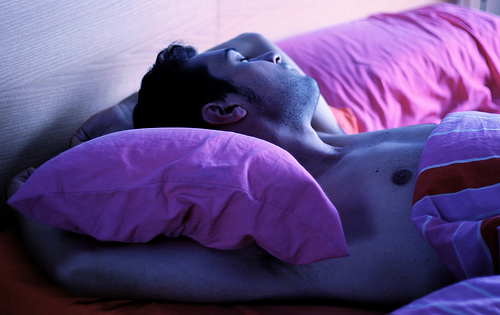
A research team at Northwestern University are studying the connection between memory and sleep, and the possibilities of boosting memory storage while you snooze.
For the first time, scientists have used a new combination of neural imaging methods to discover how the human brain adapts to injury. The research, published in Cerebral Cortex, shows that when one brain area loses functionality, a “back-up” team of secondary brain areas immediately activates, replacing not only the unavailable area but also its confederates.
New research suggests that testing a portion of a person’s saliva gland may be a way to diagnose Parkinson’s disease. The study was released today and will be presented at the American Academy of Neurology’s 65th Annual Meeting in San Diego, March 16 to 23, 2013.
In a promising finding for epileptic patients suffering from persistent seizures known as status epilepticus, researchers have reported that new medication could help halt these devastating seizures.
Tübingen neuroscientists have shown how decision-making processes are influenced by neurons.
EPFL scientists find evidence that psychological wounds inflicted when young leave lasting biological traces—and a predisposition toward violence later in life
The production of new neurons, known as neurogenesis, was found to be induced in the adult normal cortex by the antidepressant fluoxetine, as reported in a study published online last week in Neuropsychopharmacology. This finding highlights the potential neuroprotective response induced by this antidepressant drug. It also lends further support to the thesis that induction of adult neurogenesis in cortex is a relevant prevention/treatment option for neurodegenerative diseases and psychiatric disorders.
How to reengineer a brain
In the quest to map the brain, many scientists have attempted the incredibly daunting task of recording the activity of each neuron. Optogeneticist Gero Miesenboeck has a different approach for understanding the brain — rather than recording the activity of neurons, he works backwards – manipulating specific neurons to figure out exactly what they do. In this talk from TEDGlobal 2010, Miesenboeck explains his work manipulating neurons in fruit flies to see what happens when the brain’s code is broken.
Weekly Neuroscience Update
 In a small study of former NFL players, about one quarter were found to have “mild cognitive impairment,” or problems with thinking and memory, a rate slightly higher than expected in the general population.
Research at the University of Edinburgh tracked electrical signals in the part of the brain linked to spatial awareness. The study could help us understand how, if we know a room, we can go into it with our eyes shut and find our way around. This is closely related to the way we map out how to get from one place to another.
Scientists have long wondered how nerve cell activity in the brain’s hippocampus, the epicenter for learning and memory, is controlled — too much synaptic communication between neurons can trigger a seizure, and too little impairs information processing, promoting neurodegeneration. Researchers at Georgetown University Medical Center say they now have an answer. In the January 10 issue of Neuron, they report that synapses that link two different groups of nerve cells in the hippocampus serve as a kind of “volume control,” keeping neuronal activity throughout that region at a steady, optimal level.
Seniors who have spoken two languages since childhood are faster than single-language speakers at switching from one task to another, according to a study published in the January 9 issue of The Journal of Neuroscience. Compared to their monolingual peers, lifelong bilinguals also show different patterns of brain activity when making the switch, the study found.
Repression of a single protein in ordinary fibroblasts is sufficient to directly convert the cells – abundantly found in connective tissues – into functional neurons. The findings, which could have far-reaching implications for the development of new treatments for neurodegenerative diseases like Huntington’s, Parkinson’s and Alzheimer’s, will be published online in advance of the January 17 issue of the journal Cell.
Your brain at work
In his book “Your Brain at Work,” David Rock depicts the story of two people over one day at the office, and what’s happening in their brains that makes it so hard to focus and be productive. Not only does he explain why things go wrong, but how you can train your brain to improve thinking and performance at work. Based on interviews with 30 neuroscientists, he’s developed strategies to help you maximize your mental energy by understanding your brain’s limits, overcome distractions, improve your focus through understanding the nature of attention, reduce stress levels with brain-based techniques and improve how you collaborate by understanding the social needs of the brain.
Weekly Neuroscience Update

A bird listening to birdsong may experience some of the same emotions as a human listening to music, suggests a new study on white-throated sparrows, published in Frontiers of Evolutionary Neuroscience.
Scientists at University College Cork (UCC) have come up with an innovative strategy to deliver a therapy into the brain to treat the neurogenerative disease, Huntington’s disease (HD). The strategy, which involves using modified sugars to carry gene therapies into the brain, is being hailed as an exciting development which could be applied to many brain disorders, especially those with a genetic basis.
Researchers have used brain imaging technology to show that young people with a known genetic risk of bipolar but no clinical signs of the condition have clear and quantifiable differences in brain activity when compared to controls.
Scientists have identified a previously unknown group of nerve cells in the brain. The nerve cells regulate cardiovascular functions such as heart rhythm and blood pressure. It is hoped that the discovery, which is published in the Journal of Clinical Investigation, will be significant in the long term in the treatment of cardiovascular diseases in humans.
Scientists say they have found a way to distinguish between different types of dementia without the need for invasive tests, like a lumbar puncture.
Scientists at the University of Western Ontario have discovered that perhaps IQ is not the best measure of cognitive performance. Instead, they found that verbal language, short-term memory, and logical reasoning were the most important predictors of cognitive performance.
Inside The Brain: 2012 In Review
The WordPress.com stats helper monkeys prepared a 2012 annual report for this blog.

Here’s an excerpt:
This blog was viewed 130,000 times in 2012.
These are the posts that got the most views in 2012.
The evolution of spoken language
In this lecture, best-selling author Steven Pinker introduces you to linguistics, the evolution of spoken language, and the debate over the existence of an innate universal grammar. He also explores why language is such a fundamental part of social relationships, human biology, and human evolution. Finally, Pinker touches on the wide variety of applications for linguistics, from improving how we teach reading and writing to how we interpret law, politics, and literature.
Weekly Neuroscience Update
 Wellcome Trust researchers have discovered how the brain assesses confidence in its decisions. The findings explain why some people have better insight into their choices than others.
Meanwhile, a study conducted by researchers at the University of Granada Group of Neuropsychology and Clinical Psychoneuroimmunology has demonstrated that cortisol levels in saliva are associated with a person’s ability to make good decisions in stressful situations.
Your brain has at least four different senses of location – and perhaps as many as 10. And each is different, according to new research from the Kavli Institute for Systems Neuroscience.
A month of daily transcranial magnetic stimulation targeting the supplemental motor area (SMA) results in lasting improvements in symptoms of Tourette syndrome, show study findings.
Researchers have used brain imaging technology to show that young people with a known genetic risk of bipolar but no clinical signs of the condition have clear and quantifiable differences in brain activity when compared to controls.
Researchers have found the first proof that a chemical in the brain called glutamate is linked to suicidal behavior, offering new hope for efforts to prevent people from taking their own lives.
Neurobiologists at the Research Institute of Molecular Pathology (IMP) in Vienna investigated how the brain is able to group external stimuli into stable categories. They found the answer in the discrete dynamics of neuronal circuits. The journal Neuron publishes the results in its current issue.
Photo Credit: photo credit: Lori Greig via photopin cc
Sorry I’m late, it’s all down to my chronobiology

Individuals differ in terms of their chronotype – that is to say whether you are morning oriented or evening oriented, or somewhere in the middle.
We are well into party season as the holidays approach, with dinners, drinks with friends and similar festive cheer. But in the midst of all the fun there is also an annoyance: the latecomer.
Everyone knows someone who is always late. Maybe you’re one of those people yourself. Theories on why some individuals are late on a regular basis come from a variety of perspectives – anthropological, cultural, neurological and psychological. But are there scientific explanations for chronic lateness?
We are all governed by our circadian clocks. The study of this internal clock comes under the heading of chronobiology. “Circadian rhythms are internal 24-hour rhythms created by the Earth spinning on its axis within a 24-hour period,” says Dr Andrew Coogan, a chronobiologist at NUI Maynooth.
“Life has evolved to take advantage of that. Through evolution we have adapted a time-keeping mechanism. Animals and organisms can anticipate changes in their environment and then react appropriately. It’s important particularly for preyed-upon animals, who know to get home before it’s dark.”
The existence of circadian rhythms was first demonstrated in the 1960s when human subjects were placed into a timeless environment – a concealed former second World War bunker to be exact – with no time-reference points, clocks, natural light and so on.
It was found that the volunteers still expressed 24-hour rhythms through their internal clock. They had energy at appropriate times, slept at night time and were awake during the day.
But circadian rhythms affect individuals differently and can lead to inclinations towards “morningness” or “eveningness” and, in turn, “lateness”.
“Individuals differ in terms of their chronotype – that is to say whether you are morning oriented or evening oriented, or somewhere in the middle,” says Coogan.
“This is both an individual characteristic but also changes across the lifespan so small children generally are morning oriented, teenagers tend towards eveningness, then back towards the morning in adulthood.
“This affects the time of day we are most alert and our cognitive prowess is best set up for. Such individual differences seem to be down in part to genetics, but may also be driven by environmental factors – TVs, computers in bedrooms and street lighting at night might all make for a tendency toward ‘eveningness’.
“It might also explain in part lateness. If you are trying to get out of bed and get to school early yet your body clock is not attuned to that rhythm you may struggle and end up being late. So some of us may be predisposed to be late at different times of the day – probably most pertinent to the morning.”
The inclination towards morningness and eveningness also relates to personality. Eveningness tends to be associated with creativity and impulsiveness.
“Plus if you’re a strongly creative person you lose a sense of time when you’re in the middle of something you find very interesting – otherwise known as the absent-minded professor effect,” says Billy O’Connor, professor of physiology in the Graduate Entry Medical School in the University of Limerick.
“People get so engrossed in what they’re doing, they lose any sense of time. It’s actually a sign of good mental health. But it can be very frustrating for other people.”
Morning people, on the other hand, tend more towards conscientiousness and better organisational skills.
“Some people are future oriented so time is very important to them,” says Coogan. “Those who live in the present are not so bothered with being late.”
Being late for a flight or an important meeting is stressful and some people get addicted to that feeling. “Creating a stressful environment can be used by people to up their game,” says O’Connor. “It helps some people focus but you can become addicted to stress, more specifically the hormone cortisol. Its release gets you whizzing along when you need it most.
“Chronic stress ages the body and the brain. So this kind of behaviour works in the short term and does help some people get more done in their lives. But the brain performs optimally when it is calm and focused.”
There is, of course, one other reason why 3pm means 3.30pm to some people. “It can be a power thing,” says O’Connor. “In a business meeting setting, for example, which is a complex social gathering with multiple agendas and strict rules of engagement. They are not casual affairs so being constantly late for a meeting without a valid reason may be regarded as discourteous in a group.
“It may also be regarded as attention seeking, selfish behaviour and signs of a disorganised mind, and will more than likely result in social exclusion,” he says.
JOHN HOLDEN
This article appeared in the Irish Times 19-12-12
Image Credit: Getty Images
 inside-the-brain.com