Weekly Neuroscience Update

Neuronal activity during exposure to various images reveals distinct spatial groupings. The red region, for example, responds well to face stimuli. Credit by Takayuki Sato/RIKEN Brain Science Institute.

Neuronal activity during exposure to various images reveals distinct spatial groupings. The red region, for example, responds well to face stimuli. Credit by Takayuki Sato/RIKEN Brain Science Institute.

A brain region that responds to a particular category of objects is found to consist of small clusters of neurons encoding visual features of these objects.

Scientists have discovered that by deactivating a major switch in the brain that is linked to learning and memory, memories become jumbled, like “hitting random notes on a keyboard,” and lose their sense of association.

Newcastle University scientists have discovered that as the brain re-organizes connections throughout our life, the process begins earlier in girls which may explain why they mature faster during the teenage years.
Learning requires constant reconfiguration of the connections between nerve cells. Two new studies now yield new insights into the molecular mechanisms that underlie the learning process.

In the first study of its kind, two researchers have used popular music to help severely brain-injured patients recall personal memories. Amee Baird and Séverine Samson outline the results and conclusions of their pioneering research in the recent issue of the journal Neuropsychological Rehabilitation.

Neuroscientists have successfully demonstrated a technique to enhance a form of self-control through a novel form of brain stimulation.

Finally this week, scientists have discovered that as the brain re-organizes connections throughout our life, the process begins earlier in girls which may explain why they mature faster during the teenage years.

Inside The Brain’s Rhythm

wufigure1To understand how the brain recognizes speech, appreciates music and performs other higher-level functions, it is necessary to understand how neural systems process temporal information.

Recently, scientists at Beijing Normal University studied a simple but powerful network model by which a neural system can extract long-period (several seconds in duration) external rhythms from visual input.

Moreover, the study’s findings suggest that a large neural network with a scale-free topology – that is, a network in which the probability distribution of the number of connections between its nodes follows a power law – is analogous to a repertoire where neural loops and chains form the mechanism by which exogenous rhythms are learned. Importantly, their model suggests that the brain does not necessarily require an internal clock to acquire and memorize these rhythms.

Interested in learning more? Read this story in full here.

Weekly Neuroscience Update

laugh

The act of laughing at a joke is the result of a two-stage process in the brain, first detecting an incongruity before then resolving it with an expression of mirth. The brain actions involved in understanding humour differ between young boys and girls. These are the conclusions reached by a US-based scientist supported by the Swiss National Science Foundation.

The structure of the brain shows the way in which we process numbers. People either do this spatially or non-spatially. A study by Florian Krause from the Donders Institute in Nijmegen shows for the first time that these individual differences have a structural basis in the brain.

Pioneering research points to a promising avenue for the treatment of post-traumatic stress disorder (PTSD) utilising neurofeedback training to alter the plasticity of brain networks linked to the condition.

Perseverance is a quality that plays a large role in the success or failure of many pursuits. It has never been entirely clear why this trait seems more apparent in some people than others, but a new piece of research may at least help explain where it comes from.

A mechanism in the brain which controls tics in children with Tourette Syndrome (TS) has been discovered by scientists at The University of Nottingham.

Dyslexia may be caused by impaired connections between auditory and speech centers of the brain, according to a recent study published  in Science. The research could help to resolve conflicting theories about the root causes of the disorder, and lead to targeted interventions.

Weekly Neuroscience Update

scientists develop video game for stroke

Scientists have developed a therapeutic at-home 3D gaming programme to help stroke patients overcome motor weakness, which affects 80 per cent of survivors.

Using a video game in which people navigate through a virtual town delivering objects to specific locations, a team of neuroscientists has discovered how brain cells that encode spatial information form “geotags” for specific memories and are activated immediately before those memories are recalled.

Establishing links between genes, the brain and human behavior is a central issue in cognitive neuroscience research, but studying how genes influence cognitive abilities and behavior as the brain develops from childhood to adulthood has proven difficult. Now, an international team of scientists has made inroads to understanding how genes influence brain structure and cognitive abilities and how neural circuits produce language.

Stanford University School of Medicine neuroscientists have discovered a new role played by a common but mysterious class of brain cells.

A new study using brain imaging has shown the effect of the chronic pain drug pregalbin on the brain, giving researchers new insight on the treatment of fibromyalgia and other chronic pain disorders.

A study published recently in the Journal of Neuroscience points, for the first time, to the gene trkC as a factor in susceptibility to panic disorder. The researchers define the specific mechanism for the formation of fear memories which will help in the development of new pharmacological and cognitive treatments.

Finally, in the largest study on the topic to date, research shows that speaking a second language may delay the onset of three types of dementias.  The study found that people who spoke two languages developed dementia four and a half years later than people who only spoke one language.


This Is Your Brain On Poetry

poetryResearchers at the University of Exeter have been bridging the gap between art and science by mapping the different ways in which the brain responds to poetry and prose. The team used state-of-the-art functional magnetic resonance imaging (fMRI) technology to visual how the brain activates certain regions to process various activities.

Before this study, no one had specifically examined the brain’s differing responses to poetry and prose. The results, published in the Journal of Consciousness Studies, revealed activity within a “reading network” of brain regions that were activated in response to any written material.

The researchers found that when study participants read one of their favorite passages of poetry, regions of the brain associated with memory were stimulated more strongly than “reading areas.” This suggests that reading a favorite passage is like a recollection. When the team specifically compared poetry to prose, they found evidence that poetry activates brain regions associated with introspection – such as the posterior cingulate cortex and medial temporal lobes.

Study highlights an increase in young and middle age stroke

Actor Frankie Muniz reveals he suffered a mini-stroke

Actor Frankie Muniz reveals he suffered a mini-stroke

Stroke rates among young and middle-aged people worldwide are increasing and these groups now account for nearly one-third of all strokes, according to a new study. The analysis of data gathered between 1990 and 2010 found that the number of strokes among people aged 20 to 64 rose 25 percent during that time, and that this age group now accounts for 31 percent of the total number of strokes, compared with 25 percent before 1990.

The news that former Malcolm In The Middle actor,  Frankie Muniz,  has recently suffered his second mini-stroke at the age of 27, seems to bear out the study findings. He revealed the news on Twitter.

Almost a year to the day, I experienced another mini stroke. Hopefully that will be the last. Miserable.


What Is A Mini Stroke?

A mini stroke is medically known as a transient ischemic attack (TIA). A TIA is a sign that part of the brain isn’t getting enough blood.One in ten people who suffer a TIA go on to have a stroke within a week if they remain untreated.

Weekly Neuroscience Update

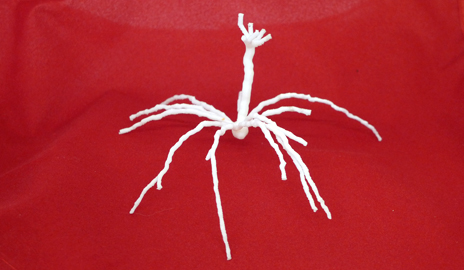
3D-printed model of a neuron (credit: Yale University)

3D-printed model of a neuron (credit: Yale University)

A Yale neuroscientist  has created the first 3D-printed neuron.

Studies released today suggest promising new treatments for nicotine and heroin addiction, and further our understanding of pathological gambling and heroin abuse in those suffering chronic pain. This new knowledge, released at Neuroscience 2013, the annual meeting of the Society for Neuroscience (SFN) and the world’s largest source of emerging news about brain science and health, may one day lead to non-pharmaceutical interventions and therapies to treat addiction. Also presented at SFN, new studies revealing links between social status and specific brain structures and activity, particularly in the context of social stress.

A new study has found that people experiencing a depressive episode process information about themselves differently than people who are not depressed.

To flexibly deal with our ever-changing world, we need to learn from both the negative and positive consequences of our behaviour. In other words, from punishment and reward. Hanneke den Ouden from the Donders Institute in Nijmegen demonstrated that serotonin and dopamine related genes influence how we base our choices on past punishments or rewards. This influence depends on which gene variant you inherited from your parents. These results were published in Neuron on November 20.

Brain scans reveal that people with fibromyalgia are not as able to prepare for pain as healthy people, and they are less likely to respond to the promise of pain relief.

Scientists have used RNA interference (RNAi) technology to reveal dozens of genes which may represent new therapeutic targets for treating Parkinson’s disease. The findings also may be relevant to several diseases caused by damage to mitochondria, the biological power plants found in cells throughout the body.

Playing a fast-paced strategy video games can help the brain to become more agile and improve strategic thinking, according to new research.

While young children sleep, connections between the left and the right hemispheres of their brain strengthen, which may help brain functions mature, according to a new study by the University of Colorado Boulder.  And in another sleep study, a team of sleep researchers  has confirmed the mechanism that enables the brain to consolidate memory and found that a commonly prescribed sleep aid enhances the process. Those discoveries could lead to new sleep therapies that will improve memory for aging adults and those with dementia, Alzheimer’s and schizophrenia.