An animated tour around the human brain.
Weekly Neuroscience Update

The brain’s immune cells are hyperactive in people who are at risk of developing schizophrenia, as well as during the earliest stages of the disease, according to a new study. The findings suggest that inflammatory processes play an important role in the development of the disease, and raise the possibility that it could be treated with drugs that block or reduce this cellular response.
A new study suggests that receiving rewards as you learn can help cement new facts and skills in your memory, particularly when combined with a daytime nap.
Protein deposits associated with dementia influence brain activity during sleep.
Hearing loss accelerates cognitive decline in elderly adults, but the use of hearing aids counters this acceleration. A new scientific longitudinal study shows that those who use hearing aids have about the same cognitive level as those with no hearing loss.
The brain cells of patients with bipolar disorder, characterized by severe swings between depression and elation, are more sensitive to stimuli than other people’s brain cells, researchers have discovered.
Neuroscientists have determined some of the specific characteristics of electrical stimuli that should be applied to the brain to produce different sensations in an artificial upper limb intended to restore natural motor control and sensation in amputees.
A research study has debunked the widely-held belief that the hippocampus, a crucial part of the brain that consolidates new memories and helps connect emotions to the senses, is larger in females than in males.
In order to retain a piece of information for a short time, working memory is required. The underlying processes are considerably more complex than hitherto assumed, as researchers report in the journal “Cell Reports”. Two brain states must alternate rhythmically in order for a piece of information to be successfully maintained.
A study led by Johns Hopkins Medicine researchers suggests that awakening several times throughout the night is more detrimental to people’s positive moods than getting the same shortened amount of sleep without interruption.
Early life stress is a major risk factor for later episodes of depression. Scientific research into this link has revealed that the increased risk following such childhood adversity is associated with sensitization of the brain circuits involved with processing threat and driving the stress response. More recently, research has begun to demonstrate that in parallel to this stress sensitization, there may also be diminished processing of reward in the brain and associated reductions in a person’s ability to experience positive emotions.
Weekly Neuroscience Update

Scientists have successfully completed what is believed to be the most complex human brain-to-brain communication experiment ever. It allowed two people located a mile apart to play a game of “20 Questions” using only their brainwaves, a nearly imperceptible flash of light, and an internet connection to communicate.
A new study reveals clues to how thoughts take shape.
University of Pennsylvania researchers have made another advance in understanding how the brain detects errors caused by unexpected sensory events. This type of error detection is what allows the brain to learn from its mistakes, which is critical for improving fine motor control.
A new study shows that music can improve the quality of sleep of adults with sleep disorders.
From “brain games” designed to enhance mental fitness, to games used to improve real-world problems, to games created purely to entertain, today’s video games can have a variety of potential impacts on the brain. A new article argues that it is the specific content, dynamics, and mechanics of individual games that determine their effects on the brain and that action video games might have particularly positive benefits.
Training people to be compassionate rather than empathic might help to solve problems such as depression, burnout and narcissism, according to researchers at the Max Planck Institute for Human Cognitive and Brain Sciences.
How does the brain determine which direction to let its thoughts fly? Looking for the mechanisms behind cognitive control of thought, researchers have used brain scans to shed new light on this question.
The risk of suffering a stroke is significantly reduced for up to two months after receiving a flu vaccine, a major new study has shown.
A new study sheds light on why people with schizophrenia misinterpret social cues in others, often leading to unpleasant paranoid and persecutory thoughts.
A malfunctioning enzyme may be a reason that binge drinking increases the odds of alcoholism, according to a study by scientists at the Stanford University School of Medicine.
A new study finds that the part of the brain responsible for seeing is more powerful than previously believed. In fact, the visual cortex can essentially make decisions just like the brain’s traditional “higher level” areas.
The brain’s wiring patterns can shed light on a person’s positive and negative traits, researchers report in Nature Neuroscience.
Combining MRI and other data helps machine-learning systems predict effects of neurodegenerative disease.
The way our brain responds to others’ good fortune is linked to how empathetic people report themselves to be, according to new research.
Finally this week, a team of researchers have discovered that images of brain activity scanned by using functional magnetic resonance imaging (fMRI) can act as a signature pattern to accurately identify certain individuals.
7 Myths About The Brain You Thought Were True
Think you know the brain? Think again! This video breaks down some of the most persistent myths surrounding your brain.
Inside The Sleeping Brain
Why do we sleep? We spend a third of our lives in slumber, but science has yet to determine exactly why we have do it. Here’s a look at how sleep works, why we’re not getting enough sleep, what happens if you DON’T sleep, and an idea about where sleep came from in the first place
Inside The Brain Quick Fact

Source: www.factslides.com/s-Your-Body
Weekly Neuroscience Update

Total correct score on the Eyes test for each individual is plotted as a dot, coloured according to group, to illustrate the distribution of performance by group. Mean score for each group is shown by a black dot, and the error bars indicate the 95% confidence interval of the mean score. Credit: Baron-Cohen et al./PLOS ONE.
New results published by researchers at the Autism Research Centre (ARC) show both men and women with autism show an extreme of the typical male pattern on the ‘Reading the Mind in the Eyes’ test.
Researchers at Mayo clinic completed analysis of a 4 year prospective study comparing detailed neurologic examination versus magnetic resonance imaging (MRI) of the brain to localize neurologic dysfunction. The findings, demonstrated MRI’s superior performance to the clinical exam.
Researchers at the University of Oslo have tested a new device for delivering hormone treatments for mental illness through the nose. This method was found to deliver medicine to the brain with few side effects.
Researchers have performed the first focused ultrasound treatments in the United States for dyskinesia associated with Parkinson’s disease.
A computer-based brain-training game could improve the daily lives of people with schizophrenia, say University of Cambridge researchers.
A gene linked in previous research, appears to predict more severe post-traumatic stress disorder (PTSD) symptoms as well as a thinner cortex in regions of the brain critical for regulating strong emotions and coping with stressful experiences. This study is believed to be the first to show that the spindle and kinetochore-associated complex subunit 2 (SKA2) gene may play a role in the development of PTSD.
Midday naps are associated with reduced blood pressure levels and prescription of fewer antihypertensive medications, according to new research.
A ‘gene signature’ that could be used to predict the onset of diseases, such as Alzheimer’s, years in advance has been developed in research published in the open access journal Genome Biology.
Is Seeing Believing?
Sometimes, against a uniform, bright background such as a clear sky or a blank computer screen, you might see things floating across your field of vision. What are these moving objects, and how are you seeing them? Michael Mauser explains the visual phenomenon that is floaters.
Why are some people left-handed?
Today, about one-tenth of the world’s population are southpaws. Why are such a small proportion of people left-handed — and why does the trait exist in the first place? Daniel M. Abrams investigates how the uneven ratio of lefties and righties gives insight into a balance between competitive and cooperative pressures on human evolution.
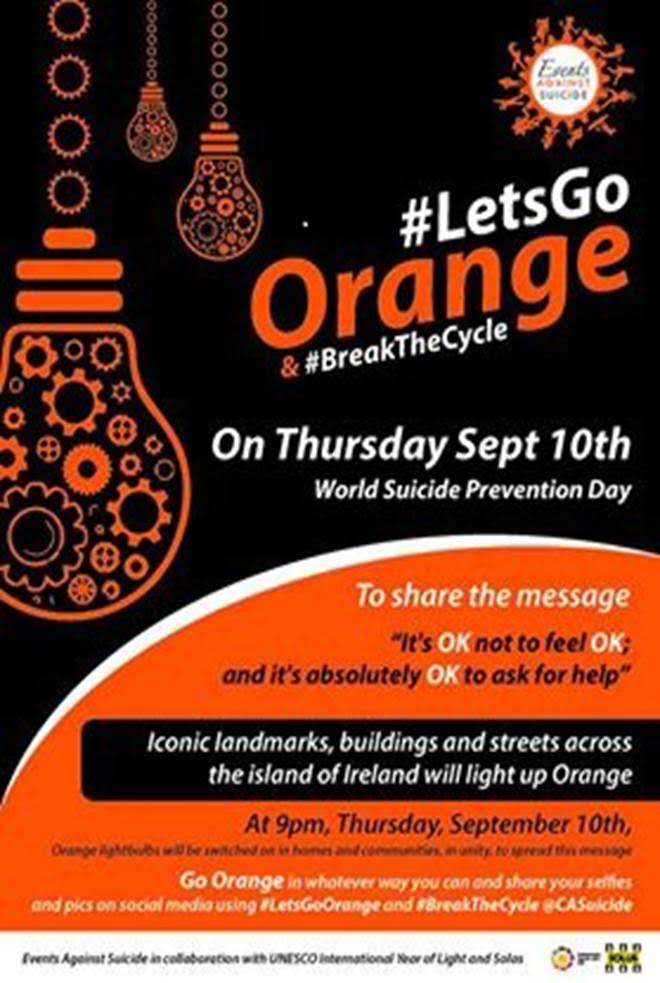
World Suicide Prevention Day
 inside-the-brain.com