Weekly Neuroscience Update

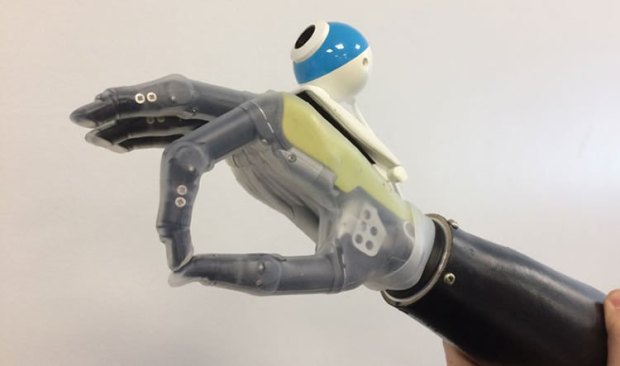
seeing-hand-prosthetic-neurosciencenews.jpg

A new generation of prosthetic limbs which will allow the wearer to reach for objects automatically, without thinking – just like a real hand – are to be trialled for the first time.

Researchers have discovered both the structure of specific brain areas and memory are linked to genetic activity that also play important roles in immune system function.

Understanding the structure of our brain is as important as understanding its size when it comes to evolution, a new report suggests.

Scientists have published ground-breaking scans of newborn babies’ brains which researchers from all over the world can download and use to study how the human brain develops.

A new study reports that contrary behaviour of blood vessels in the retrotrapezoid nucleus help keep us breathing.

Researchers have developed a non-invasive means to measure whether infants are in pain, which could prevent babies from undergoing excessive discomfort during medical treatments.

A landmark study has identified the first genetic locus for anorexia nervosa and has revealed that there may also be metabolic underpinnings to this potentially deadly illness.

Finally this week, researchers have identified how two distinct areas of the developing brain communicate and report REM sleep is key to this communication.


Weekly Neuroscience Update

seizure-onset-epilepsy-neurosciencenews.jpg

This is a simulated seizure activity on cortical tissue. NeuroscienceNews.com image is credited to Y. Wang.

A new study explores which of the two main patterns of brain activity may be seen during the onset of an epileptic seizure.

Researchers link obsessive behaviours in frontotemporal dementia (FTD) to immune pathways and suggest targeting the immune system could be a new strategy for the treatment of FTD.

Scientists have identified a gene that plays a vital role in the production of neurons and glial cells in the brain.

Reviewing brain scans of bipolar patients, researchers observe notable differences in the thickness of gray matter in areas of the brain associated with motivation and control inhibition compared to those without the disorder.

Researchers use optogenetics to study impairment to the CA2 region of the hippocampus.

Stimulating the brain by taking on leadership roles at work or staying on in education help people stay mentally healthy in later life, according to new research.

Our brains process foreign-accented speech with better real-time accuracy if we can identify the accent we hear, according to a team of neurolinguists.

The puzzle of how the brain regulates blood flow to prevent it from being flooded and then starved every time the heart beats has been solved with the help of engineering.

Researchers say stroke prevention strategy is also helping to reduce dementia in people aged 80 and over.

Finally this week, a new study reveals the amygdala has distinct neurons that can judge ambiguity and intensity of facial expressions.


Weekly Neuroscience Update

vegas-nerve-parkinsons-neurosciencenews (1).jpgAccording to researchers, Parkinson’s disease may start in the gut and spread to the brain via the vagus nerve.

You probably know that walking does your body good, but it’s not just your heart and muscles that benefit. Researchers found that the foot’s impact during walking sends pressure waves through the arteries that significantly modify and can increase the supply of blood to the brain.

An international collaboration of neuroscientists has shed light on how the brain helps us to predict what is coming next in speech.

A recently published study, which combines four studies of extreme longevity, has identified new rare variants in chromosomes 4 and 7 associated with extreme survival and with reduced risks for cardiovascular and Alzheimer’s disease.

Scientists have discovered that neurons in brain regions that store memory can form networks in the absence of synaptic activity.

A new study reports estrogen fluctuations can alter brain circuit activation in women with a variant of a specific gene.

Your brain may not be the same age as your body, and an “older” brain may be linked to an increased risk of dying at a younger age, a new study finds.

Zapping the brain with just a bit of electricity at the right time may help to improve memory function in some people, according to a new study.

Gentle noise stimulation can enhance sleep quality and improve memory in older people, a new study reports.

Like air-traffic controllers scrambling to reconnect flights when a major hub goes down, the brain has a remarkable ability to rewire itself after suffering an injury. However, maintaining these new connections between brain regions can strain the brain’s resources, which can lead to serious problems later, including Alzheimer’s Disease, according to researchers.

Researchers have discovered a new cellular mechanism that may be a root cause of multiple sclerosis.

Combining brain training programs with transcranial direct current simulation can lead to cognitive improvements and better working memory, a new study reports.

Finally this week, a new video game is helping to speed up neuroscience research by allowing players to reconstruct the architecture of neurons.


Weekly Neuroscience Update

Adobe Spark.jpg

A new research project sheds light on the role played by a specific area of the brain in our moral judgements. The more developed it is, the more understanding we show towards those who have unintentionally caused harm.

A new study could help explain how pain often follows a chemical induced itch.

Researchers at the University of Liverpool have identified the basis for how a single gene mutation can cause a rare neurological movement disorder known as dystonia.

A new sensor could help to reveal the role dopamine plays in learning and emotion.

Researchers have developed a method using MRI to identify when HIV is still present in the brain, despite effective drug treatment.

Pupil dilation is at its largest when people are most uncertain about their situation, a new study reports.

Sleep deprivation increases the number of available A1 adenosine receptors, but restorative sleep helps normalize them again, a new study reports.

Scientists report doxycycline, a common antibiotic, could help to disrupt the formation of negative memories associated with PTSD and in another new study the power of oxytocin in combating PTSD will be tested.

Brain researchers report the anterior cingulate cortex, an area of the brain associated with empathy, activates very weakly in people with autism.

Non-invasive ultrasound improves the delivery to the brain of a therapeutic antibody targeting Alzheimer’s disease, scientists have found.

A new blood test has been developed that could help to identify infants who may be experiencing bleeding in the brain as a result of abusive head trauma.

Researchers at the University of Zurich have identified the brain mechanism that governs decisions between honesty and self-interest. Using non-invasive brain stimulation, they could even increase honest behavior.

Finally this week, a new study reveals acute stress can increase prosocial behavior and empathy.

Weekly Neuroscience Update

auditory-memory-magnets-neurosciencenews.jpg

image is credited to McGill University. Philippe Albouy

A new study reveals people showed improvements in auditory memory when transcranial magnetic stimulation was applied.

The part of the brain that creates mental maps of one’s environment plays a much broader role in memory and learning than was previously thought, according to new research published this week in the journal Nature by researchers at Princeton University.

Researchers have developed new tests to help quantify automatic moral and empathetic judgement.

Neurons in the prefrontal cortex “teach” neurons in the hippocampus to “learn” rules that distinguish memory-based predictions in otherwise identical situations, suggesting that learning in the present helps guide learning in the future, according to research conducted at the Icahn School of Medicine at Mount Sinai and published April 5 in the journal Neuron.

Neuroimaging technology can help determine the success of failure possibilities of cochlear implants for those who lose their hearing during adulthood.

Scientists have known that a lack of sleep can interfere with the ability to learn and make memories. Now, a group of researchers have found how sleep deprivation affects memory-making in the brain.

Reducing stress in those with epilepsy may be a beneficial, low risk preventative treatment for seizures, researchers report.

Using PET scans of the brain, researchers have shown that dopamine falls and fluctuates at different times during a migraine headache.

MRIs show a brain anomaly in nearly 70 percent of babies at high risk of developing the condition who go on to be diagnosed, laying the groundwork for a predictive aid for pediatricians and the search for a potential treatment.

A new study reports the anterior cingulate cortex, an area of the brain associated with empathy, activates very weakly in people with autism.

Scientists at Max Planck Florida Institute for Neuroscience developed a light-sensitive technique to visualize and manipulate neuromodulation with unprecedented spatial and temporal precision.

Finally this weekk, new research indicates that some autobiographical memories are more vulnerable to Alzheimer’s disease and dementia than others.


Weekly Neuroscience Update

adobe-spark-81

Different people age at different rates and the same goes for their brains, according to scientists who have discovered a link between a common genetic variant and an increased risk for neurodegenerative diseases. The new biomarker becomes active around age 65 and may provide a new means of evaluating, preventing, or treating Alzheimer’s and other age-related brain disorders.

According to a new study, adolescence may be a crucial period for remodeling of the human brain.

The brains of those who are born blind make new connections in the absence of visual information, resulting in enhanced, compensatory abilities such as a heightened sense of hearing, smell and touch, as well as cognitive functions (such as memory and language) according to a new study.

Scientists have developed a new genetic test for Alzheimer’s risk that can be used to predict the age at which a person will develop the disease.

Using a satnav to get to your destination ‘switches off’ parts of the brain that would otherwise be used to simulate different routes, reveals new research.

Researchers trace the Pavlovian response to a small cluster of neurons in the striatum.

Finally this week, a new neuroimaging study reveals how different parts of the brain represent an object’s location in depth compared to its 2D location.

Weekly Neuroscience Update

neuroimaging-early-alzheimers-neurosciencneews.jpg

image credited to Per Uvdal

New technology allows researchers to produce images that predate the formation of amyloid beta in the brain. The findings have prompted researchers to suggest stabilizing the protein, rather than attempting to limit it, in order to reduce Alzheimer’s symptoms.

new study shines light on the process by which head injuries lead to brain disease later in life. 

A new type of long-term potentiation that is controlled by kainate receptors has been reported by scientists. The finding could have major benefits to understanding how the brain works and what goes wrong in neurodegenerative disorders such as epilepsy and dementia.

According to researchers, axons coordinate each other’s destruction, contributing to neurodegeneration.

Dendrites are not just passive conduits, a new study reports. The finding could change scientists’ understanding of how the brain works, and lead to new approaches for treating neurological disorders.

Structural differences have been found in the cerebral cortex of patients with depression, and these differences normalize with appropriate medication,  a new study reports.

Researchers at Karolinska Institutet collaborating in the large-scale Karolinska Schizophrenia Project are taking an integrative approach to unravel the disease mechanisms of schizophrenia. In the very first results now presented in the prestigious scientific journal Molecular Psychiatry, the researchers show that patients with schizophrenia have lower levels of the vital neurotransmitter GABA as well as changes in the brain’s immune cells.

Finally this week, researchers have identified a genetic variant that can accelerate normal brain aging in older people by up to 12 years.


Weekly Neuroscience Update

standup-comedy-ftr.jpg

A study published in Frontiers in Neuroscience takes a look inside the brains of professional comedians and compares them with less humorous humans. They attempt to home in on the seat of creative humour and ask what it can tell us about creativity.

A new study reports brain cells may preferentially activate a copy of one parent’s genes over the other in offspring.

Music, specifically infant directed song, could have evolved as a means to allow parents to let their children know their needs are being met, while freeing them up to perform other essential tasks, a new study theorizes.

Researchers report a new neuroimaging device can successfully measure brain synchronization during a conversation.

Specialized nerve cells, known as somatostatin-expressing (Sst) interneurons, in the outer part of the mammalian brain (or cerebral cortex) — play a key role in controlling how information flows in the brain when it is awake and alert. This is the finding of a study published online in Science March 2 by a team of neuroscientists at NYU Langone Medical Center and its Neuroscience Institute.

Amygdala reactivity may help predict who will have post-traumatic stress disorder symptoms in the year following a trauma, a recent study from Emory University  finds.

Recent research published in Frontiers in Public Health shows that the effects of vibrations produced by horses during horse-riding lead to the activation of the sympathetic nervous system, which improves learning in children.

A compound called P7C3 provides both protection for neurons following a stroke and improves physical and cognitive outcomes, a new study reports.

MIT researchers have devised a way to measure dopamine in the brain much more precisely than previously possible, which should allow scientists to gain insight into dopamine’s roles in learning, memory, and emotion.

A new study reports the ability to modulate brain activity when it comes to shutting off processes irrelevant to a task may be compromised in older people.

Concrete links between the symptoms of autism and synaesthesia have been discovered and clarified for the first time, according to new research by psychologists at the University of Sussex.

Researchers have identified a potential mechanism for the development of alcoholism.

Finally this week, researchers have discovered a genetic pathway that could lead to people developing anxiety and panic disorders.

Weekly Neuroscience Update


Adobe Spark (81).jpg

Fathers given boosts of the hormone oxytocin show increased activity in brain regions associated with reward and empathy when viewing photos of their toddlers, a new study finds. The journal Hormones and Behavior published the results of the study, the first to look at the influence of both oxytocin and vasopressin – another hormone linked to social bonding – on brain function in human fathers.

A new study looks at the association between tiredness, genetics, environment and health.

A genetic ‘switch’ has been discovered by researchers at the University of Leicester which could help to prevent or delay the symptoms of Parkinson’s disease. In a paper published in the journal Cell Death and Differentiation, the team discovered that a gene called ATF4 plays a key role in Parkinson’s disease, acting as a ‘switch’ for genes that control mitochondrial metabolism for neuron health.

A new study supports olfactory testing as an early method to detect those at risk of develop dementia.

Researchers have experimentally confirmed the hypothesis, whereby comprehension of a word’s meaning involves not only the ‘classic’ language brain centres but also the cortical regions responsible for the control of body muscles, such as hand movements. The resulting brain representations are, therefore, distributed across a network of locations involving both areas specialised for language processing and those responsible for the control of the associated action.

Better quality sleep is linked to improved emotions and fewer stressors the next day, researchers report.

New research shows that patients with mild traumatic brain injury (mTBI), even without evidence of brain lesions, may exhibit changes in brain connectivity detectable at the time of the injury that can aid in diagnosis and predicting the effects on cognitive and behavioural performance at 6 months.

Finally this week, preschool aged children who took naps after learning new verbs better understood the word when tested 24 hours later, a new study reports.