This Is Your Brain On Gratitude

do what you love

“Thank you” doesn’t just bring light to people’s faces. It also lights up different parts of the brain.

In honor of Thanksgiving, I’d like to share this article with you from UC Berkeley’s Greater Good Science Center.

Evidence is mounting that gratitude makes a powerful impact on our bodies, including our immune and cardiovascular health. But how does gratitude work in the brain?

A team at the University of Southern California has shed light on the neural nuts and bolts of gratitude in a new study, offering insights into the complexity of this social emotion and how it relates to other cognitive processes.

There seems to be a thread that runs through subtle acts of gratitude, such as holding a door for someone, all the way up to the big powerful stuff like when someone gives you a kidney,” says Glenn Fox, a postdoctoral researcher at USC and lead author of the study. “I designed this experiment to see what aspects of brain function are common to both these small feelings of appreciation and large feelings of gratitude.

In their experiment, Fox and his team planned to scan participants’ brains while they were feeling grateful to see where gratitude showed up.

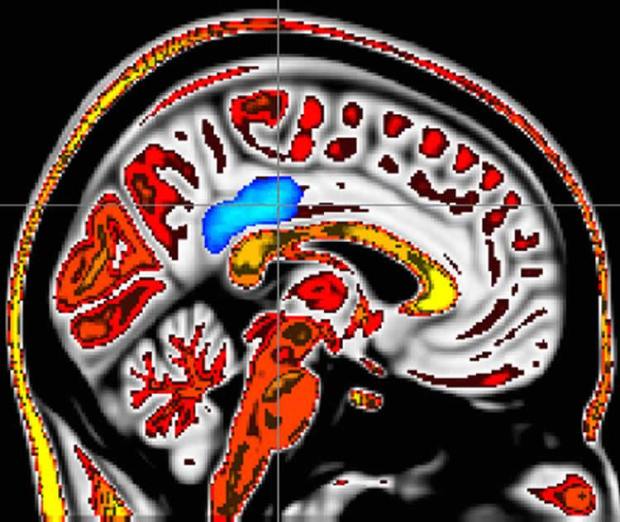
The researchers found that grateful brains showed enhanced activity in two primary regions: the anterior cingulate cortex (ACC) and the medial prefrontal cortex (mPFC). These areas have been previously associated with emotional processing, interpersonal bonding and rewarding social interactions, moral judgment, and the ability to understand the mental states of others.

A lot of people conflate gratitude with the simple emotion of receiving a nice thing. What we found was something a little more interesting,” says Fox. “The pattern of [brain]activity we see shows that gratitude is a complex social emotion that is really built around how others seek to benefit us.

In other words, gratitude isn’t merely about reward—and doesn’t just show up in the brain’s reward center. It involves morality, connecting with others, and taking their perspective.

In further studies, Fox hopes to investigate what’s going on in the body as gratitude improves our health and well-being.

It’s really great to see all the benefits that gratitude can have, but we are not done yet. We still need to see exactly how it works, when it works, and what are the best ways to bring it out more,” he says. “Enhancing our knowledge of gratitude pulls us closer to our own human dignity and what we can do to benefit each other.

You might also like to read When You Are Grateful, Your Brain Becomes More Charitable

Weekly Neuroscience Update

genetics-autism-neurosciencenews.jpg

A network of more than 200 genes encoding proteins with diverse cellular roles was revealed in a non-biased CRISPR screen for regulators of microexon splicing. Many of the genes have previously been linked to autism. Image is credited to Thomas Gonatopoulos-Pournatzis.

Using CRISPR techniques, researchers have uncovered a genetic network linked to autism.

Researchers find evidence of cognitive issues and miRNA biomarkers, indicating brain injuries from concussions or head-to-head contact, in college football players. The findings indicated lasting damage caused by sports-related concussions occur earlier than expected.

A new method for studying the mircobiome has allowed researchers to identify a connection between metabolism in gut bacteria and the development of diabetes.

A new study has identified unique functional brain networks associated with characteristic behaviors of autism spectrum disorder (ASD) in 12- and 24-month old children at risk for developing ASD. The study is published in Biological Psychiatry: Cognitive Neuroscience and Neuroimaging.

Researchers have identified a brain network that may control the diversion of attention to focus on potential threats. Dopamine, they report, is key to the process.

New research has found preliminary evidence that high-intensity interval exercise temporarily impairs reward learning mechanisms in the brain. The research, which was published in Physiology & Behavior, indicates that this type of exercise does not improve all aspects of cognitive function.

A new study reports aerobic exercise can have antidepressant effects for patients with major depressive disorder.

Researchers propose a new theory of human thinking, suggesting our brain’s navigation system is key to thinking. This may explain why our knowledge seems to be organized in spatial fashion.

Scientists have solved a 125-year-old mystery of the brain, and, in the process, uncovered a potential treatment for acquired epilepsy.

A new neuroimaging study reveals the brains of teenage girls who self-harm show similar features to adults with borderline personality disorder.

Researchers were able to distinguish between children with or without ASD diagnosis, thanks to a new saliva-based biomarker panel. Researchers report the test can be used in children as young as 18 month, assisting in early diagnosis of autism.

Finally this week, a new study reveals common brain activity patterns associated with depressive moods.


Weekly Neuroscience Update

serotonin-receptor-activation-neuroscieneews.jpg

Serotonin-induced activation of serotonin (3A) receptors. NeuroscienceNews.com image is credited to Case Western Reserve University School of Medicine.

Using cryo-electron microscopy, researchers have successfully imaged serotonin attaching to the receptor and twisting open the channel, allowing sodium molecules to travel through.

Researchers report adults who sleep six hours per night, as opposed to the recommended eight, have higher chances of waking up dehydrated.

A new study reports some genetic factors that increase obesity work to lower metabolic risk. 14 genetic variations, researchers report, are linked to higher BMI but lower diabetes risk.

A new method for studying the mircobiome has allowed researchers to identify a connection between metabolism in gut bacteria and the development of diabetes.

Researchers have discovered how the nature of T cells help protect the brain from viruses. The findings shed light on the role the immune system plays in a number of neurodegenerative disorders.

A new study has identified a brain network that may control the diversion of attention to focus on potential threats. Dopamine, they report, is key to the process.

As the adage goes “neurons that fire together, wire together,” but a new paper published today in Neuron demonstrates that, in addition to response similarity, projection target also constrains local connectivity.

A new study reveals common brain activity patterns associated with depressive moods.

Engaging in regular exercise can help preserve the motor and non-motor function of Parkinson’s disease patients, most likely as a result of an increased release of dopamine in the brain, a small study suggests.

Researchers have identified abnormalities in specific neural networks that may be a biomarker to predict the risk of developing schizophrenia.

Researchers find evidence of cognitive issues and miRNA biomarkers, indicating brain injuries from concussions or head-to-head contact, in college football players. The findings indicated lasting damage caused by sports-related concussions occur earlier than expected.


How Stress Affects The Brain #StressAwarenessDay

Stress isn’t always a bad thing; it can be handy for a burst of extra energy and focus, like when you’re playing a competitive sport or have to speak in public. But when it’s continuous, it actually begins to change your brain. In this video, Madhumita Murgia shows how chronic stress can affect brain size, its structure, and how it functions, right down to the level of your genes

Weekly Neuroscience Update

mini-retina-eye-brain-neurosciencenews

Axons of retinal ganglion cells (red) derived from human pluripotent stem cells bundle together and navigate their environment using growth cones (green), similar to human development of the optic nerve. NeuroscienceNews.com image is credited to Department of Biology, School of Science at IUPUI

Biologists are growing ‘mini retinas’ in the lab from stem cells to mimic the growth of the human retina. The researchers hope to use the research to restore sight when critical connections between the eye and the brain are damaged. These models also allow the researchers to better understand how cells in the retina develop and are organized. These results are published online in Scientific Reports, a Nature Research journal.

Researchers have discovered how the brain attempts to compensate for poor performance in tasks which require complicated transformation, such as writing your name backwards.

Observing the brain’s response to repeated stimuli has helped KAUST researchers develop a method for modeling connectivity patterns in neural networks. Mapping connectivity patterns will help to better understand brain function, ultimately improving diagnosis and treatment of brain diseases and mental disorders.

A new study reveals unique connections within brain networks in children on the autism spectrum. Researchers say, in ASD, the amygdala shows marked differences in connection with the occipital cortex than in typically developing children.

Researchers have identified key differences between the way males and females with schizophrenia process the emotional states of others than those without the condition. The study reports those with schizophrenia use less complex brain regions than healthy controls to process other people’s emotions.

According to a new study, certain behavioral risk factors strongly predict the likelihood of a person developing depression, and these risk factors change as we age.

Using neuroimaging technology, researchers have identified three different subtypes of depressive disorder, including one that seems to be untreatable by common SSRI antidepressants.

Finally this week, researchers report those who have had appendectomies have a reduced risk of developing Parkinson’s disease. A new study reveals the appendix acts as a reservoir for proteins associated with the neurodegenerative disease.

Weekly Neuroscience Update

brain-structure-language-neurosciencenews.jpg

Image:  Bansal et al., PLOS Computational Biology, October 2018.

Scientists are using computational models of the brain to simulate how the structure of the brain may impact brain activity and, ultimately, human behavior. The research focuses on interconnectivity, looking at how different regions are linked to and interact with one another.

Using a green filter helps to increase reading speed for children with dyslexia, researchers report.

Using three different training models, researchers report mental training, mindfulness and meditation can induce structural brain plasticity and reduce social stress.

A new study reports sleep helps improve learning performance in predictable processes.

A new brain imaging study reveals how the midbrain and striatum, two key areas of the dopamine system, become more active when a person updates their beliefs about the world around them.

Researchers report deep brain stimulation has little benefit for those suffering from early onset Alzheimer’s disease.

Finally this week, a decade worth of data reveals people who multitask with different forms of media at once are worse at completing simple memory tasks.

Weekly Neuroscience Update

speech-pitch-neurosceincneews.jpg

Chang Lab’s research reveals what area of the human brain controls the pitch of our speech.

Researchers have revealed the area of the brain that controls our voice box, allowing us to alter the pitch of our speech. The insight could pave the way for advancing neuroprosthetics to allow people who can’t speak, to express themselves in a naturalistic way.

A new study reports the brain mechanisms responsible for triggering memory are identical, whether a person is awake or asleep.

While the effects of sleep deprivation are well known, researchers discover sleeping too much could have a detrimental effect on your brain. A new study reports sleeping more than eight hours per night can reduce cognitive ability and reasoning skills.

Researchers have discovered the thalamus plays a crucial role in the development of normal sleep and waking states.

A new study reports T cells are activated in the intestines and migrate to the brain, causing an inflammatory cascade that may lead to multiple sclerosis. Researchers say the gut microbiome may play a more significant role in the development and progression of MS than previously believed.

A new study reports an afternoon nap can help us to process unconscious information and enhance cognition.

Utilizing lesion network mapping, a recently developed technique for analyzing how the brain works, researchers have studied free will perception related to movement decisions.

A new study reports a protein made by astrocytes plays a critical role in brain plasticity by assisting with neural maturation and flexibility.

Only a small proportion of cases of dementia are thought to be inherited – the cause of the vast majority is unknown. Now, in a study published today in the journal Nature Communications, a team of scientists led by researchers at the University of Cambridge believe they may have found an explanation: spontaneous errors in our DNA that arise as cells divide and reproduces.

An international team of researchers has demonstrated, with electrophysiological evidence, the existence of grid-like activity in the human brain.

Finally, this week, a new study reports people may be able to avoid depression, even if they have a genetic predisposition to SAD, by maintaining or boosting serotonin levels throughout the year.


Weekly Neuroscience Update

mindfulness-pain-neurosciencenews.jpg

Whole brain analyses revealed that higher dispositional mindfulness during painful heat was associated with greater deactivation of a brain region called the posterior cingulate cortex, a central neural node of the default mode network. Further, in those that reported higher pain, there was greater activation of this critically important brain region. image is credited to Zeidan et al.

Ever wonder why some people seem to feel less pain than others? A  new study may have found one of the answers – mindfulness.

Researchers at the Kavli Institute for Systems Neuroscience in Norway in have discovered a network of brain cells that express our sense of time within experiences and memories.

A new study reveals elevated glial activation in the brains of those with fibromyalgia.

Brains of baby boys born prematurely are affected differently and more severely than premature infant girls’ brains. This is according to a study published in the Springer Nature-branded journal Pediatric Research.

According to researchers, the speed at which a person speaks influences the way we hear and understand upcoming words. 

A new study reports under conditions of stress, KCNB1 builds up in the brain, before becoming toxic and promoting the production of amyloid beta. In Alzheimer’s patients, the KCNB1 levels are higher than in those without the condition.

Researchers report pyramidal neurons in the basolateral amygdala help us to recognize and categorize foods.

A new study sheds additional light on how the brain consolidates memory during sleep. Researchers report rapid fluctuations in gamma band activity in the hippocampus during nREM sleep helps facilitate memory reactivation.

Finally this week, researchers report on how the brain learns to recognize an individual face, regardless of where it appears in different visual locations.


Weekly Neuroscience Update

neuron-diversity-neurosciencenw.jpg

Different gene variants ensure the diversity of neurons by chance. Image from University of Basel, Biozentrum.

A new mathematical model has shown how different gene variants enable random diversity in neurons.

Common genetic variants may underlie autism spectrum disorder and schizophrenia across human populations, according to a study appearing September 11th in the journal Cell Reports.

Researchers report learning rates are enhanced when conditioned stimuli is presented during resting phase of the cardiac cycle.

Cognitive neuroscientists have found out more about how the bilingual brains works, according to a new research paper published in the journal Proceedings of the National Academy of Sciences.

A new study reports environmentally induced epigenetic alterations have a greater impact on intelligence that previously believed.

Researchers have identified the variables that lead the brain to apply specific defensive strategies while under the threat of danger, and implicate a specific pair of neurons in this process.

Using AI technology, researchers provide new insight into how the human brain connects individual episodic memories to help solve problems.

A new study reports binge drinking affects gene expression in both males and females differently. In females who binge drink, genes linked to hormone signaling and immune function become altered, whereas in males, alterations occur to genes associated with nerve signaling.

Researchers report the brain controls speech production in a similar manner to how it controls the production of arm and hand movements. 

Is pain treatment more helpful if it is provided by a person from our own social group, or is the help of a stranger more efficient? A study conducted by researchers from the Universities of Wuerzburg, Amsterdam and Zurich investigated this question and found that people experience a stronger pain relief if they are treated by a person that belongs to a different social group.

A new study unites cognitive science and information theory, reporting our brains are structured to make the best possible decisions given their limited resources.

Finally, this week, using EEG, researchers have identified smaller spikes in the P3 brain wave is associated with aggressive behavior in young children. The findings could help to diagnose toddlers with aggressive tendencies before their behaviors become ingrained, researchers say.