Weekly Neuroscience Update

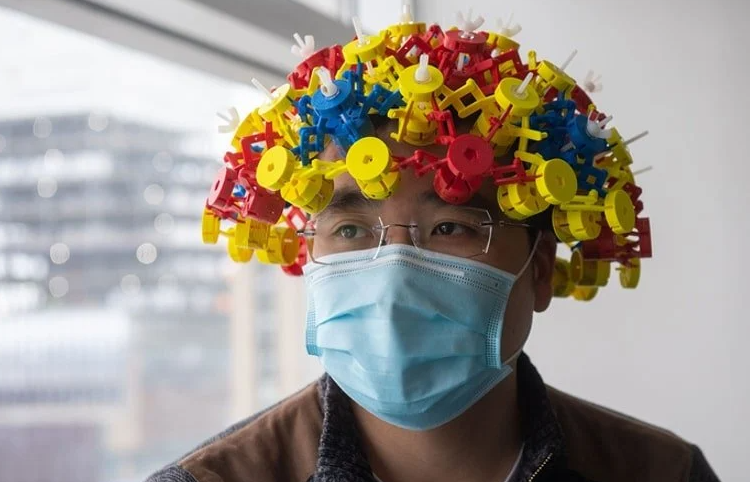
Ke Wu, a PhD student in BU’s department of mechanical engineering, demonstrates a new magnetic metamaterial device intended to be used in conjunction with MRI machines to boost the quality of brain scans. Credit: Cydney Scott, Boston University

A novel wearable magnetic metamaterial could help make MRI imaging faster, cheaper, and crisper.

While the word “mutation” may conjure up alarming notions, a mutation in brain immune cells serves a positive role in protecting people against Alzheimer’s disease. Now University of California, Irvine biologists have discovered the mechanisms behind this crucial process.

People cannot distinguish between a face generated by Artificial Intelligence – using StyleGAN2- and a real face say researchers, who are calling for safeguards to prevent “deep fakes”.

Minor everyday rises in blood pressure due to short-term stressors can be linked to a brain area that controls conscious and learned motor skills. This discovery, presented by researchers, paves the way for a chance to influence the rises in blood pressure and, in the long run, prevent hypertension.

MRI scans of children aged 9 to 10 years with ADHD showed few differences in structural brain measurements compared to their unaffected peers, according to a new study.

A recent study has shown that the brain has neurons that fire specifically during certain mathematical operations. The findings indicate that some of the neurons detected are active exclusively during additions, while others are active during subtractions. They do not care whether the calculation instruction is written down as a word or a symbol.

New research has shown that a bacterium commonly present in the nose can sneak into the brain and set off a cascade of events that may lead to Alzheimer’s disease.

A research team has discovered that communication between two key memory regions in the brain determines how what we experience becomes part of what we remember, and as these regions mature, the precise ways by which they interact make us better at forming lasting memories.

Finally this week, digital twins are already used in manufacturing, industry, and aerospace. Now a European project called Neurotwin wants to make virtual copies of brains.

Weekly Neuroscience Update

A new study underscores the importance of healthy sleep to prevent the Alzheimer’s related amyloid-beta 42 protein from forming clumps in the brain.

It has long been known that there is an association between food and pain, as people with chronic pain often struggle with their weight. Researchers at the Del Monte Institute for Neuroscience may have found an explanation in a new study that suggests that circuitry in the brain responsible for motivation and pleasure is impacted when someone experiences pain.

Researchers have found 90 minutes of mild- to moderate-intensity exercise directly after a flu or COVID-19 vaccine may provide an extra immune boost.

When a person tries to access a memory, their brain quickly sifts through everything stored in it to find the relevant information. But as we age, many of us have difficulty retrieving memories. In a review published in the journal Trends in Cognitive Sciences researchers propose an explanation for why this might be happening: the brains of older adults allocate more space to accumulated knowledge and have more material to navigate when attempting to access memories.

Researchers have discovered a critical role the dorsal precentral gyrus plays in how people use the sound of their voices to control how they want the words they speak to sound.

Finally this week, a new study has uncovered new evidence linking higher levels of neuroticism and anxiety with the ability to experience a deeply relaxing sensation known as the Autonomous Sensory Meridian Response (ASMR).

Weekly Neuroscience Update

Researchers propose forgetting memories or things we have learned may be a functional feature in the brain and actually an additional form of learning.

Scientists have developed a device for recording brain activity that is more compact and affordable than the solutions currently on the market. With its high signal quality and customizable configuration, the device could help people with restricted mobility regain control of their limbs or provide advance warnings of an impending seizure to patients with epilepsy. The article presenting the device and testing results came out in Experimental Brain Research.

A new, large-scale study led by scientists at the Yale School of Public Health has established a robust link between long-term ozone exposure and an increased risk of cognitive impairment in older adults.

A new study found that frailty was a strong risk factor for dementia, even among people who are at a high genetic risk for dementia, and that it might be modified through a healthy lifestyle.

A systematic review published in the scientific journal Addiction has found that cannabis use leads to acute cognitive impairments that may continue beyond the period of intoxication.

Neuroscientists have identified a specific signal that young children and even babies use to determine whether two people have a strong relationship and a mutual obligation to help each other.

Finally this week a new study reveals how the body produces different health-promoting signaling molecules in an organ-specific manner following exercise at different points during the day.

Weekly Neuroscience Update

Running may be a useful activity to undertake for better mental health. Researchers have found that only ten minutes of moderate-intensity running increases local blood flow to the various loci in the bilateral prefrontal cortex —the part of the brain that plays an important role in controlling mood and executive functions.

New research reveals how our immune cells use the body’s fat stores to fight infection. The research could help develop new approaches to treating people with bacterial infections.

Recent cannabis use is linked to extremes of nightly sleep duration—less than 6 hours or more than 9 hours—reveals a study of a large representative sample of US adults, published online in the journal Regional Anesthesia & Pain Medicine.

The risk of developing multiple sclerosis increases 32 fold following Epstein-Barr virus infection.

Living alone for several years and/or experiencing serial relationship break-ups are strongly linked to raised levels of inflammatory markers in the blood–but only in men–finds a large population study published online in the Journal of Epidemiology & Community Health.

Long before the onset of dementia, there is evidence for increased activity of the brain’s immune system. Researchers came to this conclusion based on a study of more than 1,000 older adults. 

Sleep deprivation increases the levels of serotonin 2A neurotransmitter receptors within 6 – 8 hours. Abnormal serotonin 2A receptor function is associated with hallucinations, cognitive impairment, and is linked to psychiatric disorders such as schizophrenia.

Finally this week, work plays an active role in keeping the brain healthy and retaining cognitive abilities as we age, researchers report.

End of Year Neuroscience Update

Welcome to the final research update of the year. 

A new study shows that people who do vigorous physical activities, like jogging or playing competitive sports, in areas with higher air pollution may show less benefit from that exercise when it comes to certain markers of brain disease. The markers examined in the study included white matter hyperintensities, which indicate injury to the brain’s white matter, and gray matter volume. Larger gray matter volumes and smaller white matter hyperintensity volumes are markers of overall better brain health.

Long-term memory consolidation and short-term memory processes that occur during sleep do so at a cost to one another according to new research. 

In a discovery that could one day benefit people suffering from traumatic brain injury, Alzheimer’s disease, and schizophrenia, researchers have identified the characteristics of more than 100 memory-sensitive neurons that play a central role in how memories are recalled in the brain.

An observational study of more than 3,000 adults aged 65 years or older has uncovered a link between cataract surgery and a reduced risk of developing dementia, including Alzheimer’s disease.

Researchers in Japan used magnetic resonance imaging to study the brains of secondary school students during a task focused on musical observation. They found that students trained to play music from a young age exhibited certain kinds of brain activity more strongly than other students. The researchers also observed a specific link between musical processing and areas of the brain associated with language processing for the first time.

A new theory suggests consciousness is a state tied to complex cognitive operations, and not a passive basic state that automatically prevails when we are awake.

Why do so many children with autism often suffer from epilepsy? Scientists have discovered an important brain protein that quiets overactive brain cells and is at abnormally low levels in children with autism.

A newly developed self-assessment test of cognitive function can help detect early signs of dementia sooner than commonly used office-based cognitive tests.

Scientists have identified a neural mechanism that supports advanced cognitive functions such as planning and problem-solving. The mechanism distributes information from a single neuron to larger neural populations in the prefrontal cortex.

A team of researchers has found a link between the way that cells produce energy for brain function and the mutated genes found in Alzheimer’s disease.

Children with autism have abnormally low levels of the CNTNAP2 protein. The protein, which can be detected in cerebrospinal fluid samples, may serve as a new biomarker for autism and could potentially become a target to treat epilepsy that is commonly associated with ASD.

Finally, this new study brings understanding how the brain processes information one step closer.


Is Social Media Damaging Your Brain?

Last month, I contributed to an Irish Times article on the question of how, or indeed if, the internet is damaging our brain.

It’s an interesting question.

I view the answer not in terms of damage, but of manipulation. What most people want is not truth but validation.

What the internet companies do is take advantage of our need for nurturing – our need to be liked and to like others.

This manipulation can be disorientating as the human brain was never designed to cater for 10,000 likes from 10,000 individuals, especially not [for] a 13-year-old.

We are not designed for this avalanche of nurturing that comes through social media – this attention.

The dopamine is always on call, and you can be elated or let down at any minute depending on what the latest news is.

Neurogeneticist, Kevin Mitchell, an active Twitter user, is of a similar mind when it comes to framing the question in terms of damage.

“I don’t think we should say that our ‘brains have been rewired’, but our habits and modes of thinking and conceptual metaphors have certainly changed, ” he says. “I think social media, with its very different dynamics and rules, has changed the way we interact with other people, and the way we define our selves, through interactions with others.”

Mitchell believes that our ways of thinking have changed, but this is probably not a new thing. “Our ways of thinking have probably been continually changing over time, with every new technological development – think of Plato decrying the invention of writing and what it would do to young minds.”

I would certainly agree with this.

Brain plasticity is a defining feature of the brain. There is no point in your life when your brain is settled as ‘you’.

This question of personal identity feeds into a long-running philosophical debate about where exactly consciousness lies.

Under the ‘extended mind theory’, consciousness does not reside exclusively in the brain but rather straddles it and the environment.

Philosophers supporting this hypothesis have suggested that the tools which we use to upload information – a notebook, for example, or a search engine – are indistinguishable from the mind itself.

If the extended mind theory is true then it would mean our minds are literally being altered each time Facebook or Google change their algorithm.

But is it true?

Or does it just feel like it’s true because our heads are in such a tizzy from staring at our smartphones?

Before the advent of modern neuroscience, the idea that minds can exist independently from the body was not so farfetched. That belief opened up a niche for people to market all kinds of beliefs about unobservable entities including Gods, messiahs, spirits, souls, angels, devils and so on. These beliefs are for the most part benign if they do not involve making sacrifices that are ultimately irrational or being manipulated by others.

The idea of the mind being separate from the body goes back to Aristotle, but the body and the mind are one and the same thing.

As for theories that place the mind – or part of the mind – outside the brain, supernatural philosophy can be neither proved nor disproved.

Whatever about the internet literally colonising our minds, there’s no denying Big Tech has a profound influence on our thinking.

And if you think about it, there are only two industries that call their customers users: the illegal drugs industry and the software industry.

It’s too simple to say that we love the way social media connects us to the wider world, because it can isolate us too.  It offers us freedom, but only within a closed garden where Big Tech holds the key. To reconcile this contradiction we have to look into ourselves. We need to stop and ask ourselves what we are doing when we buy into social media and what is the full nature of this magical and intimate transaction.

Weekly Neuroscience Update

Entrainment can safely manipulate brain waves to induce improvements in memory, a new study reveals.

In the first study of its kind to explore caffeine’s effects on dynamic visual skills, researchers concluded that caffeine increases alertness and detection accuracy for moving targets. Caffeine also improved participants’ reaction times.

New research shows that a once-weekly three-minute exposure to long-wave deep red light activates mitochondria in the retina, helping to naturally boost declining vision.

While chronic traumatic encephalopathy (CTE) cannot yet be diagnosed during life, a new study provides the best evidence to date that a commonly used brain imaging technique, magnetic resonance imaging (MRI), may expedite the ability to diagnose CTE with confidence in the living.

A new study finds that people with COVID-19 who experience sleep-disordered breathing have a 31% higher likelihood of hospitalization and death.

Running may be a useful activity to undertake for better mental health. Researchers have found that only ten minutes of moderate-intensity running increases local blood flow to the various loci in the bilateral prefrontal cortex —the part of the brain that plays an important role in controlling mood and executive functions.

New research reveals how our immune cells use the body’s fat stores to fight infection. The research could help develop new approaches to treating people with bacterial infections.

Recent cannabis use is linked to extremes of nightly sleep duration—less than 6 hours or more than 9 hours—reveals a study of a large representative sample of US adults, published online in the journal Regional Anesthesia & Pain Medicine.

Finally this week, work plays an active role in keeping the brain healthy and retaining cognitive abilities as we age, researchers report.

Weekly Neuroscience Update

New artificial intelligence technology reveals previously unknown cell components. The findings may shed new light on human development and diseases.

A new mathematical model explains how the brain has the ability to continuously acquire new skills, specifically movement-based skills, without forgetting or degrading old ones. The theory, dubbed COIN, suggests identifying current context is key to learning how to move our bodies when acquiring skills.

Playing video games that are heavy on action can make you better at some new tasks. New research reveals that these games are helping by teaching players to be quicker learners.

The “background noise” in the brain disrupts long-memory signals by neurons. This noise interrupts the consistent rhythm of long-memory alpha wave signals in people experiencing identity confusion.

Memory errors may indicate a way in which the human cognitive system is optimally running, researchers say.

Housework is linked to sharper memory, attention span, and better leg strength, and by extension, greater protection against falls, in older adults, finds research published in the open access journal BMJ Open.

Repetitive transcranial magnetic stimulation (rTMS) can be used to modulate brain rhythms and cognitive behaviors related to “giving up” during problem-solving tasks.

New research reveals that specialized cells within neural circuitry that triggers complex learning in songbirds bears a striking resemblance to a type of neural cell associated with the development of fine motor skills in the cortex of the human brain.

Finally this week, a new study links a propensity to binge-watch TV shows with personality traits. Researchers found those who lack impulse control and emotional clarity are most likely to binge-watch a television series.


Weekly Neuroscience Update

Image Credit: Dartmouth College

Distinct information about familiar faces is encoded in a neural code that is shared across brains, according to a new study published in the Proceedings of the National Academy of Sciences.

A new study conducted in adults with a history of childhood maltreatment showed that two groups – those with a history of sexual abuse and those with posttraumatic stress disorder (PTSD) – had reduced brain connectivity in the attention systems known as the ventral and dorsal attention network (VAN-DAN).

New findings reveals dopamine neurons that play a role in learning and memory also drive motivation.

For the first time, researchers have used human data to quantify the speed of different processes that lead to Alzheimer’s disease and found that it develops in a very different way than previously thought. Their results could have important implications for the development of potential treatments.

Musical therapy can help to improve fine motor skills in patients with Parkinson’s disease according to new research. 

A genetic predisposition for depression combined with exposure to high-particulate-matter air pollution greatly elevates the risk that healthy people will experience depression, according to a first-of-its-kind study published in the Proceedings of the National Academies of Sciences (PNAS).

Recently published research found people who continued to spend a higher amount of time sitting between April and June 2020 were likely to have higher symptoms of depression.

A new study, published in the International Journal of MS Care, found that the vibration training improved not only physical symptoms associated with multiple sclerosis, such as increased walking speeds, but also cognitive functions, such as memory capacity and executive function.

A newly developed AI algorithm can directly predict eye position and movement during an MRI scan. The technology could provide new diagnostics for neurological disorders that manifest in changes in eye-movement patterns.

A team of researchers has found a possible connection between depression and anxiety for IBD patients and the vascular barrier in the brain choroid plexus closing. In their paper published in the journal Science, the group describes their study of the gut-brain axis response to inflammation and its link to psychiatric illnesses.

Researchers have created the first body map of sensations experienced during hallucinations in people experiencing psychosis.

Recent resarch reveals the severity of PTSD symptoms was associated with fewer risky choices and increased activation of the amygdala. Decreased activity in the ventral striatum, an area of the brain associated with processing positive valence such as reward, predicted more severe PTSD symptoms 14 months post-trauma.

Finally this week, people who consume a diet containing anti-inflammatory foods, including fruits, vegetables, and coffee, are less likely to develop dementia as they age, a new study reports.


Weekly Neuroscience Update

Researchers have investigated why many of us wake in the middle of the night and dwell on our fears.

In response to gut inflammation, such as that caused by inflammatory bowel disease (IBD), the vascular barrier in the brain choroid plexus closes, locking down access to the brain, according to a new study.

A multiyear study of older adults found that both short and long sleepers experienced greater cognitive decline than people who slept a moderate amount, even when the effects of early Alzheimer’s disease were taken into account.

A brain circuit that works as a “brake” on binge alcohol drinking may help explain male-female differences in vulnerability to alcohol use disorders, according to a preclinical study led by scientists at Weill Cornell Medicine.

The Mediterranean diet does not only have beneficial effects for the cardiovascular health of those who follow it, but it can allow them to improve their memory and prevent or delay the effects of cognitive deterioration connected to aging. 

People with higher levels of anxiety have altered perceptions of their breathing compared to those with lower levels of anxiety. The altered perception of respiration can lead to an increase in feelings of anxiety, researchers report.

Finally this week researchers reveal the neurobiological basis of why we often find it more difficult to find the right words as we age.