As part of this year’s Limerick Lifelong Learning Festival, I will be hosting an online session on optimal ways for the brain to learn in difficult times.
Advancements in brain science are revealing new perspectives on how the brain learns. This talk will describe optimal ways for the brain to learn and will provide you with the tools and techniques to help you develop your own learning toolkit.
Can people who understand the emotions of others better interpret emotions conveyed through music? Anew study by an international team of researchers suggests the abilities are linked. People who are more accurate at reading another person’s emotions are better able to understand what a musician is trying to convey through their compositions. Additionally, those with higher empathetic accuracy are better able to feel the emotions conveyed through music.
A team of researchers affiliated with several institutions in the U.S. has identified a subtype of brain cells that die in Parkinson’s patients.
Elevated levels of PHGDH in the blood could signal the earliest stages of Alzheimer’s disease. Researchers caution older adults against using “brain-boosting” supplements that contain serine due to its link to PHGDH. As PHGDH is a key enzyme in serine production, elevated PHGDH levels result in increased serine levels in the brain.
A new study examines the role of a brain area called the anterior superior temporal sulcus (aSTS) in forgiving those who make unintentional mistakes.
Using artificial intelligence technology, researchers have identified both risk and protective factors for depression in middle-aged to older adults. Social isolation, the study found, was the biggest risk factor for depression, followed by mobility difficulties and health issues.
Could there be a link between cognitive decline and excessive daytime napping? New research published in Alzheimer’s and Dementia suggests a potential connection.
Stimulating the vagus nerve, which provides a direct link between the gut and brain, makes people pay less attention to sad facial expressions according to new research published in the journal Neuroscience.
A new study reveals a mechanism that appears to reverse the build-up of protein aggregates by refolding them, rather than removing them.
Researchers found idiopathic autism occurs as the result of epigenetic abnormalities in hematopoietic cells during fetal development, leading to immune dysregulation in the brain and gut.
A specific Parkinson’s related gene could be a driver behind vocal production problems associated with the disease. The findings could lead to earlier diagnosis and treatment of Parkinson’s disease.
Finally this week by scanning the brains of 24 people actively suppressing a particular memory, researchers found a neural circuit that detects, inhibits, and eventually erodes intrusive memories.
Scientists want to increase their understanding of circadian rhythms, those internal 24-hour biological clock cycles of sleeping and waking that occur in organisms, ranging from humans to plants to fungi to bacteria. Now a research team has examined the complex workings of cyanobacteria and can better comprehend what drives its circadian clock.
A new study published is the first to look at multiple levels of biology within women with postpartum depression (PPD) to see how women with the condition differ from those without it.
There are five different diseases that attack the language areas in the left hemisphere of the brain and slowly cause progressive impairments of language known as primary progressive aphasia, reports a new study.
A team of scientists has discovered how working memory is “formatted”—a finding that enhances our understanding of how visual memories are stored.
People whose brains release more of the neurochemical oxytocin are kinder to others and are more satisfied with their lives. This is the finding of new research, published in Frontiers in Behavioral Neuroscience, that also discovered that oxytocin release increases with age, showing why, on average, people are more caring as they get older.
A genetic study involving thousands of people with bipolar disorder has revealed new insight into the condition’s molecular underpinnings.
One of the most important molecules in the brain doesn’t work quite the way scientists thought it did, according to new work by researchers. The results, published April 20 in Nature, may aid the development of a new generation of more effective neurological and psychiatric therapies with fewer side effects.
Alzheimer’s Disease could be caused by damage to a protective barrier in the body that allows fatty substances to build up in the brain, newly published research argues.
Researchers have established for the first time a link between depressive disorders and mechanical changes in blood cells.
Nearly half of all older adults now die with a diagnosis of dementia listed on their medical record, up 36% from two decades ago, a new study shows.
Finally this week, epigenetic markers of cognitive aging can predict performance on cognitive tests later in life, according to a study published in the journal Aging.
The number of axons estimated to interconnect the 360 cortical parcels of the HCP-MMP1.0 atlas. Credit: The researchers
A new study reveals axon density is lower than previously believed between distant regions of the brain.
In a study published in the journal Cell Reports, an international team of investigators used biomarkers, statistical modeling, and other techniques to develop tools for measuring the biological ages of various organ systems. Based on their findings, the researchers report that there are multiple “clocks” within the body that vary widely based on factors including genetics and lifestyle in each individual.
Researchers have identified a new pathway in the brain that plays an important role in our response to fear.
Researchers have now demonstrated that the brain waves during periods of deep sleep in a specific area of the brain can be used to determine the extent of an individual’s propensity for risk during their everyday life.
A study at Boston Children’s Hospital explains for the first time why COVID-19 causes severe inflammation in some people, leading to acute respiratory distress and multi-organ damage.
A team of researchers has found a link between the use of antibiotics by middle-aged women and cognitive decline later in life. The group has published a paper describing their work on the open-access site PLOS ONE.
Women who experienced childhood trauma had an increased risk of developing multiple sclerosis later in life. The evidence suggests childhood abuse and trauma can alter the immune system and increase the risk of developing autoimmune diseases.
A study has found no increased risk of developing brain tumors regardless of whether a person was a frequent cell phone user or if they had never used a cell phone before.
The consolidation of learning that occurs during sleep is a result of the learning process and not merely because certain brain regions get used a lot during learning. This finding is published in The Journal of Neuroscience and resolves a long-standing debate among sleep researchers.
People who grew up in rural or suburban areas have better spatial navigation skills than those raised in cities, particularly cities with grid-pattern streets, finds a new study.
The return of consciousness after traumatic brain injury (TBI) remains something of a mystery for scientists and is not easy to predict. A series of recently published studies have found that by using technologies to monitor brain functions after TBI, scientists may be able to better predict who will “wake up” after TBI and what brain circuits to target to potentially treat disorders of consciousness.
Finally this week, researchers have established for the first time a link between depressive disorders and mechanical changes in blood cells.
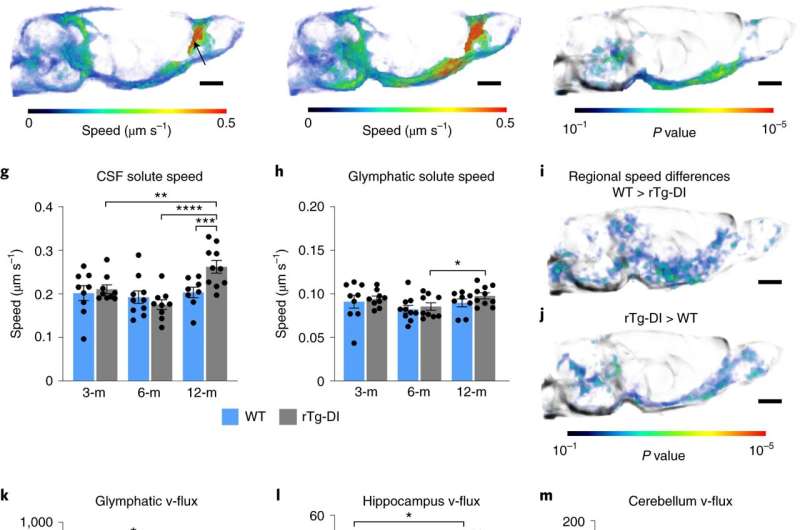
CSF flow speed becomes hyperdynamic with severe CAA. Credit: Nature Aging (2022). DOI: 10.1038/s43587-022-00181-4
A new study suggests that a contributing factor in dementia may come down to a double dose of bad waste management in the brain.
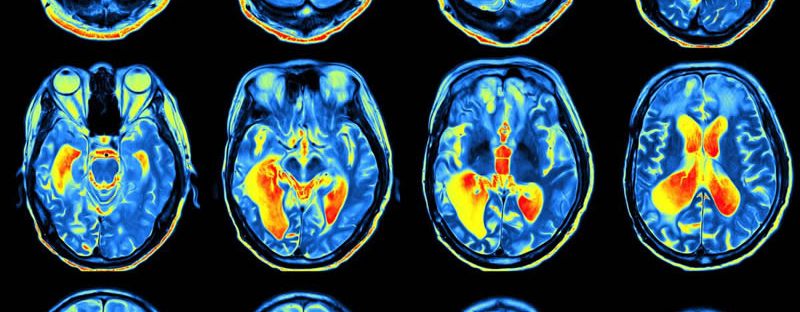
The first major study to compare brain scans of people before and after they catch Covid has revealed shrinkage and tissue damage in regions linked to smell and mental capacities months after subjects tested positive.
Researchers have discovered two types of brain cells that play a key role in dividing continuous human experience into distinct segments that can be recalled later. The discovery provides new promise as a path toward development of novel treatments for memory disorders such as dementia and Alzheimer’s disease.
Stanford Medicine researchers have linked a specific gene known to be associated with ALS with a characteristic of the disease, opening avenues for a targeted therapy.
A research group from the University of Bologna discovered the first causal evidence of the double dissociation between what we see and what we believe we see: these two different mechanisms derive from the frequency and amplitude of alpha oscillations.
A new, first-of-its-kind clinical trial will examine how the brain adapts to advanced, bionic arms in children born without a limb, with the ultimate goal of improving children’s control of their prosthetic.
People who suffer from a neurological or mental health condition are at increased risk of developing another disorder later in life. Parkinson’s disease patients are four times more likely to develop dementia, and those with mental health disorders were also at greater risk of developing dementia later in life.
Finally this week, new research shows if the circadian clock is disrupted, we might be at greater risk of retinal degeneration as we age.
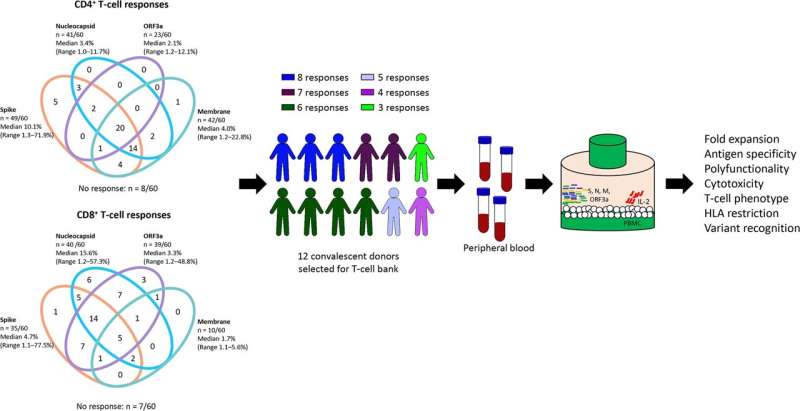
New research is providing hope to immunocompromised people who are vulnerable to COVID-19. Scientists have discovered promising evidence that T cell immunotherapy could help them to fight against multiple strains of the virus.
Treatments integrating music and auditory beat stimulation are effective in reducing state anxiety in some patients, according to a new study published in the open-access journal PLOS ONE.
The underlying molecular mechanisms that promote autoimmune diseases are multilayered and complex. Now, scientists have succeeded in deciphering new details of these processes. Their work supports the notion that excessive consumption of glucose directly promotes the pathogenic functions of certain cells of the immune system and that, conversely, a calorie-reduced diet can have a beneficial effect on immune diseases.
Teens who had an insecure attachment to their mothers as toddlers are more likely to overestimate the trustworthiness of strangers, a new study reports.
A new study reveals that oleic acid produced in the brain is an essential regulator of the process that enables learning and memory and supports proper mood regulation. The finding has paved the path to discovering potential new therapeutic strategies to counteract cognitive and mood decline in patients with neurological disorders.
A small study found people who received lithium, a drug commonly associated with the treatment of bipolar disorder, are less likely to develop dementia.
Scientists have found that people with Parkinson’s disease have a clear “genetic signature” of the disease in their memory T cells. The scientists hope that targeting these genes may open the door to new Parkinson’s treatments and diagnostics.
If you are forgetful or make mistakes when in a hurry, a new study found that meditation could help you to become less error-prone.
Older adults who take statin drugs have a lower risk of developing Parkinson’s disease or parkinsonism symptoms later in life compared to those who do not take statins. Researchers speculate this may be because statins have a neuroprotective effect on arteries in the brain.
Finally this week, researchers have developed a new, fully automated prosthetic arm that learns during normal use and adapts to varying conditions.
Ever wonder how ballet dancers can spin and spin and spin, but never seem to get dizzy? Neuroplasticity, that’s how. This short video explains how it works, and how you can use your brain in the same way.
Researchers recently carried out a large-scale analysis of the brains of patients with Alzheimer’s disease (AD). Their findings, published in Nature Neuroscience, unveiled a series of disease-related changes in protein co-expression modules, which were not identified when examining RNA networks in the same brain regions.
A new study, published in the journal PNAS, proposes how the brain stays stable despite changes in the neural code.
Cognitive decline is the biggest factor in determining how long patients with Alzheimer’s disease will live after being diagnosed, according toa new research study. The findings, published in the Journal of Alzheimer’s Disease, are a first step that could help health care providers provide reliable prediction and planning assistance for patients with Alzheimer’s disease and their families.
An increase in depressive symptoms in adolescence has been linked to ozone exposure as a result of air pollution, even in areas that meet air quality standards.
Seven in ten long COVID patients experience concentration and memory problems several months after the initial onset of their disease, with many performing worse than their peers on cognitive tests, according to new research from the University of Cambridge.
Finally this week, researchers have developed a new method for training people to be creative, one that shows promise of succeeding far better than current ways of sparking innovation.
The precision with which we perceive the real world is not stable in time, rather it rhythmically fluctuates between high precision and low precision states several times per second. These fluctuationsfollow rhythmic electrical activities in the brain. Electrical rhythms of the brain range across different frequencies, from 1 to 250 hertz.
Brain circuitry responsible for motivation and pleasure is activated when a person experiences pain. Thefindings reveal a link as to why some people may overeat when they experience chronic pain.
For the first time, neuroscientists have identified a population of neurons in the human brain that lights up when we hear singing, but not other types of music. These neurons, found in the auditory cortex, appear to respond to the specific combination of voice and music, but not to either regular speech or instrumental music. Exactly what they are doing is unknown and will require more work to uncover, the researchers say.
People exposed to more green space during the first year of the COVID-19 pandemic reported significantly less depression and anxiety, according to new research published in the journal PLOS One.
A new study links cardiorespiratory fitness in older adults to a decreased risk of developing Alzheimer’s disease. Older adults with higher levels of cardiorespiratory fitness have a 33% reduced risk for developing Alzheimer’s.
Finally this week,Nostalgia decreases activity in pain-related brain areas and decreases subjective ratings of thermal pain, according to research recently published in Journal of Neuroscience.
Researchers at Oxford University have implanted a novelclosed-loop research platform for investigating the role of the pedunculopontine nucleus (PPN)—a brainstem nucleus—in Parkinson’s-like Multiple Systems Atrophy (MSA).
Your brain remains as nimble as ever until you hit your 60s, according to a report published in the journal Nature Human Behaviour.
A team of researchers has developed a way to create a molecular map of the human blood-brain barrier. In their paper published in the journal Nature, the group describes how they created their map and what it revealed about disorders such as Alzheimer’s disease.
Brain organization differs between boys and girls with autism, according to a new study from the Stanford University School of Medicine.
Children with insomnia symptoms are likely to persist with them as young adults and are significantly more likely to develop an insomnia disorder in early adulthood compared to children who do not have difficulty sleeping, according to new research.
A specific group of fungi residing in the intestines can protect against intestinal injury and influence social behavior, according to new preclinical research.
The University of Oulu Functional Neuroimaging research group has for the first time succeeded in describing how the various types of pulsations in the human brain change when a person sleeps. Brain pulsation changes during sleep and their role in brain clearance have not been previously studied in humans. The results of the study may also help understand the mechanisms behind many brain diseases.
Finally this week, selenium, a natural mineral found in grains, meats, and nuts can reverse cognitive impairment following a stroke and improve learning and memory in the aging brain.





 inside-the-brain.com