Weekly Neuroscience Update

Music can induce a range of emotions and help us to better understand different cultures. But what is it that makes us tune in to some songs more than others? Researchers say when we listen to a song, our brains predict what happens next, and that prediction dictates whether we like that song or not.

New research has found significant changes in fathers’ brains between the prenatal and the postpartum period. The main changes occurred in cortical areas associated with visual processing, attention, and empathy toward their baby.

Objective measurement of psychiatric disorders has long proved challenging. Yet, there is ample evidence that analysis of speech patterns can accurately diagnose depression and psychosis, measure their severity, and predict their onset, according to a literature review featured in the January/February issue of the Harvard Review of Psychiatry

Alzheimer’s disease onset may be accelerated by viruses that inflame and disrupt signals from the olfactory system to the hippocampus, a new study reports.

As many as one in four patients who receive anesthesia may suffer accidental awareness during their procedure. Researchers have identified specific brain structures that may predict whether a person will experience accidental awareness under anesthesia. The findings will help identify patients who require higher-than-average doses of anesthesia.

A new study aims to investigate the interaction between the digestive and nervous systems, or the gut-brain axis, to discover more about the links between digestive health and neurodegenerative diseases.

Neuroscientists have now shown that two distinct cell populations in the striatum are affected differently by Huntington’s disease. They believe that neurodegeneration of one of these populations leads to motor impairments, while damage to the other population, located in structures called striosomes, may account for the mood disorders that are often seen in the early stages of the disease.

Finally this week, older adults with cognitive decline who have higher levels of vitamin D in their brains had better cognitive function than their peers with lower levels of vitamin D according to a new study.

The Neurobiology of Leadership

Brains, leadership and belief

In the summer of 1963, a quarter of a million people showed up at the mall in Washington D.C. to hear Dr. Martin Luther King Jr. speak.

Dr. King was not the only man in America who was a great orator.

Nor was he the only man who suffered in a pre-civil rights America.

But he had a gift.

He did not tell people what needed to change in America.

He told people what he believed; and the people who believed what he believed took his cause, made it their own, and created structures to get the word out to others such that 250,000 people showed up on the right day and at the right time to hear him speak.

Many traveled long distances to Washington for what they themselves believed about America. It was not about black versus white: 25% of the audience was white. 

Higher authority

Dr King believed that there were two types of laws in the world: those that are made by a higher authority and those that are made by men; and not until all the laws that are made by men are consistent with the laws that are made by the higher authority will we live in a just world. It just so happens that the civil-rights movement was the perfect vehicle to help him bring his cause to life. 

There are leaders, and there are those who lead

Dr King gave the ‘I have a dream’ speech, not the ‘I have a plan’ speech. We listen to politicians now with their comprehensive 12-point plans. That is not leadership and it is not inspiring anybody.

Today, there are leaders, and there are those who lead. Leaders hold a position of power or authority, but those who lead inspire us. We follow those who lead, not for them, but for ourselves.

Those who start with a belief have the ability to inspire those around them and to find others who inspire them.    

Is the brain wired for beliefs? 

Until recently, the task of applying what we know about the brain to the bigger question of personal human experience has been avoided by scientists.

However, the emergence of the new discipline of neuroscience – the scientific study of the nervous system – is helping us to bridge this gap by providing new ways to answer such old questions as why beliefs are so important to us.

One answer is that the brain is wired to make predictions about what is going to happen next based on what has happened in the past, and in some ways, predictions are like beliefs. For instance, scientists write about scientific predictions as if they are beliefs or explanations that are pre-emptively offered to anticipate and explain the world as we see it. 

Uncertainty can make you sick

Knowing that the brain is wired for prediction explains why we find uncertainty so stressful and if it persists, it can actually make us sick. In this way, religious beliefs can reduce the uncertainty of our own experiences by explaining the unexplainable. This also accounts for why those things we now explain through science were once thought of as magic or caused by a deity. 

Meaning is not innate and must be manufactured

The explanation that the brain is wired for prediction is a general explanation to understanding how we make meaning. The brain of a newborn is not just a miniature version of an adult brain. Its wiring is incomplete. What infants are doing is waiting for a set of wiring instructions from the world. In this way, the people who raised you influenced the wiring of your brain including what to believe and what is meaningful to you. 

We have one self-creating freedom 

As we mature into adulthood, we have one self-creating freedom in that we can accept or reject these instructions. In this way, a person is what he makes himself to be, and those who lead and inspire us help facilitate this process.

We follow those who lead not because we have to, but because we want to. We have to value this self-creating freedom that is enjoyed in our time.

Weekly Neuroscience Update

New research suggests that the brain of a bilingual person who knows two alphabets is different from that of a bilingual person who only knows one alphabet. The differences occur in a region called the visual word form area (VWFA).

A new study reports chronic infections of the upper gastrointestinal tract could be linked to Parkinson’s disease. Researchers say alpha synuclein, a Parkinson’s linked protein, is released during upper GI infections, inducing an immune response. Findings suggest frequent chronic infections could overwhelm the body’s ability to remove the protein, leading to the onset of Parkinson’s.

New research has found significant changes in fathers’ brains between the prenatal and the postpartum period. The main changes occurred in cortical areas associated with visual processing, attention, and empathy toward their baby.

A novel deep learning method that uses graph convolutional neural networks (gCNNs) can predict cognitive function based on the brain’s size and structure. The algorithm may provide insights into the relationship between brain morphology and different cognitive functions, as well as declines in cognitive function.

A study led by researchers at the Hospital del Mar Medical Research Institute links psychological trauma in childhood with an increased risk of developing some kind of mental disorder years later.

Music can induce a range of emotions and help us to better understand different cultures. But what is it that makes us tune in to some songs more than others? Researchers say when we listen to a song, our brains predict what happens next, and that prediction dictates whether we like that song or not.

Finally this week, a new study published by University of Oxford researchers in JMIR Pediatrics and Parenting, shows that although many school-age adolescents are spending considerable time gaming, it is not having a negative impact on their well-being.

Weekly Neuroscience Update

A new study published in the journal Molecular Psychiatry offers evidence that a simple walk through nature can lower activity in stress-related brain regions. The experiment revealed that participants who walked for an hour in a forest showed decreased amygdala activity during a stress task, while those who walked for an hour in the city did not.

A team of scientists has developed the first computer model predicting the role of cortical glial cells in cognition.

A number of studies have suggested that eating a healthy diet may reduce a person’s risk of dementia, but a new study has found that two diets, including the Mediterranean diet, are not linked to a reduced risk of dementia.

A new theory proposes there is an underlying relationship between nap transition in young children, brain development, and memory formation.

The dose of nicotine from a single cigarette blocks estrogen production in the brain, causing behavioral changes. These findings may shed new light on why quitting smoking may be more difficult for women than men.

A new study suggests quantum processes are part of cognitive and conscious brain functions.

Proteins associated with motor neuron disease, or ALS are present in the gut many years before disease pathologies can be found in the brain. A stool sample or gut biopsy could help identify the presence of MND-associated proteins years before symptoms appear.

Crossword puzzles have an edge over computerized memory games in improving memory function in older adults with mild cognitive impairment.

A team of neuroscientists has recently uncovered how the brain works to make distinctions between “right” and “wrong” sounds—research that provides a deeper understanding of how we learn complex audio-motor tasks like speaking or playing music.

A new study looks deep inside the brain, where previous learning was reactivated during sleep, resulting in improved memory.

Finally this week, a study of nearly 2,000 children found that those who reported playing video games for three hours per day or more performed better on cognitive skills tests involving impulse control and working memory compared to children who had never played video games.

Weekly Neuroscience Update

Human brain organoids showing neurons and their dendrites (green), telencephalic (forebrain) cells (blue), and a kind of cell-cell contact called tight junctions (red). By Allessandra DiCorato A single-cell analysis of 3D models of the human cerebral cortex suggests they can be used to study important brain processes that have been difficult to investigate. Credit: Noelia Anton Bolanos and Irene Faravelli

Researchers have found that human brain organoids replicate many important cellular and molecular events of the developing human cortex, the part of the brain responsible for movement, perception, and thought.

Loneliness, restless sleep, and unhappiness have a significant effect on biological aging, a new study reports.

A Brazilian study published in the journal PNAS describes some of the effects infection by SARS-CoV-2 can have on the central nervous system. A preliminary version (not yet peer-reviewed) posted in 2020 was one of the first to show that the virus that causes COVID-19 can infect brain cells, especially astrocytes. It also broke new ground by describing alterations in the structure of the cortex, the most neuron-rich brain region, even in cases of mild COVID-19.

New research reveals how changes in pupil size affect the way we perceive our surroundings.

Human Brain Project (HBP) researchers have identified a new marker for predicting the clinical outcome of patients with Amyotrophic Lateral Sclerosis (ALS) through magnetoencephalography. This marker can be measured in the brain during its resting state and highlights the importance of brain flexibility for ALS patients.

A new theory of consciousness suggests decisions are made unconsciously, then about half a second later, they become conscious.

Strenuous cognitive work leads to an accumulation of glutamate in the prefrontal cortex, according to new research published in the journal Current Biology. The new findings suggest that mental fatigue is a neuropsychological mechanism that helps to avert the build-up of potentially toxic byproducts of prolonged cognitive activity.

A research team has identified a specific cell group in the brain responsible for shifts in the sleep-wake rhythm caused by psychostimulants.

Amid much speculation and research about how our genetics affect the way we age, new research shows that individual differences in our DNA matter less as we get older and become prone to diseases of aging, such as diabetes and cancer.

Finally, this week, listening to birdsong reduces anxiety and paranoia, a new study reports.

Using Your Brain To Improve Your Own Mental Health #WorldMentalHealthDay

The key to a happy life

The key to a happy life is the ability to transcend personal suffering, find a balance, and recognise that the world has problems. This requires mental effort and those of us who strive to better understand ourselves in the world come out the other side as a new person, with some peace of mind and a way to live.

Fundamental or accidental?

A limit to understanding ourselves in the world is the fact that we do not know that some of the things we perceive to be truly fundamental today may actually be just accidental. For instance, the brain uses systematic patterns of thought to produce philosophy including science, mathematics, literature, ideas, and beliefs including a belief in a deity to guide us towards new insights. What we need to understand is that none of these may be fundamental in themselves. They are just tools that our ancestors used to probe the unknown and to see what is possible – knowing that what is common for us is just a tiny sliver of what actually exists.

Accidental fundamentalism is often mistaken for truth

In the West, we have made the truth our highest value. This motivation while important is weak compared to the actual power of belief. We are born into a culture that often insists on a particular religious or ideological philosophy as fact and the only way to understand ourselves in the world, but adhering to this belief may cause personal suffering by impeding insights necessary to achieve peace of mind. Resisting enculturation is the highest expression of human psychological development and is a hallmark of what is called in psychology the fully self-actualised person.

Recasting reality

Self-actualisers reject accepted cultural ‘truths’ and see beyond the confines of an era to achieve a clearer perception of reality. A further subtle difference sets these people apart. Most of us see life as striving to get this or that – whether it be material things or having a family or doing well career-wise. Self-actualizers in contrast do not strive as much as develop. They are only ambitious to the extent of being able to express themselves more fully and perfectly, delighting in what they are able to do. Another general point is their profound freedom of mind. In contrast to the conforming pressures around them, self-actualizers are a walking example of free will.

Mental health requires courage

In this way, happiness can be described as personal autonomy. The independence of mind to explore and choose the best skills and tools needed to achieve personal insight. Where you are no longer beholden to culture, creed, or religion and without any attendant guilt or fear in abandoning old ways in order to try new ones as you evolve to become the master of your own fate.

What to believe?

Mental health is two things:(i) being in touch with reality and (ii) being open to new experiences. But here’s the thing – there is no reality only perception. Understand that the world is not necessarily as you perceive it. Everyone has filters and only by acknowledging them can you begin to get a clearer picture. Even in a close relationship, the same simple act can be viewed differently. A man will see paying all the bills as his duty while his wife will see it as an act of love. Appreciate that your views might be prejudices. Most importantly make sure that the perceptions you do retain or adopt are grounded in verifiable facts and can be tested. Otherwise, any actions you take based on your beliefs will be on shaky ground.

Weekly Neuroscience Update

Exercise can improve your cognitive and mental health — but not all forms and intensities of exercise affect the brain equally. The effects of exercise are much more nuanced, as specific intensities of exercise over a long period of time are associated with different aspects of memory and mental health, according to a new study.

A research team has shown for the first time that non-invasive stimulation of the vagus nerve at the ear can strengthen the communication between stomach and brain within minutes.

A mutation in a newly discovered small protein is connected to a significant increase in the risk for Alzheimer’s disease, expanding the known gene targets for the disease and presenting a new potential avenue for treatment, according to a new study.

A new report highlights the advances and challenges in prevention, clinical care, and research in traumatic brain injury, a leading cause of injury-related death and disability worldwide.

Neurons in an area of the brain responsible for memory (known as the entorhinal cortex) are significantly larger in SuperAgers compared to cognitively average peers, individuals with early-stage Alzheimer’s disease, and even individuals 20 to 30 years younger than SuperAgers — who are aged 80 years and older, reports a new study.

Children who were infected with COVID-19 show a substantially higher risk of developing type 1 diabetes (T1D), according to new research.

Researchers have discovered a biological mechanism that increases the strength with which fear memories are stored in the brain. The study provides new knowledge on the mechanisms behind anxiety-related disorders, and identifies shared mechanisms behind anxiety and alcohol dependence.

Finally this week, a new study demonstrates how an AI algorithm can estimate biological age with high accuracy based on brain scan images.

Inside The Addicted Brain

Addiction is now understood to be a brain disease. Whether it’s alcohol, prescription pain pills, nicotine, gambling, or something else, overcoming an addiction isn’t as simple as just stopping or exercising greater control over impulses.

That’s because addiction develops when the pleasure circuits in the brain get overwhelmed, in a way that can become chronic and sometimes even permanent. This is what’s at play when you hear about reward “systems” or “pathways” and the role of dopamine when it comes to addiction.

But what does any of that really mean?

This video explainer from Yale Medicine shows how addiction takes hold of the brain.

Weekly Neuroscience Update

Researchers have presented new findings which found after one session of aerobic exercise people showed reduced cravings for alcohol, lower levels of stress, and improvements in mood.

When our eyes move during REM sleep, we’re gazing at things in the dream world our brains have created, according to a new study. The findings shed light not only into how we dream, but also into how our imaginations work.

Measuring how the eyes’ pupils change in response to light—known as the pupillary light reflex—could potentially be used to screen for autism in young children, according to a new study.

Researchers have made an important discovery about the way our brains process the sensations of sound and touch. They found that sensory systems in the brain are closely interconnected, with regions that respond to touch also involved when we listen to specific sounds connected to touching certain objects.

A study into the effect of surprise on our memory has inadvertently discovered a method that might help us to perform better in exams.

Scientists have uncovered how dopamine connects subregions of the striatum essential for habit formation, findings that may change the overall understanding of how habits are formed—and could be broken.

New research finds the brains of people playing online video games synchronize, even when there is a physical distance between the players.

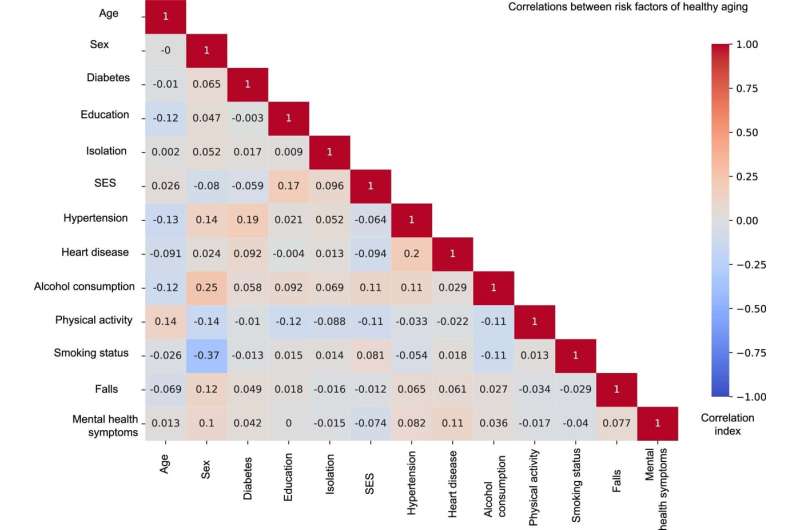
By estimating people’s brain age from MRI scans using machine learning, a team of researchers has identified multiple risk factors for a prematurely aging brain. They found that worse cardiovascular health at age 36 predicted a higher brain age later in life, while men also tended to have older brains than women of the same age, as they report in The Lancet Healthy Longevity.

Young people with 22q11.2 Deletion Syndrome have distinct and marked EEG differences in brain activity during sleep, which could influence psychiatric symptoms.

Tight control of blood sugar in teens with Type 1 diabetes may help reduce the disease’s damaging effects on the brain, effects which have been shown even in younger children, according to a study published in Nature Communications.

Tests of the brain’s electrical activity have revealed fentanyl’s effects over time and indicated that the drug stops people’s breathing before other noticeable changes and before they lose consciousness.

A newly developed artificial intelligence model can detect Parkinson’s disease by reading a person’s breathing patterns. The algorithm can also discern the severity of Parkinson’s disease and track progression over time.

A new study reveals how a molecule produced by astrocytes interferes with normal neuron development in a range of neurodevelopmental disorders.

People with an obsessive urge to constantly check the news are more likely to suffer from stress, anxiety, as well as physical ill health, finds a new study published in the peer-reviewed journal Health Communication.

Finally this week, the impact of breathing diesel exhaust fumes may be more severe for females than males, according to new research.

Weekly Neuroscience Update

For the first time, a team of international scientists has studied the development of the main immune cell population residing in the human brain, called microglia, on human tissue.

Scientists have uncovered a molecular pathway that distills threatening sights, sounds and smells into a single message: Be afraid. A molecule called CGRP enables neurons in two separate areas of the brain to bundle threatening sensory cues into a unified signal, tag it as negative and convey it to the amygdala, which translates the signal into fear. The research, published in Cell Reports on August 16, 2022, may lead to new therapies for fear-related disorders such as post-traumatic stress disorder (PTSD) or hypersensitivity disorders such as autism, migraines and fibromyalgia.

Researchers have identified a new type of retinal ganglion cell, the neurons in the retina that encode the visual environment and transmit information back to the brain.

Children who sleep less than 9 hours per night have significant differences in brain regions associated with memory, intelligence, and well-being compared to their peers who sleep 9 or more hours per night. Less sleep in children was also associated with increased risks of depression, anxiety, and impulsive behaviors.

A new study finds that Alzheimer’s disease disrupts at least one form of visual memory by degrading a newly identified circuit that connects the vision processing centers of each brain hemisphere.

Leisure activities, such as reading a book, doing yoga and spending time with family and friends may help lower the risk of dementia, according to a new meta-analysis published in the August 10, 2022, online issue of Neurology.

Finally this week, a novel study reports the dynamics of consciousness may be understood by a newly developed conceptual and mathematical framework.