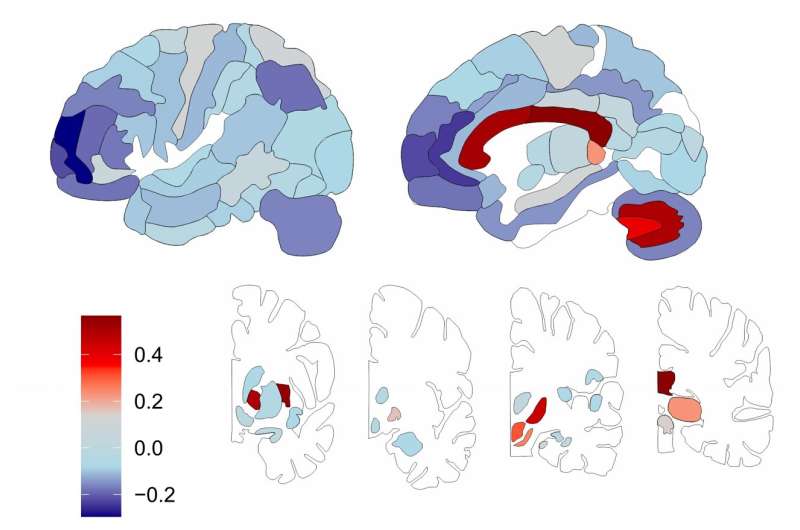
Neuroscience has always faced the monumental task of understanding the complexities of the human brain. A recent study has made significant progress in unraveling these complexities, focusing on the chemical neuromodulators dopamine and serotonin, and their roles in decision-making during social interactions.
The Study
The study involved Parkinson’s disease patients who were awake during brain surgery. These patients participated in the “ultimatum game,” a scenario that tests human decision-making in the face of varying monetary offers from both computers and humans. The findings revealed a fascinating insight: people are more inclined to accept unfair offers from computers than from human counterparts. This suggests a unique aspect of human social behavior, closely linked to the interaction between dopamine and serotonin in the brain.
Dopamine and Serotonin: The Dynamic Duo
Researchers found that dopamine levels fluctuate based on the comparison of current offers to previous ones, acting as a continuous tracking system. Meanwhile, serotonin focuses on the current offer’s value. This interaction becomes particularly pronounced in social settings, where the concept of fairness influences dopamine levels, indicating a higher value placed on human interactions over those with computers.
Technological Advancements
The use of advanced carbon-fiber electrodes allowed researchers to measure multiple neurotransmitters simultaneously, enabling the differentiation between dopamine and serotonin dynamics. This provides a clearer picture of how these chemicals influence decision-making in social contexts.
Implications of the Research
Parkinson’s Disease: For patients with Parkinson’s disease, this study opens new pathways to understanding the disease’s progression and its impact on social behavior. The interaction between dopamine and serotonin, especially in the context of Parkinson’s, could lead to better treatment options.
Psychiatry: This research has broader implications for the field of psychiatry and the treatment of psychiatric conditions. By adding precision and quantification to our understanding of neurotransmitter dynamics, the study paves the way for developing more effective treatments.
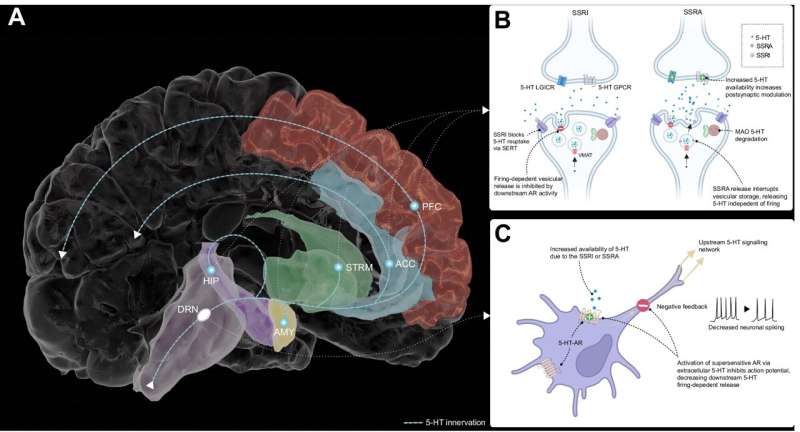
Selective serotonin releasing agent is not negated by 5-HT1A supersensitivity, resulting in a rapid onset of pro-serotonergic activity. Credit: Nature Communications (2024).
Increasing serotonin can change how people learn from negative information, as well as improving how they respond to it, according to a new study published in the journal Nature Communications.
A recent review outlines the genetic complexity of schizophrenia, highlighting nearly 300 common genetic variants and over 20 rare variants linked to the disorder. Researchers emphasize that schizophrenia’s genetic basis is multifaceted, involving multiple genes rather than a single cause. Environmental factors like lifestyle and stress also play crucial roles.
Researchers have conducted a study examining the impact of alcohol on the electrical conductivity of the brain, highlighting its sedative effects.
New research indicates that 20% of children with an older sibling diagnosed with autism are also likely to be diagnosed with autism spectrum disorder (ASD), with this rate increasing to 36% when there are multiple siblings with ASD.
An international team of researchers has investigated the neural mechanisms underlying imitative behavior: a phenomenon that facilitates interaction and social cohesion and allows people to engage spontaneously with others. The study—published in Proceedings of the National Academy of Sciences (PNAS)—has uncovered new insights into how the brain regulates this behavior, opening up new perspectives for clinical and therapeutic applications.
Advanced MRI scans, particularly diffusion tensor imaging (DTI), have shown promise in predicting which concussion patients are at risk for long-term symptoms.
A significant breakthrough in the understanding of sleep mechanism opens new promise for treating sleep disorders and associated neuropsychiatric conditions: Scientists have pinpointed the melatonin receptor MT1 as a crucial regulator of REM (Rapid Eye Movement) sleep.
Innovative new research has revealed that the activity of different versions of genes expressed in the brain is associated with the accumulation of the protein tau, which is a hallmark of Alzheimer’s disease.
Finally this week, western classical music can significantly affect brain activity, particularly in people with treatment-resistant depression. By measuring brainwaves and neural imaging, scientists discovered that music synchronizes neural oscillations between brain regions associated with sensory and emotional processing, enhancing mood.
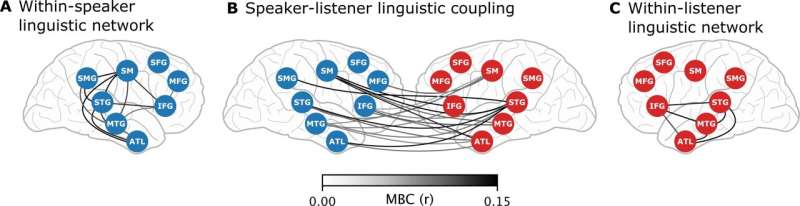
Coupling between speaker and listener brains. Credit: Neuron / Zada et al.
When two individuals interact, their brain activities tend to synchronize. Previously, it was uncertain how much of this “brain-to-brain coupling” resulted from linguistic information versus other factors like body language or tone of voice. However, researchers reported in the journal Neuron that this coupling during conversation could be modeled by considering the words used and the context of their use.
Worsening air quality and temperature extremes are linked to increased stroke burden, according to a new study.
A team of scientists has pinpointed how different areas of the neuron age differently, with a potential knock-on effect on healthy cell function and the development of neurodegenerative conditions. The paper is publishedin the journal Aging Cell.
The inflammatory activity in the body caused by rheumatoid arthritis is linked to specific cognitive impairments, finds a small comparative study.
An interdisciplinary team of scientists has found changes in the strength of neural pathways in an area of the brain involved in reward processing and movement coordination when someone has Parkinson’s disease.
New research links diets rich in vitamins and minerals, with low added sugar, to younger biological age.
For patients with major depressive disorder (MDD), seizure duration of 60 to 69 seconds induced by electroconvulsive therapy (ECT) is associated with the highest remission rates compared with seizure duration of less than 20 seconds, according to a study published in JAMA Network Open.
A new study reveals that the part of the brain that receives and processes visual information in sighted people develops a unique connectivity pattern in people born blind.
New research finds that specialized MRI scans can detect early brain changes that indicate a higher risk for Alzheimer’s disease (AD) before significant cognitive decline occurs. Researchers discovered that cortical microstructural changes in the brain closely resemble patterns seen in AD pathology.
A new report highlights that addressing 14 modifiable risk factors from childhood could prevent or delay nearly half of dementia cases. The study identifies high LDL cholesterol and untreated vision loss as new significant risks.
Researchers have developed a computer model that mimics how the hippocampus stores new episodic memories without erasing old ones. The findings reveal insights into how the brain organizes personal experiences and maintains stability despite constant updates. The model shows promise for enhancing our understanding of memory retention and cognitive processing.
This short video explores the impact of regular aerobic exercises like running on increasing brain volume and enhancing memory and cognitive functions. It also examines the effects of consistent physical activity on improving sleep quality, which directly benefits brain health and performance. Furthermore, it reveals how exercise acts as a potent tool for stress reduction by boosting the production of key brain chemicals that help manage stress and induce feelings of happiness. Valuable insights are provided for both fitness enthusiasts and those interested in brain health.
Mapping network connectivity to cycles of seizure likelihood. Credit: Nature Medicine (2024)
A team of epilepsy specialists has developed a method to forecast the risk of a seizure within 24 hours. The researchers demonstrated that the surge of brain activity indicative of a seizure is preceded by unusual communication among certain brain regions. By examining a mere 90 seconds of these atypical brain signals, the researchers were able to predict the likelihood of a seizure.
A significant discovery by Australian scientists has the potential to improve the effectiveness of drugs currently used to manage cognitive decline in patients with Alzheimer’s disease.
A new study reveals that quick learners of motor skills have distinct brain activity patterns. Using brain-monitoring electrodes, they found that visual processing plays a crucial role in learning new movements. Fast learners showed higher activity in brain regions linked to visual information and muscle movement planning. These findings highlight the importance of vision in acquiring motor skills and its implications for older adults.
Star-shaped glial cells, so-called astrocytes, are more than just a supporting cell of the brain. They are actively involved in learning processes and interact with nerve cells. Now scientists are using a biophysical model to clarify how astrocytes interact with nerve cells to regulate rapid adaptation to new information. The results of the study have now been publishedin Communications Biology.
New research shows that inflammation outside the brain, such as that caused by common infections such as colds and urine infections, is linked to the progression of multiple sclerosis (MS).
Recent advances in the study of proteomes (i.e., the entire range of proteins expressed by human cells and tissues) have opened new opportunities for identifying the biological markers of specific diseases or mental disorders. This could in turn inform the prevention, diagnosis and treatment of these medical conditions.
A new experimental cancer drug could ease cognitive difficulties for those with Rett syndrome, a rare autism-linked disorder, by enhancing brain cell functions.
An MIT study published in Nature provides new evidence for how specific cells and circuits become vulnerable in Alzheimer’s disease, and hones in on other factors that may help some people show resilience to cognitive decline, even amid clear signs of disease pathology.
A new study demonstrates how the external representation of physiological signals (interoception) can affect our perception of them and teach us how to improve them in order to balance the body in stressful situations, for example. The study was recently publishedin the journal Scientific Reports.
A new study proposes a novel approach to studying consciousness through behavioural observations and learning curves, highlighting that learning often occurs in sudden leaps, suggesting these “eureka moments” are preceded by conscious cognitive processes.
Finally this week, there is a potential connection between a diagnosis of certain gastrointestinal (GI) syndromes and the formation and rupture of intracranial (brain) aneurysms according to new research.
On this World Brain Day, let’s explore 10 evidence-based strategies to enhance memory, sharpen cognitive abilities, and promote long-term brain health. Empower yourself with the knowledge to optimize your cognitive potential and thrive in both personal and professional life.
1. Engage in Regular Exercise
Physical activity not only benefits your body but also stimulates brain health. Regular exercise increases blood flow to the brain, promotes the release of essential neurotransmitters, and encourages the growth of new brain cells. Aim for at least 150 minutes of moderate-intensity aerobic activity per week, along with strength training exercises.
2. Adopt a Balanced Diet What you eat directly affects your brain’s health. A diet rich in fruits, vegetables, whole grains, lean proteins, and healthy fats provides essential nutrients for optimal brain function. Include foods like fatty fish (rich in omega-3 fatty acids), nuts, seeds, and dark leafy greens to support cognitive health.
3. Stay Mentally Active Just as physical exercise benefits the body, engaging in mentally stimulating activities exercises the brain. Reading, solving puzzles, playing board games, learning new skills or languages, and engaging in creative endeavors all help keep your brain sharp by forming new neural connections.
4. Get Sufficient Sleep Quality sleep is crucial for brain health and cognitive performance. During deep sleep, the brain clears out toxins and consolidates memories. Aim for 7-9 hours of uninterrupted sleep per night to allow your brain to recharge and rejuvenate.
5. Socialize Regularly Social interactions stimulate the brain and reduce the risk of cognitive decline. Engaging in conversations, spending time with friends and family, and participating in group activities can positively impact brain health and emotional well-being.
6. Manage Stress Chronic stress can have detrimental effects on brain health, leading to memory issues and cognitive impairment. Practice stress-reduction techniques such as meditation, mindfulness, yoga, or deep breathing exercises to keep your brain sharp and calm.
7. Stay Hydrated Dehydration can affect cognitive function, causing headaches, fatigue, and difficulty concentrating. Drink an adequate amount of water throughout the day to support optimal brain performance.
8. Challenge Your Brain Regularly challenge your brain with new and complex tasks. Engage in activities that push you out of your comfort zone, such as learning a musical instrument, trying out a new hobby, or taking up a new sport. Embracing novelty and pushing your mental boundaries will help keep your brain agile.
9. Limit Alcohol and Avoid Smoking Excessive alcohol consumption and smoking can harm brain cells and negatively impact cognitive function. Moderation or avoidance of these substances is crucial for maintaining a sharp mind.
10. Prioritize Mental Health Taking care of your mental health is essential for overall brain health. Seek professional help if you experience symptoms of depression, anxiety, or any other mental health concerns. Mental well-being is the foundation for a sharp and focused mind.
A healthy brain is a thriving brain. Prioritize your physical, mental, and emotional well-being to keep your mind sharp and agile. Regular exercise, nutritious food, mental challenges, restful sleep, and positive habits all play a vital role in enhancing cognitive function and maintaining brain health throughout life. Remember, it’s never too late to invest in your brain’s well-being, and even small changes today can lead to significant benefits in the years to come.
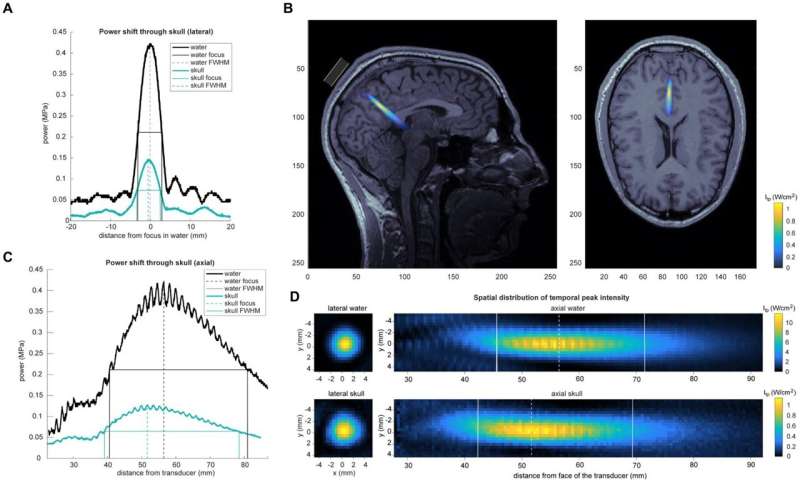
In a new studypublished in Frontiers in Human Neuroscience, researchers used low-intensity ultrasound technology to noninvasively alter a brain region associated with activities such as daydreaming, recalling memories and envisioning the future. They found that the technique can ultimately enhance mindfulness, marking a major advancement in the field of neuroscience.
New research finds that semaglutide, known as Ozempic/Wegovy, does not negatively impact brain health and may reduce cognitive problems and nicotine dependence.
Exposure to parental smoking (ParS) is associated with an increased risk for multiple sclerosis (MS) in later life in certain populations, according to a study presented at EAN 2024, the 10th Congress of the European Academy of Neurology, held from June 29 to July 2 in Helsinki.
Researchers have identified a new mutation in the ARPP21 gene linked to ALS. This discovery could improve ALS diagnosis and open avenues for personalized therapies.
A new approach to improving uncertainty estimates in machine-learning models enhances prediction accuracy. The method uses the minimum description length principle to provide more reliable confidence measures for AI decisions, which is crucial in high-stakes settings like healthcare.
A recent study suggests that consciousness evolved not for individual survival, but for social purposes, helping humans communicate ideas and emotions.
Researchers have discovered a neural activity pattern that can accurately predict and monitor the clinical status of OCD patients undergoing deep brain stimulation (DBS). This study highlights how this biomarker can guide DBS therapy, improving treatment outcomes for those with severe, treatment-resistant OCD.
A new study has found how the protein CGRP affects the brain’s lymphatic system, contributing to migraine pain. Their study reveals that CGRP prevents cerebrospinal fluid from draining, influencing migraine attacks.
Research published in Science Advancesshows neurobiological underpinnings of sex and gender in children to better understand how sex (assigned at birth) and gender (identity and expression) influence the brain, and ultimately a person’s health.
A new study shows that by age three, children can understand others’ intentions using active mirror neurons.
For the first time, scientists have found that sleep can be detected by patterns of neuronal activity just milliseconds long, 1,000 times shorter than a second, revealing a new way to study and understand the basic brain wave patterns that govern consciousness. They also show that small regions of the brain can momentarily “flicker” awake while the rest of the brain remains asleep, and vice versa from wake to sleep.
A neuroimaging study of young people who exhibit a persistent pattern of disruptive, aggressive, and antisocial behavior, known as conduct disorder, has revealed extensive changes in brain structure.
Retired rugby players who have suffered multiple concussions have higher levels of certain proteins in their blood, which may make them more prone to developing diseases such as motor neuron disease (MND), according to a new study.
Researchers have used machine learning to define three subtypes of Parkinson’s disease based on the pace at which the disease progresses.
A new study reveals that psilocybin, the active compound in magic mushrooms, temporarily disrupts brain networks involved in introspective thinking, like daydreaming and memory. These changes persist for weeks, potentially making the brain more flexible and improving mental health. The findings could pave the way for psilocybin-based therapies for depression and PTSD. The research underscores the importance of using these drugs under medical supervision.
A recent study links sleep preferences to brain performance, finding that “night owls” often score higher on cognitive tests than “morning larks.” Researchers analyzed data from over 26,000 people, highlighting that sleeping 7-9 hours a night optimizes brain function.
Distribution of cholesterol in the human brain. Credit: Maria Osetrova
Scientists have found that 93% of the lipids in brain tissue are distributed differently in the white and gray matter, the subcortex, the visual and motor cortices, and the prefrontal cortex, which is responsible for decision-making, social behavior, and other functions.
Researchers have shown how glial cells are reprogrammed into neurons via epigenetic modifications.
Young adults who have higher levels of inflammation, which is associated with obesity, physical inactivity, chronic illness, stress and smoking, may experience reduced cognitive function in midlife, a new study has found.
A new study finds that higher inflammation in young adulthood is associated with reduced cognitive function in midlife. Inflammation due to factors like obesity and smoking can impact memory and processing speed. This link, previously noted in older adults, now extends to early adulthood, suggesting long-term brain health effects. Reducing inflammation through lifestyle changes may help prevent cognitive decline.
Researchers have discovered why migraines are often one-sided, revealing that proteins released during aura are carried to pain-signaling nerves via cerebrospinal fluid.
A recent study has pinpointed brain regions associated with mood fluctuations and pleasure responses in bipolar disorder. The findings revealed that people with bipolar disorder show heightened activity in the ventral striatum during rewards, explaining extreme mood shifts.
In groundbreaking research, scientists have determined the structure of molecules within a human brain affected by Alzheimer’s disease.
A global research team has discovered a gene whose variants potentially cause neurodevelopmental disorders (NDDs) in hundreds of thousands of people across the world. The findings publishedin Nature, are an exciting first step towards the development of future treatments for the disorders which have devastating impacts on learning, behavior, speech, and movement.
A longitudinal study has found that high-intensity interval exercise improves brain function in older adults for up to five years.
A new research collaboration has harnessed a powerful machine learning model to predict concussion status in patients.
A new study shows that human biases in handedness and visual field processing have social and cognitive implications. Researchers found that people with a reversed bias (left hand, right visual) are more likely to have social difficulties and conditions like autism or ADHD.
A recent study sheds light on how the brain adapts hearing in different listening situations.
Finally this week, a study investigating the effect of sleep on brain performance has found a link between an individual’s preference for morning or evening activity and their brain function, suggesting that self-declared “night owls” generally tend to have higher cognitive scores.
A large team of neuroscientists, biochemists and Alzheimer’s specialists affiliated with institutions in the U.S. and Iceland has created a protein map to look for patterns in cerebrospinal fluid that may serve as markers for the onset of Alzheimer’s disease decades before diagnosis.
How much trust should we put in our memories? New research shows we have a good awareness of when we are recalling events accurately—and when our brain is filling in gaps with general knowledge.
Researchers at the Perron Institute and The University of Western Australia have discovered a new set of cells that can protect blood vessel structure in the central nervous system (CNS) known as the blood-brain barrier. Their findings have been published in the journal Science Advances.
As temperatures rise, so do chances for migraine attacks, according to a new study.
Researchers have discovered how the brain prioritizes immediate and distant goals. Their study found that the hippocampus processes urgent goals faster and differently than future goals. This insight could help understand psychiatric disorders like depression, which affect goal-setting abilities. The findings reveal crucial differences in brain activity and behavior related to goal prioritization.
A new study has found multiple doses of anesthetics do not compromise brain function in young children. The research paper was published in The Lancet Respiratory Medicine.
A new slow-release ketamine tablet has shown potential in treating severe depression, offering a convenient and safe at-home alternative to existing treatments. In a randomized-controlled trial, patients on the highest dose of ketamine saw significant reductions in depression symptoms compared to placebo.
A pilot study shows promise for a new treatment option for individuals with memory impairments caused by multiple sclerosis (MS).
A new study reveals that mindfulness helps improve sleep quality and reduce stress by focusing on the present and minimizing negative thoughts. The study tracked 144 nurses over two weeks, highlighting how mindfulness influences emotion regulation and overall well-being.
Finally this week, scientists have identified a gene which, when missing or impaired, can cause obesity, behavioural problems and, in mothers, postnatal depression.
Temporally removed goals activated the left anterior hippocampus and current goals activated the left posterior hippocampus. a Activation maps for the contrasts comparing the remote (distant future + near future + distant past + near past) > current are overlaid in yellow. b Activation maps for the contrasts comparing the current > remote are overlaid in green. c Activation for the temporally removed goals (yellow) and the current goals (green) shown concurrently on the brain. d The same goal, for instance fixing the space helmet, was anatomically dissociated along the longitudinal axis based on whether it was currently relevant, or relevant at a point removed in time. The left hippocampal region of interest (ROI) is displayed in white. Credit: Nature Communications (2024).
How does our brain distinguish between urgent and less urgent goals? Researchers have explored how our brain remembers and adjusts the goals we set for ourselves on a daily basis.
Ever heard just a snippet of a song and instantly known what comes next? Or picked up the rhythm of a chorus after just a few notes? New researchhas uncovered what happens in our brain when we recognize and predict musical sequences.
A new study provides the first anatomical, functional representation of the ocular surface in the central nervous system.
In a small study, researchers have discovered how a set of genes could cause neurons to die in sporadic amyotrophic lateral sclerosis (ALS). The results, published inNature Aging, provide insight into the root causes of ALS and may lead to new ways to halt disease progression.
New research shows that the brains of sighted and blind people adapt in a similar way when they learn to use sound echoes to understand the world without vision.
People with type 2 diabetes who are treated with GLP-1 agonists, like Ozempic have a decreased risk of developing dementia, according to a new study from Karolinska Institutet published in the journal eClinicalMedicine.
A class of drugs already on the market to lower blood pressure appears to reduce adults’ risk of developing epilepsy, a team of researchers has discovered.
In a recent study, a Yale-led research team described for the first time a rare neurodevelopmental syndrome that begins affecting patients during infancy and typically causes developmental delays, severe seizures, cardiac dysrhythmia, and recurring infection.
Not all patients with depression respond to medication. Two recently published studies provide additional information on how an alternative treatment, transcranial magnetic stimulation (TMS), could be further enhanced. TMS differs from electroconvulsive therapy (ECT), which is also used to treat depression.
New research provides insights into the brain regions involved in paranoia.
A new study reveals variations of the visual saltation illusion, where rapid light flashes in peripheral vision create perceptual errors. The study shows that our brains misplace the second flash near the midpoint, regardless of its actual position. This finding challenges our understanding of visual processing and questions the reliability of eyewitness testimony. The research opens doors for further studies on visual perception and attention.
Researchers worldwide can now create highly realistic brain cortical organoids—essentially miniature artificial brains with functioning neural networks—thanks to a newly released proprietary protocol.
A new study reveals that a balanced ratio of neural excitation (E) and inhibition (I) is crucial for brain development and cognitive performance. Researchers found that lower E/I ratios in children correlate with better memory and intelligence. This balance is vital for preventing brain disorders and was measured using a novel AI and MRI technique. The findings could inform personalized treatments for mental health conditions.
Tau positron emission tomography (PET) has the best performance as a standalone marker for prediction of progression of mild cognitive impairment (MCI) to dementia, according to a study published online in JAMA Neurology.
Murdoch University’s Center for Healthy Aging is identifying new interventions to treat resting tremor in people with Parkinson’s disease.
New research reveals that sildenafil (Viagra) enhances brain blood flow and improves blood vessel function in patients at risk of vascular dementia. This study marks a significant advancement in addressing this condition.
Finally, this week, do our brains process natural voices and deepfake voices differently? Research conducted at the University of Zurich indicates that this is the case.