Weekly Neuroscience Update

New research shows that moderate physical activity was linked to increased volume in brain areas associated with memory, especially in older adults.

The biological changes that occur as a result of aging could be a mechanism behind why older adults with depression do not have a full resolution of symptoms following taking antidepressants. The persistence of depressive symptoms becomes a source of depleted psychological well-being, increased disability, accelerated cognitive decline, and premature aging in older adults.

Researchers have identified a pathway that begins in the gut and ends with a pro-inflammatory protein in the brain that appears to contribute to the development of Alzheimer’s disease.

A new study looks at the brains of black women who reported having experiences with racial discrimination. The goal of the study was to determine whether racial discrimination could affect the brain. After doing MRI scans on the women’s brains, the researchers found changes in their white matter.

The smell of fresh cut grass or blooming flowers appears to have a positive effect on a person’s overall well-being, a new study reveals.

A new study proposes a new learning method for people with autism that may accelerate the learning process and even significantly improve capabilities in terms of visual perception. According to the researchers, improving the perceptual capacity of people with autism is often a challenge, which usually requires long and tedious training alongside additional learning challenges that characterizes autism, such as the ability to generalize learning to new situations.

The unique features of an individual adolescent’s brain can help predict their risks of developing mental health problems later in life.

The effects of COVID-19 infection on neurological health are becoming more apparent. A new study reveals COVID-19 can predispose people to irreversible neurological conditions, accelerate brain aging, and increase the risk of stroke and brain bleeds.

Finally this week, researchers have found that transcranial brain stimulation can improve the age-related impairment in learning new motor skills.

Weekly Neuroscience Update

A new study explores the use of music-listening to relieve acute pain, finding that people who were given the impression that they had control over the music they heard experienced more pain relief than people who were not given such control.

Better diagnosis and treatment of the incurable eye disease age-related macular degeneration is a step closer, thanks to the discovery of new genetic signatures of the disease.

Research continues to demonstrate the many ways the gut microbiome can influence human health, and an active area within this field centres on its role in Alzheimer’s disease. A new study has furthered our knowledge of this relationship by demonstrating what’s described as a clear genetic link between the two, while also pointing to the potential for new treatments.

Neuroscientists have confirmed that the exact same network is activated in speakers of 45 different languages representing 12 distinct language families.   

Pollution is widely known to be a risk to individual’s physical health, but can it have adverse effects on mental health as well? A study published in Developmental Psychology suggests that exposure to ozone can be a risk factor for depression in adolescents.

Researchers have developed a comprehensive “toolbox” to establish that the mobility of receptors exists in intact brain tissue, and this mobility is critical for certain types of memory.

People challenged with chronic back pain have been given hope with a new treatment that focuses on retraining how the back and the brain communicate, a randomised controlled trial run by researchers at UNSW Sydney and Neuroscience Research Australia (NeuRA) and several other Australian and European universities has shown.

A group of hippocampal neurons show rhythmic activity at different frequencies in the desynchronized state, but can align their rhythmic frequency to produce a synchronized brain rhythm upon activation.

A new hypothesis suggests when people are awake during the biological circadian night there are neurophysiological changes in the brain that alters the way in which we interact with the world, especially when it comes to impulse control, information processing, and reward processing.

Finally this week, you’re fast asleep. But some regions of your brain tasked with hearing sound aren’t taking the night off, according to new research.

Weekly Neuroscience Update

Credit: Science Advances (2022). DOI: 10.1126/sciadv.abo0171

New evidence that suggests the SARS-CoV-2 virus is able to enter the brain by using nose cells to make nanotube tunnels is published in the journal Science Advances.

Exploring the predictive properties of neuronal metabolism can contribute to our understanding of how humans learn and remember. This key finding from a consideration of molecular mechanisms of learning and memory conducted by scientists from Russia and the U.S. has been published in Neuroscience & Biobehavioral Reviews

Older adults who suffer from hypothyroidism are at increased risk of developing dementia. The risk is even higher in those who require thyroid hormone replacement therapy to treat their condition.

Researchers have shown that the computational imaging technique, known as “ghost imaging”, can be combined with human vision to reconstruct the image of objects hidden from view by analyzing how the brain processes barely visible reflections on a wall.

Scientists have discovered that an injury to one part of the brain changes the connections between nerve cells across the entire brain. 

Researchers have discovered the molecule in the brain responsible for associating good or bad feelings with a memory. Their discovery, published in Nature paves the way for a better understanding of why some people are more likely to retain negative emotions than positive ones—as can occur with anxiety, depression or post-traumatic stress disorder (PTSD).

New research has revealed some of the first detailed molecular clues associated with one of the leading causes of death and disability, a condition known as traumatic brain injury (TBI).

Pollution is widely known to be a risk to individual’s physical health, but can it have adverse effects on mental health as well? A study published in Developmental Psychology suggests that exposure to ozone can be a risk factor for depression in adolescents.

Finally this week, you’re fast asleep. But some regions of your brain tasked with hearing sound aren’t taking the night off, according to new research.

Weekly Neuroscience Update

While depression is a common problem for people who have had a stroke, some people may have symptoms of depression years before their stroke, according to a study published in Neurology.

New research shows visual scanpaths during memory retrieval tasks were associated with the quality of the memory. Researchers say the replay of a sequence of eye movements helps boost memory reconstruction.

A new neuroimaging study reveals every person has unique brain anatomy. The uniqueness is a result of a combination of genetic factors and life experiences, researchers report.

Adolescents are over three times more vulnerable to developing a cannabis addiction than adults, but may not be at increased risk of other mental health problems related to the drug, finds a new study led by UCL and King’s College London researchers.

Researchers have developed a chop stick-like device that uses a weak electrical current to stimulate the tongue and enhance the taste of salt. The device could help to reduce dietary sodium intake by up to 30%.

Socially anxious women exhibit heightened oxytocin reactivity to psychosocial stress, according to new research published in Psychoneuroendocrinology. The study provides evidence that the hormone plays a role in physiological reactions to socially stressful situations.

Delayed circadian rhythms and sleep disruptions may be a cause of teen depression, rather than a symptom that develops as a result of the mental health disorder.

Health researchers have contributed to an international study published in Nature Neuroscience that sheds light on the mechanism by which anti-anxiety drugs act on the brain which could lead to cognitive impairment in vulnerable individuals.

A new machine-learning algorithm is able to accurately detect cognitive impairment by analyzing voice recordings.

Protein buildups like those seen around neurons in Alzheimer’s, Parkinson’s and other brain diseases occur in all aging cells, a new study suggests. Learning their significance may reveal new strategies for treating age-related diseases.

Finally, this week, having positive social interactions is associated with older adults’ sense of purposefulness, which can fluctuate from day to day, according to recent research.

Weekly Neuroscience Update

Intriguing new research has pinpointed a special population of T cells—tissue-resident memory T cells—as key players in the development of chronic autoimmune disorders that affect the central nervous system, opening a new window of understanding into conditions such as multiple sclerosis and many others.

New research shows emotional regulation was linked to theta wave activity in the frontal cortex of the brain.

Researchers have recently carried out a study investigating the relationship between age and the functional coupling between specific neural networks in the brain. Their paper, published in Psychology and Aging, shows that the connectivity between certain brain regions can predict people’s chronological age with a high level of accuracy.

Men who experience behavior changes including apathy or having false beliefs and perceptions in later life are at risk of faster cognitive decline than women, according to new research. 

A new study shows that children younger than their classmates within a school year are more likely to be treated for Attention Deficit Hyperactivity Disorder (ADHD), suggesting immaturity may influence diagnosis.

Finally this week, researchers have identified a novel gene called MGMT that appears to increase Alzheimer’s disease risk in women.

Weekly Neuroscience Update

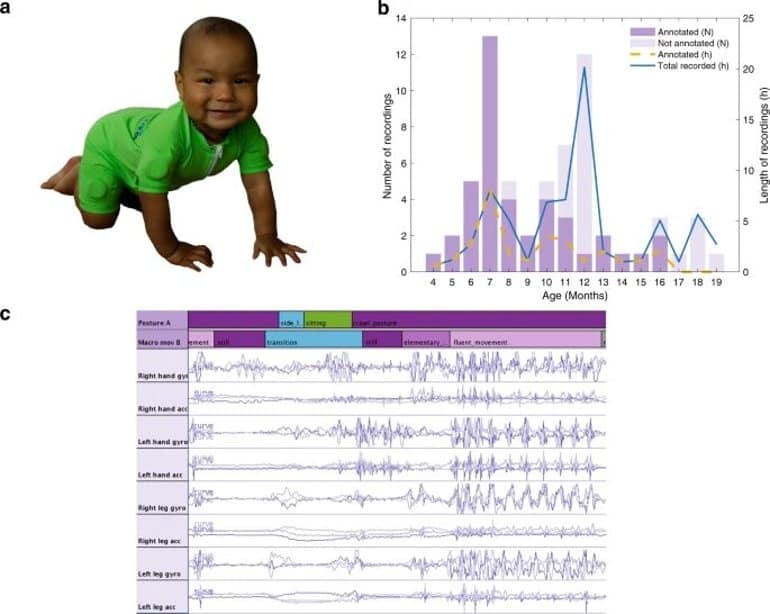
A newly designed baby jumpsuit that monitors motor development carries the possibility for assessing overall neurodevelopment in infants. It is now commonly accepted that the motor development of a young child is not independent of all other neurocognitive development. The strong innate drive of the child to move has emerged from a clear need: the child must move a lot to gain experience and learn from the surrounding environment. It is now commonly accepted that the motor development of a young child is not independent of all other neurocognitive development. The strong innate drive of the child to move has emerged from a clear need: the child must move a lot to gain experience and learn from the surrounding environment.

A new brain mapping study finds damage to one part of the brain changes connections between neurons across the entire brain.

A recent study, published in Neurology, shows that social isolation is linked to changes in brain structure and cognition – the mental process of acquiring knowledge – it even carries an increased risk of dementia in older adults.

Measuring the electrical activity of the retina in response to light stimulus could be a biomarker for ADHD and autism, researchers report.

A large international team of researchers has found 69 unique genetic variants linked to the ability to keep time to a beat. In their paper published in the journal Nature Human Behavior, the group describes their genetic study involving more than 600,000 volunteers.

Researchers have identified the exertion level where aerosol particle emission increases exponentially, offering an explanation as to why exercise intensity may be linked to the transmission of infections.

New research reports girls and boys show similar rates of concern for autism spectrum disorder and identifies several biases contributing to the inflated sex ratio for autism diagnosis. The findings could help with the early identification of girls on the autism spectrum.

Finally this week a new study has identified potential targets to develop a therapy that could prevent Alzheimer’s disease.

Weekly Neuroscience Update

Measuring changes in the activity of neurons in a cortical area while perturbing the activity in another area. Credit: Sainsbury Wellcome Centre

Researchers have discovered how two neocortical areas in the brain communicate with one another and found that their influence on each other changes over much faster timescales than previously thought.

Neuroscientists using MRI scans discovered that psychopathic people have a 10% larger striatum, a cluster of neurons in the subcortical basal ganglia of the forebrain, than regular people. This represents a clear biological distinction between psychopaths and non-psychopathic people.

Glycan, a special sugar protein, appears to play a significant role in the development of Alzheimer’s disease.

Genetic studies have offered clues, identifying genes associated with Autism Spectrum Disorder, but despite finding many pieces to the puzzle, scientists have not yet figured out how they all fit together, and why there is such wide variation in ASD symptoms. Now an international team of scientists report significant progress in understanding how the combined effects of rare mutations and common genetic variation determine whether a child will develop ASD.

Researchers identify the exertion level where aerosol particle emission increases exponentially, offering an explanation as to why exercise intensity may be linked to the transmission of infections.

The dopaminergic system appears to play an important but overlooked role in LSD’s effects on consciousness, according to new research published in the journal Psychopharmacology. The findings provide new insight into the neurophysiological mechanisms responsible for the unique effects of psychedelic drugs.

Finally this week, a new study has identified potential targets to develop a therapy that could prevent Alzheimer’s disease.

Weekly Neuroscience Update

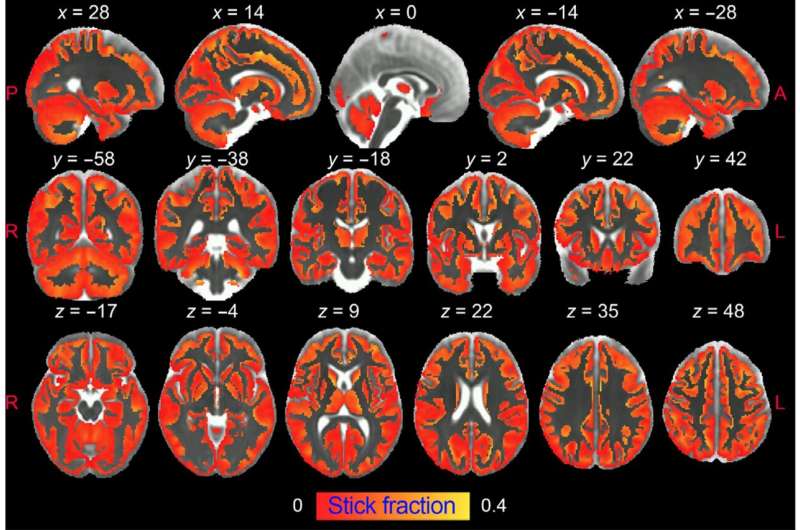
Researchers from the UMH-CSIC Neurosciences Institute have developed an innovative strategy that allows imaging of microglial and astrocyte activation in the gray matter of the brain using diffusion-weighted magnetic resonance imaging (dw-MRI). Credit: IN-CSIC-UMH

Research has made it possible to visualize for the first time and in great detail brain inflammation using diffusion-weighted Magnetic Resonance Imaging. This detailed “X-ray” of inflammation cannot be obtained with conventional MRI, but requires data acquisition sequences and special mathematical models. Once the method was developed, the researchers were able to quantify the alterations in the morphology of the different cell populations involved in the inflammatory process in the brain.

A new study conducted at 38 schools in Barcelona suggests that traffic noise at schools has a detrimental effect on the development of working memory and attention in primary-school students.

People who can frequently recall their dreams tend to be more creative and exhibit increased functional connectivity in a key brain network, according to new research published in the journal Nature and Science of Sleep. The findings provide new insights into the neurophysiological correlates of dreaming.

Researchers have identified elevated levels of a biomarker in the blood that persists for months in long COVID patients who experience neuropsychiatric symptoms.

Plenty of people claim they can’t function without their morning coffee, but is there a neurological basis to it? A study published in Scientific Reports suggests that coffee does have beneficial effects on cognitive function, and it may do this by reorganizing brain functional connectivity.

Low exposure to gonadal hormones during early gestation and infancy predicts higher recalled childhood gender nonconformity in men, according to new research.

Researchers at Carnegie Mellon University have explored the regions of the brain where concrete and abstract concepts materialize. A new study now explores if people who grow up in different cultures and speak different languages form these concepts in the same regions of the brain.

Finally this week, new research will explore how psilocybin affects specific brain pathways in autistic adults and is the first-ever mechanistic study of psilocybin in autistic adults.

Weekly Neuroscience Update

The return of consciousness after traumatic brain injury (TBI) remains something of a mystery for scientists and is not easy to predict. A series of recently published studies have found that by using technologies to monitor brain functions after TBI, scientists may be able to better predict who will “wake up” after TBI and what brain circuits to target to potentially treat disorders of consciousness.

According to a new report, both genetics and environmental factors contribute to socioeconomic status’ impact in an interplay with effects that spans several areas of the brain.

An immersive virtual-reality anger control training program can reduce the level of anger provoked, according to a new study published in the peer-reviewed journal Cyberpsychology, Behavior, and Social Networking. 

A new study examines the influence of statins on emotional bias, a marker for risk of depression.

Researchers at Karolinska Institutet in Sweden have studied how the screen habits of U.S. children correlate with how their cognitive abilities develop over time. They found that the children who spent an above-average time playing video games increased their intelligence more than the average, while TV watching or social media had neither a positive nor a negative effect.

Finally this week, a new study reveals the mechanisms behind repetitive transcranial magnetic stimulation’s effect on the brain in the treatment of depression.

Weekly Neuroscience Update

Can people who understand the emotions of others better interpret emotions conveyed through music? A new study by an international team of researchers suggests the abilities are linked. People who are more accurate at reading another person’s emotions are better able to understand what a musician is trying to convey through their compositions. Additionally, those with higher empathetic accuracy are better able to feel the emotions conveyed through music.

A team of researchers affiliated with several institutions in the U.S. has identified a subtype of brain cells that die in Parkinson’s patients.

Elevated levels of PHGDH in the blood could signal the earliest stages of Alzheimer’s disease. Researchers caution older adults against using “brain-boosting” supplements that contain serine due to its link to PHGDH. As PHGDH is a key enzyme in serine production, elevated PHGDH levels result in increased serine levels in the brain.

A new study examines the role of a brain area called the anterior superior temporal sulcus (aSTS) in forgiving those who make unintentional mistakes.

Using artificial intelligence technology, researchers have identified both risk and protective factors for depression in middle-aged to older adults. Social isolation, the study found, was the biggest risk factor for depression, followed by mobility difficulties and health issues.

Could there be a link between cognitive decline and excessive daytime napping? New research published in Alzheimer’s and Dementia suggests a potential connection.

Stimulating the vagus nerve, which provides a direct link between the gut and brain, makes people pay less attention to sad facial expressions according to new research published in the journal Neuroscience.

A new study reveals a mechanism that appears to reverse the build-up of protein aggregates by refolding them, rather than removing them.

Researchers found idiopathic autism occurs as the result of epigenetic abnormalities in hematopoietic cells during fetal development, leading to immune dysregulation in the brain and gut.

A specific Parkinson’s related gene could be a driver behind vocal production problems associated with the disease. The findings could lead to earlier diagnosis and treatment of Parkinson’s disease.

Finally this week by scanning the brains of 24 people actively suppressing a particular memory, researchers found a neural circuit that detects, inhibits, and eventually erodes intrusive memories.