Weekly Neuroscience Update

(A) Brain regions where spectra were measured (yellow box) (B) 1H MR spectrum in the hippocampus: Hippocampal taurine signal shown at 3.4 ppm (arrow). Black line: actual measured spectrum. Red line: LCModel fitting spectrum. Credit: Korea Basic Science Institute (KBSI)

For the first time, a research team in Korea has discovered there is a significant relationship between depression and the taurine concentration in the hippocampus, an area of the brain responsible for memory and learning functions. This discovery provides the opportunity to publicize the role and importance of taurine in future prevention, diagnosis, and treatment of depression.

A recent study reveals that individuals who experienced childhood adversity, such as neglect or abuse, faced higher chances of COVID-19 hospitalization or mortality in adulthood.

Time spent watching television or playing computer games has measurable and long-term effects on children’s brain function, according to a review of 23 years of neuroimaging research, which—while showing negative impacts—also demonstrates some positive effects.

A first-of-its-kind study has identified overactive inflammation and loss of critical protection mechanisms in the brain as potential contributors to suicide risk.

An international team of scientists has uncovered the vital role of microglia, the immune cells in the brain that acts as its dedicated defense team, in early human brain development. By incorporating microglia into lab-grown brain organoids, scientists were able mimic the complex environment within the developing human brain to understand how microglia influence brain cell growth and development.

A novel study finds a link between childhood physical fitness and cerebellar grey matter volume in adolescents.

Mayo Clinic researchers have identified new scoring criteria allowing for the detection of treatable forms of rapidly progressive dementia (RPD) with reasonably high confidence during a patient’s first clinical visit. This scoring criteria may allow physicians to substantially reduce the time it takes to begin treatment. The findings are published in the Annals of Neurology.

A new sudy has identified the top three genes responsible for traumatic brain injury complications.

Researchers have made a discovery that sheds light on how our brain cells manage to efficiently replace older proteins. This process is crucial for maintaining effective neural communication and ensuring optimal cognitive function.

A pair of studies has uncovered novel cellular mechanisms that are involved in two types of genetic amyotrophic lateral sclerosis, or ALS.

In a study published in the Journal of Neuroscience Research, psychological assessments indicated that people who regularly use cannabis, or marijuana, tend to have a greater understanding of the emotions of others. Brain imaging tests also revealed that cannabis users’ anterior cingulate—a region generally affected by cannabis use and related to empathy—had stronger connectivity with brain regions related to sensing the emotional states of others within one’s own body.

Finally this week, researchers have unearthed the genetic connection between the heart and brain related to fainting spells.

Weekly Neuroscience Update

Credit: Nature Mental Health (2023)

Researchers have identified important new methods for accurately identifying possible biomarkers in adolescent brains that can reliably predict cognitive developments and psychiatric issues.

A new study has examined the neural processes underlying odor processing in the human olfactory system and how the brain handles odor information from different nostrils and details the finding that each nostril has its own sense of smell, recording a distinct representation of the odor information it encounters.

A groundbreaking discovery suggests that dendrites could be pivotal in learning processes and may even influence our understanding of brain states and degenerative diseases.

A new study reveals the brain’s swift response to human errors compared to unintended outcomes. The study found that the brain recognizes an error within one second and then engages in a longer process to prevent future errors. This process was absent when the outcome wasn’t a direct result of an action, indicating a specialized error-awareness mechanism in the brain.

Researchers have identified new therapeutic targets for progressive supranuclear palsy (PSP), an incurable brain disorder with symptoms mimicking Parkinson’s and dementia.

A speech prosthetic developed by a collaborative team of neuroscientists, neurosurgeons, and engineers can translate a person’s brain signals into what they’re trying to say. The new technology might one day help people unable to talk due to neurological disorders regain the ability to communicate through a brain-computer interface.

It’s been debated for decades, but now researchers have suggested that left-handedness is not linked to better spatial skills.

A new study sheds light on when adolescents start thinking like adults. Researchers found that executive function, critical for task-switching and focus, typically matures around 18 years old. Drawing from over 10,000 participants and multiple datasets, this large-scale study offers a developmental chart for teen cognitive growth. These findings are invaluable for education, psychiatry, and the judicial system.

Emerging research underscores the profound connection between mental health and heart disease, with depression and anxiety hastening the onset of cardiovascular risk factors.

Researchers have discovered a potential link between the microbe C. perfringens and the progression of multiple sclerosis (MS). The study hints at the prospect of developing a vaccine or alternative treatments in the near future.

In a new study, researchers use a very large dataset to identify predictive brain imaging-based biomarkers of mental illness in adolescents.

Using advanced brain scanning technology, a research team has revealed insights into what happens in the brain during an advanced form of meditation called jhana. By uncovering distinct patterns of activity in different regions of the brain during jhana, the research suggests exciting possibilities for innovative therapies merging ancient meditation practices with modern neuroscience to improve well-being.

Finally this week, new research suggests your biological age, more than the years you’ve lived, may predict your risk of dementia and stroke in the future.

Weekly Neuroscience Update

A new study unveils the existence of traveling waves of the neurochemical acetylcholine in the striatum, a region of the brain responsible for motivating actions and habitual behaviors.

Researchers have conducted a study aimed at better understanding the patterns in neural network communication associated with ‘bad’ decisions made while gambling. Their paper, published in Frontiers in Neuroscience, shows that different types of ‘bad’ decisions made while gambling, namely avoidant and approach decisions, are associated with distinct neural communication patterns.

What determines how a teenager’s brain is structured and how it evolves? Researchers have established a close link between brain activity and a maturation process called cortical thinning.

Researchers have found COVID-19 does not appear to cause direct brain damage or viral invasion. In blood or cerebrospinal fluid samples, no abnormal biomarkers were found. The findings thus suggest that post-COVID condition is not the result of ongoing infection, immune activation, or brain damage.

A recent study finds differences in functional brain connectivity in people with and without psychosis and schizophrenia that could help researchers understand the neural underpinnings of this disease.

Brain health in people over age 50 deteriorated more rapidly during the pandemic, even if they didn’t have COVID-19, according to major new research linking the pandemic to sustained cognitive decline. The cognitive decline seems to have been exacerbated by several factors during the pandemic, including an increase in loneliness and depression, a decrease in exercise, and higher alcohol consumption.

Prenatal lead exposure is associated with an increased risk for cognitive developmental delay in children, according to a new study.

Children who are too short for their age can suffer reduced cognitive ability arising from differences in brain function as early as six months of age, according to new research. Stunted growth had previously been linked with poor cognitive outcomes later in life, but this is the first time that this association has been found in infancy. It is also the first time stunted growth has been linked to functional differences in how the brain works in early development.

Finally this week, researchers have developed a new method for mapping how the parts of the brain “speak” to each other, critical to understanding behavior changes in patients with neurological disease.

Weekly Neuroscience Update

An international team of researchers has published a digital atlas showing how the normative maturation of the fetal brain occurs between 14 – 31 weeks’ gestation, a critical developmental period.

New findings suggest that measuring changes in how pupils react to light could help predict recovery from depression and personalize transcranial magnetic stimulation (TMS) treatment of major depressive disorder.

A new study has found the influence of language on human thinking could be stronger than previously assumed. 

Scientists at Imperial College London are leading the development and testing of a new method of stimulating the brain, which could provide an alternative treatment for brain diseases such as Alzheimer’s, and its associated memory loss.

Researchers report neural signaling during online exchanges is considerably reduced compared to face-to-face conversation.

Two different regions of the brain are critical to integrating semantic information while reading, which could shed more light on why people with aphasia have difficulty with semantics, according to new research.

Finally this week, researchers in Canada have examined what type of music helps to dampen pain perception.

Weekly Neuroscience Update

Study summary graphic. Credit: Mount Sinai Health System

A team of researchers has created the first “multiome” atlas of brain cell development in the human cerebral cortex across six broad developmental time points from fetal development into adulthood, shedding new light on their roles during brain development and disease.

A new study links rhythmic oscillations in ovarian hormone levels in women during the menstrual cycle to changes in brain structure.

Researchers at Monash University have identified a new way of mapping ‘phosphenes’—the visual perception of the bright flashes we see when no light is entering the eye—to improve the outcome of surgery for patients receiving a cortical visual prosthesis (‘bionic eye’).

newly published atlas offers the most detailed maps yet of the location, structure, and, in some cases, function of more than 3,000 types of brain cells.

Researchers have analyzed more than a million human brain cells to produce detailed maps of gene switches in brain cell types and revealed the links between specific types of cells and various common neuropsychiatric disorders.

A new study shows that teenagers with OCD experience deficits in decision-making and behavioral control. This is linked to abnormal activity in an area of the brain called the orbitofrontal cortex (OFC).

Severe inflammation in early childhood is a clinically known risk factor for developing autism and schizophrenia. Now, for the first time, scientists have discovered that inflammation alters the development of vulnerable brain cells, and this could have mechanistic links to neurodevelopmental disorders. This finding could lead to treatments for many different childhood-onset neurodevelopmental disorders.

Scientists have discovered widespread differences in metal levels in the brains of patients with Huntington’s disease, a type of dementia, compared to a control group with healthy tissue.

In two parallel projects, researchers have been involved in creating the most comprehensive atlases of human brain cells to date. The two studies provide clues on different brain diseases and give hope for medical advancements in the future, such as new cancer drugs.

In a suite of new studies, a large consortium of researchers shares new knowledge about the cells that make up our brains and the brains of other primates.

The brains of people who reduce their drinking, as well as of people who quit drinking entirely, have greater volume in certain regions than people who drink more heavily, according to a new study of adults treated for alcohol use disorder. 

Sleeping patterns and stress hormones could be the key to understanding how and when people with epilepsy are likely to experience seizures, a new study reveals.

New research has found molecular evidence highlighting important sex differences in the brains of people with major depressive disorder, with evidence of changes occurring specifically in the female brain, but not in males.

Finally this week, new research has found that MRI scans can reveal the parts of the brain that are involved in responding to fatty foods.

Weekly Neuroscience Update

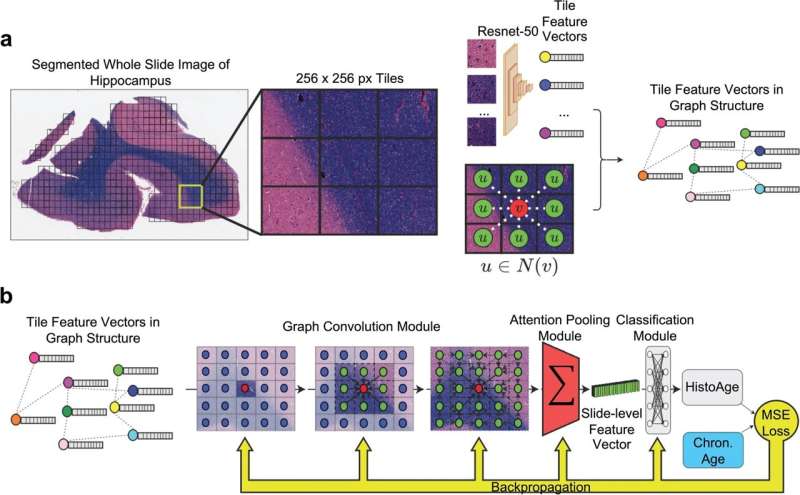
Schematic of preprocessing and model training

Researchers have, for the first time ever, used AI to develop an algorithm they term “HistoAge” which predicts age at death based on the cellular composition of human brain tissue specimens with an average accuracy of within 5.45 years. This powerful tool can also identify neuroanatomical regions vulnerable to age-related changes, an indicator of potential cognitive diseases.

Scientists have uncovered why night shift work is associated with changes in appetite. The findings could help the millions of people who work through the night and struggle with weight gain.

The brain circuitry disrupted in Alzheimer’s disease appears to influence memory through a type of brain wave known as theta oscillation, a team of researchers report. The findings, published in Nature Communications, could help researchers design and evaluate new treatments for Alzheimer’s, a condition that affects millions of people around the globe and has no cure.

A new study suggests that a healthy heart may help prevent Alzheimer’s—and this gives hope for new treatments.

Researchers have shown the potential of a new gene therapy approach to silence human sensory neurons (nerve cells) as a means of treating persistent pain. Many current drugs for chronic pain are highly addictive, which makes it important to discover new alternatives.

Scientists have developed new tools, based on AI language models, that can characterize subtle signatures in the speech of patients diagnosed with schizophrenia.

Can plant-derived nutrients alter gut bacteria to affect brain function? A team of scientists investigated this question in a study of overweight adults. Their findings, published in the journal Gut, suggest that dietary fiber can exert influence on both the composition of gut bacteria and the reward signals in the brain and associated food decision-making.

New guidance has been issued for clinicians on the determination of brain death, also known as death by neurologic criteria

Researchers have shown it is possible to detect tell-tale signs of Parkinson’s disease 20–30 years before symptoms appear. Their work opens the door to screening programs and preventative treatments long before irreversible damage is done.

Finally this week, there is evidence that some form of conscious experience is present by birth, and perhaps even in late pregnancy, an international team of researchers has found.

Weekly Neuroscience Update

Credit: Psychological Bulletin (2023)

A new study has provided the first clear picture of where language processes are located in the brain. The findings may be useful in clinical trials involving language recovery after brain injury.

Researchers have developed a model for studying one type of familial epilepsy, opening the door to understanding—and eventually targeting—the mechanisms that lead to the disorder and its associated fatalities.

A new study published in Nature Medicine sheds light on how biological sex influences brain function and its impact on the risk of various brain-related diseases.

A breakthrough technique developed by University of Oxford researchers could one day provide tailored repairs for those who suffer brain injuries. The researchers have demonstrated for the first time that neural cells can be 3D-printed to mimic the architecture of the cerebral cortex.

A research team has identified new potential treatments for children with rare genetic conditions of blood vessels, which cause severe, symptoms like seizures and impaired development.

Scientists have discovered new insights into how our brain stores episodic memories—a type of long-term, conscious memory of a previous experience—that could be critical to the development of new neuroprosthetic devices to help patients with memory problems, like Alzheimer’s disease and dementia.

A global blood test for concussion could be a step closer after a new study discovered specific proteins or biomarkers that can help diagnose concussions relatively quickly and accurately.

The brain circuitry that is disrupted in Alzheimer’s disease appears to influence memory through a type of brain wave known as theta oscillation, a team led by UT Southwestern Medical Center researchers report. The findings, published in Nature Communications, could help researchers design and evaluate new treatments for Alzheimer’s, a condition that affects millions of people around the globe and has no cure.

Finally this week, a new study reveals the role of vascular system cells—pericytes—in the formation of long-term memories of life events—memories that are lost in diseases such as Alzheimer’s disease. 

Weekly Neuroscience Update

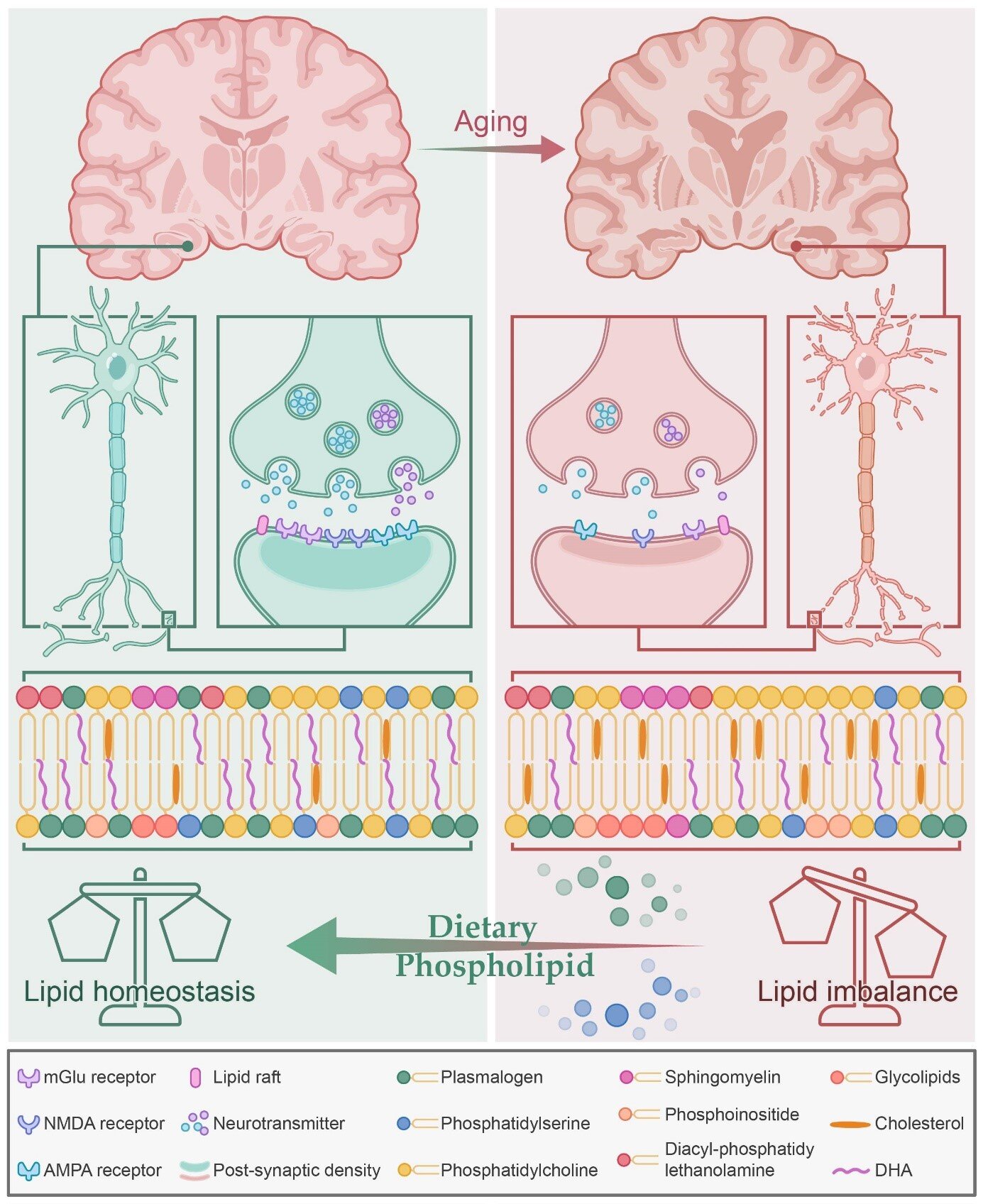
Dietary phospholipid intervention could prevent brain aging by maintaining lipid homeostasis and enhancing synaptic plasticity. Credit: Wei Xiong et al.

A new review highlights the significant role of dietary lipids in preventing brain aging and cognitive decline. As the global burden of aging-related brain diseases, particularly dementia, continues to rise, this research offers promising insights into potential nutritional interventions that could improve brain function during aging.

Cerebrospinal fluid (CSF) leaks may be one of the mechanisms that link traumatic brain injury (TBI) with dementia, according to a new hypothesis.

Short-term exposure to air pollution may be linked to an increased risk of stroke, according to a meta-analysis published in Neurology. Short-term exposure was defined as occurring within five days of the stroke.

People with a higher cumulative estrogen exposure throughout their life may have a lower risk of cerebral small vessel disease, according to a new study.

New research is painting a clearer picture of the early signs of multiple sclerosis (MS), showing that people are nearly twice as likely to experience mental illness in the years leading up to the onset of the disease.

Increased TV/DVD screen time at 1 and 2 years of age negatively affects developmental performance at 2 and 3 years of age, according to a study published in JAMA Pediatrics.

Whether you are an early bird or a night owl, your internal clock plays a critical role in maximizing your mental performance, according to a recent study. This effect is so strong that it can significantly impact academic performance for adolescent students and the results of brain health assessments for older adults.

Researchers are using ultra-high field 7 Tesla MRI to provide a better understanding of how sleep is regulated.

A new study suggests a common brain network exists among people with substance use disorder. By evaluating data from across more than 144 studies of addiction, the team found abnormalities across substance use disorders mapped to a common brain network across substances and lesion locations, suggesting a potential brain circuit to target with neurostimulation therapies.

Finally this week, people differ significantly in their memory performance and researchers have now discovered that certain brain signals are related to these differences.

Weekly Neuroscience Update

A new study sheds light on the neural underpinning of subjective odor perceptions.

New research has found that cognitive behavioral therapy (CBT) can significantly reduce the burden of fibromyalgia in part by reducing pain-catastrophizing, a negative cognitive and emotional response that can intensify pain through feelings of helplessness, rumination and intrusive thoughts. This finding is backed by neuroimaging data, evidencing reduced connectivity between regions of the brain associated with self-awareness, pain and emotional processing.

Researchers have discovered how an active form of a gene present in 75% of the human population works to protect the brain against neurodegeneration.

A recent study provides new insight into the relationship between the release of the neurotransmitter dopamine and decision-making processes. The scientists found that when dopamine is released, decisions are made faster, but tend to be more inaccurate.

A new study recently published in JAMA Neurology provides insights into the complex and intricate relationship of contact sports and the risk of dementia.

A team of leading clinicians, engineers, and neuroscientists has made a groundbreaking discovery in the field of treatment-resistant depression. By analyzing the brain activity of patients undergoing deep brain stimulation (DBS), a promising therapy involving implanted electrodes that stimulate the brain, the researchers identified a unique pattern in brain activity that reflects the recovery process in patients with treatment-resistant depression.

Scientists have revealed how the effects of psychosis spread throughout the brain.

Researchers have identified new regions of the brain crucial to the formation of long-term memory, challenging the conventional notion that the hippocampus is central to memory consolidation, by demonstrating that a different set of brain networks play a role.

Finally this week, scientists have revealed the molecular structure of a type of receptor that’s crucial to brain development and function.

Weekly Neuroscience Update

Single-trial dynamics in LIP and SC are different. (Neuron, 2023)

A new paper, published in Neuron, highlights the role of the superior colliculus (SC), a structure in the midbrain, in terminating decisions.

Degeneration of dopaminergic neurons is widely accepted as the first event that leads to Parkinson’s, but a new study suggests that a dysfunction in the neuron’s synapses—the tiny gap across which a neuron can send an impulse to another neuron—leads to deficits in dopamine and precedes the neurodegeneration.

Depression, a challenging condition to diagnose early, may now be detected more promptly using a simple 1-minute Electroencephalogram (EEG) test at home.

Scientists have confirmed that human brains are naturally wired to perform advanced calculations, much like a high-powered computer, to make sense of the world through a process known as Bayesian inference.

New research shows how repeated traumatic brain injury contributes to Alzheimer’s disease.

Racial disparities can be seen in dementia severity, functional impairment, and neuropsychiatric symptoms among patients with frontotemporal dementia (FTD), according to a study recently published in JAMA Neurology.

A new study identifies a potential new approach to PTSD treatment.

Any head injury—even a mild one—raises a person’s risk of later having an ischemic stroke. Having multiple injuries increases that risk, even more so than the severity of a single traumatic brain injury, researchers have found.

New research finds that cerebrospinal fluid net flow is markedly decreased in Huntington’s disease, with the decrease being greater in the later stages of the disease.

The targeted use of ultrasound technology can bring about significant changes in brain function that could pave the way towards treatment of conditions such as depression, addiction, or anxiety, a new study suggests.

Finally this week, new research finds that antidepressants may actually reduce negative memories in individuals suffering from depression while improving overall memory function.