A little light relief on Day 4 of #BrainAwarenessWeek. For John Cleese fans, a “serious” discussion on the organization of the brain and its functions to human health.
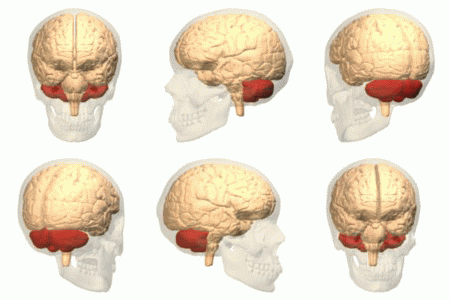
A little light relief on Day 4 of #BrainAwarenessWeek. For John Cleese fans, a “serious” discussion on the organization of the brain and its functions to human health.
How do brain cells communicate with one another to produce thoughts, feelings, and behavior?
They signal to one another using a process called neurotransmission.
But the transmission of these important chemical messages could not occur without unique cellular structures called receptors (a molecule in cells that serves as a docking station for another molecule).
Neurotransmission begins when one brain cell releases a neurochemical into the synapse (the space in between neurons.) But for a neighboring cell to “pick up” the message, that neurochemical must bind with one of its receptors.
When an electrical signal reaches the end of a neuron, it triggers the release of tiny sacs that had been inside the cells. Called vesicles, the sacs hold chemical messengers such as dopamine or serotonin.
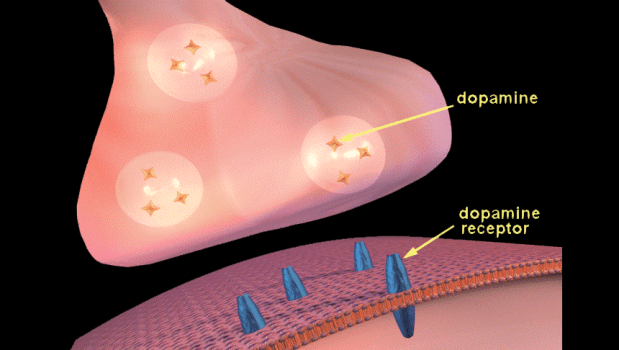
This drawing shows a synapse — the space between two cells. The chemical messenger dopamine is inside the top cell. Receptors on the bottom cell are waiting to receive it.
NATIONAL INSTITUTE ON DRUG ABUSE
As it moves through a nerve cell, an electrical signal will stimulate these sacs. Then, the vesicles move to — and merge with — their cell’s outer membrane. From there, they spill their chemicals into the synapse.
Those freed neurotransmitters then float across the gap and over to a neighboring cell. That new cell has receptors pointing toward the synapse. These receptors contain pockets, where the neurotransmitter needs to fit.
It’s a bit like a game of catch. The first cell releases the neurochemical into the synapse and the receiving cell must catch it before it can read it and respond. The receptor is the
part of the cell that does the catching.
Signals for all of our sensations — including touch, sight and hearing — are relayed this way. So are the nerve signals that control movements, thoughts and emotions.
Each cell-to-cell relay in the brain takes less than a millionth of a second. And that relay will repeat for as far as a message needs to travel.
In recent years, researchers have learned that receptors are just as important as neurotransmitters in maintaining a healthy brain. In fact, studies have demonstrated that receptors play an important role in mood, learning, and social bonds. Receptors also mediate structural plasticity or remodeling of brain circuits that may result in changes to the number and type of synapses.
This short video discusses synaptic transmission in a simple and clear way.
Adapted from Dana Alliance for Brain Initiatives
To mark Brain Awareness Week, a global campaign to increase public awareness of the progress and benefits of brain research, which runs from 11-17 March 2019, I will be posting a series of articles on the nature of the brain.
Your brain is a multilayered web of billions of nerve cells arranged in patterns that coordinate thought, emotion, behaviour, movement and sensation.
A complicated highway system of nerves connects your brain to the rest of your body so communication can occur in split seconds. Think about how fast you pull your hand back from a hot stove.
The outermost layer, the cerebral cortex (the “gray matter” of the brain), is a fraction of an inch thick but contains 70 percent of all neurons. Deep folds and wrinkles in the brain increase the surface area of the gray matter, so more information can be processed.
Your brain’s hemispheres are divided into four lobes.

The cerebrum is divided into two halves (hemispheres) by a deep fissure. The hemispheres communicate with each other through a thick tract of nerves, called the corpus callosum, at the base of the fissure. In fact, messages to and from one side of the body are usually handled by the opposite side of the brain.
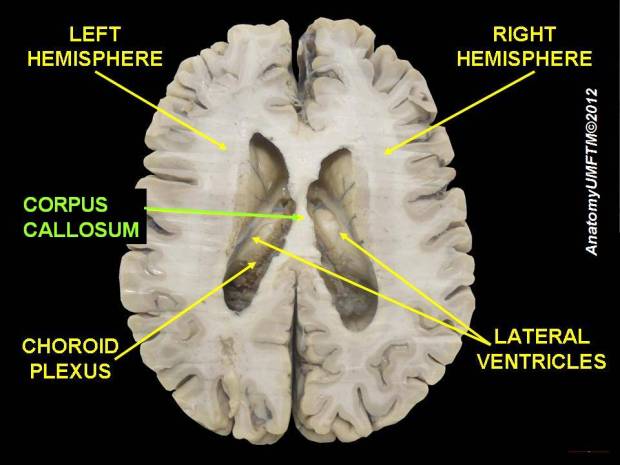
Beneath the cortex are areas such as the basal ganglia, which controls movement; the limbic system, central to emotion; and the hippocampus, a keystone of memory.
The primitive brainstem regulates balance, coordination and life-sustaining processes such as breathing and heartbeat.
Throughout the brain, nerve cells (neurons) communicate with one another through interlocking circuits. Neurons have two main types of branches coming off their cell bodies. Dendrites receive incoming messages from other nerve cells. Axons carry outgoing signals from the cell body to other cells — such as a nearby neuron or muscle cell.

Interconnected with each other, neurons are able to provide efficient, lightning-fast communication. When a neuron is stimulated, it generates a tiny electrical current, which passes down a fiber, or axon. The end of the axon releases neurotransmitters —chemicals that cross a microscopic gap, or synapse — to stimulate other neurons nearby.

Neurotransmitters: Queensland Brain Inst.
Neurotransmitters pass through the synapse, the gap between two nerve cells, and attach to receptors on the receiving cell. This process repeats from neuron to neuron, as the impulse travels to its destination — a web of communication that allows you to move, think, feel and communicate.
While all the parts of your brain work together, each part is responsible for a specific function — controlling everything from your heart rate to your mood.
Sources
Dana Alliance for Brain Initiatives
For the first time, scientists have identified gene recombination, or “mixing and matching” of DNA, in the brain.
New technology revealed DNA in neurons is recombined, producing thousands of previously unknown gene variations—and identifying a potential near-term treatment for Alzheimer’s disease.
The study, published in Nature and authored by Jerold Chun, M.D., Ph.D., professor and senior vice president of Neuroscience Drug Discovery at SBP, focused on the Alzheimer’s-linked gene, APP, and discovered it is recombined by using the same type of enzyme found in HIV. This finding indicates existing FDA-approved antiretroviral therapies for HIV that block reverse transcriptase might also be able to halt the recombination process—and could be explored as a new treatment for Alzheimer’s disease.
In this video, Professor George Paxinos AO describes the hidden region of the brain, which he has named the endorestiform nucleus. He tells us where it’s located and its possible function. He also discusses 3D mapping and why this discovery might set us apart from other primates.

Stress isn’t always a bad thing; it can be handy for a burst of extra energy and focus, like when you’re playing a competitive sport or have to speak in public. But when it’s continuous, it actually begins to change your brain. In this video, Madhumita Murgia shows how chronic stress can affect brain size, its structure, and how it functions, right down to the level of your genes
This is a simple but effective video which helps you understand how the brain works.
The word bipolar means ‘two extremes.’ For the many millions experiencing bipolar disorder around the world, life is split between two different realities: elation and depression. So what causes this disorder? And can it be treated? Helen M. Farrell describes the root causes and treatments for bipolar disorder.
Most people will take a pill, receive an injection, or otherwise take some kind of medicine during their lives. But most of us don’t know anything about how these substances actually work. How can various compounds impact the way we physically feel, think, and even behave? Sara Garofalo explains how some drugs can alter the communication between cells in the brai
 inside-the-brain.com