This Is Your Brain On Gratitude

do what you love

“Thank you” doesn’t just bring light to people’s faces. It also lights up different parts of the brain.

In honor of Thanksgiving, I’d like to share this article with you from UC Berkeley’s Greater Good Science Center.

Evidence is mounting that gratitude makes a powerful impact on our bodies, including our immune and cardiovascular health. But how does gratitude work in the brain?

A team at the University of Southern California has shed light on the neural nuts and bolts of gratitude in a new study, offering insights into the complexity of this social emotion and how it relates to other cognitive processes.

There seems to be a thread that runs through subtle acts of gratitude, such as holding a door for someone, all the way up to the big powerful stuff like when someone gives you a kidney,” says Glenn Fox, a postdoctoral researcher at USC and lead author of the study. “I designed this experiment to see what aspects of brain function are common to both these small feelings of appreciation and large feelings of gratitude.

In their experiment, Fox and his team planned to scan participants’ brains while they were feeling grateful to see where gratitude showed up.

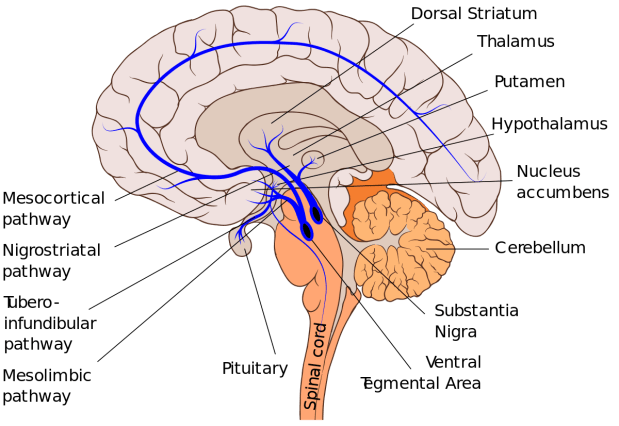
The researchers found that grateful brains showed enhanced activity in two primary regions: the anterior cingulate cortex (ACC) and the medial prefrontal cortex (mPFC). These areas have been previously associated with emotional processing, interpersonal bonding and rewarding social interactions, moral judgment, and the ability to understand the mental states of others.

A lot of people conflate gratitude with the simple emotion of receiving a nice thing. What we found was something a little more interesting,” says Fox. “The pattern of [brain]activity we see shows that gratitude is a complex social emotion that is really built around how others seek to benefit us.

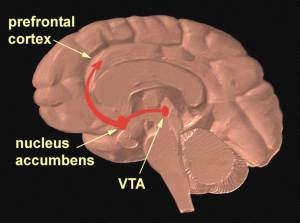
In other words, gratitude isn’t merely about reward—and doesn’t just show up in the brain’s reward center. It involves morality, connecting with others, and taking their perspective.

In further studies, Fox hopes to investigate what’s going on in the body as gratitude improves our health and well-being.

It’s really great to see all the benefits that gratitude can have, but we are not done yet. We still need to see exactly how it works, when it works, and what are the best ways to bring it out more,” he says. “Enhancing our knowledge of gratitude pulls us closer to our own human dignity and what we can do to benefit each other.

You might also like to read When You Are Grateful, Your Brain Becomes More Charitable

How Stress Affects The Brain #StressAwarenessDay

Stress isn’t always a bad thing; it can be handy for a burst of extra energy and focus, like when you’re playing a competitive sport or have to speak in public. But when it’s continuous, it actually begins to change your brain. In this video, Madhumita Murgia shows how chronic stress can affect brain size, its structure, and how it functions, right down to the level of your genes

Rewiring The Brain: Teaching An Old Dog New Tricks

For decades, scientists thought that the adult human brain was static and unchanging. But in the last few decades, we have learned that the adult brain is more dynamic than we ever imagined.  In fact, the human brain is malleable and can change in response to new experiences.  It is adaptable, like plastic – hence the term “neuroplasticity.”

Learn more about neuroplasticity in this infographic.

Rewiring_the_Brain_Infographic_1.jpg

The Neuroscience of Memory

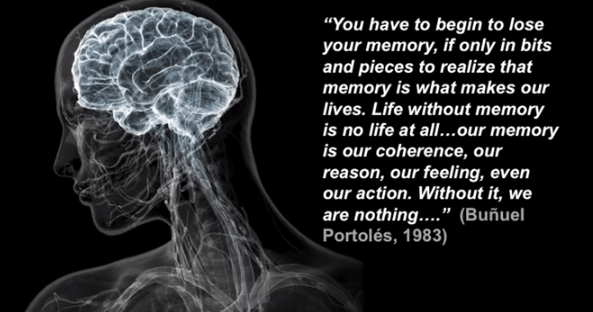
Our memories are our lives, and a fundamental basis of our culture. Collective memoirs of the past both bind society together and shape our potential future. With our brains we can travel through time and space, calling to mind places of significance, evoking images and emotions of past experiences. It’s no wonder, then, that we so desperately fear the prospect of memory loss.

Many regions of the brain are involved in memory, but one of the most critical components is the hippocampus, which plays a crucial role in the formation of long-term memories. Damage to the hippocampus can therefore result in significant memory loss.

In this video, Eleanor Maguire draws on evidence from virtual reality, brain imaging and studies of amnesia to show that the consequences of hippocampal damage are even more far-reaching than suspected, robbing us of our past, our imagination and altering our perception of the world. Maguire also explains how, despite our beliefs, our memories are not actually as accurate as you might think. In fact, they’re not really even about the past.

9 Ways To Cut Your Risk of Alzheimer’s Disease

Only 40 years ago it was widely believed that if you lived long enough, you would eventually experience serious cognitive decline, particularly with respect to memory. The implication for cognition was that achieving an advanced age was effectively equivalent to becoming senile – a word that implies mental defects or a dementing (1) illness. Since then there has been a major shift away from the view of “aging as a disease” and towards the view of “aging as only a risk factor” for a number of neurological diseases.

A recent Lancet report, by 24 leading dementia researchers from around the world, zeroed in on nine of the best-known lifestyle factors that contribute to the illness and account for more than a third of dementia cases. Not smoking, doing exercise, keeping a healthy weight, treating high blood pressure and diabetes can all reduce the risk of dementia, as well as cardiovascular disease, and cancer. The researchers say they did not have enough data to include dietary factors or alcohol in their calculations but believe both could be important.

original

Source: Lancet

The takeaway: 1 in three cases of dementia could be prevented if more people looked after their brain health throughout life.

Related Reading: 15 Ways To Stave Off Dementia


(1) Dementia is how we describe symptoms that impact memory and lead to a decline in cognitive performance, often in ways that disrupt daily living. There are different brain disorders that cause dementia, but Alzheimer’s is the most common, followed by cerebrovascular disease and Lewy bodies disease.

Weekly Neuroscience Update

runner-888016_960_720.jpgAccording to researchers, endurance runners appear to have greater functional connectivity in their brains that those who don’t exercise as much.

New research reveals that children begin using olfactory information to help guide their responses to emotionally-expressive faces at about five years of age. The findings advance understanding of how children integrate different types of sensory information to direct their social behaviour.

A new study explores how neurons adapt their function to respond to stimuli quickly.

A distinctive neural signature found in the brains of people with dyslexia may explain why these individuals have difficulty learning to read, according to a new study from MIT neuroscientists.

Brain connections that play a key role in complex thinking skills show the poorest health with advancing age, new research suggests.

Researchers have identified immune cells in the membranes around the brain that could be a ‘missing link’ in the gut-brain axis. The immune cells also appear to have a positive impact on recovery following spinal cord injury.

Therapeutic hypothermia following a Traumatic Brain Injury (TBI) significantly improves survival rate, a new study reports.

An enzyme found in the fluid around the brain and spine is giving researchers a snapshot of what happens inside the minds of Alzheimer’s patients and how that relates to cognitive decline.

Finally this week,a new study looks at the way in which noise sensitivity is manifested due to changes in the way in which the brain processes auditory information.


Weekly Neuroscience Update

tandem-skydivers-603631_960_720.jpg

Our brain’s changing structure, not simply getting older and wiser, most affects our attitudes to risk, according to new research.

A new study from Center for Music in the Brain (MIB) Aarhus University/The Royal Academy of Music, Denmark, published in Scientific Reports, shows that participants receiving oxytocin – a hormone known to promote social bonding – are more synchronized when finger-tapping together, than participants receiving placebo. This effect was observed when pairs of participants, placed in separate rooms tapped together in a leader/follower relationship.

Researchers have identified a population of neurons that appear to be responsible for muscle paralysis during REM sleep.

A team of scientists has mapped out how our brains process visuals we don’t even know we’ve seen, indicating that the neuronal encoding and maintenance of subliminal images is more substantial than previously thought.

Mutations of the GBA gene, a known risk factor for Parkinson’s disease, appear to also influence the development of cognitive decline, a new study reports.

Women and men look at faces and absorb visual information in different ways, which suggests there is a gender difference in understanding visual cues, according to a team of scientists.

A new neuroimaging study finds iron is distributed in an unusual way in the brains of people with Parkinson’s disease.

Scientists have discovered for the first time that the rhythm of breathing creates electrical activity in the human brain that enhances emotional judgements and memory recall.

A new study reveals sleep could be used as an early prevention strategy against PTSD.

Finally this week, researchers discover metaphors that involve body parts such as arms or legs, such as ‘twist my arm, engage a brain region responsible for the visual perception of those parts.


Weekly Neuroscience Update

eating-796489_960_720.jpgA new study looks at the role the visual system plays in our food decisions.

Neurons found in the human eye naturally display a form of error correction in the collective visual signals they send to the brain, according to a new study in PLOS Computational Biology.

Researchers have created a new optical illusion which helps reveal how our brains determine the material properties of objects – such as whether they are transparent, shiny, matte or translucent – just from looking at them.

Genetic circuits can be isolated within individual synthetic cells, researchers report.

A new study identifies a sub region of the brain that works to form a particular kind of memory: fear-associated with a specific environmental cue or “contextual fear memory.”

Researchers have revealed multiple functions of visual attention, the process of selecting important information from retinal images.

As you age, you may find it more difficult to focus on certain tasks. But while distractions can be frustrating, they may not be as bad as we think. In a review published November 15 in Trends in Cognitive Sciences researchers  suggest that there may be some benefits to reduced focus, especially in people over 50.

Consuming a high fat diet during adolescence could contribute to cognitive impairment as an adult, a new study reports.

An interdisciplinary team of researchers at the University of Georgia has developed a new technology that may help scientists better understand how an individual cell synchronizes its biological clock with other cells.

A new study could be the first step to developing drugs that targets carbonic anhydrase in mitochondria to help protect against aging and neurodegeneration.

Researchers report altering synaptic plasticity leads to a computational switch in a hippocampal synapse which turns the presynaptic neuron turns into “detonator” mode, causing it to fire more readily.

Finally this week, a new study has revealed how three important brain signaling chemicals affect the way that we handle uncertainty.