What fuelled the rage in Anders Baring Brevik’s brain?

Friends and loved ones gather at the Oslo cathedral to mourn (Photo by Paula Bronstein/Getty Images)

Along with so many of you, I was horrified this week to hear of the despicable attack of Anders Behring Brevik on the people of Norway. In his rambling 1500-page manifesto and instruction manual for would-be “crusaders” against Islam and liberal European politicians, Brevik describes how he will be on a “steroid rush” in the midst of the attack. In fact, the manifesto describes the extensive use of steroids and protein drinks to provide him with more energy and one point he writes that he wishes he could obtain “aggressiveness pills.”  I believe that Brevik’s abuse of steroids provides a hint to understanding his behaviour.

Playing with fire

Steroids are dangerous drugs, and when used inappropriately, they can cause serious behavioural and psychiatric problems – possibly by interfering with the brain’s ability to regulate a hormone called vasopressin – which is linked to aggression1.  Research has shown that the inappropriate use of anabolic steroids – man-made versions of the male sex hormone testosterone – can have catastrophic behavioural consequences including aggression (also known as roid rage or the “steroid rush” mentioned in Brevik’s manifesto) such as fighting, physical and sexual assault, armed robbery and property crimes such as burglary and vandalism.  The full-blown aggression can last for up to two weeks after withdrawal. As if this is not bad enough, the psychiatric consequences of inappropriate use of anabolic steroids include jealousy, irritability, deluded thinking, mood swings and bad judgement due to a feeling of invincibility.  Why would anyone even dream of taking such a drug – I hear you ask?

The upside of anabolic steroids

Anabolic steroids are powerful body-building drugs. They promote rapid growth of muscle bone, the larynx (voice box) and a decrease in body fat leading to increased strength and endurance. For this reason anabolic steroid abuse is widespread among athletes, bodybuilders, weightlifters and football players at all levels. However, in this case anabolic steroids are taken to simply replace the discipline required for the long hours of training needed to build up more muscle – as nature intended – and are thus a “shortcut” to an athletic body. These bulking-up effects of steroids on muscle can boost confidence and strength leading the abuser to overlook the potential serious long-term damage that these substances can cause. These drugs are also abused by people who believe that they look underweight, are the wrong shape, to stop being bullied, beaten up or sexually attacked.

Anabolic steroids are very effective in treating conditions such as delayed puberty, some types of impotence, body wasting in patients with AIDS, and other diseases that occur when the body produces abnormally low amounts of testosterone. However, the doses prescribed to treat these medical conditions are 10 to 100 times lower than the doses that are abused for performance enhancement usually by some athletes, nightclub bouncers and others interested in beefing-up their muscles.

Why are anabolic steroids addictive?

By enhancing certain types of performance or appearance anabolic steroid abuse is increasing in adolescents and most rapidly among females. Abuse of anabolic steroids differs from the abuse of other illegal drugs because the initial use of anabolic steroids is not driven by the immediate euphoria that accompanies most drugs of abuse, such as cocaine, heroin, alcohol and marijuana, but by the desire of the abuser to change their appearance and performance, characteristics of great importance to adolescents and young adults.

Route of administration

They can be taken orally (by mouth) as tablets or capsules (Anadrol® [oxymetholone], Oxandrin® [oxandrolone], Dianabol® [methandrostenolone], Winstrol® [stanozolol], and others), by injection into muscles (Deca-Durabolin® [nandrolone decanoate], Durabolin® [nandrolone phenpropionate], Depo-Testosterone® [testosterone cypionate], Equipoise® [boldenone undecylenate], and others) or by ointment preparations rubbed into the skin and are often taken together with drinks rich in protein – the building blocks of muscle.  Health food supplements such as dehydroepiandrosterone (DHEA) and androsterone (street name Andro) are not anabolic steroids.

Enough is never enough

Anabolic steroids are legally available only on prescription and for the illegal market are manufactured in illegal laboratories (poor quality), smuggled in from other countries or stolen from hospitals and pharmacies. One of the hallmarks of addiction is an inability to control drug intake and anabolic steroid abuse is no exception to this. Abusers use two ways of maximizing the effect of the drug on muscle growth – stacking and pyramiding. Both can cause very high levels of steroids to accumulate quickly in the body resulting in acute behavioural and psychiatric problems such as the controlled rage or “steroid rush” described by Brevik.

Stack ‘em high

Stacking is the term used when abusers take two or more anabolic steroids together, mixing oral and/or injectable types, sometimes adding drugs such as stimulants (caffeine, nicotine) or painkillers (codeine, morphine, heroin, diazepam).  Stacking is thought to produce a greater effect on muscle size than could be obtained by simply increasing the dose of a single drug.

The ultimate pyramid scheme

In a separate procedure called pyramiding at the beginning of a cycle, the abuser starts with low doses of the stacked substances – gradually increasing the doses for 6 to 12 weeks.  In the second half of the cycle, the doses are slowly decreased to zero.  This is followed by a second cycle during which the person continues to train, but without drugs. Abusers believe that pyramiding allows the body time to adjust to the high doses, and the drug-free cycle allows time for the body’s natural hormonal system to recover.

Inside the enraged brain of Anders Baring Brevik

Brevik carefully planned his terrible crime suggesting that while he took care of his physical body and noticed the interest females took in his appearance he abused anabolic steroids probably for the psychological effects – to fuel his jealousy and irritability with Islam and liberal European politicians, and for the controlled rage or “steroid rush” required in the midst of his attack. Individuals who abuse steroids can experience prolonged withdrawal symptoms (up to one year), the most dangerous of which is depression, because it sometimes leads to suicide attempts. So it’s no surprise that Brevik has been put on suicide watch and will be for some time to come.

Life is not just about winning

A key lesson to be taken from this appalling tragedy is the importance of encouraging youths to avoid anabolic steroid abuse. However, most adolescents already know that anabolic steroids build muscles and can increase athletic prowess and a failure to acknowledge these potential benefits creates a credibility problem and can actually make youths more likely to try the drugs.  Young people need to see the benefits of working with what nature has provided – such as the importance of proper nutrition and exercise and other techniques for improving performance – and not “cheat” by using steroids and thereby exposing themselves to the negative side-effects associated with these drugs.  Participating in sports offers many benefits, but young people and adults shouldn’t take unnecessary health risks in an effort to win.  By giving a balanced picture of what these drugs can do for you and to you I hope that this blog post will help in those prevention and education efforts by reaching young people, their parents, and others who may think that anabolic steroids are a harmless way to ‘bulk up’ or achieve athletic goals.

What can we learn from the actions of Anders Baring Brevik?

Probably the most important lesson to be taken from this appalling tragedy is the realization that the stresses of life and how we manage them IS the difference between life and death. We also need to support research that increases our understanding of the impact of steroid abuse and improve our ability to prevent abuse of these drugs, but also promote other healthy behaviours and attitudes. I look forward to developing this theme in greater detail including drug-free tips on how to manage anger and stress in future posts, but in the meantime, my deepest sympathy goes to the victims’ loved ones and to all the people of Norway at this difficult time.

  1. Plasticity in anterior hypothalamic vasopressin correlates with aggression during anabolic-androgenic steroid withdrawal in hamsters.  Grimes, Jill M.; Ricci, Lesley A.; Melloni, Richard H., Jr.  Behavioral Neuroscience, Vol 120(1), Feb 2006, 115-124. doi: 10.1037/0735-7044.120.1.115

For those interested in the topic of steroid abuse more information can be found at:
www.steroidabuse.gov

http://www.nida.nih.gov/Drugpages/PSAhome.html

University of Limerick medical graduates conferred

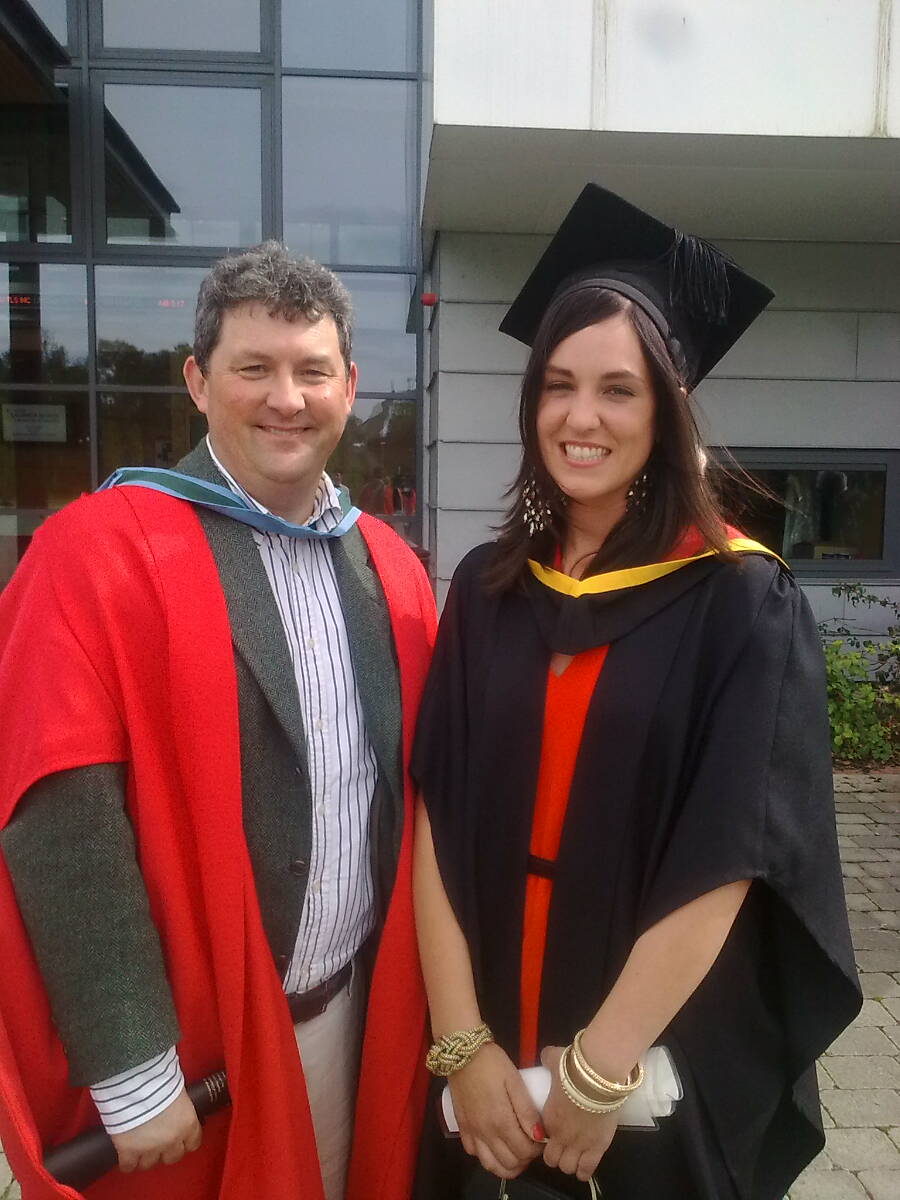
Pictured with Dr. Neasa Starr at UL Medical Graduation

Last Tuesday, 14 June, was an historic day in the life of the University of Limerick Graduate Entry Medical School  (GEMS) in which I am Foundation Head of Teaching and Research in Physiology.

Four years ago on September 10th we welcomed 32 students, from a variety of degree disciplines, to Limerick to study at Ireland’s first graduate entry medical school. Last week those students, who came from backgrounds as diverse as music, engineering, science, and education, were conferred with their Bachelor of Medicine and Bachelor of Surgery degrees.

Last week’s conferring ceremony for students marks a number of firsts – the first medical school to be founded in Ireland in over 150 years, the first graduate entry medical school in Ireland, and the first to integrate problem based learning techniques into its four-year curriculum.

I join with all my colleagues at GEMS in wishing this cohort of new doctors every success in their future careers.

Anesthesia – a neuroscience phenomenon

How the brain reacts to anesthesia is a neuroscientific phenomenon that includes a dash of mystery. In this fascinating video Emery Brown, Professor of Health Sciences and Technology and Professor of Computational Neuroscience, MIT  and Warren M. Zapol Professor of Anaesthesia, Harvard Medical School Massachusetts General Hospital, sets out to demystify some of the mystery for us.

How does the brain respond to natural disasters?

What is the brain's response to the Japanese earthquake and tsunami disaster?

An interesting article in Psychology Today, by Susan Krauss Whitbourne, on our empathetic response to natural disasters.

The Japanese earthquake and subsequent tsunami of March 11, 2011 was the country’s largest natural disaster. As in all too many previous cases, including the Haitian earthquake of 2010, people around the world are riveted to the television screen and internet as the vast devastation and human toll of these massive disasters continues to unfold.

Media coverage of these events documents, sometimes for days on end, the human toll of nature’s wrath.  Why are people so likely to stay glued to the news media during these times of crisis? Are we all basically rubberneckers at heart who watch these crises with a kind of sadistic voyeurism? Research on the brain regions triggered when watching other people who are in trouble suggests a very different interpretation.  

Click here to read this article in full

What’s going on with Charlie Sheen?

Is Charlie Sheen suffering from bipolar disorder?

As actor Charlie Sheen’s bizarre media blitz continues, viewers are left to ponder if Sheen’s interviews are some kind of brilliant performance art or evidence of an epic meltdown, or some combination of the two. Or is his current behaviour evidence of a more worrying mental illness.

Some psychologists have stated that Charlie Sheen appears to have bipolar disorder. Dr. Drew Pinsky has said that Charlie Sheen appears to be having a “manic episode.”

Another psychologist says that Charlie Sheen is showing classic symptoms of bipolar disorder. “The symptom I see is the pressured speech.” he says. “[Sheen is] really pushing to get those words out; he’s really on a roll. He’s getting everything coming out pretty fast, almost faster than his brain can think and that’s very common with people who have bipolar disorder.” 1

What is bipolar disorder?

Over 300,000 people in Ireland suffer from depression, however a less common form of depression is manic depression also known as bipolar disorder which affects about 20,000 Irish people. Bipolar disorder is a mood disorder characterised by extreme lows with feelings of hopelessness and sadness followed by elated manic highs where in your mind anything becomes possible. 

Vicious cycles

These extremes of mood often follow each other in regular cycles that may be days, months or even years apart although on average there are twice as many episodes of depression then for mania. Like any other mental illness bipolar disorder is related to genetic background and personality type but can also be triggered by stressful events. However in a lot of cases bipolar disorder can arise ‘out of the blue’ when people’s lives’ are going quite well. 

Similarities to classic depression

The depressive symptoms experienced by people with bipolar disorder are similar to those people who experience classic depression.  One minute you are working away in your garden and the next you can be overtaken by profound feelings of despair – a sense of being totally worthless – that can take you down into the depths of depression. In this situation the mood is very low and daily life can become so overwhelming that it can be difficult to endure. As the feelings deepen – thoughts of suicide and a preoccupation with suicide often emerges. 

Manic depression

The German psychiatrist Emil Krapelin coined the term ‘manic depression’ after examining many patients with this condition back in the 1800’s. Even then Krapelin believed that this condition was caused by a specific abnormality in the brain. 

Where in the brain does depression occur?

Depression is associated with a disturbance in the prefrontal lobe of the brain – found just behind the eyes. This region of the brain is involved in judging things to be good or bad. It is also involved in social behaviour and interpreting social situations so it is not surprising that the low mood, reduced motivation and social withdrawal are key symptoms of depression. For this reason, people who are depressed often feel rejected or cut off from the world and blame themselves for wars in distant lands – even though they may have never visited that country. 

The role of amines in depression

Neuroscientists still don’t know for certain why people develop bipolar disorder but they do know that it is related to imbalances in brain chemicals called neurotransmitters which are involved in communication. However, research over the past 40 years has the confirmed that depression is associated with low levels of family of chemicals called amines. Amines are neurotransmitters that help nerve cells to stay in touch with each other. A lack of these amines particularly dopamine and serotonin which are carried by nerve pathways into the frontal lobe leads to a kind of starvation of nerve cells in the frontal lobe – giving rise to the symptoms of depression. 

Reserpine and depression

The link between low amine levels and depression was made when reserpine a drug to lower blood pressure also lowered brain amine levels and caused very profound depression. Also, addictive drugs such as cocaine, amphetamine and alcohol which inappropriately increase amine levels in the brain can trigger depression upon withdrawal. So the message is simple – in order to avoid depression you need healthy levels of these amines in our brain and you need healthy mental health habits to keep them there. 

Medication for depression

Over the past 25 years neuroscientists been working hard to develop drugs that can safely raise amine levels in the brain – the so-called antidepressant drugs – and better, more effective antidepressants come on the market every decade. 

The manic phase of bipolar disorder

In contrast to the depressive phase, the manic phase of bipolar disorder is the ‘polar’ opposite of depression. Feelings of boundless energy and that anything is possible are often felt. Many people are often creative in this phase.  The German composer Robert Schuman experienced bipolar disorder throughout his life. He completed four works in 1829 when in a depressed phase and twenty-five works a year later when in a manic phase. 

The secret of our success…

If bipolar disorder were due to a bad gene then why has it not been weeded out over the generations? One answer is that despite the truly awful cost to the life of the individual the gene for bipolar depression continues to exist because it confers an advantage on our species such as the creative insights leading to discoveries, inventions and exceptional performances in science, the arts, drama, music, sport and business – contributing to the great advances in our civilization – from which we all benefit. Ironically then, bipolar disorder may be the secret of our success as a species.  

…comes at a very high cost

Very tragically the rate of suicide in bipolar disorder is very high. The cycle of depression and mania lead the German composer Robert Schuman to an attempted suicide in 1854. Almost a quarter (22%) of people with this condition will commit suicide.  This is higher than that observed in schizophrenia. 

Recognizing the manic phase

In severe mania an individual will behave in an uncharacteristic way. They will become very talkative, loud, verbal, very expressive, extremely confident even uncharacteristically confident. Some people will start-up companies in this phase. They will go out and direct traffic, invest unwisely. They don’t see things as being limited by their circumstances or by their personal capacities. In the manic phase literally anything is possible! 

The manic phase can come on quickly or gradually. The person may not be fully aware what is happening to them. They may find themselves drinking more, wanting to be with people, going to pubs and nightclubs and dancing all night despite the fact that they may be too old for it. There is a tremendous pressure to ‘do things’ such as going out to dig the garden at 4am in the morning – for the stay-at-home types. 

The brain, stress and bipolar disorder

Whenever you encounter a stressful situation the pituitary gland in your brain sends a signal to your adrenal glands (just above your kidneys) to release cortisol which in turn gets your body ready for action. However blood cortisol levels are much higher than normal in depression and bipolar disorder causing a general state of high alert including early morning wakening which contributes to mental exhaustion.

Neuroscientists believe that the manic phase is an over activity of the dopamine and serotonin pathways in the frontal lobe.  In this way a dysfunction in the serotonin pathway in the brain has a ‘knock-on’ affect in the regulation the pituitary gland which in turn inappropriately over-activates the adrenals to release too much cortisol. However neuroscientists still don’t know for certain why people develop bipolar disorder.

Lithium and treatment of bipolar disorder

Mania is very resistant to treatment – benzodiazepines, major tranquilizers and antidepressants don’t work adequately. Fortunately there is lithium – an element found as a salt in soil and rocks and thus very cheap to make. Because it is element lithium cannot be patented (owned) by the drug industry. It was for this reason that lithium was largely ignored for years by the pharmaceutical industry. However, even in ancient times lithium was known to be a mild sedative. The mood stabilising effect of lithium was rediscovered by accident by an Australian psychiatrist John Cade in 1949 when working with guinea pigs. After ingesting lithium himself to ensure its safety in humans, Cade published an article “Lithium salts in the treatment of psychotic excitement” – which is still the number one most cited article in the Medical Journal of Australia. Lithium was eventually accepted as a treatment for mania in the 1970s.

Lithium – a truly life saving drug

Initially investigated as a treatment for gout, lithium has the effect of calming nerve cells. While lithium is the conventional treatment for the manic phase of bipolar disorder and reaches the brain within hours it can take up to six weeks to show an effect. Lithium is also very toxic particularly to the thyroid and kidneys. The required dosage 400–600 mg (15–20 mg per kg of body weight) is slightly less than the toxic level, requiring blood levels of lithium to be monitored closely during treatment. Within four to five days of stopping lithium a person can begin to get high again. Despite its limitations lithium is truly is a life saving drug – the only one to have an anti-suicide effect – allowing people to manage their moods and get on with their lives.  

The cup that cheers

Hundreds of soft drinks once included lithium salts or lithia water (naturally occurring mineral waters with higher lithium amounts). An early version of Coca Cola available in pharmacies’ soda fountains was called Lithia Coke and was a mixture of Coca Cola syrup and lithia water. The soft drink 7 Up, originally named “Bib-Label Lithiated Lemon-Lime Soda”, contained lithium citrate until it was reformulated in 1950. Lithia light beer was brewed at the West Bend Lithia Company in Wisconsin.

In 2009, Japanese researchers at Oita University reported that low levels of naturally-occurring lithium in drinking water supplies reduced suicide rates. A previous report had found similar data in the American state of Texas. In response, psychiatrist Peter Kramer raised the hypothetical possibility of adding lithium to drinking water.

A possible future treatment?

Research shows that manic depression seems to run in families so genetics also plays a role. Nobel Prize winner Paul Greengard of Rockefeller University, New York believes that a low-level of expression in a gene called P11 – which regulates serotonin levels in the brain – may underlie bipolar disorder. Gene therapy whereby healthy P11 genes are injected into the brain may be a future treatment.    

1 Source: kfor.com

Irish Blog Awards

Being a relative newcomer to the blogging world, it is gratifying to see Inside the Brain listed in a great line up of  finalists for the Irish Blog Awards in the Science / Education category

The award is sponsored by Microsoft Ireland’s Developer and Platform Group and the awards will take place in Belfast later this month.

Although traditional scientific training typically doesn’t prepare scientists to be effective communicators outside of academia, there is a growing movement towards engagement between scientists and the public. It is something that I have always been interested in, and now new media forms, such as blogging, have made communicating scientific discoveries to the public so much more effective.

The 2005 Descartes science communication prize winner, Bill Bryson believes that “so much science is inherently interesting, and more effort is needed to get that across…you need to teach ‘normal’ people the wonder of science – you should be getting that even if you’re never going to be a scientist.”

He advises scientists hoping to communicate their work to the wider world not to ” lose your sense of wonder and don’t forget the wow factor. It’s the same in all walks of life, but for scientists, who might not be the best communicators, to forget these can be particularly tragic.”

That sense of wonder in science is still very much alive in me and I hope with this blog to be able to convey a little of that wow factor to readers for many years to come. Reading through the list of finalists in this awards category I can see that this is as true for them as it is for me.

Best of luck to everyone who has made it through to the final round of the Irish Blog Awards!

How cupid’s arrows find their mark inside your brain

Your brain in love

Men and women can now thank a dozen brain regions for their romantic fervor. Researchers have revealed the fonts of desire by comparing functional MRI studies of people who indicated they were experiencing passionate love, maternal love or unconditional love. Together, the regions release neuro­transmitters and other chemicals in the brain and blood that prompt greater euphoric sensations such as attraction and pleasure. Conversely, psychiatrists might someday help individuals who become dan­gerously depressed after a heartbreak by adjusting those chemicals.

Passion also heightens several cognitive functions, as the brain regions and chemicals surge. “It’s all about how that network interacts,” says Stephanie Ortigue, an assistant professor of psychology at Syracuse University, who led the study. The cognitive functions, in turn, “are triggers that fully activate the love network.”

Tell that to your sweetheart on Valentine’s Day!

Graphics by James W. Lewis, West Virginia University (brain), and Jen Christiansen.

Source: Scientific American

Dalai Lama to visit University of Limerick

The University of Limerick is to host a public address by His Holiness, the Dalai Lama on Thursday, 14th April 2011.  The event is being organised in conjunction with the charity ‘Children in Crossfire’ established by Richard Moore, a long-time friend of the Dalai Lama, and two non profit organisations, Spunout.ie and Afri.  

The University of Limerick address will be the final engagement for the Dalai Lama who will be in Ireland for just two days in April as a guest of Richard Moore and ‘Children in Crossfire’.  The charity was established in 1996 by Richard Moore from Derry, who in 1972, aged 10 was blinded by a rubber bullet and has since become a leading international advocate for the rights of children suffering from the injustice of poverty.

Richard was awarded the Harry McKillop Irish Spirit Award for his humanitarian activities.  ‘Children in Crossfire’ envisages the creation of a safe environment where all children can realise their rights, develop to the fullest and reach their potential. By improving early childhood care for development, the charity, of which the Dalai Lama is Patron, strives to empower young children and their communities to build a better future.

Civic and community leaders will be invited to hear His Holiness speak on the theme of ‘The Power of Forgiveness’ and the event will include ritual chant and music performances by students and faculty of the Irish World Academy at UL as well as performances by the Irish Chamber Orchestra.  Limerick primary and secondary school children involved in the ‘Music as an Instrument of Social Change” programme will also perform.  This programme aims to bring music into the culture of schools, particularly those in the Regeneration areas.  

The event, which will take place from 9:30am to11:30am, is open to members of the public.  Tickets for this event will be on sale at a cost of €25 and are subject to booking fees and online charges. All proceeds from the event will support a Dalai Lama initiative to be established at UL.  Tickets will shortly be available for purchase.  Those interested in purchasing tickets can register their interest by accessing www.ul.ie/dalailama

Society for Neuroscience Annual Meeting

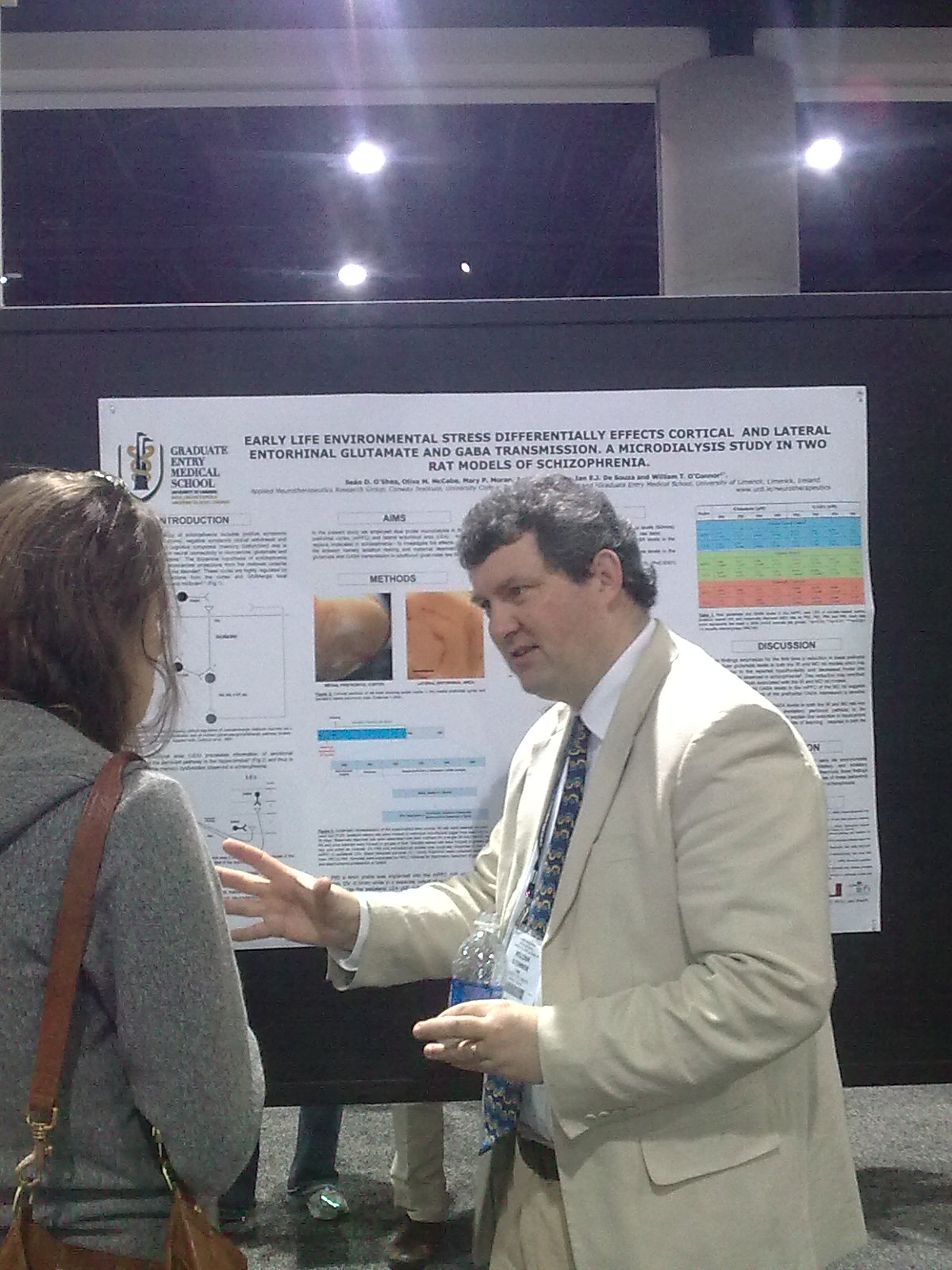
I have just returned from the Society for Neuroscience Annual Meeting in San Diego, California, at which I made a poster presentation.

The Society for Neuroscience annual meeting is the premier venue for neuroscientists from around the world to debut cutting-edge research. Since 1971, the meeting has offered attendees the opportunity to learn about the latest breakthroughs and network with colleagues at top destinations throughout North America.

One of the highlights of the meeting was a talk on Saturday by award-winning actress Glenn Close whose presentation, entitled “Bringing Change to Mind on Mental Illness,” focused on how science and society can work together to change minds on mental illness. Acknowledging that much work must be done to help the American public understand that mental illness is a brain disease, Close tackled questions like: “how do we reduce misconceptions, stigma, and bias that confront those with conditions like depression, bipolar disorder, and PTSD?” and “how can we help the public discern fact from fiction to bring positive change for families struggling with mental illness?” Glenn Close’s nephew, Calen Pick, and her sister, Jessie Close, also spoke about their personal struggles with mental illness.

View the full video of presentation 

On Monday, Rep. Patrick Kennedy, a tireless advocate for biomedical research and for people struggling with brain-based illnesses, highlighted his vision for a new campaign for brain research at Neuroscience 2010. Kennedy delivered the special presentation, entitled “A Neuroscience ‘Moonshot’: Rallying a New Global Race for Brain Research,” to a crowd filled with Neuroscience 2010 attendees and the general public at the San Diego Convention Center. His speech addressed the urgency of helping a generation of veterans affected by PTSD and TBI, and how public advocacy combined with growing science funding can help realize major advances in basic research and translational application for all brain-based conditions.

View the full video of Kennedy’s presentation.

I will be writing more in coming posts on the many interesting insights I gained from the meeting.

My poster presentation, SFN 2010, San Diego