Know Your Neurons

selection-of-neuron-types

Different Types of Neurons A. Purkinje cell B. Granule cell C. Motor neuron D. Tripolar neuron E. Pyramidal Cell F. Chandelier cell G. Spindle neuron H. Stellate cell (Credit: Ferris Jabr; based on reconstructions and drawings by Cajal)

The Know Your Neurons series on the  Scientific American website features some great information on the discovery and naming of neurons, alongside some terrific historical images.

human-neurons-stained

Human hippocampus stained with Golgi’s method (Credit: Wikimedia Commons)

drawing-of-neurons

Cajal’s drawing of Purkinje cells and granule cells in a pigeon’s brain (Credit: Wikimedia Commons)

Learn more: click here

Limerick Lifelong Learning Festival

I will be giving a free lecture today, Monday 26th March, to mark the start of the Limerick Lifelong Learning Festival.

The title of my talk is “Alzheimer’s Disease – and ways to avoid it”

The talk will take place from 2-4 pm at Limerick’s Downtown Centre.

Check out www.downtowncentre.ie for directions or call Clodagh  061-233701

About Limerick Lifelong Learning Festival

The Limerick Lifelong Learning Festival is a celebration of Lifelong Learning in the region. It aims to promote Limerick as a centre of Lifelong Learning through a wide variety of enjoyable and informative events, taking place throughout the city and county during Festival week.

I am delighted to be a part of the  Limerick Lifelong Learning Festival again this year, following its successful pilot launch last June. The Festival will take place from Monday 26th March to Sunday April 1st. All events are free.

http://www.limerick.ie/lovelearning

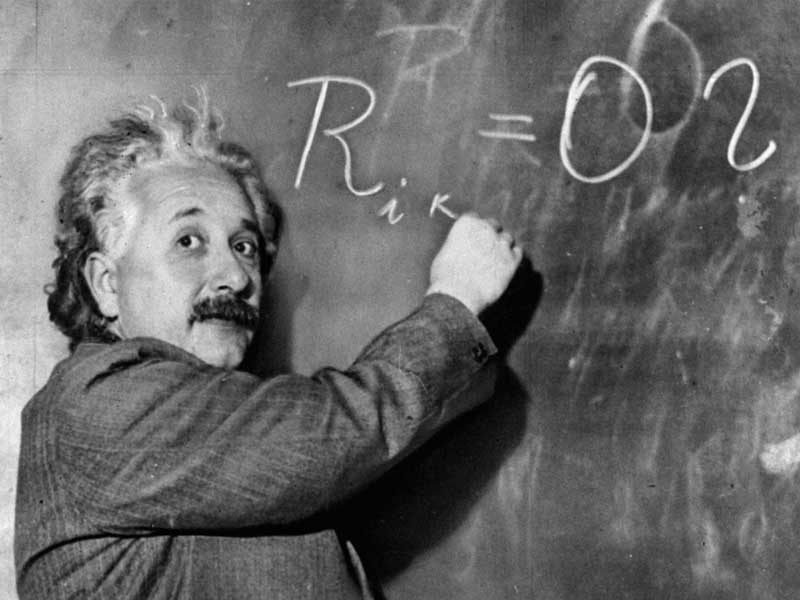
Celebrating Einstein’s Birthday

Today is Albert Einstein’s birthday.

The famed physicist was born 133 years ago on March 14th 1879.

In honour of the great scientist’s birthday here are three of my favourite Einstein quotes:

“Any intelligent fool can make things bigger and more complex… It takes a touch of genius — and a lot of courage to move in the opposite direction.”

“Two things are infinite: the universe and human stupidity; and I’m not sure about the universe.”

“The tragedy of life is what dies inside a man while he lives.”

The Neuroscience of Illusion


In this illusion, created by Edward Adelson at MIT, squares A and B are the same shade of gray.

This illusion occurs because our brain does not directly perceive the true colors and brightness of objects in the world, but instead compares the color and brightness of a given item with others in its vicinity.

For instance, the same gray square will look lighter when surrounded by black than when it is surrounded by white. Another example: when you read printed text on a page under indoor lighting, the amount of light reflected by the white space on the page is lower than the amount of light that would be reflected by the black letters in direct sunlight.

Your brain doesn’t really care about actual light levels, though, and instead interprets the letters as black because they remain darker than the rest of the page, no matter the lighting conditions. In other words, every newspaper is also a visual illusion!

The beautiful brain

Hippocampus II, 2010

I am captivated by these images by Greg Dunn,  a visual artist with a Ph.D in neuroscience from the University of Pennsylvania.

Olfactory Bulb

It’s not so easy to tell at first glance whether Dunn is painting a branching pattern of a plant or that of a neuron. But maybe that’s the point. Dunn’s eye seems attuned to the dazzling beauty packed into the cellular architecture of each square millimeter of our nervous system, architecture that repeats itself all around us.

Glomerulus, 2008, ink on xuan with digital manipulation

You can view more images and read an interview with the artist onThe Beautiful Brain .

Your Weekly Neuroscience Update

You’re running late for work and you can’t find your keys. What’s really annoying is that in your frantic search, you pick up and move them without realising. This may be because the brain systems involved in the task are working at different speeds, with the system responsible for perception unable to keep pace. So says Grayden Solman and his colleagues at the University of Waterloo in Ontario, Canada.

Scientists have now discovered how different brain regions cooperate during short-term memory  and in other research -findings that a prion-like protein plays a key role in storing long-term memories

Memories in our brains are maintained by connections between neurons called “synapses”. But how do these synapses stay strong and keep memories alive for decades? Neuroscientists at the Stowers Institute for Medical Research have discovered a major clue from a study in fruit flies: Hardy, self-copying clusters or oligomers of a synapse protein are an essential ingredient for the formation of long-term memory.

Researchers reveal a novel mechanism through which the brain may become more reluctant to function as we grow older.

New research from Uppsala University shows that reduced insulin sensitivity is linked to smaller brain size and deteriorated language skills in seniors. The findings are now published in the scientific journal Diabetes Care.

Age-related delays in neural timing are not inevitable and can be avoided or offset with musical training, according to a new study from Northwestern University. The study is the first to provide biological evidence that lifelong musical experience has an impact on the aging process.

Could brain size determine whether you are good at maintaining friendships? Researchers are suggesting that there is a link between the number of friends you have and the size of the region of the brain – known as the orbital prefrontal cortex – that is found just above the eyes. A new study, published today in the journal Proceedings of the Royal Society B, shows that this brain region is bigger in people who have a larger number of friendships.

Scientists have long believed that human speech is processed towards the back of the brain’s cerebral cortex, behind auditory cortex where all sounds are received – a place famously known as Wernicke’s area after the German neurologist who proposed this site in the late 1800s based on his study of brain injuries and strokes. But, now, research that analyzed more than 100 imaging studies concludes that Wernicke’s area is in the wrong location. The site newly identified is about 3 centimeters closer to the front of the brain and on the other side of auditory cortex – miles away in terms of brain architecture and function.

New research from Cold Spring Harbor Laboratory (CSHL) might help explain how a gene mutation found in some autistic individuals leads to difficulties in processing auditory cues and paying spatial attention to sound.

Neuroscientists may one day be able to hear the imagined speech of a patient unable to speak due to stroke or paralysis, according to University of California, Berkeley, researchers.

Cocaine-dependent men and women might benefit from different treatment options, according to a study conducted by Yale School of Medicine researchers.

New research finds problems that require a flash of illumination to solve are best approached during the time of day when you’re not at your peak.

Researchers for the first time are documenting the basic wiring of the brain, the complex relationships among billions of neurons that are responsible for reason, memory and emotion. The work eventually could lead to better understanding of schizophrenia, autism, multiple sclerosis and other disorders.

Can neuroscience explain consciousness?

Consciousness – n. the quality or state of being aware especially of something within oneself. 

Some philosophers are convinced that there are phenomena that science can never explain. One example of this is consciousness – a distinguishing feature of thinking, feeling creatures such as ourselves and other higher mammals. Much research into the nature of consciousness has been done by neuroscientists, psychologists and others. But despite all the new scientific findings, a number of recent philosophers claim that there is something intrinsically mysterious about the phenomena of consciousness that no amount of scientific investigation can eliminate.

Is consciousness scientifically inexplicable? 

What are the grounds for this view? Their basic argument is that conscious experiences are fundamentally unlike anything else in the world in that they have a ‘subjective’ aspect.  Consider for example the experience of watching a sad movie. This is an experience that will have a distinctive ‘feel’ to it and while neuroscience may one day explain the complex goings-on in the brain that produce our feeling of sadness – it cannot explain why watching a sad move feels the way it does. These philosophers argue that the scientific study of the brain can at most tell us which brain processes are correlated with which consciousness experiences and while scientific information is interesting and valuable it does not tell us why experience with a distinctive subjective feel (such as sadness) should result from the purely physical going on in the brain.  Many people believe this to be the case also.

Science – the art of the possible 

This argument is compelling but it is controversial and is not endorsed by all philosophers, let alone neuroscientists. Indeed, in response to this argument the philosopher Daniel Dennett published a book in 1991 defiantly titled Consciousness Explained. Most neuroscientists would sometimes accuse those philosophers who argue that consciousness must always elude scientific explanation of being dogmatic and having a lack of imagination and predict that in the not-too-distant future neuroscience will deliver a radically different type of brain science, with radically different explanatory techniques what will explain why our experiences feel the way they do.

Science is a tribute to what we can know although we are fallible

Unfortunately there is a 2000-year-long tradition of philosophers trying to tell scientists what is and is not possible and later scientific development have often proved the philosophers wrong. Only time will tell whether the same fate awaits those who argue that consciousness must always elude scientific explanation.

My money is on the neuroscientists with this one!