Are We Born Creative?

blue box

Since the dawn of human evolution, our world has been driven by creative flashes of inspiration.  Creativity often appear as a spontaneous burst of new ideas but it is really the ability to derive new ideas from old ones – the reassembly of information that we already possess.  While everyone can learn to be creative to some degree, new research is revealing that the extent to which we inherit our creativity may be greater that previously thought.

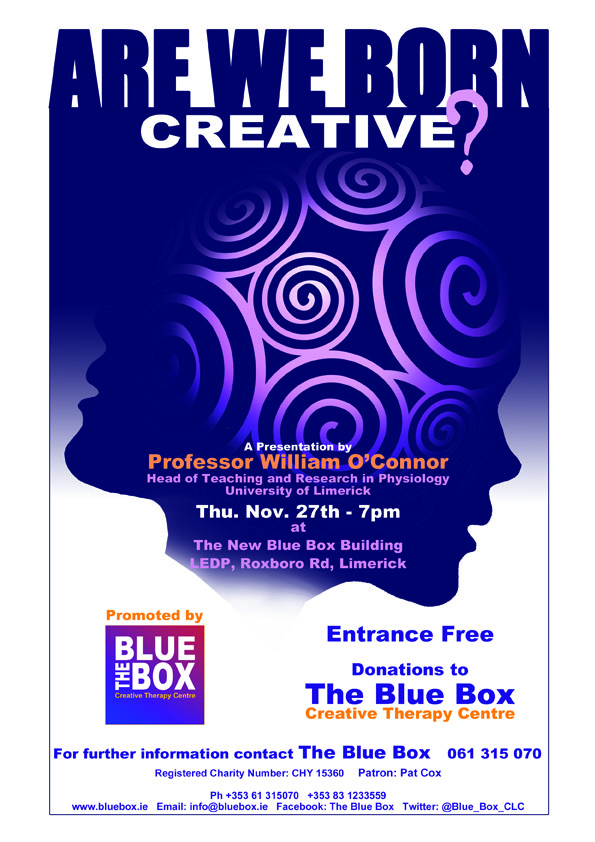
This Thursday, November 27, I will be giving a public talk on creativity and how we can foster it. The talk will take place at The Blue Box Creative Therapy Centre in Limerick city centre.  Entrance is free; donations to this worthy cause are welcome.

Book your ticket


#SfN14 highlights: DREADD-nought, or the role of the posterior parietal cortex in decision making

Enjoying more blogs from Society For Neuroscience Annual Meeting

neuroscience and medicine

I’m sure that you would like to improve on this terrible pun–feel free to chime in in the comments! And now let’s move beyond the acronym: this post is about a poster that was shown at #SfN14 on Monday morning, November 17, during the session on Executive function: Decision making.

358.21/SS34. Disrupting inhibition in posterior parietal cortex reduces decision accuracy. K. ODOEMENE, A. M. BROWN, M. T. KAUFMAN, A. K. CHURCHLAND

The authors, from Cold Spring Harbor Laboratory, NY, are interested in understanding how sensory information is used by the brain to inform decision making. They trained mice on a visual discrimination task in which the animals had to learn to recognize that a slowly flashing light was associated with a water reward in one location and a faster flash with a reward at another place. They then injected a viral vector encoding a protein known as a DREADD: a designer receptor exclusively activated by a designer drug…

View original post 243 more words

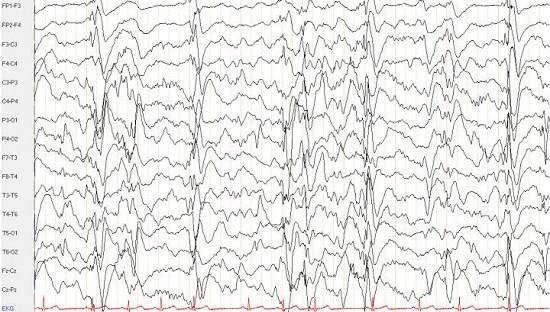
#SfN14 highlights: Oscillations: EEG

This is one of the first years I haven’t attended the Society For Neuroscience annual conference. I am catching up via social media instead.

neuroscience and medicine

303.Poster session. Oscillations: EEG.
Monday, Nov 17, 2014, 8 AM-12 PM.

I really enjoy poster sessions and the unique opportunities for interacting with the authors that they offer. This morning, I spent some time at the session on brain oscillations as studied by EEG. Here are highlights from a couple of posters (three, actually) that I had the opportunity to discuss with their authors. My apologies to the presenters whose posters I did not cover. Note that any inaccuracy or outright misunderstanding in what follows is my responsibility alone!


303.03/C39. Phase dependency of long-range neuronal transmission in entrained neuronal networks: A combined tACS-TMS-EEG study. K. D. FEHÉR, Y. MORISHIMA.

303.05/C41. A method for removing tACS artifacts from EEG data. Y. MORISHIMA, K. D. FEHÉR.

The authors of these posters, from the University of Bern, Switzerland, have combined seemingly for the first time transcranial alternating current stimulation (tACS), a noninvasive approach to modulate brain rhythms, together…

View original post 511 more words

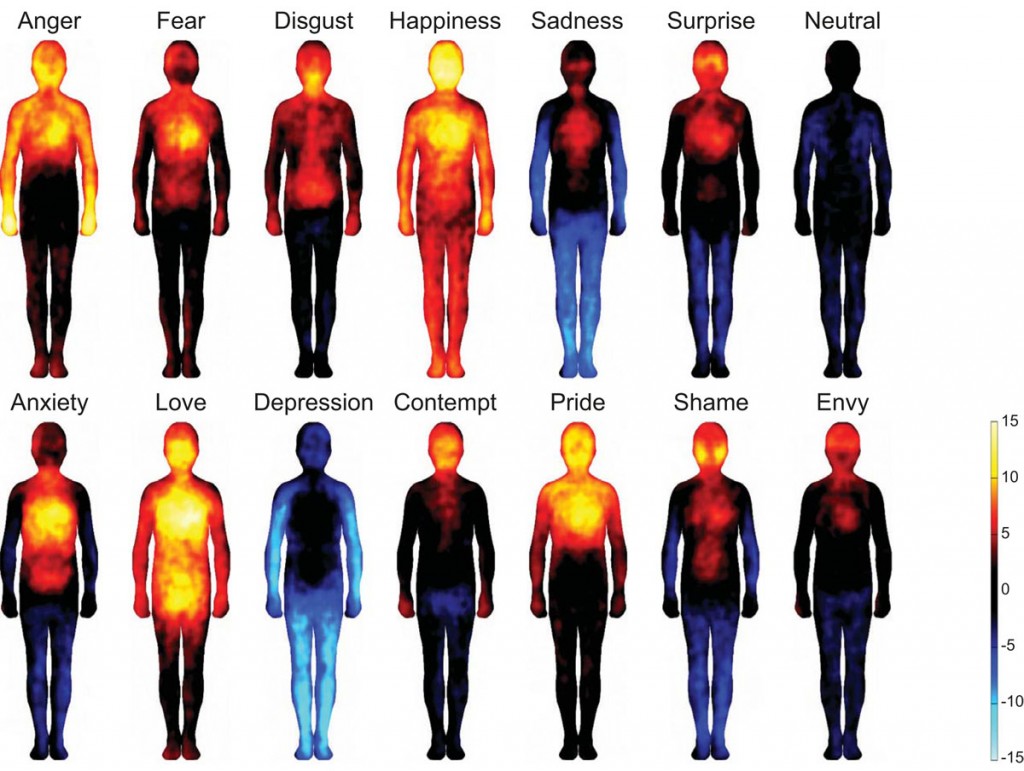
Bodily Map Of Emotions

Yellow shows regions of increased sensation while blue areas represent decreased feeling in these composite images. Image courtesy of Lauri Nummenmaa, Enrico Glerean, Riitta Hari, and Jari Hietanen.

Yellow shows regions of increased sensation while blue areas represent decreased feeling in these composite images. Image courtesy of Lauri Nummenmaa, Enrico Glerean, Riitta Hari, and Jari Hietanen.

More than 700 participants in Finland, Sweden and Taiwan participated in experiments aimed at mapping their bodily sensations in connection with specific emotions. Participants viewed emotion-laden words, videos, facial expressions and stories. They then self-reported areas of their bodies that felt different than before they’d viewed the material. By coloring in two computer-generated silhouettes — one to note areas of increased bodily sensation and the second to mark areas of decreased sensation — participants were able to provide researchers with a broad base of data showing both positive and negative bodily responses to different emotions.

Researchers found statistically discrete areas for each emotion tested, such as happiness, contempt and love, that were consistent regardless of respondents’ nationality. Afterward, researchers applied controls to reduce the risk that participants may have been biased by sensation-specific phrases common to many languages (such as the English “cold feet” as a metaphor for fear, reluctance or hesitation). The results are published in the Proceedings of the National Academy of Sciences.

Digital Literacy May Protect Against Cognitive Decline

HealthCetera - CHMP's Blog

Can digital literacy delay cognitive decline?

Researchers think it might. In a recently published study in The Journals of Gerontology, Series A: Biological Sciences and Medical Sciences they found that digital literacy — the ability to engage, plan, and execute digital actions such as web browsing and exchanging e-mails — is an independent protective factor against cognitive decline.

Using data from the English Longitudinal Study of Ageing, they followed 6,442 participants in the UK between the ages of 50 and 89 for eight years. The data measured delayed recall from a 10-word-list learning task across five separate measurement points. Socioeconomic status, including wealth and education, comorbidities, and baseline cognitive function were included in the models.

senior-computerHigher wealth, education and digital literacy improved delayed recall, while people with functional impairment, diabetes, cardiovascular diseases, depressive symptoms or no digital literacy showed decline.

Those who reported being nonusers of Internet/E-mail and intermittent…

View original post 214 more words

Neuroscience and Education

neuroeducation

During my recent sabbatical I had the pleasure of speaking to the staff of Mount Barker High School in Adelaide.

Mount Barker High School

by
Jenni Cook
Assistant Principal

On the first day back at school this term staff enjoyed a presentation from Neuroscientist, Professor Billy O’Connor, a passionate researcher into neuroscience and education.

Billy is the head of Teaching and Research in Physiology at the University of Limerick Graduate Entry Medical School, and was on sabbatical at Flinders University. We were fortunate enough to have him visit us on his last day in Australia.

Billy talked about recent research into the neuroplasticity of the brain and how it is possible to rewire the pathways of the brain through ‘exercise’, much as we exercise any muscle to build its strength.

Research shows that during adolescence the brain is rewiring itself as children become adults. During this process there can be feelings of loss and grief, uncertainty and confusion and excessive emotions. As we all know, adolescents can sometimes be temperamental!

The last part of…

View original post 268 more words

Message to Richard Dawkins: Human Happiness Is Not Determined By Circumstance

rd

The eminent geneticist Richard Dawkins caused controversy last week with his remarks that it would be immoral to carry on with a pregnancy if the mother knew the foetus had Down’s syndrome.  His remarks implied that a child with Down’s syndrome has little to add to the world and the condition overshadows any achievement the child might make.

As a neuroscientist and Professor myself  I would suggest that he has missed something important namely that human happiness/ mental health /quality of life/ well-being is not determined by what happens/does not happen to us or indeed by what we have/don’t have.

Genetics may be difficult but humans are even more complex!

It is an astonishing fact that the recipe for human happiness can be summarised into just one sentence and here it is. Happiness is determined by an ability to engage and respond appropriately to the people, things and events that surround us.  Notice from this, that your own happiness depends on YOU alone and not the people, things and events that surround you.

What is empathy?

The ability to engage and respond appropriately to people, things and events is the basis of empathy. Furthermore, the quality of your engagement and the appropriateness of your response determine your level of empathy. Empathy allows human beings to not only interact with each other effectively, but also to predict the actions, intentions, and feelings of others.  A useful trait indeed for a happy life.

Where is empathy in the brain?

The recent discovery of mirror neurons  – a cluster of neurons that help connect us emotionally to other people, respond sympathetically towards others and allow us to anticipate others intentions  is believed to be the basis of human empathy

Empathy – you either use it or lose it.

How can we learn to better engage and respond?  The recent discovery that the practice of meditation changes the shape of those brain areas involved in empathy  – allowing those discrete areas in the brain to grow or change – by adding a tiny fraction of the brain’s neural circuitry and eliminating old ones. This finding has established a new field of contemplative neuroscience – the brain science of meditation – and it helps to explain how meditation acts to improve mental health by cultivating the empathy needed to lead a more compassionate and loving outlook in life.

Happiness or heartbreak.

I do think that Professor Dawkins’s statement might be of some benefit if it opens up a debate on how we deal with what life serves up to each of us. At various times we may experience a great deal of stress in our lives and in this we are not alone. The question is – as events and worries beset us, are we going to turn more and more to quick fixes to handle our dis-stress?

Probably the most important lesson to be taken from Richard Dawkins/ Down’s syndrome controversy is the realization that the stresses of life and how we manage them IS the difference between happiness and heartbreak.

I look forward to developing this theme in greater detail including drug-free tips on how the avoid worry and stress in future posts.

Other posts on this topic

Emotions are habits, so pick up a good one

Mental health and well-being for mind and brain

What can neuroscience teach us about consciousness,mental health and well-being?

The empathic brain

Your brain and the art of confusion


Weekly Neuroscience Update


brain-white-matter-child-fitness (1)

The team used diffusion tensor imaging (DTI, also called diffusion MRI) to look at five white-matter tracts in the brains of the 24 participants. This method analyzes water diffusion into tissues. For white matter, less water diffusion means the tissue is more fibrous and compact, both desirable traits. This image shows an MRI of white matter in the human brain. The image is for illustrative purposes only, and is not connected to the research. Credit Kubicki et al.

A new study of 9 and 10-year-olds finds that those who are more aerobically fit have more fibrous and compact white-matter tracts in the brain than their peers who are less fit. “White matter” describes the bundles of axons that carry nerve signals from one brain region to another. More compact white matter is associated with faster and more efficient nerve activity. The team reports its findings in the open-access journal Frontiers in Human Neuroscience.

In a new study published in The Journal of Neuroscience, researchers report that the amygdala — a part of the brain associated with decision making, memory and emotion — plays a part in telling us who to trust almost instantly.

The latest research on sports concussions in teens has been the focus of recent study.

Depression is known to be a common symptom of Parkinson’s disease, but remains untreated for many patients, according to a new study.

Following another person’s gaze can reveal a wealth of information critical to social interactions and also to safety. Gaze following typically emerges in infancy, and new research looking at preterm infants suggests that its visual experience, not maturational age, that underlies this critical ability.

fMRI scans reveal brain differences in risk-taking teens

Children and adolescents with autism have a surplus of synapses in the brain, and this excess is due to a slowdown in a normal brain “pruning” process during development, according to a study by neuroscientists at Columbia University Medical Center (CUMC).

While much attention has focused on the link between violent video game playing and aggression among youths, a new study finds significantly increased signs of depression among preteens with high daily exposure to violent video games.

An imaging study of chronic users of codeine-containing cough syrups (CCS) has found deficits in specific regions of brain white matter and associates these changes with increased impulsivity in CCS users.

New treatments for multiple sclerosis (MS) using common anti-psychotic agents have been discovered by Victoria University of Wellington researchers.

People with schizophrenia struggle to turn goals into actions because brain structures governing desire and emotion are less active and fail to pass goal-directed messages to cortical regions affecting human decision-making, new research reveals.

Your Brain On Social Media #SMDay

social media day

To mark the fifth global Social Media Day today, here are my thoughts on predicting the future of social media.

Internet companies are looking for ways to get inside our heads – to tinker with the very thing that makes us human – our brain.  As Facebook gets ready to take-on new challengers after its recent launch on the stock market, is it possible that the battle for future dominance on the Internet will be won or lost inside our heads?  Knowledge about human behaviour, emotion and sensory stimulation is starting to flow through to the actual strategies of the leading Internet competitors.

Neuroscience – front and centre

Neuroscience – the scientific study of the nervous system – once at the periphery of the way we thought about the Internet, is suddenly in the spotlight. Just by understanding how the human brain works – Internet companies can get more users.

It’s all in your head

The Internet takes advantage of the two most important features within the human brain – that social behaviour elicits pleasure and that vision triggers memories and emotions deep within our unconscious minds – and quite simply, the key to the future success of the Internet and future billion-dollar valuations will depend on how the Internet can get that neuroscience right.

The reward pathway

The first feature is that social activity triggers a nerve pathway deep in our subconscious – the mesolimbic dopamine pathway – also called the reward pathway, releasing a chemical called dopamine which bathes the brain’s pleasure centres – similar to other activities with intrinsic value such as food, sex and getting money. People like talking about themselves on social media because it has intrinsic value by generating a warm emotion of being part of something important. In other words, we like sharing because it is enjoyable for its own sake as a social activity. In this way sharing is deeply sensory – we humans literally ‘get high’ on social activity.

reward_pathway_jpeg

To the left is a view of the human brain cut down the middle. The reward pathway – shown in red above – is activated by a rewarding stimulus. The major structures in the reward pathway are highlighted: the ventral tegmental area (VTA), the nucleus accumbens and the prefrontal cortex. The VTA sends information along its connections to both the nucleus accumbens and the prefrontal cortex. The neurons of the VTA contain the neurotransmitter dopamine which is released in the nucleus accumbens and in the prefrontal cortex. The pathway shown here is not the only pathway activated by rewards, other structures are involved too, but only this part of the pathway is shown for simplicity. (Adapted from the American Society for Neuroscience).

Humans – the ultimate party animals

Even 80 year olds look forward to their weekly bingo or bridge game or to just simply meet up with family/friends and having a chat.  From cooking a favourite meal to getting together with friends, it’s the smells and the stories and the smiles that make human connections so essential to psychological wellbeing. This is why we humans are the most social of the apes – no question about it – we love to party. No surprise then about the popularity of the Internet as it has taken our ability to socialise to a new level. Every comment, post, status update and tweet is a tiny jolt that triggers the pleasure centres of our brains.  On top of that – time and location are no longer impediments to social contact with like-minded friends.

Seeing is believing

The second feature is that over 70% of the human brain is dedicated to vision which means that our brains think in terms of visual images.

In fact, the visual system is the first to mature in the human brain so that by the age of five, children are able to compete on visual games with their grandparents …and win! This explains why the newer social networks like Instagram and Pinterest that use images have the potential to become even more popular for Internet users that the text-based Facebook and Twitter. Viewed from this perspective, Mark Zuckerberg’s recent billion-dollar bid for Instagram suddenly makes a lot of sense. It’s not just that Instagram is a hugely popular mobile network with millions of users; it’s that the company understands that retro filters and beautiful light effects actually trigger visual associations and associated memories deep within our unconscious minds.

The future of the Internet is a neurofuture

Future Internet innovations is not in a mobile or social experience that’s just smaller but something more intimate, and more expressive – one which embraces a sensor-rich Smartphone including touchable screen and high-density display. The future will be wrapped in an envelope of sensation – vision, touch, taste, smell and sound – where companies will compete with each other to rush out new innovations that flood our pleasure centres with dopamine. Narrowing the gap between our physical and digital worlds – making our digital worlds as visual, tactile and emotional as the real world – such as the world’s first cyber-hug – is just around the corner. Today’s new Android and iPhone mobile app “sense and soul” that takes the orderly, linear and rational layout of Google+ and transforms it into something beautifully nonlinear,  unstructured and stimulating might be an important step in this direction.