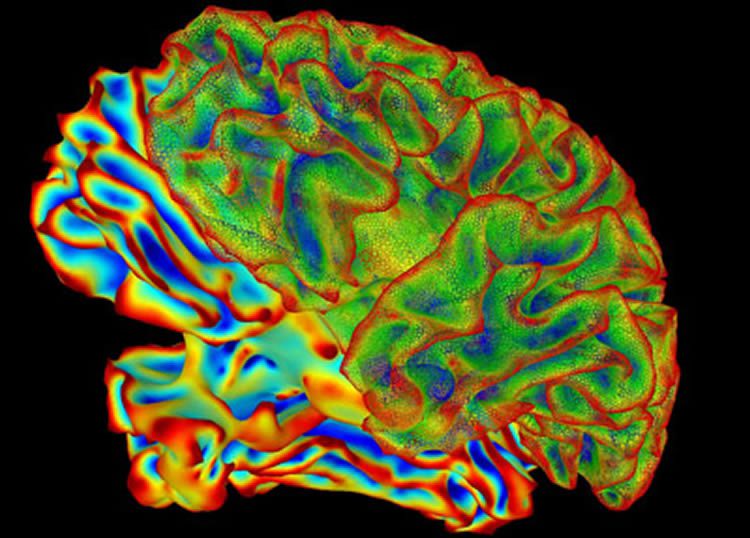
Weekly Neuroscience Update

autism-men-neuroimaging

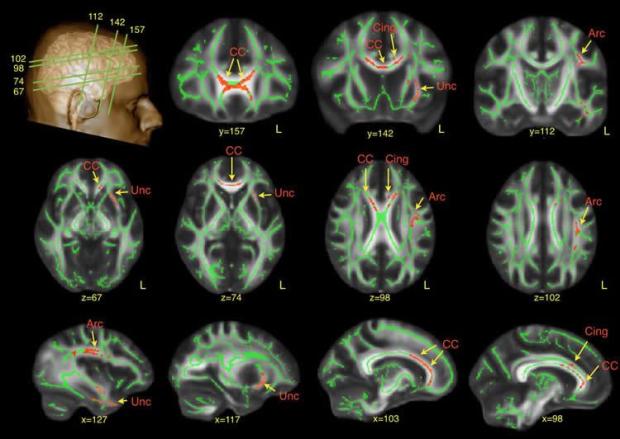
Red regions indicate reduced fractional anisotropy values in autism spectrum disorder (ASD). Credit: The researchers/King’s College London.

Research at King’s College London has revealed subtle brain differences in adult males with autism spectrum disorder (ASD), which may go some way towards explaining why symptoms persist into adulthood in some people with the disorder.

Women who take estrogen supplements from before or at the start of menopause and continue with them for a few years have better preserved brain structure, which may reduce the risk of dementia.

Scientists have taken a significant step toward understanding the cause of schizophrenia, in a landmark study that provides the first rigorously tested insight into the biology behind any common psychiatric disorder.

Stopping disruptions in cellular “trash removal” brought on by errors in molecular marks on DNA may guard against neurodegenerative diseases like Parkinson’s.

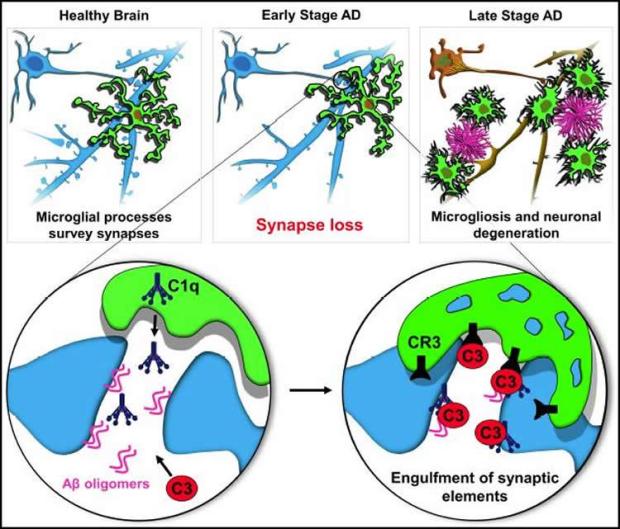
Roughly twenty years before the first symptoms of Alzheimer’s disease appear, inflammatory changes in the brain can be seen, according to a new study from Karolinska Institutet published in the medical scientific journal Brain.

In a new study, researchers reveal how brain scans could be used to identify children at high risk for later-life depression – information that could pave the way for early intervention and prevention.

Researchers have shown that graphene can be used to make electrodes that can be implanted in the brain, which could potentially be used to restore sensory functions for amputee or paralysed patients, or for individuals with motor disorders such as Parkinson’s disease.

A new study has linked stress and anxiety to the same neurocircuitry in the brain as depression and dementia.

Different regions of our brain need to work simultaneously in order for us to process emotion. But according to new research, such regions are disconnected among individuals who experience multiple episodes of major depression.

A team of international researchers have announced the discovery of a system in the brain that may underlie the development of involuntary vocalizations (commonly called vocal tics) that often occur in people with Tourette syndrome.

A new study sheds light on multiple sclerosis (MS), specifically damage in the brain caused by the disease that may explain the slow and continuous cognitive decline that many patients experience. The findings, which appear in the Journal of Neuroscience, show that the brain’s immune system is responsible for disrupting communication between nerve cells, even in parts of the brain that are not normally considered to be primary targets of the disease.

Cognitive function and health appear to be genetically linked, according to research published in Molecular Psychiatry. The study was carried out by an international team from the US, the UK and Germany.

Researchers have discovered the mechanics of how dopamine transports into and out of brain cells, a finding that could someday lead to more effective treatment of drug addictions and neurological disorders such as Parkinson’s disease.

The brains of children who are obese function differently from those of children of healthy weight, and exhibit an “imbalance” between food-seeking and food-avoiding behaviors, researchers at Vanderbilt University Medical Center have found.

Finally this week, neuroscientists have now shown that rhythmic brain waves, called theta oscillations, engage and synchronize the brain regions that support the integration of memories. The results were published in the journal Current Biology.

Weekly Neuroscience Update

twentyqs

Scientists have successfully completed what is believed to be the most complex human brain-to-brain communication experiment ever. It allowed two people located a mile apart to play a game of “20 Questions” using only their brainwaves, a nearly imperceptible flash of light, and an internet connection to communicate.

A new study reveals clues to how thoughts take shape.

University of Pennsylvania researchers have made another advance in understanding how the brain detects errors caused by unexpected sensory events. This type of error detection is what allows the brain to learn from its mistakes, which is critical for improving fine motor control.

A new study shows that music can improve the quality of sleep of adults with sleep disorders.

From “brain games” designed to enhance mental fitness, to games used to improve real-world problems, to games created purely to entertain, today’s video games can have a variety of potential impacts on the brain. A new article argues that it is the specific content, dynamics, and mechanics of individual games that determine their effects on the brain and that action video games might have particularly positive benefits.

Training people to be compassionate rather than empathic might help to solve problems such as depression, burnout and narcissism, according to researchers at the Max Planck Institute for Human Cognitive and Brain Sciences.

How does the brain determine which direction to let its thoughts fly? Looking for the mechanisms behind cognitive control of thought, researchers have used brain scans to shed new light on this question.

The risk of suffering a stroke is significantly reduced for up to two months after receiving a flu vaccine, a major new study has shown.

A new study sheds light on why people with schizophrenia misinterpret social cues in others, often leading to unpleasant paranoid and persecutory thoughts.

A malfunctioning enzyme may be a reason that binge drinking increases the odds of alcoholism, according to a study by scientists at the Stanford University School of Medicine.

A new study finds that the part of the brain responsible for seeing is more powerful than previously believed. In fact, the visual cortex can essentially make decisions just like the brain’s traditional “higher level” areas.

The brain’s wiring patterns can shed light on a person’s positive and negative traits, researchers report in Nature Neuroscience.

Combining MRI and other data helps machine-learning systems predict effects of neurodegenerative disease.

The way our brain responds to others’ good fortune is linked to how empathetic people report themselves to be, according to new research.

Finally this week, a team of researchers have discovered that images of brain activity scanned by using functional magnetic resonance imaging (fMRI) can act as a signature pattern to accurately identify certain individuals.

Weekly Neuroscience Update

Total correct score on the Eyes test for each individual is plotted as a dot, coloured according to group, to illustrate the distribution of performance by group. Mean score for each group is shown by a black dot, and the error bars indicate the 95% confidence interval of the mean score. Credit: Baron-Cohen et al./PLOS ONE.

Total correct score on the Eyes test for each individual is plotted as a dot, coloured according to group, to illustrate the distribution of performance by group. Mean score for each group is shown by a black dot, and the error bars indicate the 95% confidence interval of the mean score. Credit: Baron-Cohen et al./PLOS ONE.

New results published by researchers at the Autism Research Centre (ARC) show both men and women with autism show an extreme of the typical male pattern on the ‘Reading the Mind in the Eyes’ test.

Researchers at Mayo clinic completed analysis of a 4 year prospective study comparing detailed neurologic examination versus magnetic resonance imaging (MRI) of the brain to localize neurologic dysfunction. The findings, demonstrated MRI’s superior performance to the clinical exam.

Researchers at the University of Oslo have tested a new device for delivering hormone treatments for mental illness through the nose. This method was found to deliver medicine to the brain with few side effects.

Researchers have performed the first focused ultrasound treatments in the United States for dyskinesia associated with Parkinson’s disease.

A computer-based brain-training game could improve the daily lives of people with schizophrenia, say University of Cambridge researchers.

A gene linked in previous research, appears to predict more severe post-traumatic stress disorder (PTSD) symptoms as well as a thinner cortex in regions of the brain critical for regulating strong emotions and coping with stressful experiences. This study is believed to be the first to show that the spindle and kinetochore-associated complex subunit 2 (SKA2) gene may play a role in the development of PTSD.

Midday naps are associated with reduced blood pressure levels and prescription of fewer antihypertensive medications, according to new research.

A ‘gene signature’ that could be used to predict the onset of diseases, such as Alzheimer’s, years in advance has been developed in research published in the open access journal Genome Biology.

Weekly Neuroscience Update

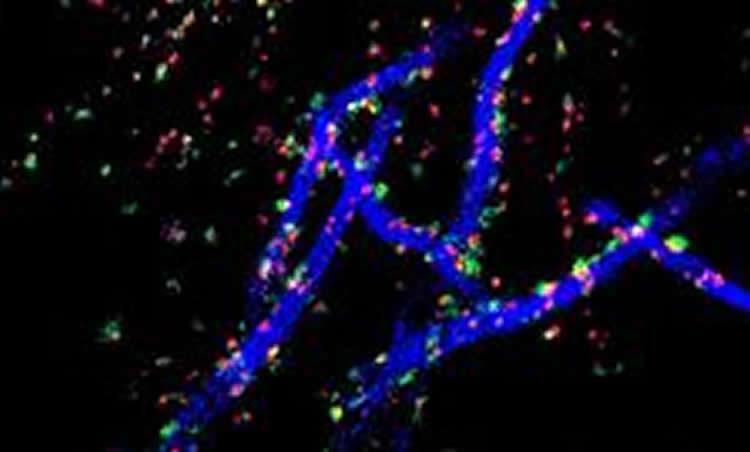
Using a technique dubbed “brainbow,” the Virginia Tech Carilion Research Institute scientists tagged synaptic terminals with proteins that fluoresce different colors. The researchers thought one color, representing the single source of the many terminals, would dominate in the clusters. Instead, several different colors appeared together, intertwined but distinct. Credit: Virginia Tech.

Using a technique dubbed “brainbow,” the Virginia Tech Carilion Research Institute scientists tagged synaptic terminals with proteins that fluoresce different colors. The researchers thought one color, representing the single source of the many terminals, would dominate in the clusters. Instead, several different colors appeared together, intertwined but distinct. Image Credit: Virginia Tech.

Neuroscientists know that some connections in the brain are pruned through neural development. Function gives rise to structure, according to the textbooks. But scientists have discovered that the textbooks might be wrong. Their results were published this week in Cell Reports.

In 2011, MIT neuroscientist Rebecca Saxe and colleagues reported that in blind adults, brain regions normally dedicated to vision processing instead participate in language tasks such as speech and comprehension. Now, in a study of blind children, Saxe’s lab has found that this transformation occurs very early in life, before the age of 4. The study, appearing in the Journal of Neuroscience, suggests that the brains of young children are highly plastic, meaning that regions usually specialized for one task can adapt to new and very different roles. The findings also help to define the extent to which this type of remodeling is possible.

New research suggests individuals with autistic traits may have more advanced creativity skills than those without such traits.

Physically fit people tend to have larger brain volumes and more intact white matter than their less-fit peers. Now a new study reveals that older adults who regularly engage in moderate to vigorous physical activity have more variable brain activity at rest than those who don’t. This variability is associated with better cognitive performance, researchers say.

Young adults diagnosed with attention deficit/hyperactivity disorder (ADHD) in adolescence show differences in brain structure and perform poorly in memory tests compared to their peers, according to new research from the University of Cambridge, UK, and the University of Oulu, Finland.

People who will develop dementia may begin to lose awareness of their memory problems two to three years before the actual onset of the disease, according to a new study published in the online issue of Neurology. The study also found that several dementia-related brain changes, or pathologies, are associated with the decline in memory awareness.

People with Alzheimer’s disease have fat deposits in the brain. For the first time researchers have discovered accumulations of fat droplets in the brain of patients who died from the disease and have identified the nature of the fat.

Finally this week, a computer analyzing speech has correctly identified five individuals who would later experience a psychotic episode against 29 who would not among a group of high-risk patients in a proof-of-principle study. The findings raise the prospect of a clinical tool to aid the diagnosis and prognosis of severe mental disorders such as schizophrenia.


Weekly Neuroscience Update

The stage when a brain is actively engaged in a new experience can be described as “online” activity. On the flip side of this neurological process, “offline” activity, or neural replay, is the process by which the brain rehearses what has been learned in order to strengthen the most important memories. The image is for illustrative purposes only. Image credit: NIH.

The stage when a brain is actively engaged in a new experience can be described as “online” activity. On the flip side of this neurological process, “offline” activity, or neural replay, is the process by which the brain rehearses what has been learned in order to strengthen the most important memories. The image is for illustrative purposes only. Image credit: NIH.

The permanence of memories has long thought to be mediated solely by the production of new proteins. However, new research has shown that the electrical activity of the brain may be a more primary factor in memory solidification.

Sleeping not only protects memories from being forgotten, it also makes them easier to access, according to new research. The findings suggest  that after sleep we are more likely to recall facts which we could not remember while still awake.

The tendency of more intelligent people to live longer has been shown, for the first time, to be mainly down to their genes by new research published in the International Journal of Epidemiology.

Dogs have a specialized region in their brains for processing faces, a new study finds.

The first ever genetic analysis of people with extremely high intelligence has revealed small but important genetic differences between some of the brightest people in the United States and the general population.

A new study, published in the Journal of the American Medical Association Neurology, found a strong association between insulin resistance and memory function decline, increasing the risk for Alzheimer’s disease. Insulin resistance is common in people who are obese, pre-diabetic or have Type 2 diabetes.

New brain research has mapped a key trouble spot likely to contribute to intellectual disability in Down syndrome.

Fundamental differences between how the brain forms during adolescence have been discovered in children with schizophrenia and their siblings, a new study shows. The study opens up new avenues for researchers to explore when developing treatment for the illness, which can be hugely debilitating for children.

Weekly Neuroscience Update

Axon initial segments (blue) and the synapses that form along them (red and green) are shown. Image credit: Winnie Wefelmeyer/MRC Centre for Developmental Neurobiology.

Axon initial segments (blue) and the synapses that form along them (red and green) are shown. Image credit: Winnie Wefelmeyer/MRC Centre for Developmental Neurobiology.

A new study characterises a novel way in which neurons remain electrically stable when confronted with chronic increases in neuronal activity.

Lithium chloride which is used as a mood stabiliser in the treatment of mental health problems, mainly bipolar disorder, could be used to treat arthritis according to a new study.

New research indicates that adults born very premature are more likely to be socially withdrawn and display signs of autism.

Scientists have found that existing anti-malaria drugs could be a potential treatment for Parkinson’s disease.

A number of studies presented at the Alzheimer’s Association International Conference, showed that regular supervised exercise sessions could help to improve symptoms in people with memory problems and dementia.

Brain scans of war veterans with posttraumatic stress disorder have led researchers to an area of the prefrontal cortex that appears to be a good predictor of response to treatment with SSRIs–the first-line drug treatment for PTSD.

New research findings show that body fat can send a signal that affects the way the brain deals with stress and metabolism.

Increasing the levels of a signaling molecule found in the brain can positively alter response to stress, revealing a potential new therapeutic target for treatment of depression.

Music training, begun as late as high school, may help improve the teenage brain’s responses to sound and sharpen hearing and language skills, suggests a new study.

Researchers have, for the first time, determined the rate at which the developing brain eliminates unneeded connections between neurons during early childhood.

Scientists have identified a critical function of what they believe to be schizophrenia’s “Rosetta Stone” gene that could hold the key to decoding the function of all genes involved in the disease.

Researchers have discovered a link between autism and genetic changes in some segments of DNA that are responsible for switching on genes in the brain.

Infants can use their expectations about the world to rapidly shape their developing brains, researchers have found.

Finally this week, there’s new evidence suggesting that women’s brains are especially vulnerable to Alzheimer’s disease and other problems with memory and thinking.

Weekly Neuroscience Update

Current treatment methods used are transcranial direct current simulation (tDCS) – which is application of a low intensity direct (constant) current between two electrodes on the head, and transcranial alternating current simulation (tACS) – which sees a constant electrical current flow back and forth. Image credit: Monash University.

Current treatment methods used are transcranial direct current simulation (tDCS) – which is application of a low intensity direct (constant) current between two electrodes on the head, and transcranial alternating current simulation (tACS) – which sees a constant electrical current flow back and forth. Image credit: Monash University.

Researchers have discovered a new technique to enhance brain excitability that could improve physical performance in healthy individuals such as athletes and musicians.

The constant movement of children with attention-deficit/hyperactivity disorder (ADHD) may be distracting — but the fidgeting also may improve their cognitive performance, a study has found.

It is known that sleep facilitates the formation of long-term memory in humans. In a new study, researchers show that sleep does not only help form long-term memory but also ensures access to it during times of cognitive stress.

An international team of neuroscientists has proved the uniqueness of screams for the first time. In a study, they discovered that screams possess very special acoustic properties: This makes them a specific type of vocal expression which is only used in stressful and dangerous situations.

A new study published in the journal Cerebral Cortex suggests people who speak two languages have more gray matter in the executive control region of the brain.

Structural brain abnormalities in patients with schizophrenia, providing insight into how the condition may develop and respond to treatment, have been identified in an internationally collaborative study

Memories that have been “lost” as a result of amnesia can be recalled by activating brain cells with light.

High blood levels of a growth factor known to enable new blood vessel development and brain cell protection correlate with a smaller size of brain areas key to complex thought, emotion and behavior in patients with schizophrenia, researchers report in the journal Molecular Psychiatry.

Scientists have discovered a link between autism and genetic changes in some segments of DNA that are responsible for switching on genes in the brain.

Finally this week, new research has found that types of empathy can be predicted by looking at physical differences in the brain. This raises the fascinating possibility that some kinds of empathy might be able to be increased by training or that it might be possible for people to lose their empathy over time.

Weekly Neuroscience Update

This image shows an overview of the Rehabilitation Gaming System. Image credit: Rehabilitation Gaming System.

This image shows an overview of the Rehabilitation Gaming System. Image credit: Rehabilitation Gaming System.

Using virtual reality to increase a patient’s confidence in using their paralyzed arm may be critical for recovery, according to research published in the open-access Journal of  NeuroEngineering and Rehabilitation.

A pioneering study conducted by leading researchers at the University of Sheffield has revealed blood types play a role in the development of the nervous system and may cause a higher risk of developing cognitive decline. The findings  seem to indicate that people who have an ‘O’ blood type are more protected against the diseases in which volumetric reduction is seen in temporal and mediotemporal regions of the brain like with Alzheimer’s disease for instance.

A star-shaped brain cell called an astrocyte appears to help keep blood pressure and blood flow inside the brain on a healthy, even keel, scientists report.

Thanks to advances in brain imaging technology, we now know how specific concrete objects are coded in the brain, to the point where we can identify which object, such as a house or a banana, someone is thinking about from its brain activation signature.

A new study finds some people can be trained to learn absolute pitch.

Scientists have discovered a previously unknown link between the brain and the immune system that could help explain links between poor physical health and brain disorders including Alzheimer’s and depression.

A team of neuroscientists has determined how a pair of growth factor molecules contributes to long-term memory formation, a finding that appears in the journal Neuron.

Our understanding of how a key part of the human brain works may be wrong. That’s the conclusion of a team at Oxford University’s Centre for Human Brain Activity (OHBA), published in journal Trends in Cognitive Sciences. Until now, it was thought that working memory – the way in which we deal with and respond to immediate demands – was underpinned by stable brain patterns. The OHBA team discovered that instead, the areas of the brain responsible for working memory are changing all the time.

A new study finds people with higher levels of moral reasoning have greater gray matter volume in brain regions linked to social behaviour, decision-making and conflict processing, compared with those who have lower levels of moral reasoning.

Genes linked to creativity could increase the risk of developing schizophrenia and bipolar disorder, according to new research.

One of the major challenges of cocaine addiction is the high rate of relapse after periods of withdrawal and abstinence. But new research reveals that changes in our DNA during drug withdrawal may offer promising ways of developing more effective treatments for addiction.

According to a piece of research by the UPV/EHU-University of the Basque Country, the capacity to recall specific facts deteriorates with age, but other types of memory do not.

Finally, this week, a new study has found that the brain shrinks over the course of the day, ending up smaller in the evening – before returning to its full size the next morning.

Weekly Neuroscience Update

A new study has found that while stereotypic shapes exist for this structure, individuals with a broader hippocampus tend to perform better on various tests that assess memory. The image is for illustrative purposes only. Image credit: Camillo Golgi.

A new study has found that while stereotypic shapes exist for this structure, individuals with a broader hippocampus tend to perform better on various tests that assess memory. The image is for illustrative purposes only. Image credit: Camillo Golgi.

New research challenges the long-held belief that a larger hippocampus is directly linked to improved memory function.

Premature birth can alter the connectivity between key areas of the brain, according to a new study led by King’s College London. The findings should help researchers to better understand why premature birth is linked to a greater risk of neurodevelopmental problems, including autistic spectrum disorders and attention deficit disorders.

Scientists have uncovered mathematical equations behind the way the brain forms – and even loses – memories.

New scanning methods which map the wiring of the brain could provide a valuable new tool to predict people at risk of schizophrenia, according to a new study.

People with depression may be more likely to develop Parkinson’s disease, according to a large study published in Neurology.

Medical researchers have known for several years that there is some sort of link between long-term depression and an increased risk of stroke. But now scientists are finding that even after such depression eases, the risk of stroke can remain high.

A new study from the University of Cambridge has identified one of the oldest fossil brains ever discovered – more than 500 million years old – and used it to help determine how heads first evolved in early animals.

Researchers have succeeded in reconstructing the neuronal networks that interconnect the elementary units of sensory cortex — cortical columns. The scientists say that this study marks a major step forward to advance the understanding of the organizational principles of the neocortex and sets the stage for future studies that will provide extraordinary insight into how sensory information is represented, processed and encoded within the cortical circuitry.

Smokers who are able to quit might actually be hard-wired for success, according to a study from Duke Medicine.

Scientists are attempting to mimic the memory and learning functions of neurons found in the human brain. To do so, they investigated the electronic equivalent of the synapse, the bridge, making it possible for neurons to communicate with each other.

Finally this week, in a study using functional magnetic resonance imaging, scientists found that our inherent risk-taking preferences affect how we view and act on information from other people.

Weekly Neuroscience Update

Using a new technique that allows them to enlarge brain tissue, MIT scientists created these images of neurons in the hippocampus. Image credit: Fei Chen and Paul Tillberg

Using a new technique that allows them to enlarge brain tissue, MIT scientists created these images of neurons in the hippocampus. Image credit: Fei Chen and Paul Tillberg

A team of researchers has taken a novel approach to gaining high-resolution images; they have discovered a method that enlarges tissue samples by embedding them in a polymer that swells when water is added. This allows specimens to be physically magnified, and then imaged at a much higher resolution.

Scientists have captured the exact point and time when information is exchanged between brain cells, a breakthrough that could explain how and why neurological conditions like schizophrenia or epilepsy occur. And rather than being a single condition, new research published in the American Journal of Psychiatry suggests that schizophrenia may be a group of eight genetically different diseases – each with their own symptoms.

Research from the Center for Vital Longevity at The University of Texas at Dallas has shed new light on which cognitive processes tend to be preserved with age and which ones decline.

The brains of some Iraq and Afghanistan combat veterans who survived blasts from improvised explosive devices (IEDs) and died later of other causes show a distinctive honeycomb pattern of broken and swollen nerve fibers throughout critical brain regions, including those that control executive function. The pattern is different from brain damage caused by car crashes, drug overdoses or collision sports, and may be the never-before-reported signature of blast injuries suffered by soldiers as far back as World War I.

Our brains can be electrically “tuned” to enable us to find what we’re looking for, even in a crowded and distracting scene, new research indicates.

Finally this week, higher cognitive skills are found in the children of mothers who are consistently able to support the development of their baby’s sense of autonomy, according to a study led by researchers at the University of Montreal.