Weekly Neuroscience Update

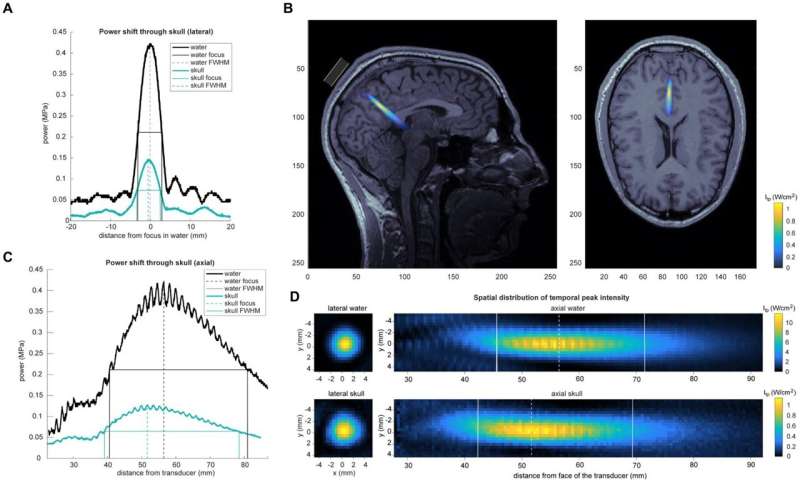
Credit: Frontiers in Human Neuroscience (2024). 

In a new study published in Frontiers in Human Neuroscience, researchers used low-intensity ultrasound technology to noninvasively alter a brain region associated with activities such as daydreaming, recalling memories and envisioning the future. They found that the technique can ultimately enhance mindfulness, marking a major advancement in the field of neuroscience.

New research finds that semaglutide, known as Ozempic/Wegovy, does not negatively impact brain health and may reduce cognitive problems and nicotine dependence.

Exposure to parental smoking (ParS) is associated with an increased risk for multiple sclerosis (MS) in later life in certain populations, according to a study presented at EAN 2024, the 10th Congress of the European Academy of Neurology, held from June 29 to July 2 in Helsinki.

Researchers have identified a new mutation in the ARPP21 gene linked to ALS. This discovery could improve ALS diagnosis and open avenues for personalized therapies. 

A new approach to improving uncertainty estimates in machine-learning models enhances prediction accuracy. The method uses the minimum description length principle to provide more reliable confidence measures for AI decisions, which is crucial in high-stakes settings like healthcare.

A recent study suggests that consciousness evolved not for individual survival, but for social purposes, helping humans communicate ideas and emotions. 

Researchers have discovered a neural activity pattern that can accurately predict and monitor the clinical status of OCD patients undergoing deep brain stimulation (DBS). This study highlights how this biomarker can guide DBS therapy, improving treatment outcomes for those with severe, treatment-resistant OCD.

New research could transform how we understand the way opioids affect the brain. 

A new study has found how the protein CGRP affects the brain’s lymphatic system, contributing to migraine pain. Their study reveals that CGRP prevents cerebrospinal fluid from draining, influencing migraine attacks.

Researchers have developed a neural network that mimics human decision-making by incorporating elements of uncertainty and evidence accumulation. 

Research published in Science Advances shows neurobiological underpinnings of sex and gender in children to better understand how sex (assigned at birth) and gender (identity and expression) influence the brain, and ultimately a person’s health.

A new study shows that by age three, children can understand others’ intentions using active mirror neurons.

For the first time, scientists have found that sleep can be detected by patterns of neuronal activity just milliseconds long, 1,000 times shorter than a second, revealing a new way to study and understand the basic brain wave patterns that govern consciousness. They also show that small regions of the brain can momentarily “flicker” awake while the rest of the brain remains asleep, and vice versa from wake to sleep.

A neuroimaging study of young people who exhibit a persistent pattern of disruptive, aggressive, and antisocial behavior, known as conduct disorder, has revealed extensive changes in brain structure.

Retired rugby players who have suffered multiple concussions have higher levels of certain proteins in their blood, which may make them more prone to developing diseases such as motor neuron disease (MND), according to a new study.

Researchers have used machine learning to define three subtypes of Parkinson’s disease based on the pace at which the disease progresses.

A new study reveals that psilocybin, the active compound in magic mushrooms, temporarily disrupts brain networks involved in introspective thinking, like daydreaming and memory. These changes persist for weeks, potentially making the brain more flexible and improving mental health. The findings could pave the way for psilocybin-based therapies for depression and PTSD. The research underscores the importance of using these drugs under medical supervision.

Scientists have established new criteria for a memory-loss syndrome in older adults that specifically impacts the brain’s limbic system.

A recent study links sleep preferences to brain performance, finding that “night owls” often score higher on cognitive tests than “morning larks.” Researchers analyzed data from over 26,000 people, highlighting that sleeping 7-9 hours a night optimizes brain function.

Finally this week, new research has demonstrated that activation of the brain’s reward system could boost recovery from a heart attack. 

Weekly Neuroscience Update

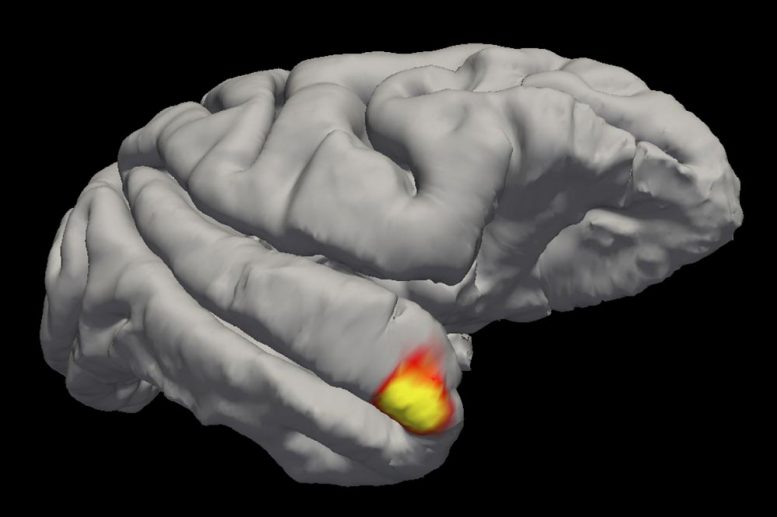
An area (red-yellow) in the brain’s temporal pole specializes in familiar face recognition. Credit: Sofia Landi

New research reveals a class of neurons in the brain’s temporal pole region that links face perception to long-term memory. It’s not quite the apocryphal grandmother neuron — rather than a single cell, it’s a population of cells that collectively remembers grandma’s face. The findings, published in Science, are the first to explain how our brains inculcate the faces of those we hold dear.

Researchers have discovered a previously unknown repair process in the brain that they hope could be harnessed and enhanced to treat seizure-related brain injuries.

A new study demonstrates that puppets can attract and hold the attention of children with autism spectrum disorder (ASD), raising the potential for developing more engaging therapies that strengthen social engagement and facilitate learning.

Artificial neural networks is helping researchers uncover new clues as to why people on the autism spectrum have trouble interpreting facial expressions.

Researchers have revealed how proteins accumulate in the incorrect parts of brain cells in amyotrophic lateral sclerosis (ALS) and demonstrate how it may be possible to reverse the accumulation. ALS, more commonly known as motor neuron disease, is a progressive fatal disease that affects nerve cells in the brain and spinal cord, causing loss of muscle control, with patients become increasingly paralyzed and losing the ability to speak, eat and breathe. 

Combining artificial intelligence, mathematical modeling, and brain imaging data, researchers have shed light on the neural processes that occur when people use mental abstraction.

A team of scientists has uncovered a system in the brain used in the processing of information and in the storing of memories—akin to how railroad switches control a train’s destination. The findings offer new insights into how the brain functions.

Finally this week, researchers have developed a powerful miniature brain platform to study the mechanistic causes of Alzheimer’s disease and to test dementia drugs in development.

Weekly Neuroscience Update

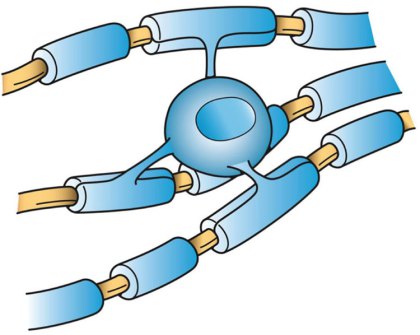
Oligodendrocytes are formed by a type of stem cell in the brain called oligodendrocyte progenitor cells (OPCs), and are responsible for re-wrapping, or remyelinating, the bare axons with myelin in response to injuries or diseases. This image is for illustrative purposes only and shows and artist’s representation of an oligodendrocyte. Credit Holly Fischer.

Oligodendrocytes are formed by a type of stem cell in the brain called oligodendrocyte progenitor cells (OPCs), and are responsible for re-wrapping, or remyelinating, the bare axons with myelin in response to injuries or diseases. This image is for illustrative purposes only and shows and artist’s representation of an oligodendrocyte. Credit Holly Fischer.

Like conducting an errant orchestra to play together, researchers are guiding processes that go awry in multiple sclerosis to repair themselves.

For the first time, scientists have discovered the exact mechanism rabies uses to efficiently enter the central nervous system, where it erupts in a toxic explosion of symptoms.

Neurons in human skin perform advanced calculations, previously believed that only the brain could perform.

Brain scans of college students have shed light on why people learn more effectively when their curiosity is piqued than when they are bored stiff. Researchers in the US found evidence that curiosity ramped up the activity of a brain chemical called dopamine, which in turn seemed to strengthen people’s memories.Students who took part in the study were better at remembering answers to trivia questions when they were curious, but their memories also improved for unrelated information they were shown at the same time.The findings suggest that while grades may have their place in motivating students, stimulating their natural curiosity could help them even more.

Researchers have discovered that T-cells – a type of white blood cell that learns to recognize and attack microbial pathogens – are activated by a pain receptor.

Quantitative tools dissect how two genes mutated in early-onset Parkinson’s disease collaborate in flagging damaged mitochondria.

A new study suggests a neural link between curiosity, motivation, and memory.

In a recent study published in the journal PLOS One, scientists uncovered a new pathway by which the brain uses an unusual steroid to control blood pressure. The study also suggests new approaches for treating high blood pressure and heart failure

Research using state-of-the-art eye-tracking technology has found that people suffering from chronic pain pay more frequent and longer attention to pain-related words than individuals who are pain-free.

The traditional view is that learning is based on the strengthening or weakening of the contacts between the nerve cells in the brain. However, this has been challenged by new research findings from Lund University in Sweden. These indicate that there is also a third mechanism – a kind of clock function that gives individual nerve cells the ability to time their reactions.

And finally this week, how your brain decides who to make friends with when you start university.

Can the damaged brain repair itself?

After a traumatic brain injury, it sometimes happens that the brain can repair itself, building new brain cells to replace damaged ones. But the repair doesn’t happen quickly enough to allow recovery from degenerative conditions like motor neuron disease (also known as Lou Gehrig’s disease or ALS). In this video, regenerative neurologist  Siddharthan Chandran walks through some new techniques using special stem cells that could allow the damaged brain to rebuild faster.


Death Of Broadcasting Legend Colm Murray

Colm Murray

Colm Murray

I am saddened to hear of the death last night of  the hugely popular RTÉ Sport broadcaster Colm Murray,  who was diagnosed with motor neurone disease three years ago.

In a moving documentary MND – The Inside Track, aired last year on RTE television, the broadcaster said that he wanted to do something “positive”, despite his personal struggle. His doctor, Trinity and Beaumont Professor Orla Hardiman, hailed him for his willingness “to be of service”, and to help find a future cure by partaking in medical trials. “Colm could easily have laid down to the disease and become a victim but he instead became a champion,” she said.

While he admitted at the time that he did not expect to be cured, Colm Murray said that it was his most “fervent wish that the coming years will see giant steps forward in the battle to find a cure”.

“It gives me something to hope for. It’s a faint glimmer of light at the end of a very dark tunnel.”

What is Motor Neurone Disease?

One in 50,000 people will develop the terminal disease, which attacks the central nervous system, and ultimately destroys all muscular function, but what exactly is this disease?

Amyotrophic Lateral Sclerosis (ALS)*,  also known as Motor Neuron Disease,  targets the nerves controlling the muscles of movement including postural muscles eventually disabling those nerves controlling chest breathing. Interestingly nerves regulating the senses, seeing, hearing, touching, tasting and smelling are not affected. Cognition is not affected – dementia is rare.

Incidence

ALS occurs in 2-5 people per 100,000 with slightly more males affected than females. The origin is still a mystery however elite sportsmen and women are disproportionally affected.

The podcast below gives an excellent in-dept explanation of ALS.

http://neuroscene.com/?p=204

*Amyotrophic Lateral Sclerosis 

= lack of:   Myo = muscle; Trophic = nourishment;

Lateral = location in the spinal cord;   Sclerosis = scarring.