Weekly Round Up

Welcome to the last weekly round-up of 2011. I have enjoyed putting this together each week and look forward to updating you with lots more new and exciting research in the field of neuroscience in the coming year.

New research has shown, for the first time, that the cortex, which is the largest zone of the brain and which is generally associated with high cognitive functions, is also a key zone for emotional learning.

When you experience a new event, your brain encodes a memory of it by altering the connections between neurons. This requires turning on many genes in those neurons. Now, MIT neuroscientists have identified what may be a master gene that controls this complex process.

A new technique for color-coding nerves involved in touch gives neuroscientists a much-needed tool for studying that mysterious sense.

When accidents that involve traumatic brain injuries occur, a speedy diagnosis followed by the proper treatment can mean the difference between life and death. A research team, led by Jason D. Riley in the Section on Analytical and Functional Biophotonics at the U.S. National Institutes of Health, has created a handheld device capable of quickly detecting brain injuries such as hematomas, which occur when blood vessels become damaged and blood seeps out into surrounding tissues where it can cause significant and dangerous swelling.

Shrinkage in certain parts of the brain may herald Alzheimer’s disease long before symptoms arise, according to new research.

At UCLA’s Laboratory of Integrative Neuroimaging Technology, researchers use functional MRI brain scans to observe brain signal changes that take place during mental activity. They then employ computerized machine learning (ML) methods to study these patterns and identify the cognitive state — or sometimes the thought process — of human subjects. The technique is called “brain reading” or “brain decoding.”

Compared to our other senses, scientists don’t know much about how our skin is wired for the sensation of touch. Now, research reported in the December 23rd issue of the journal Cell, a Cell Press publication, provides the first picture of how specialized neurons feel light touches.

Both children and the elderly have slower response times when they have to make quick decisions in some settings. But recent research suggests that much of that slower response is a conscious choice to emphasize accuracy over speed. In fact, healthy older people can be trained to respond faster in some decision-making tasks without hurting their accuracy – meaning their cognitive skills in this area aren’t so different from younger adults.

Scientists at the University of Cambridge have made a significant step in the development of a novel therapy that could one day help to slow down, or even halt, the damage caused by Parkinson’s disease, one of the most common neurodegenerative disorders.

Weekly Round Up

Image Source: The Dana Foundation

Our senses of sight and hearing work closely together, perhaps more than people realize, a new UCLA psychology study shows.

A team of neurobiologists  has shown for the first time that cortex, the largest area of the brain that is typically associated with higher functions such as perception and cognition, is also a prominent site of emotional learning.

Tiny electric currents applied across regions of the brain can improve hand movements in recovering stroke patients for a short period, an Oxford University study has demonstrated.

For the first time, scientists have proven that cannabis harms the brain. But the same study challenges previously-held assumptions about use of the drug, showing that some brain irregularities predate drug use.

How might keeping patients awake during surgery lead to the more successful removal of brain tumours? James Keidel, in his shortlisted entry for the 2011 Wellcome Trust Science Writing Prize, explains.

Researchers from the University of Bristol have discovered that a chemical compound in the brain can weaken the synaptic connections between neurons in a region of the brain important for the formation of long-term memories. The findings, published in the Journal of Neuroscience, may also provide a potential explanation for the loss of memory associated with Alzheimer’s.

Weekly Round Up

The Guardian newspaper reports on a new study on how video games can persist in our perception as fleeting hallucinations in an effect labelled ‘game transfer phenomena’.

Responding to faces is a critical tool for social interactions between humans. Without the ability to read faces and their expressions, it would be hard to tell friends from strangers upon first glance, let alone a sad person from a happy one. Now, neuroscientists from the California Institute of Technology (Caltech), with the help of collaborators at Huntington Memorial Hospital and Cedars-Sinai Medical Center, have discovered a novel response to human faces by looking at recordings from brain cells in neurosurgical patients.

New medical research tends to confirm that the human brain does not stop developing in adolescence, but continues well into our 20s, according to investigators at the University of Alberta.

A review of the evidence to date suggests that music therapy can help patients recover their movements after experiencing brain damage.

Frontotemporal dementia—triggered by cell death in the front and sides of the brain—accounts for about one-fourth of all cases of early-onset dementia. Now, scientists at UCLA have discovered that a certain signaling pathway plays a key role in the brain disorder and may offer a potential target for treatment.

Finally, the latest research shows that your learning can continue even while you sleep, so those adverts for products that help you learn while you sleep may be true after all!

Weekly Update

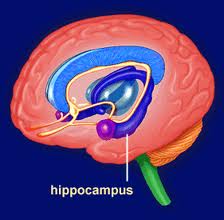
The formation of new memories and the retrieval of older memories are both evidenced in the hippocampus region of the brain

The hippocampus is a brain structure that plays a major role in the process of memory formation. It is not entirely clear how the hippocampus manages to string together events that are part of the same experience but are separated by “empty” periods of time. Now, new research published in the latest issue of the journal Neuron finds that there are neurons in the hippocampus that encode every sequential moment in a series of events that compose a discrete experience.

Sad people are apparently better than happy people at face recognition, an upside to being down in the dumps that is yielding insights into how mood can affect the brain. The findings, based on experiments involving college students, could help lead to better treatments for depression, psychologists say.

Our memories work better when our brains are prepared to absorb new information, according to a new study by MIT researchers.

A fundamental new discovery about how nerve cells in the brain store and release tiny sacs filled with chemicals may radically alter the way scientists think about neurotransmission – the electrical signaling in the brain that enables everything from the way we move, to how we remember and sense the world.

Weekly Round Up

Researchers Aim for Direct Brain Control of Prosthetic Arms Credit J. Contreras-Vidal/University of Maryland.

Engineering researchers at four U.S. universities are embarking on a four-year project to design a prosthetic arm that amputees can control directly with their brains and that will allow them to feel what they touch. The researchers have developed a prototype of a device that provides feedback to the wearer’s arm while objects are moved with a prosthetic ‘hand,’ a gripper. The prototype, which incorporates noninvasive monitoring of electrical activity and blood-oxygen levels in the brain, may be incorporated into next-generation prosthetic arms.

Millions of people with severe, treatment-resistant depression could improve their condition by adding an anti-inflammatory drug to their antidepressant medication, a leading consortium of UK researchers in biological psychiatry has reported.

A new study of the brain’s master circadian clock — known as the suprachiasmatic nucleus, or SCN — reveals that a key pattern of rhythmic neural activity begins to decline by middle age.

Vanderbilt University psychologists have found that our visual perception can be contaminated by memories of what we have recently seen, impairing our ability to properly understand and act on what we are currently seeing.

And finally, a new study provides clues about the cellular mechanisms of traumatic brain injury, a signature injury of the wars in Iraq and Afghanistan.

Weekly Round-Up

Transcranial magnetic stimulation can minimize forgetfulness

Memory failure is a common occurrence yet scientists have not reached a consensus as to how it happens. However, according to a new study at Beth Israel Deaconess Medical Center, Transcranial magnetic stimulation (TMS) is able to minimize forgetfulness by disrupting targeted brain regions as they compete between memories.

A new study which will be published in an upcoming issue of Psychological Science, finds changes in brain activity after only five weeks of meditation training.

In an ongoing quest to map the brain, scientists have determined how the brain works to understand others. According to a new study, the brain generates empathy in one manner for those who differ physically and in another method for those who are similar. In a paper published online by Cerebral Cortex, researcher Dr Lisa Aziz-Zadeh, suggests empathy for someone to whom you can directly relate — (for example, because they are experiencing pain in a limb that you possess) — is mostly generated by the intuitive, sensory-motor parts of the brain. However, empathy for someone to whom you cannot directly relate relies more on the rationalizing part of the brain.

The brain holds on to false facts, even after they have been retracted according to a report in Scientific American.

Psychologists have found that thought patterns used to recall the past and imagine the future are strikingly similar. Using functional magnetic resonance imaging to show the brain at work, they have observed the same regions activated in a similar pattern whenever a person remembers an event from the past or imagines himself in a future situation. This challenges long-standing beliefs that thoughts about the future develop exclusively in the frontal lobe.

Many dementia patients being prescribed antipsychotic drugs could be better treated with simple painkillers, say researchers from Kings College, London, and Norway.

Brain damage can cause significant changes in behaviour, such as loss of cognitive skills, but also reveals much about how the nervous system deals with consciousness. New findings reported in the July 2011 issue of Cortex demonstrate how the unconscious brain continues to process information even when the conscious brain is incapacitated.

Years after a single traumatic brain injury (TBI), survivors still show changes in their brains. In a new study, researchers from the Perelman School of Medicine at the University of Pennsylvania suggest that Alzheimer’s disease-like neurodegeneration may be initiated or accelerated following a single traumatic brain injury, even in young adults.

Weekly Round Up


All in the mind: Repressing bad memories for long enough can lead to us forgetting them completely, researchers claim

Fear burns memories into our brain, according to new research by University of California, Berkeley and if those memories are causing you distress, a team of researchers from Lund University in Sweden may have the answer. People can train their minds to erase embarrassing moments from their mind, according to their research. Scientists used EEG scans to monitor the parts of the brain that became active when volunteers actively tried to forget something. They were also able to pinpoint the exact moment a memory is ‘forgotten’, and claim that long-term suppression of a memory is a sure-fire way of permanently erasing it. The researchers say that mastering the technique could be useful for people who suffer from depression or post traumatic stress disorder, where constantly dwelling on upsetting or traumatic memories has a devastating effect on mental health.

And on the subject of PTSD, researchers at the Max Planck Institute of Psychiatry in Munich, are looking into the link between post-traumatic stress disorder and shrinkage of the hippocampus structure in the brain. (The hippocampus, which is Greek for “seahorse,” is a paired structure tucked inside each temporal lobe and shaped like a pair of seahorses, thence its name).

When we find something funny, our brains as well as our faces “light up” and the funnier we find a joke, the more activity is seen in “reward centres” – specific neurons which create feelings of pleasure, recent research shows.

Another region of the brain which also ‘lights up’  is in the medial orbito-frontal cortex when we experience beauty in a piece of art or a musical excerpt, according to new research funded by the Wellcome Trust. The study, published July 6 in the open access journal PLoS One, suggests that the one characteristic that all works of art, whatever their nature, have in common is that they lead to activity in that same region of the brain, and goes some way to supporting the belief that beauty does indeed lie in the beholder.


Weekly Round Up

Pathways within the brain can be strengthened by reading and language exposure

 Recent research shows that reading  boosts brain pathways and can actually affect understanding in nearly all school subjects – a great reason to encourage the reading habit in your children.

Scientists at the University of Michigan Health System have demonstrated how memory circuits in the brain refine themselves in a living organism through two distinct types of competition between cells. Their results, published  in Neuron, mark a step forward in the search for the causes of neurological disorders associated with abnormal brain circuits, such as Alzheimer’s disease, autism and schizophrenia.

The left and right halves of the brain have separate stores for working memory, the information we actively keep in mind, suggests a study published online yesterday by the Proceedings of the National Academy of Sciences.

Over time, and with enough Internet usage, the structure of our brains can actually physically change, according to a new study.

Bringing the real world into the brain scanner, researchers at The University of Western Ontario from The Centre for Brain and Mind can now determine the action a person was planning, mere moments before that action is actually executed.

And finally good news at last for coffee addicts.For years we’ve been told that caffeinated coffee was bad for us. It’s unhealthy and addictive, doctors warned. But as vindication for all who stuck by their energizing elixir, a new study published early online in the Journal of Alzheimer’s Disease,  shows that guzzling caffeinated coffee may actually be good for our brains. In fact, it may help keep Alzheimer’s at bay.  So enjoy that cuppa joe!

Weekly Round Up

Are teenage brains wired to predict the next big music hit?

The brain is constantly changing as it perceives the outside world, processing and learning about everything it encounters. In a new study, which will be published in an upcoming issue of Psychological Science, scientists find a surprising connection between two types of perception: If you’re looking at a group of objects and getting a general sense of them, it’s difficult for your brain to learn relationships between the objects.

Recent research published in the Journal of Consumer Psychology.suggests that the activity in teen brains may have some Nostradamus-like qualities when it comes to predicting the hits or misses of popular music.

Fear burns memories into our brain, and new research by University of California, Berkeley neuroscientists explains how in findings that have implications for the treatment of PTSD.

Ands speaking of memory…have you forgotten where you put your keys recently? Your brain might be in a better state to recall where you put them at some times than at others, according to new research from UC Davis.

Weekly Round Up

The brain has an inbuilt sense of justice

In this week’s round-up of the latest discoveries in the field of neuroscience,  New Scientist is asking the question of why we remember some dreams but not others? And Live Science takes a look at the top 10 mysteries of the mind, while a new study from the Karolinska Institute and Stockholm School of Economics shows that the brain has a built-in sense of justice.

The Telegraph reports on how brain scans reveal the power of art while researchers in Oslo and Sweden revealed that musicians’ brains are highly developed in a way that makes the musicians alert, interested in learning, disposed to see the whole picture, calm, and playful. The same traits have previously been found among world-class athletes, top-level managers, and individuals who practice transcendental meditation.

How does fear alter memory? A new study reveals that it can literally change our perception, a process that may help researchers better understand post-traumatic stress disorder (PTSD), other anxiety disorders and possibly conditions like autism. Dr Melanie Greenberg has also been looking at PTSD and the complexity of its mind-body effects and how our brains process trauma.