Think Feedback Not Failure

I came across an old newspaper cutting from the Irish Times recently – an article by NLP practitioner, Carmel Wynne on the theme of how we live up to our expectations of success or failure.

Your thoughts, feelings and actions run like habitual programmes in the brain.  Just as you can upgrade and change computer programs you can change your mental programmes.

Your thoughts have a structure that you can alter.  You can transform how you think. Doing so offers you life-changing possibilities because your mind is so powerful.

When you change your thinking about a situation you change your feelings.  It’s not the situation but how you think about it that makes it pleasant or unpleasant.

It’s amazing how your brain responds to what you believe is true.  What is considered overcrowding in a train is experienced as atmosphere in a nightclub.  If you hold the belief that too many people in a train make for an uncomfortable environment you are right.  If you think that lots of people crowded together in a nightclub make for a wonderful atmosphere your brain produces feelings of enjoyment in response to your thoughts.

Changing beliefs is not easy.  Yet one tiny change can have a huge impact on your life.  Think what would happen if you stopped using the word ‘Failure’.  It would bring about significant changes in how you think and feel.

Substitute the word ‘Feedback’ and you eliminate all the negative connotations that are linked with failure.  Feedback encourages constructive thinking and has a positive impact on creativity.

Failure is a concept that creates negativity.  It breeds pessimistic thinking.  The feelings of inadequacy and discouragement that accompany the belief that you are not measuring up discourage and de-motivate further efforts.

When you eliminate the concept of failure and replace it with the idea of getting feedback the whole focus shifts.  Feedback puts attention onto learning what works and doesn’t work.  This information allows the person to take risks and seek different solutions.

Feedback allows for flexibility.  When you recognise something is not working you take another approach.  You let go of ‘Ill-formed’ language when you discard the word ‘Failure’.  Just think of the impact of this tiny alteration.

The effect of replacing one word potentially changes your feelings and for those who are self-aware your internal experience.  What a powerful tool for personal growth and achievement.

I need hardly tell you that no two people respond to the same event in identical ways. Some people are naturally optimistic and others are pessimistic.  Psychologist Martin Seligman has discovered three major attitudes that distinguish the two.

Optimists view downturns in their lives as temporary blips in the graph.  Basically they see troubles and difficulties as delayed success.  They view misfortune as situational and specific.

The three Ps of pessimism are Permanence, Pervasiveness and Personalising.  Pessimists generalise, think they screw up everything and blame their own incompetence or ineffectiveness.

Helplessness, passivity and inaction influence the attitude of pessimists to setbacks.  Their belief that they screw up everything creates expectations of failure.

Realistic optimists maintain a positive attitude in the face of adversity.  Their ‘Can do’ attitude allows them use their skills to actively address problems.

Failure or feedback – it’s up to you!


Weekly Round-Up

Can meditation change brain signature?

This week..how the brain corrects perceptual errors, how meditation and hypnosis change the brain’s signature, a new method for delivering complex drugs directly to the brain, the brain development of children, and how regular exercise helps overweight children do better at school. 

New research provides the first evidence that sensory recalibration – the brain’s automatic correcting of errors in our sensory or perceptual systems – can occur instantly.

In Meditation, Hypnosis Change the Brain signature the Vancouver Sun reports that mindfulness training is ‘a valuable, drug-free tool in the struggle to foster attention skills, with positive spinoffs for controlling our emotions.’

Oxford University scientists have developed a new method for delivering complex drugs directly to the brain, a necessary step for treating diseases like Alzheimer’s, Parkinson’s, Motor Neuron Disease and Muscular Dystrophy.

A new study has found that a mother’s iron deficiency early in pregnancy may have a profound and long-lasting effect on the brain development of the child, even if the lack of iron is not enough to cause severe anemia.

Children with Tourette syndrome could benefit from behavioural therapy to reduce their symptoms, according to a new brain imaging study.

Regular exercise improves the ability of overweight, previously inactive children to think, plan and even do mathematics, Georgia Health Sciences University researchers report.

Image Credit: Photostock

Weekly Round Up

The neuroscience of dreaming

In this week’s round-up of the latest discoveries in the field of neuroscience – the neuroscience of dreaming and eureka moments, the teenage brain and new research into Parkinson’s and Alzheimers.

Scientists have long puzzled over the many hours we spend in light, dreamless slumber. But a new study from the University of California, Berkeley, suggests we’re busy recharging our brain’s learning capacity during this traditionally undervalued phase of sleep, which can take up half the night.

Perhaps while sleeping we are gaining new insight into our problems. A new brain-imaging study looks at the neural activity associated with insight. The research, published by Cell Press in the March 10 issue of the journal Neuron, reveals specific brain activity that occurs during an “A-ha!” moment that may help encode the new information in long-term memory.

I’ve written previously about the brain of a teenager being hot-wired to take risk, but now new research shows that just when teens are faced with intensifying peer pressure to misbehave, regions of the brain are actually blossoming in a way that heighten the ability to resist risky behavior.

Brain scans are being used to spot the early stages of Alzheimer’s disease in a UK-based pilot that could revolutionise its diagnosis. Doctors are using magnetic resonance imaging (MRI) scans to look at whether particular parts of the brain have started to shrink, which is a key physiological sign of Alzheimer’s. The MRI project is an example of “translational research” – that which will have a direct benefit for patients. And in more translational research news, it emerges that in studies of more than 135,000 men and women regular users of ibuprofen were 40% less likely to develop Parkinson’s disease.

Sign your name across your brain

THE LATEST OECD survey reveals that almost one-quarter of Irish 15-year-olds are below the level of literacy needed to participate effectively in society. How can this be after unprecedented investment in Irish schools in the past decade?*

Research in neuroeducation – the brain science of learning  suggests that something is lost in switching from book to computer screen, and from pen to keyboard. Neuroeducation may help to explain the reported decline in literary – particularly writing – skills observed in students over the past decade.

When it comes to learning – the pen is mightier than the keyboard

Do you remember that diary you so assiduously kept or that pen pal you wrote to? Little did you know then, but the mere act of picking up a pen and writing makes you smarter.  The answer may be that reading and writing involves a number of the senses. When writing by hand, our brain receives feedback from our motor actions, together with the sensation of manipulating the pencil to form words on paper. This nerve activity is significantly different from those we receive when touching and typing on a keyboard. This explains why a written signature carries so much weight in the legal and business world – because it reflects the wiring unique to that brain.

The knack to learning is – learning by doing

The trick to all learning is to create an enriched physical learning environment by employing as many of the five senses as possible – seeing, hearing, touching, tasting and smelling – in your learning.  Thus, when writing by hand, the movements involved leave behind a kind of motor memory in the sensorimotor part of the brain, which helps us recognize letters. This implies a nerve connection between reading and writing, and suggests that the sensorimotor system plays a role in the process of visual recognition during reading. This nerve connection is weak or absent in keyboard typing.

Work it out – with pen and paper

In addition, writing involves more ‘doing’ than that observed for keyboard typing and the ‘doing’ actually reinforces the learning process by helping us focus on the task at hand and strengthening the nerve connections. Furthermore, brain scans of avid writers show an activation of Brocas area – a language centre within the brain – while little or no activation of this area is observed in those who had learned by typing on keyboards.

Awaken the living roots in your head – with your pen

The poet and Nobel Laureate Seamus Heaney – a master craftsman of the written word – was not far off the mark in his poem ‘Digging’. The poem takes the form of a promise from the poet to his father and grandfather, whose lives were, spent literally digging the soil. In this short poem Heaney acknowledges that he is not a farmer, and will not follow their vocation. But at the start of his career, he vows to translate their virtues into another kind of work:

 The cold smell of potato mould, the squelch and slap
Of soggy peat, the curt cuts of an edge
Through living roots awaken in my head.
But I’ve no spade to follow men like them.
Between my finger and my thumb
The squat pen rests.
I’ll dig with it.


 *Irish students drop in rankings for literacy and maths, Irish Times, Wednesday, December 8, 2010

Treatment expectation will boost or reduce drug efficacy

If you read my post yesterday on the neuroscience of success, you will have read of the unbeatable combination of optimism tempered with reality. Having written that post, it was fascinating today to read a paper in the current edition of Science Translational Medicine, which shows that a patient’s belief that a drug will not work can indeed become a self-fulfilling prophecy.

Researchers from Oxford University identified the regions of the brain which are affected in an experiment where they applied heat to the legs of 22 patients, who were asked to report the level of pain on a scale of one to 100. The patients were also attached to an intravenous drip so drugs could be administered secretly.

The initial average pain rating was 66. Patients were then given a potent painkiller, remifentanil, without their knowledge and the pain score went down to 55.

They were then told they were being given a painkiller and the score went down to 39.

Then, without changing the dose, the patients were then told the painkiller had been withdrawn and to expect pain, and the score went up to 64.

So even though the patients were being given remifentanil, they were reporting the same level of pain as when they were getting no drugs at all.

Brain scans during the experiment also showed which regions of the brain were affected. The expectation of positive treatment was associated with activity in the cingulo-frontal and subcortical brain areas while the negative expectation led to increased activity in the hippocampus and the medial frontal cortex.

The limbic system comprises several cortical and subcortical brain areas that are interconnected. This system essentially controls emotions, and the autonomic and endocrine responses associated with emotions. The hippocampus also belongs to the limbic system and plays an important role in long-term memory. Activity in the medial frontal cortex predicts learning from errors.

This latest research could have important consequences for patient care and for testing new drugs. Negative expectations about a drug can reduce its efficacy quite significantly, as indeed positive expectation can boost its efficacy. So it seems, that once more, a positive attitude holds the key to another area of success!

Weekly Round-Up


fightclub

Does a part of our brain host its own fight club?

In this week’s round-up of the latest discoveries and research in the field of neuroscience – the science of falling in love, the brain’s own fight club and how blogging may hold the secret of making boys write properly.

Continuing with the Valentine’s theme this week, Judy Foreman examines the scientific basis of falling in love.

In the Feb. 10 online issue of Current Biology, a Johns Hopkins team led by neuroscientists Ed Connor and Kechen Zhang describes what appears to be the next step in understanding how the brain compresses visual information down to the essentials.

In Itching for a Fight Science News carries the story that a small part of our brain hosts its very own fight club.

And finally, a report in The Independent newspaper on how blogging may have solved one of the most pressing problems that has perplexed the education world for years: how to get boys to write properly.

Chinks in the brain circuitry reveal our worry spots

Some people are more prone to anxiety than others

Open any newspaper, switch on any talk show on the radio this weekend, and you will be spoilt for choice with anxiety-inducing stories.

Living in this time of global recession, rising mortgage rates, political instability, it almost appears as if the media encourages us to be anxious on a daily basis. 

Easy as it is to respond with anxiety to these stories, it is in fact the least productive response to have in life. It is like a mental pain we inflict on ourselves, clouding our judgment and reasoning, zapping us of the energy we need to move forward with our lives and make sound decisions. Anxious thoughts activate stress hormones that trigger the brain’s  fight or flight response. But this arousal is temporary, and when it abates, is followed by exhaustion, apathy and even depression.

Not everyone is affected to the same degree by this tendency to react to life’s events with anxiety. We all know people who fret at the slightest thing, while others have the ability to remain calm and composed in the face of crisis. At its most chronic this tendency can lead to panic-attacks, social phobias, obsessive-compulsive behavior and post-traumatic stress disorder.

Now scientists at the University of California, Berkeley have discovered a neural explanation for why some individuals are indeed more anxiety-prone than others. Their findings, published in Neuron, reveal that chinks in our brain circuitry could be the answer, and may pave the way for more targeted treatment of chronic fear and anxiety disorders.

In the brain imaging study, the researchers discovered two distinct neural pathways that play a role in whether we develop and overcome fears. The first involves an overactive amygdala, which is home to the brain’s primal fight-or-flight reflex and plays a role in developing specific phobias.

The second involves activity in the ventral prefrontal cortex, a neural region that helps us to overcome our fears and worries. Some participants were able to mobilize their ventral prefrontal cortex to reduce their fear responses even while negative events were still occurring, the study found.

“This finding is important because it suggests some people may be able to use this ventral frontal part of the brain to regulate their fear responses – even in situations where stressful or dangerous events are ongoing”, said UC Berkeley psychologist Sonia Bishop, lead author of the paper.

“If we can train those individuals who are not naturally good at this to be able to do this, we may be able to help chronically anxious individuals as well as those who live in situations where they are exposed to dangerous or stressful situations over a long time frame,” Bishop added.

Bishop and her team used functional Magnetic Resonance Imaging (fMRI) to examine the brains of 23 healthy adults. As their brains were scanned, participants viewed various scenarios in which a virtual figure was seen in a computerized room. In one room, the figure would place his hands over his ears before a loud scream was sounded. But in another room, the gesture did not predict when the scream would occur. This placed volunteers in a sustained state of anticipation.

Participants who showed overactivity in the amygdala developed much stronger fear responses to gestures that predicted screams. A second entirely separate risk factor turned out to be failure to activate the ventral prefrontal cortex. Researchers found that participants who were able to activate this region were much more capable of decreasing their fear responses, even before the screams stopped.

The discovery that there is not one, but two routes in the brain circuitry that lead to heightened fear or anxiety is a key finding, the researchers said, and it offers hope for new targeted treatment approaches.

“Some individuals with anxiety disorders are helped more by cognitive therapies, while others are helped more by drug treatments,” Bishop said. “If we know which of these neural vulnerabilities a patient has, we may be able to predict what treatment is most likely to be of help.”

Source: University of California, Berkeley

Weekly Round-Up

Does sleep help you learn? (Image: Big Stock)

In today’s weekly round-up..how memories take better hold during sleep, nature vs nurture, fake it til you make it, the nature of heroism, the pathology of Alzheimer’s, the neuroscience of fear and loathing, and more.

It appears from the latest research that the best way to hold onto a  newly learned poem, card trick or algebra equation may be to take a quick nap, for the brain is better during sleep than during wakefulness at resisting attempts to scramble or corrupt a recent memory. The study, published in Nature Neuroscience, provides new insights into the complex process by which we store and retrieve deliberately acquired information.

Athena Stalk in Your Brain and The Power of Rehearsing Your Future explains that the advice to “fake it til you make it” is backed up by some of the latest findings on the brain.

Interesting article from Jonah Lehrer in the Wall Street Journal on the perennial nature vs nurture debate. And in a similar vein,  is there a gene for heroism or is it down to social or economic factors?  Can neuroscience explain the nature of heroism?

The Neuroscience of Fear and Loathing is an interesting look at this universal emotion. 

Findings from a new study from the University of Haifa shows that people diagnosed as psychopathic have difficulty showing empathy, just like patients who have suffered frontal head injury.

Article in this week’s New York Times on a new brain scan tech­nol­ogy to detect Alzheimer’s pathol­ogy in the brain.

How Perception Reveals Brain Differences explores the ways in which brains differ from one another and the ways in which we owners perceive the world accordingly.

Set your Brain to Meditate: Part 3

This is the third part in this series on mindfulness and today we will be taking a look at our mental images and preconceived ideas, more on mindlessness, the power of imagination and the role of intuition in our lives.

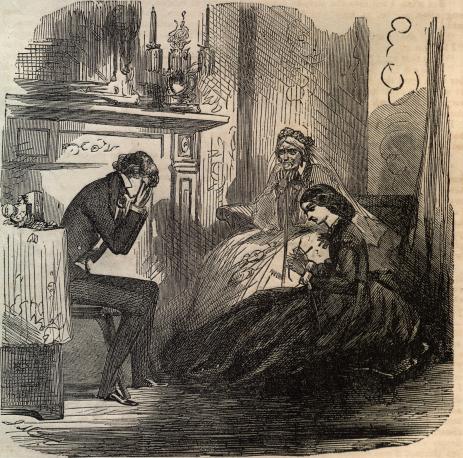
Ms. Havisham in Dickens’s Great Expectations

We need to be careful not to hold on to outmoded opinions and attitudes  – false frozen mental images –  best exemplified in Ms. Havisham in Dickens’s Great Expectations – who continued to wear her wedding dress in which she was abandoned many years before and which hung in torn and faded threads over her aged body.

Even a child can fall into this trap – for instance by regarding all old men as grumpy after just one experience with a grumpy old man and this impression may even be carried into adulthood.  In not bothering to change this perception in later life – a person can be locked into a false perception in later life that is likely to be reflected in their own experience – they will turn into an old grump too!  –  and this of course applies to other aspects of life.

Context is everything

Mindlessness results when people accept information without taking the context into account. However in mindfulness context is everything! In fact, psychologists argue that all pain is context dependent. Getting a bruise out on the football pitch will matter much less to us than if we sustain one at home.

The power of imagination

Imagination is the key to perceiving things differently. The Birdman of Alcatraz stuck in his prison cell for over 40 years managed to make his life a rich one by taking care of injured birds.  The message is simple – you can put up with anything as long as it is within a positive context – and with a personal vision everything can be put into perspective. In the famous words of Nitzche “If you have a WHY you can put up with almost any HOW”.

It’s not what you do – it’s the way that you do it!

Another key characteristic of mindfulness is a focus on process before outcome – doing rather than achieving. We look at a text book and assume that the author must be a genius …but this is a faulty comparison.  With rare exceptions most successes in life are the result of years of work that can be broken down into stages. Before you face any task no matter how daunting – ask not ‘can I do it?  – But – HOW can I do it?’  This type of approach sharpens your judgment and leads to increased self confidence.

Intuition is effortless and it works!

Sometimes it’s good to drop old habits and expectations and try something that may go against reason. Intuition is an important path to mindfulness. It may surprise you to know that the best scientists are intuitive – many spending years methodically validating what appeared to them in a flash of intuitive truth.

Intuition is achieved by escaping the heavy single minded striving of everyday life. It is believed to occur on those rare occasions when both hemispheres of the brain – the logical left side and the holistic right side – have a brief uninterrupted conversation. Intuition gives valuable information about our survival and success – ignore it at your cost.

The mindful person will go with what works even if it doesn’t make sense!

In summary, the beauty of mindfulness is that it is not work. It leads to greater control of your own thinking and can create a sense of quiet excitement about what is possible.

Try it and see for yourself!

Set Your Brain To Meditate

Part 1

Part 2