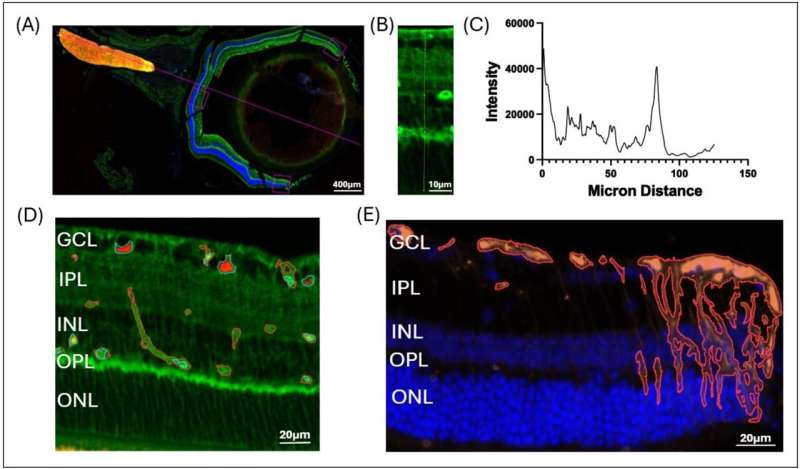
The eyes—specifically, the outer retina—may provide a window into early detection of Alzheimer’s disease long before irreversible brain damage occurs, according to new research from Houston Methodist. This discovery could dramatically change how the disease is diagnosed, monitored and treated.
Scientists have discovered that, in addition to the neocortex, a component of the human language network is present in the cerebellum, traditionally associated with motor coordination. Analysing brain scans of over 800 individuals, they found four cerebellar areas that activate during language tasks, with one area in the right posterior cerebellum dedicated specifically to language. This finding may alter our understanding of language learning and identify new targets for treating conditions such as aphasia.
A new study has found that a person’s object recognition ability, or the ability to distinguish visually similar objects, can predict who can spot an AI-generated face. The higher the ability, the easier it is for a person to tell the difference.
Researchers have found that “tuning” communication between the frontal and parietal lobes via non-invasive tACS led participants to act more unselfishly. In a study of 44 participants, those whose brain regions synchronised to a shared “gamma” rhythm were more likely to share money, suggesting that altruism is influenced by the coordination of specific brain networks rather than being a fixed trait.
People with greater exposure to air pollution face a higher risk of developing Alzheimer’s disease, according to a study published in the journal PLOS Medicine.
New research reveals that consistent cognitive engagement from childhood through late adulthood is associated with a significantly lower risk of Alzheimer’s disease. The study, which followed nearly 2,000 individuals, found that those with high “lifetime cognitive enrichment”—activities such as reading, learning languages, and visiting museums—delayed the onset of dementia symptoms by up to five years.
A new study finds that the brain learns better from spaced-out, rare events than from constant repetition, challenging 100 years of Pavlovian theory.
Researchers have developed a method to predict when someone is likely to develop symptoms of Alzheimer’s disease using a single blood test. In a study published in Nature Medicine, the researchers demonstrated that their models predicted the onset of Alzheimer’s symptoms within a margin of three to four years.
Finally this week, for the first time, scientists can record the full “electrical dialogue” occurring across an entire lab-grown human organoid.
A new study that is the first to compare inflammation and brain stress responses in long COVID-19 patients with individuals who have fully recovered shows that those with continued brain fog and other cognitive issues have a lower ability to adapt to stress and higher levels of inflammation in their brains.
Researchers have identified a remarkably small but critical piece of genetic code that helps determine how brain cells connect, communicate, and function.
Conditions such as Tourette syndrome (TS), schizophrenia, and attention-deficit/hyperactivity disorder (ADHD) have sex differences with unknown mechanisms. These sex-specific mechanisms may inform the development of more effective treatments.
A new study reveals that type 2 diabetes is associated with thinning of the brain’s cortex in older adults, particularly in regions responsible for memory and cognition.
Specific cannabinoids produced by the human body may help to quell excessive fear responses in people with post-traumatic stress disorder and anxiety, according to a Northwestern Medicine-led study published in the Journal of Clinical Investigation.
People taking antidepressants for more than two years are more likely to experience withdrawal symptoms compared to short-term users when they come off the medication, finds a new study.
Researchers have identified nine blood-based microRNAs that are elevated in teens diagnosed with depression, offering a potential biomarker for early detection. These molecules, absent in adult depression, may signal unique biological processes in adolescents.
People who have obstructive sleep apnea may have an increased risk of dementia if left untreated, according to a new study of UK electronic health care records.
New research reveals that acute stress can impair key brain functions involved in emotion regulation, particularly in individuals with distress-related disorders like depression, anxiety, and borderline personality disorder. The study found that executive functions—such as working memory, impulse control, and cognitive flexibility—are more likely to be disrupted in these individuals during high-stress moments.
A large-scale study of over 2,500 toddlers found no significant clinical differences in autistic traits between males and females at the time of early diagnosis.
A research team has uncovered the cause and molecular mechanism of chronic brain inflammation that results in repetitive behavioural disorders. The research team demonstrated that an inflammatory response by immune cells in the brain induces overactivity in certain receptors, which may, in turn, lead to the meaningless repetitive behaviours observed in people with autism spectrum disorder (ASD) and obsessive-compulsive disorder (OCD).
Measuring the interaction of brain networks could help identify teens at risk for dangerous drinking, according to a novel study that explored how brain signals relate to future drinking behaviour.
In a demographically diverse sample of healthy people, researchers found dramatic changes over the human lifespan in the brain’s “blue spot”—a tiny region involved in cognition and believed to be the first affected by neurodegenerative conditions including Alzheimer’s disease.
Researchers at Karolinska Institutet have identified three types of nerve cells connected to the intestinal villi, suggesting that previously unknown neural networks regulate fluid balance in the gut.
A study in rural China found that intensively lowering blood pressure significantly reduces the risk of dementia and cognitive decline in people with hypertension. Over 48 months, patients who received targeted care saw a 15% reduction in dementia and a 16% drop in cognitive impairment risk.
A new adaptive brain modeling framework offers fresh hope for objective diagnosis of neuropsychiatric disorders, which currently lack reliable neuroimaging biomarkers.
People who naturally stay up late, are more likely to experience faster cognitive decline than those who are early risers, according to a long-term study. Researchers found that unhealthy behaviors common in the evening, such as poor sleep, smoking, and drinking, may explain part of this risk.
A comprehensive new analysis reveals that depression significantly increases the risk of developing dementia, whether it begins in midlife or later in life.
Researchers have discovered how an ion channel in the brain’s neurons has a kind of “molecular memory,” which contributes to the formation and preservation of lifelong memories. The researchers have identified a specific part of the ion channel at which new drugs for certain genetic diseases could be targeted. The study, led by Linköping University in Sweden, has been published in Nature Communications.
A decade-long brain health study has released its full dataset, offering rare longitudinal insights into how cognition and brain structure change across adulthood.
Neuroscientists have discovered that the brain uses a dual system for learning through trial and error. This is the first time a second learning system has been identified, which could help explain how habits are formed and provide a scientific basis for new strategies to address conditions related to habitual learning, such as addictions and compulsions.
Finally, this week, parental education may protect offspring’s cognitive health later in life, according to a study published online May 30 in JAMA Network Open.
A new study that is the first to compare inflammation and brain stress responses in long COVID-19 patients with individuals who have fully recovered shows that those with continued brain fog and other cognitive issues have a lower ability to adapt to stress and higher levels of inflammation in their brains.
Researchers have identified a remarkably small but critical piece of genetic code that helps determine how brain cells connect, communicate, and function.
Conditions such as Tourette syndrome (TS), schizophrenia, and attention-deficit/hyperactivity disorder (ADHD) have sex differences with unknown mechanisms. These sex-specific mechanisms may inform the development of more effective treatments.
A new study reveals that type 2 diabetes is associated with thinning of the brain’s cortex in older adults, particularly in regions responsible for memory and cognition.
Specific cannabinoids produced by the human body may help to quell excessive fear responses in people with post-traumatic stress disorder and anxiety, according to a Northwestern Medicine-led study published in the Journal of Clinical Investigation.
People taking antidepressants for more than two years are more likely to experience withdrawal symptoms compared to short-term users when they come off the medication, finds a new study.
Researchers have identified nine blood-based microRNAs that are elevated in teens diagnosed with depression, offering a potential biomarker for early detection. These molecules, absent in adult depression, may signal unique biological processes in adolescents.
People who have obstructive sleep apnea may have an increased risk of dementia if left untreated, according to a new study of UK electronic health care records.
New research reveals that acute stress can impair key brain functions involved in emotion regulation, particularly in individuals with distress-related disorders like depression, anxiety, and borderline personality disorder. The study found that executive functions—such as working memory, impulse control, and cognitive flexibility—are more likely to be disrupted in these individuals during high-stress moments.
A large-scale study of over 2,500 toddlers found no significant clinical differences in autistic traits between males and females at the time of early diagnosis.
A research team has uncovered the cause and molecular mechanism of chronic brain inflammation that results in repetitive behavioural disorders. The research team demonstrated that an inflammatory response by immune cells in the brain induces overactivity in certain receptors, which may, in turn, lead to the meaningless repetitive behaviours observed in people with autism spectrum disorder (ASD) and obsessive-compulsive disorder (OCD).
Measuring the interaction of brain networks could help identify teens at risk for dangerous drinking, according to a novel study that explored how brain signals relate to future drinking behaviour.
In a demographically diverse sample of healthy people, researchers found dramatic changes over the human lifespan in the brain’s “blue spot”—a tiny region involved in cognition and believed to be the first affected by neurodegenerative conditions including Alzheimer’s disease.
Researchers at Karolinska Institutet have identified three types of nerve cells connected to the intestinal villi, suggesting that previously unknown neural networks regulate fluid balance in the gut.
A study in rural China found that intensively lowering blood pressure significantly reduces the risk of dementia and cognitive decline in people with hypertension. Over 48 months, patients who received targeted care saw a 15% reduction in dementia and a 16% drop in cognitive impairment risk.
A new adaptive brain modeling framework offers fresh hope for objective diagnosis of neuropsychiatric disorders, which currently lack reliable neuroimaging biomarkers.
People who naturally stay up late, are more likely to experience faster cognitive decline than those who are early risers, according to a long-term study. Researchers found that unhealthy behaviors common in the evening, such as poor sleep, smoking, and drinking, may explain part of this risk.
A comprehensive new analysis reveals that depression significantly increases the risk of developing dementia, whether it begins in midlife or later in life.
Researchers have discovered how an ion channel in the brain’s neurons has a kind of “molecular memory,” which contributes to the formation and preservation of lifelong memories. The researchers have identified a specific part of the ion channel at which new drugs for certain genetic diseases could be targeted. The study, led by Linköping University in Sweden, has been published in Nature Communications.
A decade-long brain health study has released its full dataset, offering rare longitudinal insights into how cognition and brain structure change across adulthood.
Neuroscientists have discovered that the brain uses a dual system for learning through trial and error. This is the first time a second learning system has been identified, which could help explain how habits are formed and provide a scientific basis for new strategies to address conditions related to habitual learning, such as addictions and compulsions.
Finally, this week, parental education may protect offspring’s cognitive health later in life, according to a study published online May 30 in JAMA Network Open.
Scientists have highlighted the most effective treatments for neurological diseases by overcoming one of medicine’s most difficult challenges: the blood–brain barrier. The findings offer new hope for patients with conditions including Alzheimer’s, and Parkinson’s disease, brain tumors, and epilepsy.
A study conducted in Finland showed that changes in the functioning of opioid neurotransmitters in the brain may underlie anorexia.
Poorer cardiovascular health in childhood and adolescence may be linked to early differences in brain structure, particularly in areas of the brain known to be affected in dementia in later life, according to a new scientific study.
Researchers have uncovered how specific patterns in brain activity can predict an individual’s sensitivity to pain, expanding opportunities for improved pain management strategies.
Delayed rapid eye movement (REM) sleep may be an early indicator of Alzheimer’s disease. Researchers found that participants with delayed REM sleep had higher levels of toxic proteins associated with Alzheimer’s and reduced levels of brain-derived neurotrophic factor (BDNF), which supports memory.
The microbial ecosystems in our mouths may impact cognitive function as we age, with pathogenic bacteria linked to cognitive decline.
New research suggests that mood swings in bipolar disorder are regulated by two clocks: the body’s 24-hour circadian rhythm and a dopamine-based clock that influences alertness. When these clocks align at specific intervals, they may trigger shifts between mania and depression.
A study in the Journal of Neuroscience reveals a new mechanism for how brain cells transmit signals from their tips to their nucleus, triggering gene activation crucial for learning and memory.
Investigators have discovered that activity in two widely distributed brain networks previously considered separate are actually correlated with each other and together play a key role in recognition memory, according to a study publishedin Cell Reports.
Cannabinoids offer new hope for safe and effective pain relief.
Researchers analyzed the genetic connection of retinal cells and several neuropsychiatric disorders. By combining different datasets, they found that schizophrenia risk genes were associated with specific neurons in the retina. The involved risk genes suggest an impairment of synapse biology, so the ability of neurons to communicate with each other. This impairment might also be present in the brains of schizophrenia patients.
Researchers at the University of Barcelona have identified a deficit in contrast perception in people with schizophrenia.
A study of nearly 1,000 people with post-COVID-19 syndrome (PCS) revealed that two-thirds still experienced significant symptoms, including reduced exercise capacity and cognitive performance, two years after infection. Persistent symptom clusters included fatigue, neurocognitive disturbances, and post-exertional malaise, with worse outcomes in individuals with obesity, lower education, or severe initial infections.
Finally this week, new research shows diets high in processed meat, fast food, and sugary drinks accelerate biological aging, even in young adults.
A new way of mapping activity and connections between different regions of the brain has revealed fresh insights into how higher-order functions like language, thought and attention, are organized.
Researchers at the University of Copenhagen have demonstrated that the brain’s ability to learn certain skills can be significantly enhanced if both the brain and nervous system are primed by carefully-calibrated, precisely-timed electrical and magnetic stimulations. This new research has the potential to open entirely new perspectives in rehabilitation and possibly elite sports.
A study of patients with epilepsy shows how making new neurons benefits cognition.
New AI software can read the brain scans of patients who have had a stroke to more accurately pinpoint when it happened and help doctors work out whether it can be successfully treated. It is hoped that the new technology will ultimately enable faster and more accurate emergency treatment of patients in a hospital setting.
Researchers have discovered the structural details of a brain receptor called GPR6, which could lead to new treatments for Parkinson’s disease.
Living in disadvantaged neighbourhoods is associated with higher blood pressure and lower cognitive performance, even in individuals without mild cognitive impairment. Researchers analyzed over 500 adults, finding that poor social and economic resources in neighborhoods exacerbate cardiometabolic health issues and reduce brain function.
Scientists have developed a new approach to learning through noninvasive manipulation of brain activity patterns.
A new study is helping solve the mystery as to why the brain shrinks in a unique pattern, known as atrophy, in chronic traumatic encephalopathy (CTE). Published in Acta Neuropathologica, this research provides novel evidence that cumulative repetitive head impacts are driving the specific patterns of brain degeneration found at the base of the folds of the surface of the brain, known as the cortical sulcus.
A global research collaboration has revealed a hidden cause of a rare intellectual disorder associated with severe language delay, epileptic seizures, motor impairment and brain abnormalities.
A multi-sensory digital treatment protocol, incorporating sensory integration, sensory substitution, and sensory masking (e.g., blindfolding), significantly improved participants’ performance on spatial memory tasks. Resting-state fMRI analysis showed that these improvements were associated with enhanced connectivity between memory-related brain regions, executive frontal areas, and the default mode network (DMN).
People with high blood pressure who also lack sleep may be at increased risk of reduced cognitive performance and greater brain injury, new research has found.
Researchers have uncovered a groundbreaking mechanism called Electro-Calcium (E-Ca) coupling that integrates electrical and calcium signaling in brain capillaries. This process ensures precise blood flow delivery to active neurons, crucial for brain health and cognitive function.
Researchers at the University of Helsinki have made a breakthrough in understanding what neural mechanisms allow the extreme sensitivity of human vision in darkness.
New research reveals that music can do more than trigger memories—it can alter their emotional tone. When participants recalled neutral stories while listening to emotionally charged music, they later remembered the stories as matching the music’s mood. These findings hint at music’s potential for therapeutic interventions, like reframing negative memories in depression or PTSD.
Finally this week a recent study has found that high blood sugar may impair brain health even in people without diabetes.
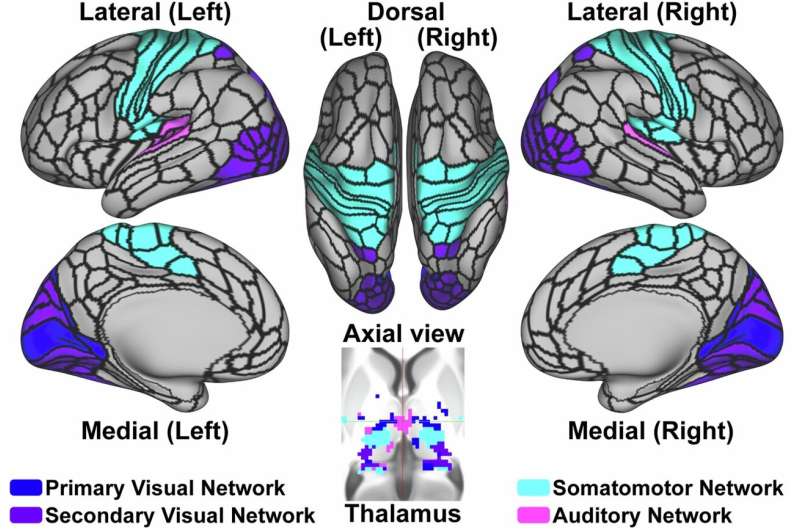
The four sensory networks of the brain network partition. The partition comprises four sensory networks, with the somatomotor network encompassing the somatosensory cortex. The thalamus contains parcels of each sensory network. Credit: Molecular Psychiatry (2024).
A new approach to analyzing brain scans could help researchers better understand psychiatric illness using much smaller groups of patients than previously thought necessary, potentially accelerating the development of more precise mental health treatments.
A new study reveals how specific brain cells called interneurons can act as our in-built traffic controllers. The findings are published in the journal PLOS Biology.
Younger and middle-aged patients seem to be disproportionately affected by neurologic manifestations of post-acute sequelae of severe acute respiratory syndrome coronavirus 2 infection (Neuro-PASC), according to a study publishedin the Annals of Neurology.
Investigators have defined new biologic and clinical biomarkers for better identifying patients with different stages of Parkinson’s disease and Lewy body dementia.
Researchers have developed the most detailed 3D computational models of key brain regions, including the hippocampus and sensory cortices, to better understand their roles in memory formation and connectivity.
New research provides critical insights into the role of sleep in motor learning for individuals recovering from traumatic brain injury (TBI). The study sheds light on how sleep, specifically a short nap, influences brain activity associated with motor skill improvement, with implications for optimizing rehabilitation strategies.
A recent study of high school football players found that concussions affect an often-overlooked but important brain signal.
Cognitive neuroscientists at Trinity College Dublin have published new research describing a brand new approach to making habit change achievable and lasting.
A new study uncovers constant communication between the human brain’s social cognitive network, responsible for understanding others’ thoughts, and the amygdala, known for processing fear and emotions. High-resolution brain scans revealed that this connection helps the brain integrate emotional importance into social interactions. This insight could lead to non-invasive treatments like transcranial magnetic stimulation (TMS) for anxiety and depression by targeting these regions. The findings highlight how evolutionary brain expansion enhances social understanding while linking it to ancient emotional processing centers.
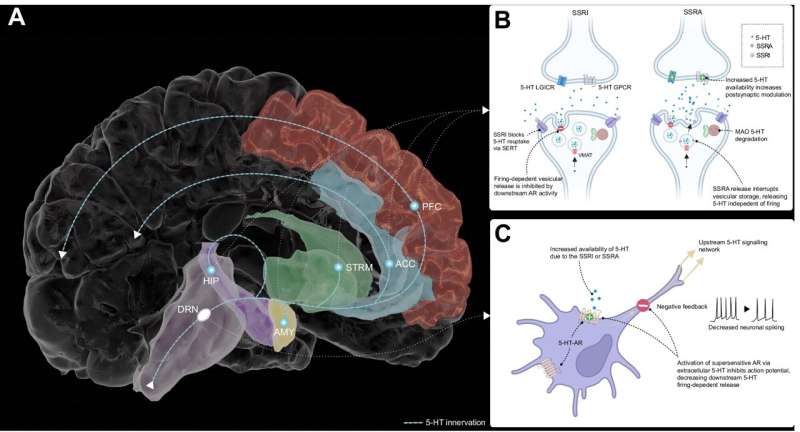
Neuroscientists have demonstrated that dopamine and serotonin work in opposition to shape learning.
Researchers have identified a novel role for the brain’s ‘locus coeruleus’ in sleep and its disruptions. This brain region facilitates the transition between NREM and REM sleep states while maintaining an unconscious vigilance toward the external world. Stress disrupts its functions and negatively impacts on sleep quality.
A new method to profile gene activity in the living human brain has been developed by researchers at FutureNeuro, the Research Ireland Center for Translational Brain Science and RCSI University of Medicine and Health Sciences, in collaboration with international partners. This innovative approach, published in JCI Insight, opens new avenues for understanding and treating neurological conditions such as epilepsy.
A study led by the University of Glasgow has revealed differences in the brains of pediatric and adult patients that might explain the sometimes catastrophic outcomes seen in children following a traumatic brain injury.
Finally this week, new research has examined the relationship of emotion regulation to real-world responses to stress to better understand stress-related increases in suicide risk in depression.
Scientists have determined that more than 60% of people who contracted COVID-19 have neurological symptoms that impact their cognitive function and quality of life, even two and three years after COVID-19.
Lip-read words can be decoded from the brain’s auditory regions similarly to heard speech, according to a new report that looked at how vision supports verbal perception.
Exercising is healthy, but not always appealing. Now research may have found a “switch” that activates the desire to get moving, as it shows that during exercise the muscle activates proteins which encourage further activity. The paper is published in Science Advances.
Researchers have demonstrated that a simple blood test that reflects brain health can predict which people are most at risk of suffering a stroke.
Our brain interprets visual information by combining what we see with what we already know. A study published in the journal Neuron, reveals a mechanism for learning and storing this existing knowledge about the world.
A newly developed brain-computer interface translates brain signals into speech with up to 97% accuracy, making it the most precise system of its kind.
Researchers have discovered that spontaneous brain activity during early development drives neural wiring before sensory experiences shape the brain. This spontaneous activity in neurons strengthens connections, following Hebb’s rule, where “cells that fire together wire together.”
A recently published study has unveiled significant findings that could enhance brain-computer interface (BCI) technologies, marking a crucial step towards more intuitive neuroprosthetic control and advanced rehabilitation therapies.
Scientists have developed a promising preventative therapeutic approach against Alzheimer’s disease, targeting the amyloid beta biomolecule that typically triggers nerve cell hyperactivity in the early stages of the brain disease.
A new study finds that COVID-19 proteins left in the brain may lower cortisol levels, leading to heightened inflammation and an exaggerated response to stressors.
Through a large-scale brain imaging study, an international research team has identified five patterns of age-related degeneration in older people experiencing mental decline. In their study, the team conducted the multi-year study of thousands of MRI scans using machine learning applications to find patterns in brain degeneration as people age.
A new machine learning model, AutMedAI, can predict autism in children under two with nearly 80% accuracy, offering a promising tool for early detection and intervention.
Researchers have discovered the neurons responsible for “item memory,” deepening our understanding of how the brain stores and retrieves the details of “what” happened and offering a new target for treating Alzheimer’s disease.
Contrary to previous research, a new study of female participants finds no link between migraine and the risk of developing Parkinson’s disease.
Children who have persistently raised inflammation are at a higher risk of experiencing serious mental health disorders including psychosis and depression in early adulthood, according to a study published today in JAMA Psychiatry.
Researchers have identified a link between brain overgrowth and the severity of social and communication symptoms in children with autism spectrum disorder.
People withmultiple sclerosis (MS) are far less likely than those without the condition to have the molecular hallmarks of Alzheimer’s disease, according to new research. The discovery suggests a new avenue of research through which to seek Alzheimer’s treatment.
Scientists have discovered a new method to regulate the receptors responsible for the sense of touch, potentially leading to more effective treatments for chronic pain.
Researchers have found that nondeceptive placebos—placebos given with the full knowledge that they are placebos—can effectively manage stress, even when administered remotely. In a two-week randomized controlled trial, participants experiencing prolonged stress were divided into two groups: one group received nondeceptive placebos, while the other served as a control.
Return to work two years after a breast cancer diagnosis is associated with higher cognitive speed performance before and after treatment, according to a study published in JAMA Network Open.
Researchers have discovered a mutation in the SARS-CoV-2 spike protein that enhances its ability to infect the central nervous system, potentially explaining neurological symptoms and long COVID. The mutation was found to allow the virus to better infiltrate the brain, with implications for future treatments targeting COVID-19’s effects on the brain.
Finally, this week, while everyone knows that a good night’s sleep restores energy, a new study finds it resets another vital function: memory.
Selective serotonin releasing agent is not negated by 5-HT1A supersensitivity, resulting in a rapid onset of pro-serotonergic activity. Credit: Nature Communications (2024).
Increasing serotonin can change how people learn from negative information, as well as improving how they respond to it, according to a new study published in the journal Nature Communications.
A recent review outlines the genetic complexity of schizophrenia, highlighting nearly 300 common genetic variants and over 20 rare variants linked to the disorder. Researchers emphasize that schizophrenia’s genetic basis is multifaceted, involving multiple genes rather than a single cause. Environmental factors like lifestyle and stress also play crucial roles.
Researchers have conducted a study examining the impact of alcohol on the electrical conductivity of the brain, highlighting its sedative effects.
New research indicates that 20% of children with an older sibling diagnosed with autism are also likely to be diagnosed with autism spectrum disorder (ASD), with this rate increasing to 36% when there are multiple siblings with ASD.
An international team of researchers has investigated the neural mechanisms underlying imitative behavior: a phenomenon that facilitates interaction and social cohesion and allows people to engage spontaneously with others. The study—published in Proceedings of the National Academy of Sciences (PNAS)—has uncovered new insights into how the brain regulates this behavior, opening up new perspectives for clinical and therapeutic applications.
Advanced MRI scans, particularly diffusion tensor imaging (DTI), have shown promise in predicting which concussion patients are at risk for long-term symptoms.
A significant breakthrough in the understanding of sleep mechanism opens new promise for treating sleep disorders and associated neuropsychiatric conditions: Scientists have pinpointed the melatonin receptor MT1 as a crucial regulator of REM (Rapid Eye Movement) sleep.
Innovative new research has revealed that the activity of different versions of genes expressed in the brain is associated with the accumulation of the protein tau, which is a hallmark of Alzheimer’s disease.
Finally this week, western classical music can significantly affect brain activity, particularly in people with treatment-resistant depression. By measuring brainwaves and neural imaging, scientists discovered that music synchronizes neural oscillations between brain regions associated with sensory and emotional processing, enhancing mood.
This video explores the storage, suppression, and rekindling of memories, drawing upon groundbreaking research from Trinity College Dublin.
In pursuit of perfect memory, we tend to categorize forgetfulness as a sign of cognitive weakness. However, emerging research suggests a paradigm shift in our understanding of memory and forgetfulness. In contrast to popular belief, forgetting is not a sign of a faulty memory, but rather the brain orchestrating a purposeful act to optimize our cognitive abilities.
This shift could revolutionize the way we perceive memory and its role in our daily lives. Instead of viewing forgetfulness as a shortcoming, it could be seen as a strategic mechanism, honed by evolution to filter and prioritize information. Imagine the implications this could have on education, where traditional methods often emphasize rote memorization. If forgetting is indeed a natural and adaptive process, educators might need to reconsider their approach to learning and information retention.
Furthermore, the understanding of forgetting and its purpose can hold profound implications for disciplines such as psychology and neurology. Expanding our comprehension of the mechanisms and functions of forgetting may serve to reshape the approaches taken toward memory-related disorders and therapeutic interventions. This, in turn, could potentially open up new avenues for research and treatment, propelling advancements in these crucial fields.
Neuroplasticity at Work Neuroplasticity, the brain’s ability to reorganize itself by forming new neural connections, plays a pivotal role in understanding the purposeful nature of forgetfulness. In a world where information overload is a daily reality, the brain must prioritize and organize data to function efficiently. This remarkable ability allows the brain to filter out irrelevant information and focus on what’s essential. The brain’s plasticity enables it to form new neural connections and reorganize existing ones, facilitating adaptation to new environments and learning new skills. Understanding the brain’s capacity for adaptation and prioritization sheds light on its incredible resilience and capability to thrive in diverse and demanding circumstances.
Learning from Mistakes Forgetfulness also serves as a valuable tool in learning from our mistakes. It allows us to filter out the less important information and retain only the most crucial lessons from our experiences. This process of selective forgetfulness aids in simplifying complex situations and extracting the key takeaways, ultimately contributing to a more refined learning process. By discarding superfluous details, our minds are better equipped to discern patterns and identify the core factors that contributed to specific outcomes. This, in turn, empowers us to make more informed decisions in the future and navigate similar situations more effectively. It’s fascinating to consider how our brains have evolved this adaptive mechanism to optimize the learning process and enable us to continuously improve our responses to various challenges.
The Role of Emotions Emotions play a significant role in the encoding and retrieval of memories. The brain tends to retain emotionally charged experiences more vividly, while less emotionally significant details may fade away. Forgetfulness, therefore, is not an indiscriminate process but rather a nuanced response influenced by the emotional context of our memories. This phenomenon highlights the interconnectedness of our emotional experiences and memory formation. The amygdala, a key player in processing emotions, is closely linked to the encoding and storage of emotional memories. When we encounter a particularly emotional event, the amygdala sends a signal to the hippocampus, a region crucial for forming new memories, enhancing the vividness and strengthening the imprint of that experience in our minds.
Understanding the impact of emotions on memory not only provides insight into the workings of the human mind but also has practical implications. For instance, educators can leverage emotionally charged experiences to enhance students’ retention of material. Similarly, in therapeutic settings, acknowledging the emotional context of memories is essential to address and process traumatic experiences effectively.
In reevaluating our understanding of forgetfulness, it becomes clear that our brains are not simply fallible machines prone to glitches. Instead, forgetfulness is a purposeful act orchestrated by our brains to optimize cognitive function in an ever-changing environment. When we consider the concept of forgetfulness in this light, we start to recognize the remarkable abilities of our brains to prioritize and adapt in response to the constant influx of new information and experiences. Rather than viewing forgetfulness as a shortcoming, we can appreciate it as a strategic process that allows our minds to maintain efficiency and relevance in a dynamic reality. This perspective invites us to explore the interplay between forgetting and remembering, shedding light on the delicate balance that sustains our cognitive prowess.
Loneliness, often considered a pervasive and silent epidemic, extends its influence far beyond emotions. Recent research has delved into the relationship between loneliness and the brain, revealing a complex interplay between loneliness and our brain’s neural patterns. The findings reveal that irrespective of social connections, lonely individuals exhibit distinct brain responses, underscoring the profound influence of this emotional state on neurological function.
The Stress Response and Cortisol
Loneliness emerges as a trigger for the stress response embedded in the brain’s complex architecture. This emotional state sets off a cascade of physiological reactions, with the release of stress hormones, particularly cortisol. Cortisol, often referred to as the “stress hormone,” serves as a vital player in the body’s response to challenging situations. However, when loneliness becomes a persistent companion, the continuous surge of cortisol can become a double-edged sword, influencing various aspects of brain health.
Memory, a fundamental component of cognitive function, becomes susceptible to the influence of heightened cortisol levels. Chronic exposure to stress hormones has been associated with memory impairment, affecting both the formation of new memories and the retrieval of existing ones. The toll on memory processes paints a vivid picture of how loneliness, as a chronic stressor, can compromise cognitive abilities.
Moreover, the prefrontal cortex, a pivotal region of the brain responsible for higher-order functions such as decision-making, emotional regulation, and social behavior, becomes a focal point of the impact of loneliness. Prolonged exposure to elevated cortisol levels has been linked to structural changes in the prefrontal cortex, including a reduction in size. This structural alteration may contribute to difficulties in decision-making and emotional regulation, creating a cognitive landscape where the challenges faced by lonely individuals extend beyond mere feelings of isolation.
Inflammation: Loneliness’s Silent Companion
Loneliness has been linked to a silent companion—increased levels of inflammation in both the body and the brain. This chronic inflammatory state may have broader implications for neurological health, potentially contributing to cognitive decline and various neurological conditions.
In response to chronic loneliness, the body’s immune system becomes activated, leading to a persistent state of inflammation. This inflammatory response is not confined to peripheral tissues; it permeates the central nervous system, reaching the brain. The intricate crosstalk between the immune system and the brain reveals the far-reaching consequences of loneliness on neurological health.
The chronic inflammatory state associated with loneliness is of particular concern due to its potential implications for cognitive function. Research suggests that prolonged exposure to elevated levels of inflammation may contribute to cognitive decline and an increased risk of various neurological conditions. The brain, normally resilient and adaptive, can become vulnerable to the systemic effects of inflammation, leading to disruptions in neural circuits and cognitive processes.
In the context of loneliness, the inflammatory response may compromise the integrity of the blood-brain barrier, a protective barrier that regulates the passage of substances between the bloodstream and the brain. This compromise can allow inflammatory molecules to enter the brain, where they may trigger localized inflammation and disrupt normal neural function.
Moreover, the chronic inflammatory state linked to loneliness may contribute to oxidative stress—a condition characterized by an imbalance between free radicals and antioxidants in the body. Oxidative stress is known to play a role in neurodegenerative processes and has been implicated in conditions such as Alzheimer’s disease and other cognitive disorders.
Structural Changes in the Brain
Loneliness isn’t merely a psychological state—it extends its influence to cognitive performance. A growing body of research paints a compelling picture of the relationship between loneliness and cognitive performance, emphasizing that loneliness isn’t merely a psychological state—it’s a cognitive challenge that leaves its mark on the brain.
As previously stated, the brain, intricately sensitive to the nuances of social connection, undergoes structural changes in response to loneliness. The hippocampus, a vital region for learning and memory, appears to be particularly susceptible. Research suggests that alterations in the volume of the hippocampus may occur in lonely individuals. These structural changes may not only be markers of the cognitive challenges associated with loneliness but could also contribute to a cycle where loneliness begets cognitive difficulties, and cognitive difficulties perpetuate feelings of isolation.
Lonely individuals, it appears, may navigate a more demanding cognitive landscape compared to their socially connected counterparts. Executive functions, the high-order cognitive processes responsible for tasks such as decision-making, problem-solving, and planning, may be particularly vulnerable in the face of loneliness. Research suggests that lonely individuals may encounter challenges in efficiently executing these cognitive processes, potentially impacting their ability to navigate complex situations and make sound decisions.
Attention, a cornerstone of cognitive performance, also falls under the sway of loneliness. Lonely individuals may exhibit difficulties in sustaining attention and may be more prone to distractions, contributing to decreased cognitive efficiency. The persistent feeling of social isolation can divert cognitive resources towards monitoring social threats or interpreting ambiguous social cues, leaving fewer resources available for tasks that require sustained attention and focus.
Memory, another pillar of cognitive function, is not immune to the influence of loneliness. Studies indicate that lonely individuals may experience alterations in memory processes, affecting both the encoding and retrieval of information. The emotional toll of loneliness can introduce a cognitive bias, influencing the way memories are stored and recalled, potentially contributing to a distorted perception of social experiences.
Sleep Disturbances and Cognitive Consequences
Poor sleep quality, a well-established consequence of loneliness, is more than just a nightly inconvenience. It is a significant factor influencing overall brain health. During sleep, the brain undergoes crucial processes that contribute to cognitive functioning, memory consolidation, and emotional regulation. Disruptions in these processes due to poor sleep quality can result in cognitive consequences that exacerbate the challenges faced by lonely individuals.
Attention, concentration, and decision-making—all critical components of cognitive function—can be impaired when sleep quality is suboptimal. The brain’s ability to process information, learn new things, and adapt to changing circumstances may suffer, amplifying the cognitive challenges faced by those contending with both loneliness and sleep disturbances.
The link between loneliness and sleep disturbances is multifaceted. The emotional distress associated with loneliness can manifest as heightened arousal, anxiety, or rumination during the night, impeding the ability to initiate or maintain restful sleep. Individuals grappling with loneliness may find themselves caught in a cycle where the quiet solitude of the night magnifies their feelings of isolation, further complicating their struggle for a peaceful night’s sleep.
Mental Health and the Loneliness Connection
Loneliness, far from being a fleeting emotion, is intricately intertwined with mental health, and the consequences of this connection reverberate deep within the neural circuits of the brain. Research consistently underscores the heightened risk of mental health issues, particularly depression and anxiety, in individuals grappling with loneliness. The psychological distress stemming from a perceived lack of social connection can cast a shadow over an individual’s thoughts and emotions, contributing to the development or exacerbation of these conditions.
At the neurobiological level, loneliness influences neurotransmitter levels, the chemical messengers that facilitate communication between nerve cells in the brain. Dopamine, serotonin, and norepinephrine, crucial players in regulating mood and emotional states, are particularly affected. Loneliness may lead to imbalances in these neurotransmitter systems, contributing to the manifestation of depressive symptoms and heightened anxiety.
Furthermore, loneliness disrupts the delicate neural circuits responsible for mood regulation. The brain regions involved in emotional processing, such as the amygdala and the prefrontal cortex, experience altered activity in response to chronic loneliness. The amygdala, known for its role in processing emotions, may become hyperactive, amplifying the perception of social threats and fostering a heightened state of emotional arousal. Meanwhile, the prefrontal cortex, essential for regulating emotional responses, may exhibit decreased function, leading to difficulties in emotion regulation and decision-making.
The neural changes associated with loneliness create a feedback loop, reinforcing emotional distress and further compromising mental well-being. Prolonged exposure to these alterations can contribute to the persistence and exacerbation of mental health conditions, creating a challenging cycle for individuals trapped in the grip of loneliness.
Social Pain and Pleasure Systems
Neuroscientific studies reveal that loneliness triggers brain regions associated with physical pain. The neural patterns that activate during experiences of loneliness mirror those observed in response to physical distress, reinforcing the concept of loneliness as a form of social pain. The brain, it seems, interprets social isolation with a response akin to physical injury.
Conversely, positive social interactions, genuine connections, and shared moments of companionship activate the brain’s reward centers. The pleasure derived from such interactions is not merely subjective; it is deeply rooted in the brain’s intricate circuitry. Dopaminergic pathways, particularly those associated with the brain’s reward system, light up, releasing neurotransmitters that generate feelings of happiness, satisfaction, and contentment.
The neurological impact of loneliness is a multifaceted phenomenon, with implications that extend beyond emotional well-being. Understanding and addressing the neuroscience of loneliness becomes imperative for fostering a healthier, more resilient brain.




 inside-the-brain.com