Weekly Neuroscience Update

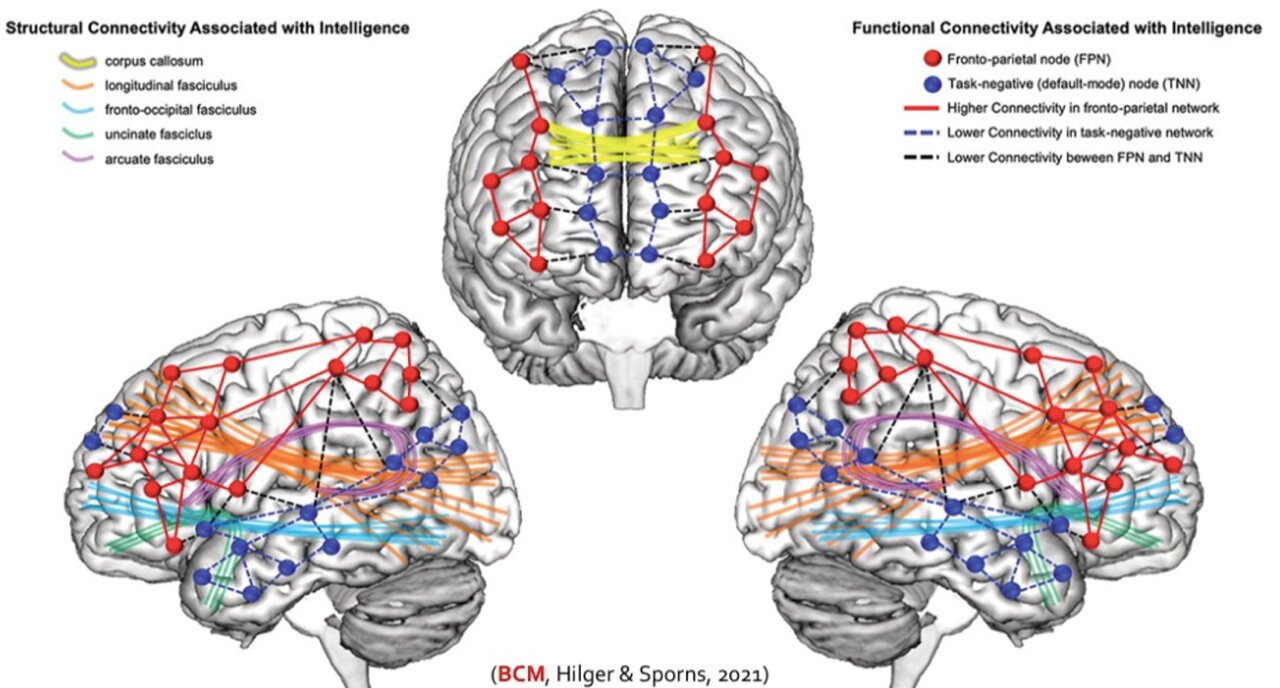
The Brain Connectivity Model of Intelligence. Schematic illustration of selected brain connections that have been linked to intelligence differences across studies. Adapted from Hilger & Sporns, 2021. Credit: Thiele et al.

Neuroscientists have developed machine learning models to predict human intelligence.

Researchers have found that incorporating specific nutrients into a regular diet may reduce iron buildup in the brain—a factor associated with cognitive decline in normal aging. The research team said the findings offer valuable insights for future clinical trials aimed at evaluating the impact of similar nutritional intake on brain iron accumulation and cognitive function.

The short-term boost our brains get after we do exercise persists throughout the following day, suggests a study led by UCL (University College London) researchers.

Thirteen proteins linked to brain aging in humans are identified in a Nature Aging paper. Changes in the concentrations of these blood proteins may peak at 57, 70, and 78 years old in humans, and suggest that these ages may be important for potential interventions in the brain aging process.

Brain scans show vulnerability to gaming addiction in teens.

A team of scientists has uncovered a novel mechanism that reshapes our understanding of how blood flow is regulated in the brain. The study, published in The Proceedings of the National Academy of Sciences introduces Electro-Calcium (E-Ca) Coupling, a process that integrates electrical and calcium signaling in brain capillaries to ensure precise blood flow delivery to active neurons.

Researchers at the Yale School of Medicine found structural and functional alterations in specific brain regions of individuals with opioid use disorder. The study’s results were published in Radiology.

A new study has identified a unique brain network that links varied patterns of brain atrophy, or shrinkage, associated with schizophrenia. By combining neuroimaging data from multiple studies involving more than 8,000 participants, the research team found a specific connectivity pattern of atrophy that was present across different stages and symptoms of schizophrenia—and distinct from brain networks associated with other psychiatric disorders.

New research provides valuable insights into the brain-body immune connection, identifying key communication hubs in the dural sinuses and skull bone marrow at the back of the head.

New research shows that slow-wave sleep strengthens synaptic connections in the neocortex, making it more receptive to long-term memory formation. Researchers found that during deep sleep, synapses in the neocortex reach peak efficiency at precise moments within slow-wave oscillations.

A new study suggests how brain, with sleep, learns meaningful maps of spaces.

A large-scale study revealed that genetic variants linked to dyslexia are associated with differences in brain areas controlling motor coordination, vision, and language. Using data from over a million individuals, researchers calculated genetic “polygenic scores” for dyslexia and analyzed their relationship to brain structures. Higher genetic risk for dyslexia was tied to lower volumes in brain regions related to speech processing and movement, and increased volumes in the visual cortex. Differences in the brain’s internal capsule, which connects regions, were also observed.

Cognitive impairment, especially in learning and memory, is more likely among people with epilepsy, according to a newly published study.

A recent study explores how connections across the entire brain predict human intelligence, moving beyond traditional focus on specific brain areas like the prefrontal cortex. Using fMRI data from over 800 individuals, researchers analyzed communication between brain regions to predict fluid, crystallized, and general intelligence scores. Findings reveal that distributed brain-wide connections play a crucial role, surpassing existing models that emphasize localized regions. This research highlights intelligence as a global property of the brain, offering fresh perspectives for understanding cognitive processes.

The chromosomal disorder 22q11.2 deletion syndrome (22q) has emerged as one of the strongest risks for schizophrenia.

New research reveals that brain structure varies with reading ability, particularly in the left hemisphere. Better readers have distinct traits, including a larger anterior temporal lobe for integrating word meaning and a thicker left Heschl’s gyrus for phonological processing.

Night shifts and poor sleep quality are associated with an increased risk for incident epilepsy, according to a study published in BMC Public Health.

People with severe, treatment-resistant depression who received a nerve-stimulating therapy showed significant improvement in depressive symptoms, quality of life and ability to complete everyday tasks after a year, according to the results of a national, multicenter clinical trial.

Finally this week, researchers have found a relationship between lifestyle choices that affect dementia risk and early signs of aging in the brain.

Weekly Neuroscience Update

(A) Brain regions where spectra were measured (yellow box) (B) 1H MR spectrum in the hippocampus: Hippocampal taurine signal shown at 3.4 ppm (arrow). Black line: actual measured spectrum. Red line: LCModel fitting spectrum. Credit: Korea Basic Science Institute (KBSI)

For the first time, a research team in Korea has discovered there is a significant relationship between depression and the taurine concentration in the hippocampus, an area of the brain responsible for memory and learning functions. This discovery provides the opportunity to publicize the role and importance of taurine in future prevention, diagnosis, and treatment of depression.

A recent study reveals that individuals who experienced childhood adversity, such as neglect or abuse, faced higher chances of COVID-19 hospitalization or mortality in adulthood.

Time spent watching television or playing computer games has measurable and long-term effects on children’s brain function, according to a review of 23 years of neuroimaging research, which—while showing negative impacts—also demonstrates some positive effects.

A first-of-its-kind study has identified overactive inflammation and loss of critical protection mechanisms in the brain as potential contributors to suicide risk.

An international team of scientists has uncovered the vital role of microglia, the immune cells in the brain that acts as its dedicated defense team, in early human brain development. By incorporating microglia into lab-grown brain organoids, scientists were able mimic the complex environment within the developing human brain to understand how microglia influence brain cell growth and development.

A novel study finds a link between childhood physical fitness and cerebellar grey matter volume in adolescents.

Mayo Clinic researchers have identified new scoring criteria allowing for the detection of treatable forms of rapidly progressive dementia (RPD) with reasonably high confidence during a patient’s first clinical visit. This scoring criteria may allow physicians to substantially reduce the time it takes to begin treatment. The findings are published in the Annals of Neurology.

A new sudy has identified the top three genes responsible for traumatic brain injury complications.

Researchers have made a discovery that sheds light on how our brain cells manage to efficiently replace older proteins. This process is crucial for maintaining effective neural communication and ensuring optimal cognitive function.

A pair of studies has uncovered novel cellular mechanisms that are involved in two types of genetic amyotrophic lateral sclerosis, or ALS.

In a study published in the Journal of Neuroscience Research, psychological assessments indicated that people who regularly use cannabis, or marijuana, tend to have a greater understanding of the emotions of others. Brain imaging tests also revealed that cannabis users’ anterior cingulate—a region generally affected by cannabis use and related to empathy—had stronger connectivity with brain regions related to sensing the emotional states of others within one’s own body.

Finally this week, researchers have unearthed the genetic connection between the heart and brain related to fainting spells.

Weekly Neuroscience Update

A new study unveils the existence of traveling waves of the neurochemical acetylcholine in the striatum, a region of the brain responsible for motivating actions and habitual behaviors.

Researchers have conducted a study aimed at better understanding the patterns in neural network communication associated with ‘bad’ decisions made while gambling. Their paper, published in Frontiers in Neuroscience, shows that different types of ‘bad’ decisions made while gambling, namely avoidant and approach decisions, are associated with distinct neural communication patterns.

What determines how a teenager’s brain is structured and how it evolves? Researchers have established a close link between brain activity and a maturation process called cortical thinning.

Researchers have found COVID-19 does not appear to cause direct brain damage or viral invasion. In blood or cerebrospinal fluid samples, no abnormal biomarkers were found. The findings thus suggest that post-COVID condition is not the result of ongoing infection, immune activation, or brain damage.

A recent study finds differences in functional brain connectivity in people with and without psychosis and schizophrenia that could help researchers understand the neural underpinnings of this disease.

Brain health in people over age 50 deteriorated more rapidly during the pandemic, even if they didn’t have COVID-19, according to major new research linking the pandemic to sustained cognitive decline. The cognitive decline seems to have been exacerbated by several factors during the pandemic, including an increase in loneliness and depression, a decrease in exercise, and higher alcohol consumption.

Prenatal lead exposure is associated with an increased risk for cognitive developmental delay in children, according to a new study.

Children who are too short for their age can suffer reduced cognitive ability arising from differences in brain function as early as six months of age, according to new research. Stunted growth had previously been linked with poor cognitive outcomes later in life, but this is the first time that this association has been found in infancy. It is also the first time stunted growth has been linked to functional differences in how the brain works in early development.

Finally this week, researchers have developed a new method for mapping how the parts of the brain “speak” to each other, critical to understanding behavior changes in patients with neurological disease.

Weekly Neuroscience Update

A study of brain function in cosmonauts reveals how the brain’s organization changes after an extended period in space, demonstrating the adaption required to live in a weightless environment.

Researchers are turning to artificial intelligence to find novel drugs that can block kappa opioid receptors with the hope to alleviate opioid addiction. The kappa opioid receptor is a protein in the brain that plays a role in pain management and addiction. When opioids bind to this receptor, it can produce a range of effects, including pain relief, as well as addiction and dependence.

Adults with high levels of attention-deficit hyperactivity disorder (ADHD) symptoms are more likely to experience anxiety and depression than adults with high levels of autistic traits, according to new research.

Scientists studying sleep difficulties have now published data in Frontiers in Neuroscience that shows that, even in an urban population experiencing disrupted sleep, humans experience longer REM sleep in winter than in summer and less deep sleep in autumn.

Regardless of the game type or length of time a child plays a video game, there is no correlation with a decline in cognitive ability, a new study reports.

Researchers have identified the in-vivo dynamics of synapses that underlie fear memory formation and extinction in the living brain. Fear memory formation and extinction are complex processes that involve changes in the connections between neurons, or synapses, in the brain. Understanding these processes at the level of individual synapses can provide important insights into the neural mechanisms of fear and anxiety disorders.

New research has found that children with conduct disorders exposed to maltreatment showed far more extensive changes in brain structure compared to children with conduct disorders who were not mistreated.

While kleptomania meets the criteria of addiction and is classified as a “Disruptive, Impulse-Control, and Conduct Disorder” by the American Psychiatry Society, few studies of the condition have been published to date. Now a team of researchers has recently found that patients with kleptomania exhibit distinct patterns of gazing and brain activity when shown images with environmental cues relevant to their symptoms. Such characteristics were not observed in healthy subjects.

Finally this week, researchers who examined the relationship between making music and mental health have found that musically active people have, on average, a slightly higher genetic risk for depression and bipolar disorder.

This Is Your Brain on Pokémon

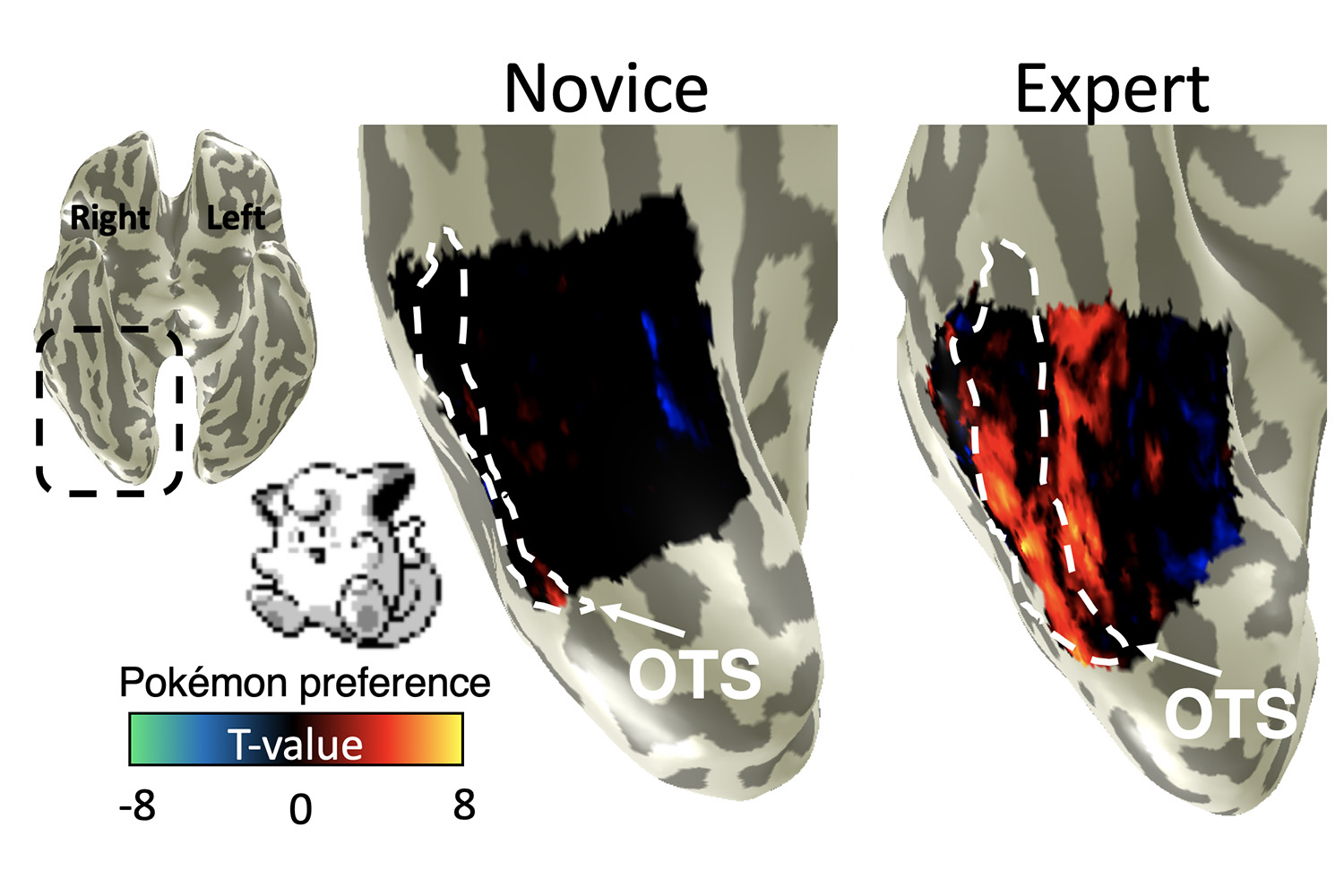
Adults who played Pokémon video games extensively as children have a brain region that responds preferentially to images of Pikachu and other characters from the series.

The findings, published in the journal Nature Human Behavior, help shed light on mysteries about our visual system.

The first Pokémon game was released in 1996 and played by children as young as 5 years old, many of whom continued to play later versions of the game well into their teens and even early adulthood.

The games not only exposed these children to the same characters over and over again, it rewarded them when they won a Pokémon battle or added a new character to the in-game encyclopedia called the Pokédex.

Furthermore, every child played the games on the same handheld device – the Nintendo Game Boy – which had the same small square screen and required them to hold the devices at roughly the same arm’s length. Playing Pokémon on a tiny screen means that the Pokémon characters only take up a very small part of the player’s center of view. The eccentricity bias theory thus predicts that preferential brain activations for Pokémon should be found in the part of the visual cortex that processes objects in our central, or foveal, vision.

expert-novice.jpg

The occipitotemporal sulcus (OTS) of adults who played Pokémon extensively as children activated more (right) upon seeing images of Pokémon characters from their childhood videogames compared to adults who did not (left). (Image credit: Jesse Gomez)

The new findings are just the latest evidence that our brains are capable of changing in response to experiential learning from a very early age, but that there are underlying constraints hardwired into the brain that shape and guide how those changes unfold.

Read more on this story at https://news.stanford.edu/2019/05/06/regular-pokemon-players-pikachu-brain 

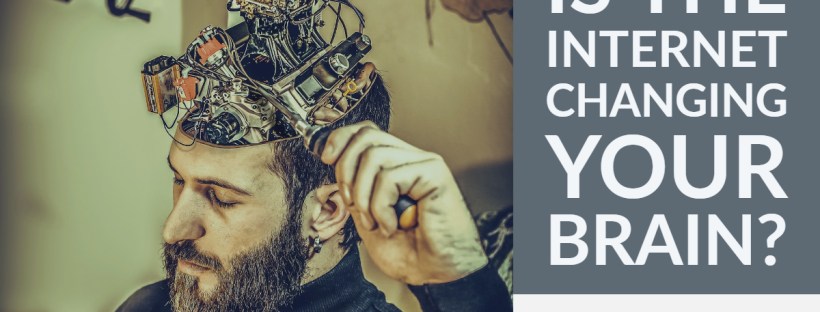
Is The Internet Changing Your Brain? #SaferInternetDay

Today, on #SaferInternetDay, I thought it a good time to return to a topic I’ve spoken about over the years. The question of whether our brains are being altered due to our increasing reliance on search engines, social networking sites, and other digital technologies, is always a timely one.

The Internet can be a force for positive change (as with new ‘cybertherapies’ to help patients with addiction and post-traumatic stress disorders), but equally, it can have a negative effect on mental health – especially with young people.

Today, I’m giving a talk to parents on the pros and cons of gaming and why gaming is so attractive to young people. I want to offer parents an opportunity to create a balance in their child’s world through understanding what is going on inside their child’s brain.

The talk takes place at Nenagh Arts Centre, Co Tipperary.  If you can’t attend in person, I’ll be sharing my slides later this week on SlideShare so check back in again.

This event is FREE but it is essential to book a seat with the Arts Centre on 067 34400 or through Eventbrite. 

Weekly Neuroscience Update

brain

Researchers have pinpointed an area of the brain that serves as an arbitrator between our two decision-making systems, one devoted to habitual behaviors and the other devoted to actions we take only after careful consideration.

Scientists who discovered a gene that links the thickness of the brain’s gray matter to intelligence say their finding might help improve understanding of brain disorders such as autism and schizophrenia.

People who appreciate the beauty of mathematics activate the same part of their brain when they look at aesthetically pleasing formula as others do when appreciating art or music, suggesting that there is a neurobiological basis to beauty.

Researchers at the University of California, San Francisco, are looking at ways video game technology can be used to improve or heal the brain.

For the first time, scientists have identified a gene linking the thickness of the grey matter in the brain to intelligence. The study is published today in Molecular Psychiatry and may help scientists understand biological mechanisms behind some forms of intellectual impairment.

People with dyslexia have greater difficulty than others in shifting attention between the senses – from seeing something to hearing something – according to an Oxford University study. The researchers suggest that action video games, where attention is constantly shifting focus, may be able to boost literacy skills – though they have yet to test this. The findings are reported in the journal Current Biology.

A new study published in Social Neuroscience says that the brain has begun processing a typed emoticon with the same signals that previously only accompanied processing a real, emoting human face.

A specific type of neuron in the amygdala performs differently in individuals with autism spectrum disorder than in those without the disorder, according to a new study by researchers at Cedars-Sinai Medical Center in New York.

Finally, this Valentine’s weekend, new research reveals that  a region deep inside the brain controls how quickly people make decisions about love.

Weekly Neuroscience Update

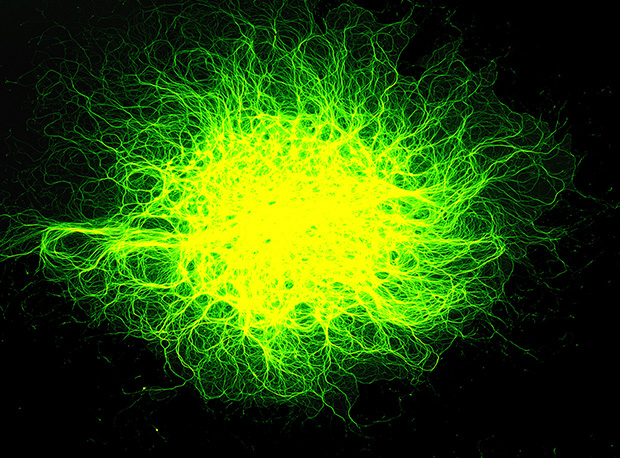
To study how nerve cells respond to injuries in their branches, Washington University researcher Valeria Cavalli grows them in “spots” like the one shown above. Cavalli recently identified a chain reaction that enables repair of these branches when they are cut. Credit Yongcheol Cho/Washington University at St. Louis.

To study how nerve cells respond to injuries in their branches, Washington University researcher Valeria Cavalli grows them in “spots” like the one shown above. Cavalli recently identified a chain reaction that enables repair of these branches when they are cut. Credit Yongcheol Cho/Washington University at St. Louis.

Researchers have identified a chain reaction that triggers the regrowth of some damaged nerve cell branches, a discovery that one day may help improve treatments for nerve injuries that can cause loss of sensation or paralysis.

Groundbreaking research nearly two decades ago linking a mother’s educational background to her children’s literacy and cognitive abilities stands out among decades of social science studies demonstrating the adverse effects of poverty. Now new research has taken that finding in a neuroscientific direction: linking poor processing of auditory information in the adolescent brain to a lower maternal educational background.

A review of new research says there is growing evidence to support the idea that the brain plays a key role in normal glucose regulation and the development of type 2 diabetes.

University of Queensland (UQ) scientists have made a fundamental breakthrough into how the brain decodes the visual world.

Cocaine addicts may become trapped in drug binges not because they are always seeking euphoric highs but rather to avoid emotional lows, says a study in Psychopharmacology.

Researchers have developed a therapeutic at-home gaming program for stroke patients who experience motor weakness affecting 80 percent of survivors.

Learning a musical instrument as a child gives the brain a boost that lasts long into adult life, say scientists.

The birth of new neurons depend upon activation of an important molecular pathway in stem cells, a new Yale School of Medicine study shows.

Researchers have taken a major step towards understanding the causes of Alzheimer’s disease with the largest study yet into the genetics of the disorder.

Light enhances brain activity during a cognitive task even in some people who are totally blind, according to a new study.

Scientists have discovered biological mechanisms that may link Parkinson’s disease to Alzheimer’s disease, according to a study published in the journal Acta Neuropathologica.


A game to map the brain #TEDxNijmegen 2013

Yesterday I shared a video from Moritz Helmstaedter a neuroscientist who has pioneered crowd sourcing for connectomics, engaging more than a hundred students to work together to analyze the immense amounts of data.  In today’s video recorded at #TEDxNijmegen, Amy Robinson, a research affiliate in MIT’s Department of Brain and Cognitive Sciences  explains that it takes a neuroscientist around 50 hours to map one cell, one neuron. And there are more than 80 billion neurons in one human brain. To complete the map of our brain MIT  are looking for help to accelerate this process by contributing to the EyeWire project. Watch the video which demonstrates how you can play the game.

The brain is a very complicated thing. You can however help us to fasten up the process of understanding as a non-scientist by joining EyeWire.” EyeWire is a game to map neural networks. Anyone can play, and you don’t need a scientific background ~ Amy Robinson

Weekly Neuroscience Update

xbox

When selecting a video game to play, opting to turn on your Wii may provide a different experience than playing your Xbox, according to a study from Mississippi State University.

Excessive alcohol use accounts for 4% of the global burden of disease, and binge drinking particularly is becoming an increasing health issue. A new review article published Cortex highlights the significant changes in brain function and structure that can be caused by alcohol misuse in young people.

Working with patients with electrodes implanted in their brains, researchers have shown for the first time that areas of the brain work together at the same time to recall memories. The unique approach promises new insights into how we remember details of time and place.

Researchers at the University of Glasgow are hoping to help victims of stroke to overcome physical disabilities by helping their brains to ‘rewire’ themselves.

Keeping active can slow down the progression of memory loss in people with Alzheimer’s disease, a study has shown.

Neuroscientists have released the results of a new study that examines how fear responses are learned, controlled, and memorized. They show that a particular class of neurons in a subdivision of the amygdala plays an active role in these processes.

Neuroscience researchers from Tufts University have found that our star-shaped brain cells, called astrocytes, may be responsible for the rapid improvement in mood in depressed patients after acute sleep deprivation. This in vivo study, published in the current issue ofTranslational Psychiatry, identified how astrocytes regulate a neurotransmitter involved in sleep. The researchers report that the findings may help lead to the development of effective and fast-acting drugs to treat depression, particularly in psychiatric emergencies.

UC Berkeley neuroscientists have found that the slow brain waves generated during the deep, restorative sleep we typically experience in youth play a key role in transporting memories from the hippocampus – which provides short-term storage for memories – to the prefrontal cortex’s longer term “hard drive.”

Researchers have found altered connectivity in the brain network for body perception in people with anorexia: The weaker the connection, the greater the misjudgement of body shape.

A group of scientists planning to map all the major connections in the human brain began studying their first test subjects in August. The $30 million Human Connectome Project will trace the main neural pathways that link the roughly 500 major regions in the brain, illuminating how biological circuitry underlies our mental functions. MRI scans of 1,200 people, including 300 pairs of twins, will be used to compile an atlas of communication routes throughout the brain. The resulting blueprint will also reveal how brain connectivity varies from person to person.