Weekly Neuroscience Update

New research has revealed how acute stress can affect the connectivity of different brain regions, leading to increased neural activity and changes in behavior.

New research has found that sleep has a crucial role in preparing the body to fight off infections. During sleep, the immune system produces cytokines, which help in fighting infections, inflammation, and stress. In contrast, sleep deprivation can weaken the immune system and increase the likelihood of getting sick. The study also found that sleeping for longer periods before an infection occurs can improve the chances of fighting it off.

A research team has found that people with chronic pain in multiple parts of the body had a higher risk of dementia and experienced broader and faster cognitive decline, including memory, executive function, learning, and attention.

Researchers have discovered how changes in blood vessels in the eye can be used to predict the progression of age-related macular degeneration (AMD), a leading cause of blindness. The researchers used high-resolution imaging techniques to measure the density of blood vessels in the retina of patients with AMD. They found that decreased blood vessel density in certain areas of the retina was associated with the progression of the disease.

A new study has identified changes in the levels of certain proteins in the blood of women with perinatal depression (depression during pregnancy or after childbirth).

A new brain connection discovered by researchers can explain how early-life stress and adversity trigger disrupted operation of the brain’s reward circuit, offering a new therapeutic target for treating mental illness. Impaired function of this circuit is thought to underlie several major disorders, such as depression, substance abuse and excessive risk-taking.

A study at the University of Tsukuba in Japan has found that routine exercise helps prevent cognitive impairment in older adults, with exercising alone being beneficial, but exercising with others having an even greater positive effect.

Although investigators have made strides in detecting signs of Alzheimer’s disease using high-quality brain imaging tests collected as part of research studies, a research team has developed an accurate method for detection that relies on routinely collected clinical brain images. The advance could lead to more accurate diagnoses.

Finally, this week, seizures can be predicted more than 30 minutes before onset in patients with temporal lobe epilepsy, opening the door to a therapy using electrodes that could be activated to prevent seizures from happening, according to new research.

Weekly Neuroscience Update

Researchers have investigated whether the perception of time changes with age, and if so, how, and why we perceive the passage of time differently.

In a study recently published in Dementia and Geriatric Cognitive Disorders, researchers have revealed changes in the cerebral neural network that could function as a biomarker for degenerative neurological conditions such as Alzheimer’s disease and dementia with Lewy bodies—abnormal protein deposits in the brain.

Experiencing three or more concussions is linked with worsened brain function in later life, according to new research.

Levodopa, a drug commonly prescribed for the treatment of Parkinson’s disease that increases dopamine in the brain has been found to have the potential to reverse the effects of inflammation on brain reward circuitry, ultimately improving symptoms of depression.

A team of researchers has found evidence linking motor neurons’ large cell size and supporting structure with the genes that underlie their vulnerability to degeneration in ALS.

A new study has examined the pain perception among people with autism and found that they experience pain at a higher intensity than the general population and are less adaptable to the sensation. This finding is contrary to the prevalent belief that people with autism are supposedly ‘indifferent to pain’. The researchers expressed the hope that the findings of their study will lead to more appropriate treatment on the part of medical staff, caregivers, and parents toward people with autism, who do not always express the experience of pain in the usual way.

Researchers have identified two distinct processes that are triggered in the brain when a person is exposed to prolonged or repeated sensory input.

Among people who received more intensive treatment for high blood pressure, evaluations of MRI scans indicated a positive change in brain structures involved in its ability to clear toxins and other byproducts, according to preliminary research to be presented at the American Stroke Association’s International Stroke Conference 2023.

New research has linked major depression in older adults to mitochondrial deterioration.

People exposed to noise pollution as a result of heavy traffic close to their homes are at greater risk of developing tinnitus, a new study reports. Tinnitus is a condition where an individual hears ringing, buzzing, or whistling sounds in their ears, even when there is no external source of the sound. Prolonged exposure to loud noise can cause damage to the hair cells in the inner ear, which are responsible for transmitting sound to the brain. As a result, the brain can create its own sounds, leading to tinnitus.

Finally this week, cinnamon could do more than just wake up your taste buds. A new study reveals eating products with cinnamon can help improve memory and learning, and may also reduce some symptoms of anxiety.

Weekly Neuroscience Update

New research shows that moderate physical activity was linked to increased volume in brain areas associated with memory, especially in older adults.

The biological changes that occur as a result of aging could be a mechanism behind why older adults with depression do not have a full resolution of symptoms following taking antidepressants. The persistence of depressive symptoms becomes a source of depleted psychological well-being, increased disability, accelerated cognitive decline, and premature aging in older adults.

Researchers have identified a pathway that begins in the gut and ends with a pro-inflammatory protein in the brain that appears to contribute to the development of Alzheimer’s disease.

A new study looks at the brains of black women who reported having experiences with racial discrimination. The goal of the study was to determine whether racial discrimination could affect the brain. After doing MRI scans on the women’s brains, the researchers found changes in their white matter.

The smell of fresh cut grass or blooming flowers appears to have a positive effect on a person’s overall well-being, a new study reveals.

A new study proposes a new learning method for people with autism that may accelerate the learning process and even significantly improve capabilities in terms of visual perception. According to the researchers, improving the perceptual capacity of people with autism is often a challenge, which usually requires long and tedious training alongside additional learning challenges that characterizes autism, such as the ability to generalize learning to new situations.

The unique features of an individual adolescent’s brain can help predict their risks of developing mental health problems later in life.

The effects of COVID-19 infection on neurological health are becoming more apparent. A new study reveals COVID-19 can predispose people to irreversible neurological conditions, accelerate brain aging, and increase the risk of stroke and brain bleeds.

Finally this week, researchers have found that transcranial brain stimulation can improve the age-related impairment in learning new motor skills.

Weekly Neuroscience Update

While depression is a common problem for people who have had a stroke, some people may have symptoms of depression years before their stroke, according to a study published in Neurology.

New research shows visual scanpaths during memory retrieval tasks were associated with the quality of the memory. Researchers say the replay of a sequence of eye movements helps boost memory reconstruction.

A new neuroimaging study reveals every person has unique brain anatomy. The uniqueness is a result of a combination of genetic factors and life experiences, researchers report.

Adolescents are over three times more vulnerable to developing a cannabis addiction than adults, but may not be at increased risk of other mental health problems related to the drug, finds a new study led by UCL and King’s College London researchers.

Researchers have developed a chop stick-like device that uses a weak electrical current to stimulate the tongue and enhance the taste of salt. The device could help to reduce dietary sodium intake by up to 30%.

Socially anxious women exhibit heightened oxytocin reactivity to psychosocial stress, according to new research published in Psychoneuroendocrinology. The study provides evidence that the hormone plays a role in physiological reactions to socially stressful situations.

Delayed circadian rhythms and sleep disruptions may be a cause of teen depression, rather than a symptom that develops as a result of the mental health disorder.

Health researchers have contributed to an international study published in Nature Neuroscience that sheds light on the mechanism by which anti-anxiety drugs act on the brain which could lead to cognitive impairment in vulnerable individuals.

A new machine-learning algorithm is able to accurately detect cognitive impairment by analyzing voice recordings.

Protein buildups like those seen around neurons in Alzheimer’s, Parkinson’s and other brain diseases occur in all aging cells, a new study suggests. Learning their significance may reveal new strategies for treating age-related diseases.

Finally, this week, having positive social interactions is associated with older adults’ sense of purposefulness, which can fluctuate from day to day, according to recent research.

Weekly Neuroscience Update

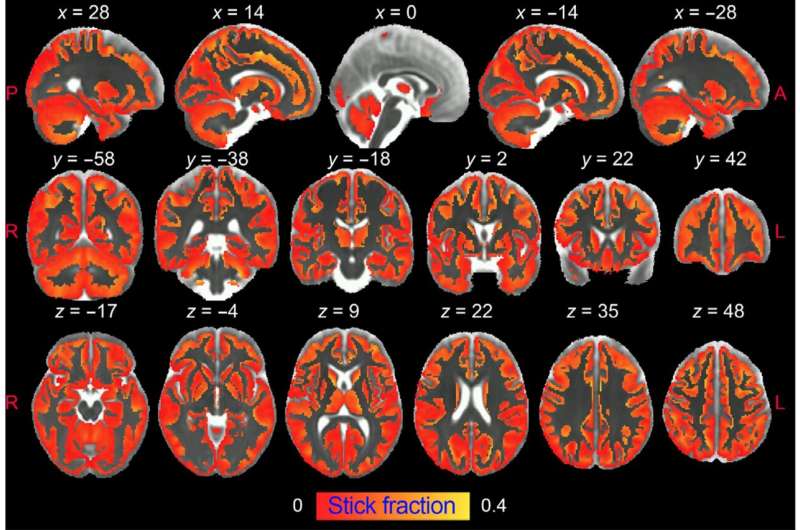
Researchers from the UMH-CSIC Neurosciences Institute have developed an innovative strategy that allows imaging of microglial and astrocyte activation in the gray matter of the brain using diffusion-weighted magnetic resonance imaging (dw-MRI). Credit: IN-CSIC-UMH

Research has made it possible to visualize for the first time and in great detail brain inflammation using diffusion-weighted Magnetic Resonance Imaging. This detailed “X-ray” of inflammation cannot be obtained with conventional MRI, but requires data acquisition sequences and special mathematical models. Once the method was developed, the researchers were able to quantify the alterations in the morphology of the different cell populations involved in the inflammatory process in the brain.

A new study conducted at 38 schools in Barcelona suggests that traffic noise at schools has a detrimental effect on the development of working memory and attention in primary-school students.

People who can frequently recall their dreams tend to be more creative and exhibit increased functional connectivity in a key brain network, according to new research published in the journal Nature and Science of Sleep. The findings provide new insights into the neurophysiological correlates of dreaming.

Researchers have identified elevated levels of a biomarker in the blood that persists for months in long COVID patients who experience neuropsychiatric symptoms.

Plenty of people claim they can’t function without their morning coffee, but is there a neurological basis to it? A study published in Scientific Reports suggests that coffee does have beneficial effects on cognitive function, and it may do this by reorganizing brain functional connectivity.

Low exposure to gonadal hormones during early gestation and infancy predicts higher recalled childhood gender nonconformity in men, according to new research.

Researchers at Carnegie Mellon University have explored the regions of the brain where concrete and abstract concepts materialize. A new study now explores if people who grow up in different cultures and speak different languages form these concepts in the same regions of the brain.

Finally this week, new research will explore how psilocybin affects specific brain pathways in autistic adults and is the first-ever mechanistic study of psilocybin in autistic adults.

Weekly Neuroscience Update

The return of consciousness after traumatic brain injury (TBI) remains something of a mystery for scientists and is not easy to predict. A series of recently published studies have found that by using technologies to monitor brain functions after TBI, scientists may be able to better predict who will “wake up” after TBI and what brain circuits to target to potentially treat disorders of consciousness.

According to a new report, both genetics and environmental factors contribute to socioeconomic status’ impact in an interplay with effects that spans several areas of the brain.

An immersive virtual-reality anger control training program can reduce the level of anger provoked, according to a new study published in the peer-reviewed journal Cyberpsychology, Behavior, and Social Networking. 

A new study examines the influence of statins on emotional bias, a marker for risk of depression.

Researchers at Karolinska Institutet in Sweden have studied how the screen habits of U.S. children correlate with how their cognitive abilities develop over time. They found that the children who spent an above-average time playing video games increased their intelligence more than the average, while TV watching or social media had neither a positive nor a negative effect.

Finally this week, a new study reveals the mechanisms behind repetitive transcranial magnetic stimulation’s effect on the brain in the treatment of depression.

Weekly Neuroscience Update

Can people who understand the emotions of others better interpret emotions conveyed through music? A new study by an international team of researchers suggests the abilities are linked. People who are more accurate at reading another person’s emotions are better able to understand what a musician is trying to convey through their compositions. Additionally, those with higher empathetic accuracy are better able to feel the emotions conveyed through music.

A team of researchers affiliated with several institutions in the U.S. has identified a subtype of brain cells that die in Parkinson’s patients.

Elevated levels of PHGDH in the blood could signal the earliest stages of Alzheimer’s disease. Researchers caution older adults against using “brain-boosting” supplements that contain serine due to its link to PHGDH. As PHGDH is a key enzyme in serine production, elevated PHGDH levels result in increased serine levels in the brain.

A new study examines the role of a brain area called the anterior superior temporal sulcus (aSTS) in forgiving those who make unintentional mistakes.

Using artificial intelligence technology, researchers have identified both risk and protective factors for depression in middle-aged to older adults. Social isolation, the study found, was the biggest risk factor for depression, followed by mobility difficulties and health issues.

Could there be a link between cognitive decline and excessive daytime napping? New research published in Alzheimer’s and Dementia suggests a potential connection.

Stimulating the vagus nerve, which provides a direct link between the gut and brain, makes people pay less attention to sad facial expressions according to new research published in the journal Neuroscience.

A new study reveals a mechanism that appears to reverse the build-up of protein aggregates by refolding them, rather than removing them.

Researchers found idiopathic autism occurs as the result of epigenetic abnormalities in hematopoietic cells during fetal development, leading to immune dysregulation in the brain and gut.

A specific Parkinson’s related gene could be a driver behind vocal production problems associated with the disease. The findings could lead to earlier diagnosis and treatment of Parkinson’s disease.

Finally this week by scanning the brains of 24 people actively suppressing a particular memory, researchers found a neural circuit that detects, inhibits, and eventually erodes intrusive memories.

Weekly Neuroscience Update

 Clock proteins generating cyanobacterial circadian rhythms. Credit: NINS/IMS

Scientists want to increase their understanding of circadian rhythms, those internal 24-hour biological clock cycles of sleeping and waking that occur in organisms, ranging from humans to plants to fungi to bacteria. Now a research team has examined the complex workings of cyanobacteria and can better comprehend what drives its circadian clock.

A new study published is the first to look at multiple levels of biology within women with postpartum depression (PPD) to see how women with the condition differ from those without it.

There are five different diseases that attack the language areas in the left hemisphere of the brain and slowly cause progressive impairments of language known as primary progressive aphasia, reports a new study.

A team of scientists has discovered how working memory is “formatted”—a finding that enhances our understanding of how visual memories are stored. 

People whose brains release more of the neurochemical oxytocin are kinder to others and are more satisfied with their lives. This is the finding of new research, published in Frontiers in Behavioral Neuroscience, that also discovered that oxytocin release increases with age, showing why, on average, people are more caring as they get older.

A genetic study involving thousands of people with bipolar disorder has revealed new insight into the condition’s molecular underpinnings.  

One of the most important molecules in the brain doesn’t work quite the way scientists thought it did, according to new work by researchers. The results, published April 20 in Nature, may aid the development of a new generation of more effective neurological and psychiatric therapies with fewer side effects.

Alzheimer’s Disease could be caused by damage to a protective barrier in the body that allows fatty substances to build up in the brain, newly published research argues.

Researchers have established for the first time a link between depressive disorders and mechanical changes in blood cells.

Nearly half of all older adults now die with a diagnosis of dementia listed on their medical record, up 36% from two decades ago, a new study shows.

Finally this week, epigenetic markers of cognitive aging can predict performance on cognitive tests later in life, according to a study published in the journal Aging.

Weekly Neuroscience Update

The number of axons estimated to interconnect the 360 cortical parcels of the HCP-MMP1.0 atlas. Credit: The researchers

A new study reveals axon density is lower than previously believed between distant regions of the brain.

In a study published in the journal Cell Reports, an international team of investigators used biomarkers, statistical modeling, and other techniques to develop tools for measuring the biological ages of various organ systems. Based on their findings, the researchers report that there are multiple “clocks” within the body that vary widely based on factors including genetics and lifestyle in each individual.

Researchers have identified a new pathway in the brain that plays an important role in our response to fear.

Researchers have now demonstrated that the brain waves during periods of deep sleep in a specific area of the brain can be used to determine the extent of an individual’s propensity for risk during their everyday life.

A study at Boston Children’s Hospital explains for the first time why COVID-19 causes severe inflammation in some people, leading to acute respiratory distress and multi-organ damage. 

A team of researchers has found a link between the use of antibiotics by middle-aged women and cognitive decline later in life. The group has published a paper describing their work on the open-access site PLOS ONE.

Women who experienced childhood trauma had an increased risk of developing multiple sclerosis later in life. The evidence suggests childhood abuse and trauma can alter the immune system and increase the risk of developing autoimmune diseases.

A study has found no increased risk of developing brain tumors regardless of whether a person was a frequent cell phone user or if they had never used a cell phone before.

The consolidation of learning that occurs during sleep is a result of the learning process and not merely because certain brain regions get used a lot during learning. This finding is published in The Journal of Neuroscience and resolves a long-standing debate among sleep researchers.

People who grew up in rural or suburban areas have better spatial navigation skills than those raised in cities, particularly cities with grid-pattern streets, finds a new study.

The return of consciousness after traumatic brain injury (TBI) remains something of a mystery for scientists and is not easy to predict. A series of recently published studies have found that by using technologies to monitor brain functions after TBI, scientists may be able to better predict who will “wake up” after TBI and what brain circuits to target to potentially treat disorders of consciousness.

Finally this week, researchers have established for the first time a link between depressive disorders and mechanical changes in blood cells.

Weekly Neuroscience Update

Researchers have taken another step forward in developing an artificial intelligence tool to predict schizophrenia by analyzing brain scans.

COVID-19 may not directly infect the brain, but the virus is still capable of causing significant neurological damage, a new study reports. Researchers say the neurological changes seen as a result of coronavirus infection are likely related to inflammation triggered by viral infection in different parts of the body or the brain’s blood vessels.

Stroke risk for patients with traumatic brain injuries is at its highest in the four months following injury and remains significant for up to five years post-injury, finds a new systematic review.

A new blood test can distinguish the severity of a person’s depression and their risk for developing severe depression at a later point. The test can also determine if a person is at risk for developing bipolar disorder. Researchers say the blood test can also assist in tailoring individual options for therapeutic interventions.

Light therapy which consists of exposure to both controlled natural light and artificial lighting may be a new tool in the treatment of neurodegenerative diseases such as Alzheimer’s and Parkinson’s disease.

Researchers link the inflammation associated with chronic sinus infections to alterations in brain activity in networks that govern cognition, external stimuli, and introspection. The findings shed light on why people suffering from sinus infections often report poor concentration and other short-term cognitive problems.

A new study recently published in eNeuro lays the groundwork for more detailed research on how humans hear in dynamic environments.

When people make eye contact with another person, their attention is immediately solicited and this causes a distortion in temporal perception. However, the shift in time perception does not change when people glance at non-social items or objects according to new research.

Sharing our personal experiences on social media may negatively impact how we feel about our memories, especially if the post doesn’t get many likes, a new study reports.

New research has shed light on how autism-spectrum disorder (ASD) manifests in the brains of girls, prompting the scientists to warn that conclusions drawn from studies conducted primarily in boys should not be assumed to hold true for girls.

Finally this week, a shared set of systems in the brain may play an important role in controlling the retrieval of facts and personal memories utilised in everyday life, new research shows.