Weekly Neuroscience Update

Study summary graphic. Credit: Mount Sinai Health System

A team of researchers has created the first “multiome” atlas of brain cell development in the human cerebral cortex across six broad developmental time points from fetal development into adulthood, shedding new light on their roles during brain development and disease.

A new study links rhythmic oscillations in ovarian hormone levels in women during the menstrual cycle to changes in brain structure.

Researchers at Monash University have identified a new way of mapping ‘phosphenes’—the visual perception of the bright flashes we see when no light is entering the eye—to improve the outcome of surgery for patients receiving a cortical visual prosthesis (‘bionic eye’).

newly published atlas offers the most detailed maps yet of the location, structure, and, in some cases, function of more than 3,000 types of brain cells.

Researchers have analyzed more than a million human brain cells to produce detailed maps of gene switches in brain cell types and revealed the links between specific types of cells and various common neuropsychiatric disorders.

A new study shows that teenagers with OCD experience deficits in decision-making and behavioral control. This is linked to abnormal activity in an area of the brain called the orbitofrontal cortex (OFC).

Severe inflammation in early childhood is a clinically known risk factor for developing autism and schizophrenia. Now, for the first time, scientists have discovered that inflammation alters the development of vulnerable brain cells, and this could have mechanistic links to neurodevelopmental disorders. This finding could lead to treatments for many different childhood-onset neurodevelopmental disorders.

Scientists have discovered widespread differences in metal levels in the brains of patients with Huntington’s disease, a type of dementia, compared to a control group with healthy tissue.

In two parallel projects, researchers have been involved in creating the most comprehensive atlases of human brain cells to date. The two studies provide clues on different brain diseases and give hope for medical advancements in the future, such as new cancer drugs.

In a suite of new studies, a large consortium of researchers shares new knowledge about the cells that make up our brains and the brains of other primates.

The brains of people who reduce their drinking, as well as of people who quit drinking entirely, have greater volume in certain regions than people who drink more heavily, according to a new study of adults treated for alcohol use disorder. 

Sleeping patterns and stress hormones could be the key to understanding how and when people with epilepsy are likely to experience seizures, a new study reveals.

New research has found molecular evidence highlighting important sex differences in the brains of people with major depressive disorder, with evidence of changes occurring specifically in the female brain, but not in males.

Finally this week, new research has found that MRI scans can reveal the parts of the brain that are involved in responding to fatty foods.

Weekly Neuroscience Update

Credit: Psychological Bulletin (2023)

A new study has provided the first clear picture of where language processes are located in the brain. The findings may be useful in clinical trials involving language recovery after brain injury.

Researchers have developed a model for studying one type of familial epilepsy, opening the door to understanding—and eventually targeting—the mechanisms that lead to the disorder and its associated fatalities.

A new study published in Nature Medicine sheds light on how biological sex influences brain function and its impact on the risk of various brain-related diseases.

A breakthrough technique developed by University of Oxford researchers could one day provide tailored repairs for those who suffer brain injuries. The researchers have demonstrated for the first time that neural cells can be 3D-printed to mimic the architecture of the cerebral cortex.

A research team has identified new potential treatments for children with rare genetic conditions of blood vessels, which cause severe, symptoms like seizures and impaired development.

Scientists have discovered new insights into how our brain stores episodic memories—a type of long-term, conscious memory of a previous experience—that could be critical to the development of new neuroprosthetic devices to help patients with memory problems, like Alzheimer’s disease and dementia.

A global blood test for concussion could be a step closer after a new study discovered specific proteins or biomarkers that can help diagnose concussions relatively quickly and accurately.

The brain circuitry that is disrupted in Alzheimer’s disease appears to influence memory through a type of brain wave known as theta oscillation, a team led by UT Southwestern Medical Center researchers report. The findings, published in Nature Communications, could help researchers design and evaluate new treatments for Alzheimer’s, a condition that affects millions of people around the globe and has no cure.

Finally this week, a new study reveals the role of vascular system cells—pericytes—in the formation of long-term memories of life events—memories that are lost in diseases such as Alzheimer’s disease. 

Weekly Neuroscience Update

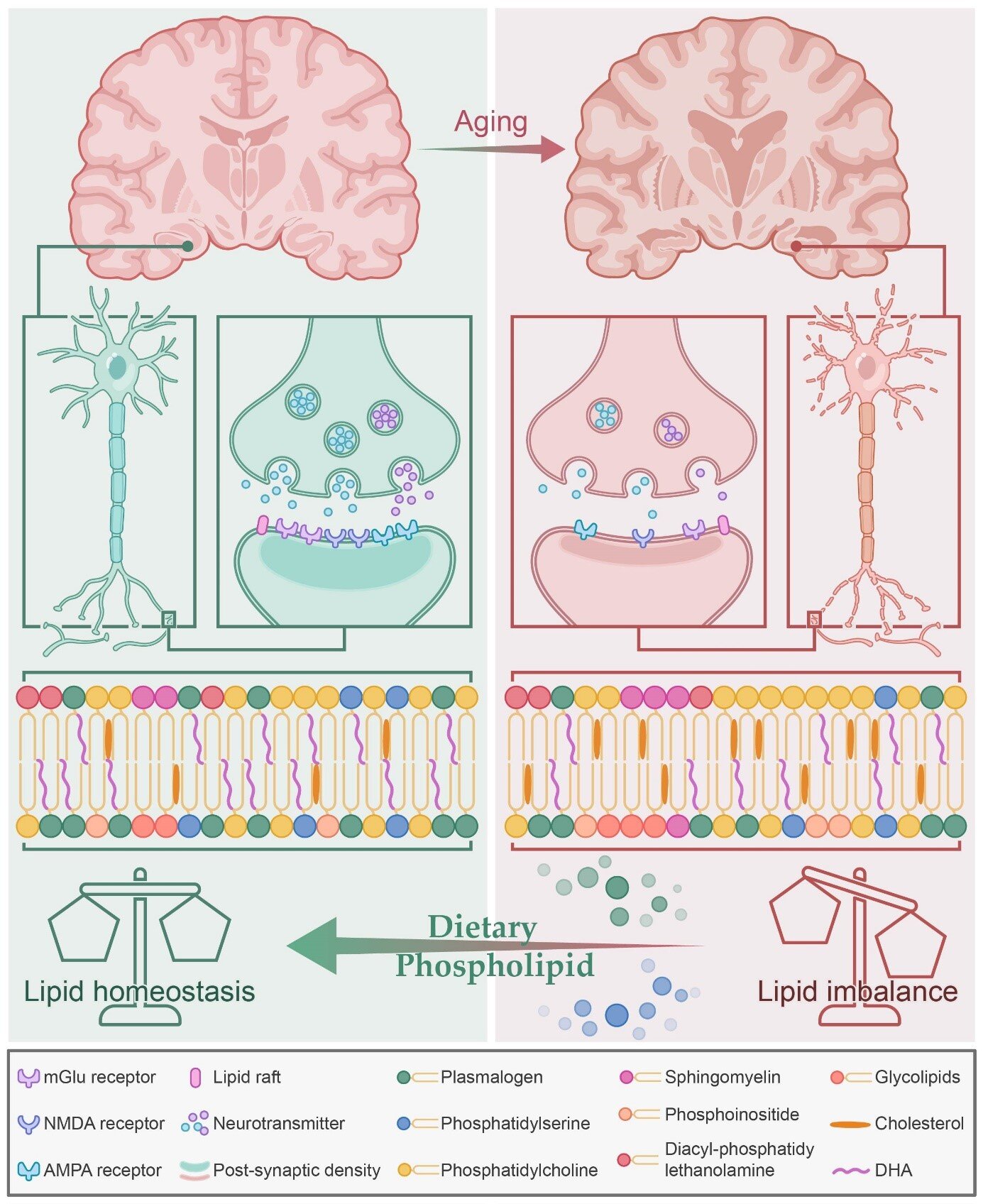
Dietary phospholipid intervention could prevent brain aging by maintaining lipid homeostasis and enhancing synaptic plasticity. Credit: Wei Xiong et al.

A new review highlights the significant role of dietary lipids in preventing brain aging and cognitive decline. As the global burden of aging-related brain diseases, particularly dementia, continues to rise, this research offers promising insights into potential nutritional interventions that could improve brain function during aging.

Cerebrospinal fluid (CSF) leaks may be one of the mechanisms that link traumatic brain injury (TBI) with dementia, according to a new hypothesis.

Short-term exposure to air pollution may be linked to an increased risk of stroke, according to a meta-analysis published in Neurology. Short-term exposure was defined as occurring within five days of the stroke.

People with a higher cumulative estrogen exposure throughout their life may have a lower risk of cerebral small vessel disease, according to a new study.

New research is painting a clearer picture of the early signs of multiple sclerosis (MS), showing that people are nearly twice as likely to experience mental illness in the years leading up to the onset of the disease.

Increased TV/DVD screen time at 1 and 2 years of age negatively affects developmental performance at 2 and 3 years of age, according to a study published in JAMA Pediatrics.

Whether you are an early bird or a night owl, your internal clock plays a critical role in maximizing your mental performance, according to a recent study. This effect is so strong that it can significantly impact academic performance for adolescent students and the results of brain health assessments for older adults.

Researchers are using ultra-high field 7 Tesla MRI to provide a better understanding of how sleep is regulated.

A new study suggests a common brain network exists among people with substance use disorder. By evaluating data from across more than 144 studies of addiction, the team found abnormalities across substance use disorders mapped to a common brain network across substances and lesion locations, suggesting a potential brain circuit to target with neurostimulation therapies.

Finally this week, people differ significantly in their memory performance and researchers have now discovered that certain brain signals are related to these differences.

Weekly Neuroscience Update

A new study sheds light on the neural underpinning of subjective odor perceptions.

New research has found that cognitive behavioral therapy (CBT) can significantly reduce the burden of fibromyalgia in part by reducing pain-catastrophizing, a negative cognitive and emotional response that can intensify pain through feelings of helplessness, rumination and intrusive thoughts. This finding is backed by neuroimaging data, evidencing reduced connectivity between regions of the brain associated with self-awareness, pain and emotional processing.

Researchers have discovered how an active form of a gene present in 75% of the human population works to protect the brain against neurodegeneration.

A recent study provides new insight into the relationship between the release of the neurotransmitter dopamine and decision-making processes. The scientists found that when dopamine is released, decisions are made faster, but tend to be more inaccurate.

A new study recently published in JAMA Neurology provides insights into the complex and intricate relationship of contact sports and the risk of dementia.

A team of leading clinicians, engineers, and neuroscientists has made a groundbreaking discovery in the field of treatment-resistant depression. By analyzing the brain activity of patients undergoing deep brain stimulation (DBS), a promising therapy involving implanted electrodes that stimulate the brain, the researchers identified a unique pattern in brain activity that reflects the recovery process in patients with treatment-resistant depression.

Scientists have revealed how the effects of psychosis spread throughout the brain.

Researchers have identified new regions of the brain crucial to the formation of long-term memory, challenging the conventional notion that the hippocampus is central to memory consolidation, by demonstrating that a different set of brain networks play a role.

Finally this week, scientists have revealed the molecular structure of a type of receptor that’s crucial to brain development and function.

Weekly Neuroscience Update

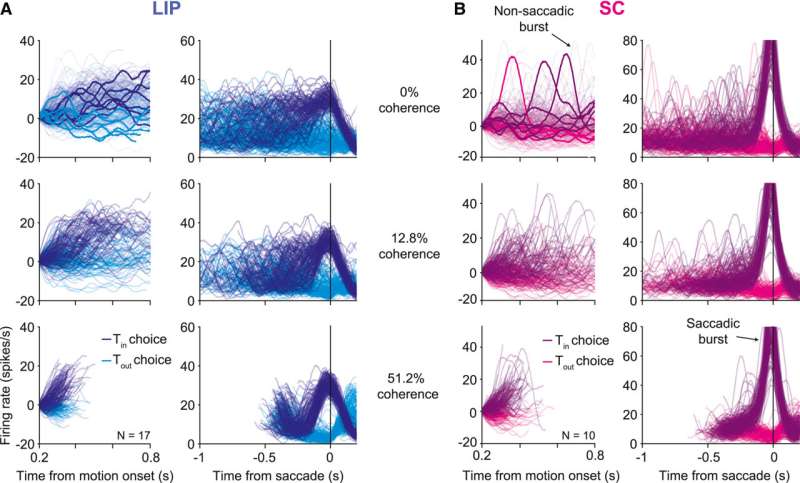
Single-trial dynamics in LIP and SC are different. (Neuron, 2023)

A new paper, published in Neuron, highlights the role of the superior colliculus (SC), a structure in the midbrain, in terminating decisions.

Degeneration of dopaminergic neurons is widely accepted as the first event that leads to Parkinson’s, but a new study suggests that a dysfunction in the neuron’s synapses—the tiny gap across which a neuron can send an impulse to another neuron—leads to deficits in dopamine and precedes the neurodegeneration.

Depression, a challenging condition to diagnose early, may now be detected more promptly using a simple 1-minute Electroencephalogram (EEG) test at home.

Scientists have confirmed that human brains are naturally wired to perform advanced calculations, much like a high-powered computer, to make sense of the world through a process known as Bayesian inference.

New research shows how repeated traumatic brain injury contributes to Alzheimer’s disease.

Racial disparities can be seen in dementia severity, functional impairment, and neuropsychiatric symptoms among patients with frontotemporal dementia (FTD), according to a study recently published in JAMA Neurology.

A new study identifies a potential new approach to PTSD treatment.

Any head injury—even a mild one—raises a person’s risk of later having an ischemic stroke. Having multiple injuries increases that risk, even more so than the severity of a single traumatic brain injury, researchers have found.

New research finds that cerebrospinal fluid net flow is markedly decreased in Huntington’s disease, with the decrease being greater in the later stages of the disease.

The targeted use of ultrasound technology can bring about significant changes in brain function that could pave the way towards treatment of conditions such as depression, addiction, or anxiety, a new study suggests.

Finally this week, new research finds that antidepressants may actually reduce negative memories in individuals suffering from depression while improving overall memory function.

Weekly Neuroscience Update

A new study reveals that individuals with stronger ‘mindreading’ abilities, or the capacity to understand others’ feelings and intentions, are more successful in cooperative tasks. This trait, also known as ‘theory of mind,’ is not directly tied to intelligence and can potentially be improved through training programs.

Researchers have identified proteomic changes associated with forms of Alzheimer’s disease.

People in their eighties who can recall everyday events and life experiences as well as someone 20 to 30 years younger—known as superagers—are also more likely to have greater movement speed than typical older adults. They also have lower rates of anxiety and depression, according to a new study published in The Lancet Healthy Longevity journal.

A research team has developed a tool that counts brain lesions in seconds.

A new study has found that the frequency and duration of naps in infants are an indication of their cognitive needs. According to the research, infants with smaller vocabularies and poorer cognitive abilities tend to nap more frequently.

Researchers have discovered that myo-inositol, a small cyclic sugar molecule found in breast milk, plays a crucial role in promoting neuronal connections in infants’ brains.

Neuroscientists have proposed a fresh perspective on systems consolidation, the process by which certain memories are moved from the hippocampus to the neocortex for long-term storage. Their theory, backed by a mathematical neural network model, posits that the consolidation of memories depends on their generalizability, not age. This theory suggests a new memory, which is a generalization of previous memories, is created during consolidation.

Researchers have utilized artificial intelligence to uncover the promising potential of extra virgin olive oil (EVOO) in combating Alzheimer’s disease (AD).

New research heightened light sensitivity in Alzheimer’s patients to “sundowning,” a worsening of symptoms late in the day, and sleep disruptions that may advance the disease. This fresh understanding of biological clock disruptions in Alzheimer’s could aid the creation of treatments and symptom management. Light therapy could potentially regulate erratic sleep patterns caused by altered circadian rhythms.

Finally this week, scientists have identified a group of nerve cells in the midbrain, which, when stimulated, can suspend all movement, akin to setting a film on pause.

Weekly Neuroscience Update

Artificial Intelligence (AI), specifically GPT-4, was found to match the top 1% of human thinkers on a standard creativity test. The AI application ChatGPT, developed using GPT-4, excelled in fluency and originality in the Torrance Tests of Creative Thinking, a widely recognized tool for assessing creativity. This breakthrough finding indicates that AI may be developing creative ability on par with or even surpassing human capabilities. 

Researchers have identified a small structure in the brain, the anterior precuneus or aPCu, as a crucial component in establishing our physical self or “I”.

Taking good care of your teeth may be linked to better brain health, according to a study published in Neurology. The study found that gum disease and tooth loss were linked to brain shrinkage in the hippocampus, which plays a role in memory and Alzheimer’s disease. The study does not prove that gum disease or tooth loss causes Alzheimer’s disease; it only shows an association.

A new study has demonstrated for the first time that the diagnosis of multiple sclerosis (MS) can be significantly improved by additionally measuring the thickness of retinal layers in the eye.

Distinct, though neighbouring, areas of the brain are activated when processing music and language, with specific sub-regions engaged for simple melodies versus complex melodies, and for simple versus complex sentences, according to researchers.

New findings suggest that depression after traumatic brain injury (TBI) could be a clinically distinct disorder rather than traditional major depressive disorder, with implications for patient treatment.

If you’re sleep deprived, you will likely have a harder time remembering things than if you’re well-rested. But if you have good cardiorespiratory fitness, your memory may be less affected by the effects of sleep deprivation than others, according to a recent McGill study published in the journal Medicine & Science in Sports & Exercise.

Finally this week, even during sleep, the sounds that infants are exposed to can play a big role in language development, especially for babies at risk of language delays.

Weekly Neuroscience Update

Encouraging children to indulge in reading for pleasure can enhance their cognitive and mental health during adolescence, a recent study reveals. The study, involving over 10,000 young adolescents from the US, discovered that an optimal reading duration of 12 hours per week contributed to improved brain structure and mental health.

New research has investigated associations of adverse childhood experiences with changes in epigenetic age acceleration.

Researchers have discovered a new depression subtype, the ‘cognitive biotype,’ affecting 27% of patients who respond poorly to typically prescribed antidepressants. These patients struggle with planning, self-control, sustained focus, and suppressing inappropriate behavior, with brain scans revealing reduced activity in the regions responsible for these tasks.

A team of researchers has developed a predictive model to recognize patterns of persistent negative thinking, or rumination, using machine learning.

A new study involving over 22,000 people with Multiple Sclerosis (MS) has identified a genetic variant associated with the disease’s faster progression. The research discovered a genetic variant that significantly affects disease severity. This development brings us closer to understanding and combatting the progressive form of MS. The identified genetic variant accelerates disability, undermining patient mobility and independence over time.

Regularly finding time for a little snooze is good for our brain and helps keep it bigger for longer, say researchers.

Do intelligent people think faster? Researchers made the surprising finding that participants with higher intelligence scores were only quicker when tackling simple tasks, while they took longer to solve difficult problems than subjects with lower IQ scores. 

Finally this week, new research provides the first physiological evidence supporting the scientific theory of how the brain consolidates memory during sleep. 

Weekly Neuroscience Update

A new study investigates how viewing visual art affects our emotions. The findings reveal how the aesthetic experience can impact the body’s emotional response.

New research has shown centenarians have distinct immune cell type composition and activity and possess highly functional immune systems that have successfully adapted to a history of sickness allowing for exceptional longevity. These immune cells may help identify important mechanisms to recover from disease and promote longevity.

Adding more magnesium-rich foods, such as spinach and nuts, to your daily diet can help reduce age-related brain shrinkage and stave off symptoms of dementia, a new study reports.

Scientists have found that the amino acid glycine can deliver a “slow-down” signal to the brain, likely contributing to major depression, anxiety and other mood disorders in some people. The discovery improves understanding of the biological causes of major depression and could accelerate efforts to develop new, faster-acting medications for such hard-to-treat mood disorders

A new method determines, with 91% accuracy whether a person is suffering from anxious or non-anxious depression from brain signals while the eyes are closed.

Researchers have found a way to assess consciousness without external stimulation, using a little-used approach where volunteers squeeze a force sensor with their hand when they breathe in and release it when they breathe out, resulting in more precise and sensitive measurements that may help improve treatment for insomnia and coma reversal.

Finally this week, new evidence suggests astrocytes can sense and react to change. These processes are key to memory formation and behavioral shifts.

Weekly Neuroscience Update

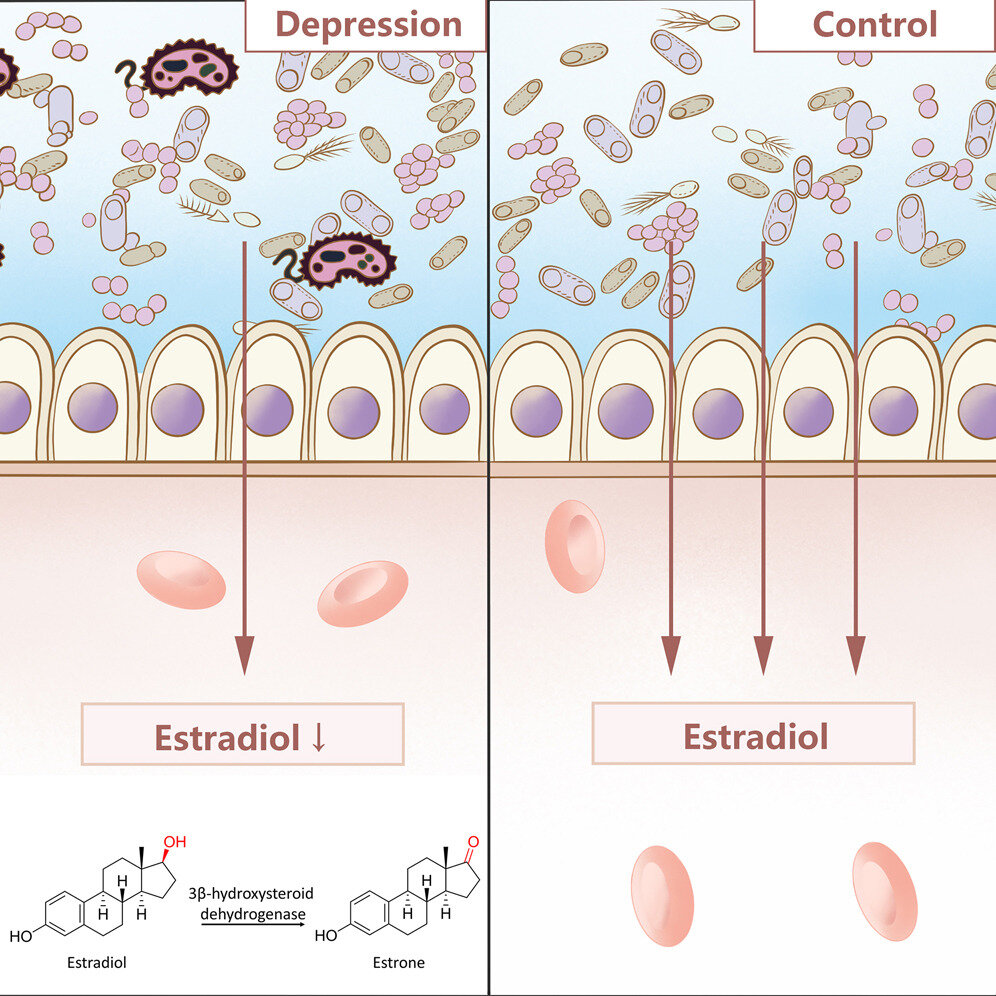
Credit: Cell Metabolism (2023). DOI: 10.1016/j.cmet.2023.02.017

Researchers have found a previously unknown mechanism linking gut bacteria, estradiol, and depression in women. The study, “Gut-microbiome-expressed 3b-hydroxysteroid dehydrogenase degrades estradiol and is linked to depression in premenopausal females,” is published in the journal Cell Metabolism.

Researchers at the Max Planck Institute for Metabolism Research in Cologne, in collaboration with Yale University, have shown that foods with high fat and sugar content change our brain.

Children with autism spectrum disorder (ASD) may benefit from early screening and intervention for cardiometabolic conditions according to a meta-analysis of the association between ASD and cardiometabolic conditions in children. Researchers analyzed data from 10 studies and found that children with ASD have a higher risk of developing cardiometabolic conditions such as obesity, hypertension, and dyslipidemia.

Researchers have developed a new wearable technology that records the activity of neurons in the brain as a human walks or moves.

New research published in Human Brain Mapping reveals sex differences and developmental changes in the brain’s white matter in healthy developing infants and 5-year-olds.These findings could help improve our understanding of brain development and potentially inform interventions to support healthy development in children and young adults.

Criteria used by neurologists to assess for multiple sclerosis in adults may fail to identify the illness in children with imaging suspicious for the disease, an oversight that could delay treatment of the disease at its earliest stages.

Elite male soccer players were 1.5 times more likely to develop neurodegenerative disease than population controls, according to an observational study published in The Lancet Public Health journal. The researchers believe that the repeated heading of the ball during practice and games may be a contributing factor to the increased risk of dementia. The findings raise concerns about the long-term health consequences of playing soccer and highlight the need for further research into ways to reduce the risk of dementia in professional athletes.

Using artificial intelligence, researchers have discovered how to screen for genetic mutations in cancerous brain tumors in under 90 seconds.

A common genetic signature has been linked to an increased risk of substance use disorders from smoking addiction to addiction to narcotics. The findings could pave the way to the development of new therapies for substance use disorder and may help diagnose those at risk of multiple substance use disorders.

Finally this week, listening to music may help boost the beneficial effects of medicine while helping to reduce some of the side effects.