
Death Of Cricketer Phillip Hughes: Why Are Some Brain Injuries Worse Than Others?

Australian cricketer, Phillip Hughes.

Australian cricketer, Phillip Hughes.

Australian cricketer Phillip Hughes has died two days after being struck in the head by a bouncer while batting for South Australia at the The Sydney Cricket Ground. Hughes, 25, had been in an induced coma since the accident on Tuesday afternoon.

Two of the most tragic events within Australian cricket in just over the past decade have involved catastrophic head injuries: firstly to David Hookes in a hotel altercation, secondly to Phillip Hughes while batting. According to research published in The Lancet, approximately a fifth of adults with a severe traumatic brain injury make a good recovery. But many more die or are left with enduring disability.  

So why are some brain injuries worse than others?

The effects of brain injury fall into three main categories:

  • Cognitive – problems with memory, concentration, information processing
  • Emotional and behavioural problems – anxiety, explosive anger and irritability, lack of awareness or empathy
  • Physical – problems with movement, balance and co-ordination, fatigue, epilepsy

Sometimes a head injury which seems severe is followed by a good recovery while a seemingly small head injury can have very serious, long-lasting consequences.  Why is this?

Location, location, location.

The reason is that brain injury operates a bit like the property market in that the three most important things to consider are location, location and location. When nerve pathways are damaged, those brain areas served by those pathways may wither or have their functions taken over by other brain regions. Nerve pathways are also called ‘white’ pathways or ‘white matter’ because they are covered by an insulating sheath of myelin and appear white to the naked eye.

The challenge is to determine the location of key ‘scaffold’ pathways and to understand what makes them so vulnerable and important. This is not an easy task given the total length of nerve pathways in the average 20-year old human brain is 160,000 km. A recent study provides new findings on the brain’s network scaffold that will help inform clinicians about the neurological impacts of brain diseases such as multiple sclerosis, Alzheimer’s disease and brain injury.
 

Weekly Neuroscience Update

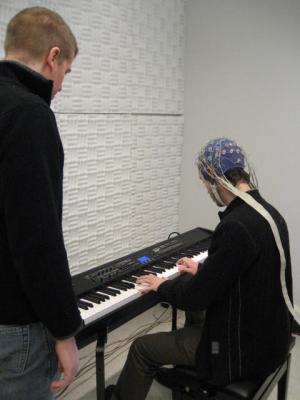
For the study, researchers recruited twenty skilled pianists from Lyon, France. The group was asked to learn simple melodies by either hearing them several times or performing them several times on a piano. Pianists then heard all of the melodies they had learned, some of which contained wrong notes, while their brain electric signals were measured using electroencephalography (EEG). Credit: Caroline Palmer/Brian Mathias

For the study, researchers recruited twenty skilled pianists from Lyon, France. The group was asked to learn simple melodies by either hearing them several times or performing them several times on a piano. Pianists then heard all of the melodies they had learned, some of which contained wrong notes, while their brain electric signals were measured using electroencephalography (EEG). Credit: Caroline Palmer/Brian Mathias

Research from McGill University reveals that the brain’s motor network helps people remember and recognize music that they have performed in the past better than music they have only heard. 

Veterans who have been exposed to nearby explosions, but who lack clear symptoms of traumatic brain injury (TBI) may still have damage to the brain’s white matter similar to veterans with TBI, according to new research at Duke Medicine and the U.S. Department of Veterans Affairs.

University of Adelaide researchers say new insights into how the human brain responds to chronic pain could eventually lead to improved treatments for patients. And also at the University of Adelaide, studies show that a gene linked to intellectual disability is critical to the earliest stages of the development of human brains. Known as USP9X, the gene has been investigated by Adelaide researchers for more than a decade, but in recent years scientists have begun to understand its particular importance to brain development.

In order to function properly, the human brain requires the ability not only to store but also to forget. Through memory loss, unnecessary information is deleted and the nervous system retains its plasticity. A disruption of this process can lead to serious mental disorders. Scientists have now discovered a molecular mechanism that actively regulates the process of forgetting. The journal Cell has published their results.

Brain imaging using radioactive dye can detect early evidence of Alzheimer’s disease that may predict future cognitive decline.

Scientists have identified a new group of compounds that may protect brain cells from inflammation linked to seizures and neurodegenerative diseases.

Your brain’s ability to instantly link what you see with what you do is down to a dedicated information ‘highway’, suggests new research.

There has been a great deal of research on changes among different brain states during sleep, but  new findings, reported in the March 13 issue of Cell, provide a compelling example of a change in state in the awake brain.

Finally, this week, using a new method to determine whether individuals met the criteria for a clinical diagnosis of bipolar disorder, researchers from UCLA tried a new approach by combining results from brain imaging, cognitive tests, and an array of temperament and behavioral measures. In an attempt to better understand the genes that cause the disorder, a collaborative research team identified about 50 brain and behavioral measures that are both under strong genetic control and associated with bipolar disorder, creating the potential to pinpoint the specific genes that contribute to the illness.

Can the damaged brain repair itself?

After a traumatic brain injury, it sometimes happens that the brain can repair itself, building new brain cells to replace damaged ones. But the repair doesn’t happen quickly enough to allow recovery from degenerative conditions like motor neuron disease (also known as Lou Gehrig’s disease or ALS). In this video, regenerative neurologist  Siddharthan Chandran walks through some new techniques using special stem cells that could allow the damaged brain to rebuild faster.


Why Are Some Brain Injuries Worse Than Others?

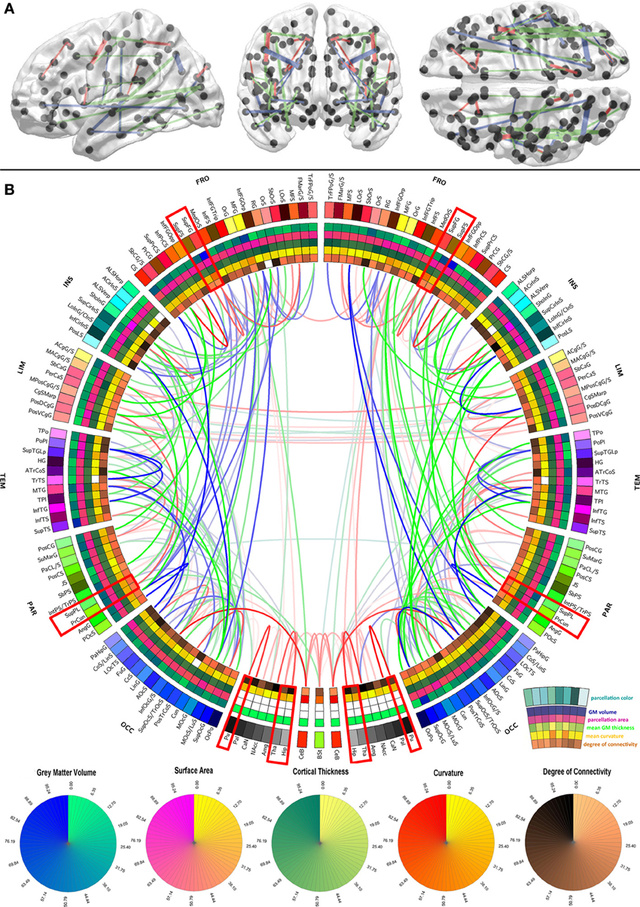
Image A: 3-D models of how the white matter in the brain connects, paired with a "connectogram" visualizing linkages between different areas of the brain / USC

3-D models of how the white matter in the brain connects, paired with a “connectogram” visualizing linkages between different areas of the brain / USC

According to research published in The Lancet, approximately a fifth of adults with a severe traumatic brain injury make a good recovery. But many more die or are left with enduring disability. Although doctors caring for Michael Schumacher, the Formula One World Champion who sustained a severe head injury while skiing, haven’t commented on how he is responding to their latest tests and treatment, Dr Peter Kirkpatrick, a leading British neurosurgeon based at Addenbrooke’s hospital in Cambridge, says that it is “extremely unlikely” that Schumacher will return to his previous level of health, although he insists it is “medically possible”.

The effects of brain injury fall into three main categories:

  • Cognitive – problems with memory, concentration, information processing
  • Emotional and behavioural problems – anxiety, explosive anger and irritability, lack of awareness or empathy
  • Physical – problems with movement, balance and co-ordination, fatigue, epilepsy

Sometimes a head injury which seems severe is followed by a good recovery while a seemingly small head injury can have very serious, long-lasting consequences.  Why is this?

Location, location, location.

The reason is that brain injury operates a bit like the property market in that the three most important things to consider are location, location and location. When nerve pathways are damaged, those brain areas served by those pathways may wither or have their functions taken over by other brain regions. Nerve pathways are also called ‘white’ pathways or ‘white matter’ because they are covered by an insulating sheath of myelin and appear white to the naked eye.

The challenge is to determine the location of key ‘scaffold’ pathways and to understand what makes them so vulnerable and important. This is not an easy task given the total length of nerve pathways in the average 20-year old human brain is 160,000 km. A recent study provides new findings on the brain’s network scaffold that will help inform clinicians about the neurological impacts of brain diseases such as multiple sclerosis, Alzheimer’s disease and brain injury.

 

Weekly Neuroscience Update

yusi

Yusnier Viera

A new study of the brain of a maths supremo supports Darwin’s belief that intellectual excellence is largely due to “zeal and hard work” rather than inherent ability. University of Sussex neuroscientists took fMRI scans of champion ‘mental calculator’ Yusnier Viera during arithmetical tasks that were either familiar or unfamiliar to him and found that his brain did not behave in an extraordinary or unusual ways.

A fear memory was reduced in people by exposing them to the memory over and over again while they slept. It’s the first time that emotional memory has been manipulated in humans during sleep, report Northwestern Medicine scientists.

Massachusetts General Hospital (MGH) researchers have identified and validated two rare gene mutations that appear to cause the common form of Alzheimer’s disease (AD) that strikes after the age of 60.

Moderate reductions in body temperature can improve outcomes after a person suffers a traumatic brain injury (TBI).

When individuals with psychopathy imagine others in pain, brain areas necessary for feeling empathy and concern for others fail to become active and be connected to other important regions involved in affective processing and decision-making, reports a study published in the open-access journal Frontiers in Human Neuroscience.

Research from Virginia Tech suggests that with advances in neurofeedback techniques, the signal-to-noise ratio of the brain activity underlying our thoughts can be “remastered.”

In a landmark discovery, the final piece in the puzzle of understanding how the brain circuitry vital to normal fertility in humans and other mammals operates has been put together by researchers at New Zealand’s University of Otago.

Brain regions associated with memory shrink as adults age, and this size decrease is more pronounced in those who go on to develop neurodegenerative disease, reports a new study published Sept. 18 in the Journal of Neuroscience . The volume reduction is linked with an overall decline in cognitive ability and with increased genetic risk for Alzheimer’s disease, the authors say.

Scientists say that people who have a certain abnormality in their brain structure are more likely to develop chronic pain following a lower back injury, according to a study published in the journal Pain.

The development of fine motor control – the ability to use your fingertips to manipulate objects – takes longer than previously believed, and isn’t entirely the result of brain development, according to a pair of complementary studies.

Weekly Neuroscience Update

japanesesupe

Researchers in Japan have used the powerful K computer, the world’s fastest supercomputer, to simulate the complex neural structure of our brain.

Heavy drinking as a teenager is the single biggest risk factor for developing dementia unusually early, according to new research. A study of almost 500,000 Swedish men identified “alcohol intoxication” as a late adolescent as the most serious of nine separate risk factors for young onset dementia (YOD) – that is, dementia before reaching 65.

For the first time, researchers have documented irregular brain activity within the first 24 hours of a concussive injury, as well as an increased level of brain activity weeks later—suggesting that the brain may compensate for the injury during the recovery time. The findings are published in the September issue of the Journal of the International Neuropsychological Society.

New findings may help neuroscientists pinpoint better targets for anti-anxiety treatments.

The synapses in the brain act as key communication points between approximately one hundred billion neurons. They form a complex network connecting various centres in the brain through electrical impulses. New research from Lund University suggests that it is precisely here, in the synapses, that Huntington’s disease might begin.

In patients with early Alzheimer’s disease, disruptions in brain networks emerge about the same time as chemical markers of the disease appear in the spinal fluid, researchers at Washington University School of Medicine in St. Louis have shown.

New research indicates that teens with anorexia nervosa have bigger brains than teens that do not have the eating disorder.

Assessing consciousness in patients with severe brain trauma is a difficult challenge for doctors, as the injury effectively takes away any ability to blink, squeeze a hand or otherwise respond. But scientists have found a way to measure the brain’s response to a magnetic pulse, helping them determine a person’s level of awareness.


Weekly Neuroscience Update

medium_46044113

A research team at Northwestern University are studying the connection between memory and sleep, and the possibilities of boosting memory storage while you snooze.

For the first time, scientists have used a new combination of neural imaging methods to discover how the human brain adapts to injury. The research, published in Cerebral Cortex, shows that when one brain area loses functionality, a “back-up” team of secondary brain areas immediately activates, replacing not only the unavailable area but also its confederates.

New research suggests that testing a portion of a person’s saliva gland may be a way to diagnose Parkinson’s disease. The study was released today and will be presented at the American Academy of Neurology’s 65th Annual Meeting in San Diego, March 16 to 23, 2013.

In a promising finding for epileptic patients suffering from persistent seizures known as status epilepticus, researchers have reported that new medication could help halt these devastating seizures.

Tübingen neuroscientists have shown how decision-making processes are influenced by neurons.

EPFL scientists find evidence that psychological wounds inflicted when young leave lasting biological traces—and a predisposition toward violence later in life

The production of new neurons, known as neurogenesis, was found to be induced in the adult normal cortex by the antidepressant fluoxetine, as reported in a study published online last week in Neuropsychopharmacology. This finding highlights the potential neuroprotective response induced by this antidepressant drug. It also lends further support to the thesis that induction of adult neurogenesis in cortex is a relevant prevention/treatment option for neurodegenerative diseases and psychiatric disorders.

photo credit: Toni Blay via photopin cc

Weekly Neuroscience Update

Mind wandering may increase creative thinking, according to a new international study.

Simple mental activity such as reading, writing, playing games and doing puzzles may protect brain health in old age, according to a new study.

Reduced production of myelin, a type of protective nerve fiber that is lost in diseases like multiple sclerosis, may also play a role in the development of mental illness, according to researchers at the Graduate School of Biomedical Sciences at Mount Sinai School of Medicine.

A small molecule known to regulate white blood cells has a surprising second role in protecting brain cells from the deleterious effects of stroke, Johns Hopkins researchers report.

Scientists have revealed the minutely detailed pain map of the hand that is contained within our brains, shedding light on how the brain makes us feel discomfort and potentially increasing our understanding of the processes involved in chronic pain.

People with Parkinson’s disease benefit from exercise programs on stationary bicycles, with the greatest effect for those who pedal faster, according to a study presented at the annual meeting of the Radiological Society of North America (RSNA).

A new method to study widespread networks of neurons responsible for our memory has been discovered by scientists from the Max Planck Institute for Biological Cybernetics.

The first study to estimate rates of traumatic brain injury (TBI), without relying on official figures, suggests the worldwide incidence of TBI could be six times higher than previously estimated.

MRI shows changes in the brains of people with post-concussion syndrome (PCS), according to a new study published online in the journal Radiology. Researchers hope the results point the way to improved detection and treatment for the disorder.

photo credit: pamlau.com via photopin cc

Neuroscience News

Is Angry Birds keeping your brain healthy?

A new study from the Archives of Neurology says playing brain stimulating games can improve your memory and delay or prevent the onset of Alzheimer’s disease.

A new study suggests hearing metaphors can activate brain regions involved in sensory experience.

Whether you are an athlete, a musician or a stroke patient learning to walk again, practice can make perfect, but more practice may make you more efficient, according to a surprising new University of Colorado Boulder study.

Researchers have found a way to study how our brains assess the behavior – and likely future actions – of others during competitive social interactions. Their study, described in a paper in the Proceedings of the National Academy of Sciences, is the first to use a computational approach to tease out differing patterns of brain activity during these interactions, the researchers report.

A molecular path from our body’s internal clock to cells controlling rest and activity have been revealed.

A new study looks at how our brain processes visual information to prevent collisions.

Can Brain Scans of Young Children Predict Reading Problems?  Brain scientists are studying whether they can predict which young children may struggle with reading, in order to provide early help.

Virtual therapists being developed to treat depression. Scientists at a U.S. university are developing new technologies to treat depression and other disorders — including a mood-detecting smart phone that will call to check up on you.

A new study shows how to boost the power of pain relief without drugs.

Neuroscience could change the face of warfare. Soldiers could have their minds plugged directly into weapons systems, undergo brain scans during recruitment and take courses of neural stimulation to boost their learning, if the armed forces embrace the latest developments in neuroscience to hone the performance of their troops

Brain activity differs when one plays against others. Researchers have found a way to study how our brains assess the behavior – and likely future actions – of others during competitive social interactions. Their study, described in a paper in the Proceedings of the National Academy of Sciences, is the first to use a computational approach to tease out differing patterns of brain activity during these interactions, the researchers report.

Reporting in PLoS Biology, researchers write that they were able to correlate words a person was hearing to specific electrical activity in the brain. Neuroscientist Robert Knight, a co-author of the study, discusses future applications of this research and concerns that it amounts to mental wiretapping.

Brains may be wired for addiction.  Abnormalities in the brain may make some people more likely to become drug addicts, according to scientists at the University of Cambridge.

Patients’ Brains May Adapt to ADHD Medication. New research reveals how the brain appears to adapt to compensate for the effects of long-term ADHD medication, suggesting why ADHD medication is more effective short-term than it is long-term.

A two-year study of high school football players suggests that concussions are likely caused by many hits over time and not from a single blow to the head, as commonly believed.